Agentic AI vs Generative AI: A Builder's Decision Guide for 2026
Stop asking which is better. Pick the right shape for your workflow with a 5-question decision framework, real costs, and a story from January where I rebuilt a $80K agentic project as a $9.5K generative one.

Table of Contents
The comparison everyone writes is that generative AI makes content and agentic AI makes decisions, which is true and useless when you are choosing between them. The workable test is to count the human steps in the workflow as it runs today. One step, meaning read, summarise, draft, and you want generative. More than three, meaning look up, compare, decide, write back, follow up, and you want agentic.
Mechanically they are not rivals: every agent has a generative model inside it, with memory, planning and tool calling wrapped around it. What differs is the bill. Agentic systems cost three to five times what generative systems cost to build and run, and the forecast that 40% of agentic projects will be cancelled by 2027 is mostly that gap going unbudgeted rather than the technology failing. Choose generative when a person asks and reads the answer, agentic when the workflow has to finish without anyone clicking next.
If you have spent any time in the last year asking "should we use generative AI or agentic AI for this," you already know the comparison sites are useless. They tell you generative AI makes content and agentic AI makes decisions. True. Also unhelpful when a finance director is staring at you waiting for a number.
I have shipped 126 production AI systems over the past four years. About 40 of them used generative AI alone. About 30 were agentic. The rest were hybrids that started as one and grew into the other. The right answer for your business is almost always obvious in the first 30 minutes of a discovery call. The rest of this post shows you how to get there in 30 minutes too.
That is the honest version. The rest of this post explains why, what each approach actually costs, the four real failure modes nobody warns you about, and a deployment story from January where a client picked the wrong one and we had to rebuild it.

What we are actually comparing
Both technologies use large language models underneath. That is the source of most confusion. People see "Claude" or "GPT" branded under both labels and assume the difference is marketing. It is not.
The cleanest framing comes from McKinsey: generative AI creates output, agentic AI creates outcomes. With generative AI you provide a prompt and the model returns a response. The interaction begins and ends with that exchange. With agentic AI you provide a goal and the system determines what steps to take, executes them across real systems, evaluates whether the outcome matches the objective, and iterates until it does.
IBM puts the relationship even more plainly. Agentic AI is the framework. AI agents are the building blocks within the framework. And inside almost every modern agent there is a generative AI model doing the reasoning. So agentic systems use generative AI. Generative systems do not use agentic AI. They are not parallel categories. One contains the other.
This matters for your build decision because the question is not "which one is better." The question is "where does the loop close?" If the loop closes when a human reads the model's output, you want generative. If the loop closes when a goal is achieved in a downstream system (CRM updated, ticket resolved, invoice posted), you want agentic.
Generative AI in depth
Generative AI is what most people mean when they say AI today. ChatGPT, Claude, Gemini, Copilot. You write a prompt, you get a response, you read it, you decide what to do next.
What it is good at: drafting (emails, contracts, marketing copy), summarizing (long documents, meetings, research), search and Q&A over a knowledge base, translation, code generation, image generation, brainstorming. Anything where the value is "give me a useful piece of content I can act on."
What it costs: for a typical business chat assistant or RAG (retrieval augmented generation) deployment, $0.50 to $5 per active user per month in token costs, plus $200 to $2,000 per month in vector database and hosting depending on document volume. Build cost ranges from $5,000 for an off the shelf integration to $50,000 for a custom RAG system with your own data. My cost calculator breaks this down with verified vendor pricing if you want to plug in your own numbers.
What it is bad at: anything that requires touching multiple systems, anything that needs to make a decision and then act on it without a person reviewing, anything where being wrong means real money disappears. The interaction model is fundamentally "advice." Bad advice has limited blast radius. Bad action does not.
Where it wins for businesses right now: internal knowledge bases, customer support deflection (where a human still confirms), content production at scale, sales call summaries, code review assistance. The 2025 McKinsey state of AI report found that the highest measured productivity gains from generative AI are still in writing, coding, and customer service drafting. Not because the technology cannot do more. Because the workflows around it have not been redesigned to let it. Financial services teams in particular have found the highest near term lift here (see how generative AI lands in financial services firms like yours).
This is the gap that pushes companies toward agentic. Generative AI assists individuals. It does not transform processes. The productivity ceiling is the human in the loop.
Agentic AI in depth

Agentic AI describes systems that pursue a goal with limited supervision. They use generative models for reasoning, but they also have memory, can call external tools (your CRM, your database, your APIs, the web), can plan multi step workflows, and can recover when a step fails. The agent decides what to do next based on what just happened.
What it is good at: ticket triage and routing, lead qualification and CRM updates, invoice and document processing, voice agents for inbound and outbound calls, research and competitive analysis, code refactoring across many files, anything that today requires a junior person clicking through five tabs to finish.
What it costs: for a production grade agent on a real workflow, build cost typically lands between $25,000 and $150,000 depending on the number of integrations and how strict the accuracy requirement is. Monthly operational cost ranges from $500 to $5,000 for the LLM tokens, plus infrastructure (hosting, vector DB, observability) that adds another $500 to $3,000. Voice agents add roughly $0.15 to $0.25 per minute of conversation once you include speech to text, the LLM, text to speech, and telephony. The orchestration only marketing rates ($0.05 per minute) ignore those layers and are not the real number.
What it is bad at: ambiguous goals, situations where the right answer changes based on relationships and context the agent cannot see, anything requiring physical world common sense, novel problem types where there is no good training distribution. Today's agents are also brittle in long horizon tasks. The longer the task chain, the higher the chance one step compounds an error into the next.
Where it wins for businesses right now: the workflows where the human steps are mechanical (look up, compare, update, send). Customer support tier one. Lead intake and qualification. AP and AR document processing. My work with Fig and Bloom is one example: an agent that handles repetitive shop operations so the team can focus on customers. The economics work because the alternative is hiring a person at $40,000 to $60,000 per year to do the same work, and the agent runs at $300 to $1,500 per month. The architecture pattern that makes this reliable is described in my agentic RAG production guide.
The catch: Gartner predicts over 40% of agentic AI projects will be canceled by the end of 2027 due to escalating costs, unclear business value, or inadequate risk controls. The technology is real. Most projects underestimate the failure modes.
Head to head: agentic AI vs generative AI
| Dimension | Generative AI | Agentic AI |
|---|---|---|
| Primary output | Content (text, image, code) | Completed work in real systems |
| Trigger | Human prompt | Goal or event |
| Human in loop | Yes, every interaction | Optional, by design |
| Touches external systems | Rarely | Always |
| Memory | Per session, optional | Persistent, required |
| Failure mode | Bad advice the user can ignore | Wrong action in a real system |
| Build complexity | Low to medium | Medium to high |
| Typical build cost | $5K to $50K | $25K to $150K |
| Typical monthly cost | $200 to $2,000 | $500 to $8,000 |
| Time to first value | 2 to 6 weeks | 6 to 16 weeks |
| Best fit team size | Any | Has at least one technical owner |
| Risk profile | Low (output is reviewed) | Medium (requires guardrails) |
| 2026 Gartner adoption | Embedded in most enterprise apps | 40% of apps will have task agents |
The cost rows are the ones that surprise people most. Agentic systems are roughly three to five times more expensive to build and run than equivalent generative systems. The economics only work when you can name the FTE cost the agent is replacing or the revenue the agent is unlocking. If you cannot, you almost certainly want generative.
The decision framework
Walk through these questions in order. Stop at the first "no."
- Is the workflow you want to automate measurable today? If you cannot tell me how many tickets get triaged per week, how long an invoice takes to process, or how many leads need qualifying, you do not have a workflow. You have a vibe. Start with generative AI as a productivity tool while you instrument the workflow. Come back to agentic in three months when you have numbers.
- Does the workflow touch more than two systems? Generative AI handles single context tasks brilliantly. Agentic AI earns its keep when the agent has to look up data in System A, check a record in System B, decide based on both, and write back to System C. If you only have one system, the answer is generative or even just a good script.
- Is "right answer" objective? Triage rules can be objective. Lead scoring can be objective. Invoice matching can be objective. Brand voice for marketing copy is not. Strategic prioritization is not. If the right answer requires judgment a human is paid to apply, agentic AI will get you 80% there and the last 20% is where the wheels come off. Use generative as a draft tool with the human in the loop.
- Can you tolerate occasional wrong actions? Every agent in production gets at least one thing wrong eventually. If "wrong" means the agent sent a slightly clunky email, you are fine. If "wrong" means the agent refunded $50,000 to the wrong customer, you need either a different problem or a much harder set of guardrails. Be honest about your blast radius.
- Do you have someone who can own it after launch? An agent in production is a system. It has logs, error rates, retraining moments, vendor changes. If nobody on your team can own that system, build something simpler. My retainer tiers exist precisely because most teams under 200 people do not have a dedicated AI ops person and need that to be a phone call instead of a hire.
If you got "yes" through all five, agentic AI is the right call and you should be talking to someone. If you got a "no" anywhere, generative AI is your starting point. Either way you can spend less than you think and learn more than you expect in the first 90 days.

What most comparisons get wrong
I read about 30 of these comparison posts before writing this one. Four things they get consistently wrong.
One. They treat agentic as the upgrade. It is not. It is a different shape of system for a different shape of problem. You do not graduate from generative to agentic. You pick the right one for the workflow. A company that uses generative AI well across writing, coding, and search will outperform a company that built three failed agentic projects. The Gartner cancellation prediction (40% of agentic projects dead by end of 2027) is mostly companies who picked agentic when generative would have shipped.
Two. They ignore the cost gap. Agentic systems cost three to five times what equivalent generative systems cost, both to build and to run. The marketing decks pretend this is not true. The implementation invoices say otherwise. If your finance director has not seen the operational cost line, the project will get cut at the first quarterly review.
Three. They underweight "agent washing." Gartner estimates only about 130 of the thousands of agentic AI vendors are real. Most "agents" you see in product launches are workflow automation with a chat interface bolted on. There is nothing wrong with workflow automation, but if you bought "agentic AI" and got "RPA with a smile," you overpaid by a factor of three. Ask vendors to show you the planning loop and the tool call traces. If they cannot, it is not an agent.
Four. They skip the operational reality. Generative AI is a feature you ship. Agentic AI is a system you operate. The first one needs a launch. The second one needs an owner. The implementation cost is only the first chapter. Every six weeks the underlying model gets cheaper or smarter or both, your tool integrations break, your prompt strategy needs to evolve, your guardrails need updating. If you are not budgeting for ongoing engineering, your agent will degrade silently. I have been called in three times this year to revive abandoned agents from 2024 and 2025 builds. Every single one was killed by silent decay, not by a single failure event.
Real deployment story: the wrong choice in January
A client (US accounting firm, 22 staff) came to me in January wanting "agentic AI to handle our client intake." Standard pitch. They had been sold on agentic by another vendor and the project had stalled at $80,000 with nothing in production.
I asked what client intake looked like today. The answer: a partner reads the inbound email, decides if the prospect fits, and either books a call or sends a polite no. About 40 emails per week, 5 minutes per email, so roughly 3.5 hours of partner time. Partner cost equivalent: about $400 per week of senior labor.
The agent the previous vendor tried to build was supposed to read the email, classify the prospect, look up firm data in the CRM, check capacity in the calendar, and send a personalized response. Five tools, multi step planning, the works. Build estimate had grown to $80,000 and operational cost was projected at $1,200 per month.
I rebuilt it as a generative AI assistant. Not an agent. The partner pastes the email into a Claude assistant we set up with their firm style guide and a small RAG over their service descriptions. The assistant drafts the classification and the response. The partner edits the response in 30 seconds and hits send. Build cost: $9,500. Monthly cost: $180. Time saved: about 70% of the original 3.5 hours, so roughly 2.5 hours a week of partner time freed up.
The agentic version would have been technically possible. It would also have taken 16 more weeks to ship and cost 8 times as much for marginal additional time savings. Worse, it would have introduced a guardrail problem (the agent could send the wrong response to a real prospect) that did not exist in the assisted version.
The lesson: agentic was the wrong shape because the human review step was already cheap. Generative cleared the bottleneck. Agentic would have created new ones.

FAQ
Is agentic AI just generative AI with extra steps?
Functionally yes. Architecturally no. Every agent uses generative AI for reasoning, but the agent adds memory, tool calling, planning, and a control loop that the model alone does not have. The "extra steps" are what make the difference between giving advice and finishing work. They also account for most of the additional cost and complexity.
Which one should my business use first?
Start with generative AI as a team productivity tool. Pick one workflow where humans currently draft, summarize, or search. Ship it in two to four weeks. Use the next 90 days to instrument the workflows around it. By month four you will know whether you have an agentic problem worth solving or whether the generative tool already cleared the bottleneck. About 60% of the time it does.
How much does an AI agent cost compared to a chatbot?
A production grade chatbot built on generative AI typically costs $5,000 to $30,000 to build and $200 to $1,500 per month to run. A production grade agent on a real workflow typically costs $25,000 to $150,000 to build and $500 to $5,000 per month to run. The cost gap reflects the integration work and the operational overhead, not the underlying LLM. Voice agents are higher again because of telephony and STT/TTS layers.
Can agentic AI replace employees?
It can replace specific tasks within roles, not roles themselves. The clearest wins I see are tier one customer support, lead qualification, document processing, and inbound voice handling. In each case the agent absorbs the high volume mechanical work and the human moves up the value chain. If a vendor is selling you full role replacement, ask them to show you a customer with that running in production for more than 12 months. They cannot.
Why are 40% of agentic AI projects predicted to fail?
Gartner cites three reasons: escalating costs, unclear business value, and inadequate risk controls. In practice the failures I have seen come from picking agentic when generative would have shipped, underestimating the operational ownership cost, and treating the agent as a feature instead of a system. The technology is real. The project management discipline often is not.
What is "agent washing"?
Repackaging existing products (chatbots, RPA, workflow automation) as "agents" without adding the planning loop, memory, and tool calling that define an agent. Gartner estimates only about 130 of the thousands of agentic AI vendors are doing genuine agentic work. Test by asking the vendor to show you the agent's plan and tool call traces for a single task. Real agents can show you. Agent washed products cannot.
Do I need both generative and agentic AI?
Most companies past their first year of AI adoption end up running both. Generative for the writing and search workflows where humans want better drafts. Agentic for the operational workflows where you want the work to finish. They are not competing budget lines. They serve different problems. The mistake is buying agentic for problems that generative already solves.
How do I know if my workflow is a good fit for agentic AI?
Walk the five question framework above. The shortest version: count the human steps in the workflow today. If the answer is one (read, summarize, draft) you want generative. If the answer is more than three (look up, compare, decide, write back, follow up) and the right answer is objective, you want agentic. Anything in between is judgment work that probably needs a human.
If you have decided you need a custom build, here is how I approach it
The fastest way to waste $50,000 on AI is to start building before you know which shape you need. The fastest way to ship something useful in 60 days is to spend the first two weeks proving the workflow and the economics, then build the smallest version that delivers value.
That is what my four packages are designed for. The Discovery package (two weeks, fixed price) is exactly this question, answered for your specific workflow with a built artifact you can use even if we never work together again. The Build packages cover both generative and agentic from there. The free AI readiness assessment is the cheapest way to start: 12 minutes, gives you a tier, gives you a recommended workflow, gives you a budget range.
If you want to skip all that and just talk to me, book a call. Tell me your workflow in two sentences. I will tell you generative or agentic in five minutes and quote you in 24 hours.
Forty percent of enterprise apps will integrate task specific AI agents by end of 2026, up from less than 5% in 2025. Agentic AI could drive 30% of enterprise app software revenue by 2035, surpassing $450 billion. Gartner, August 2025. Over 40% of agentic AI projects will be canceled by end of 2027 due to escalating costs, unclear business value, or inadequate risk controls. Only about 130 of the thousands of agentic AI vendors are real. Gartner, June 2025. Generative AI creates output, agentic AI creates outcomes. That is the cleanest framing of the difference. McKinsey, 2026. Agentic AI is the framework, AI agents are the building blocks. IBM, 2026.
Last updated
July 26, 2026
Category
Trends & Insights
Jahanzaib Ahmed
AI Systems Engineer & Founder
AI Systems Engineer with 126 production systems shipped. I run AgenticMode AI (AI agents, RAG systems, voice AI) and ECOM PANDA (ecommerce agency). I build AI that works in the real world for businesses across home services, healthcare, ecommerce, SaaS, and real estate.
Want this built for your business? See The AI Audit, or browse the free tools and guides.
Related articles
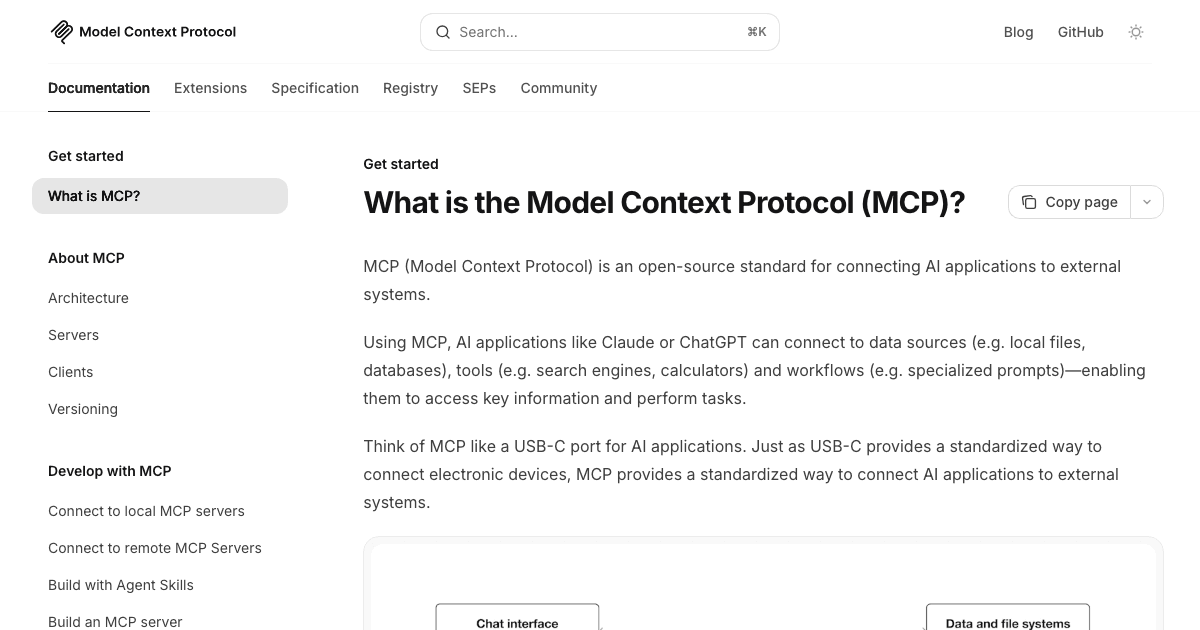
MCP Just Hit 97 Million Installs. The Dev Summit Showed What Comes Next for AI Agents.
The Model Context Protocol crossed 97 million monthly installs in March 2026. Two weeks later, hundreds of engineers gathered in New York for the first ever MCP Dev Summit. Here is what I took away from both events and what it means if you are building AI agents right now.
GuideTrends & InsightsMCP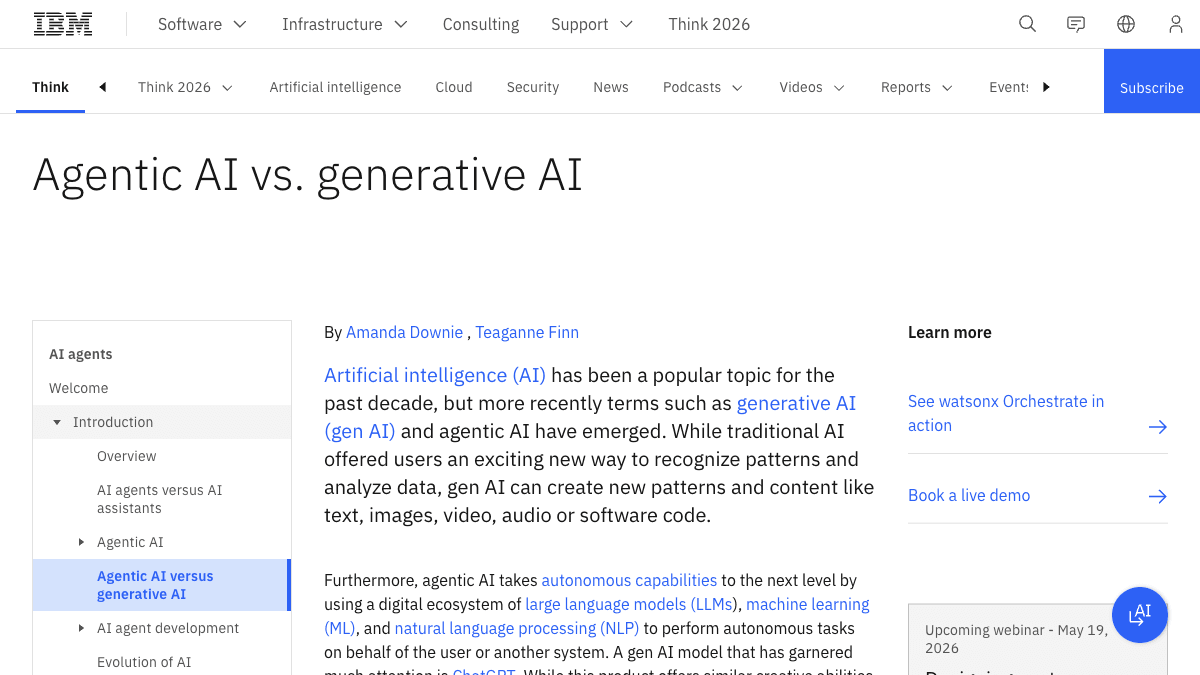
What Is Agentic AI, Really? An Honest 2026 Guide for Business Owners
What agentic AI actually is, how it differs from generative AI and chatbots, what it costs in 2026, and an honest checklist for when it's the right fit for your business.
GuideIndustry GuidesAgentic AI
AI Agent News in 2026: A Business Owner's Guide to What's Worth Tracking
A practitioner's filter on AI agent news in 2026: what mattered in April, where to follow it without drowning, and how to tell signal from hype.
NewsTrends & InsightsAI Agents