I've Hired AI Automation Consultants, Fired a Few, and Built 126 Systems Myself. Here Is How to Find One Near You.
How to find, vet, and hire an AI automation consultant in 2026. What it costs, what to ask, the red flags that cost businesses thousands, and how to decide if you need local or remote.

Table of Contents
A law firm in Chicago paid a consultant $28,000 for an AI intake system that turned out to be a form with an email autoresponder, and six months later the consultant was gone. That is the failure this market produces, and it is avoidable with better filtering rather than a bigger budget. Consulting runs $1,500 for a small fixed scope project up past $150,000 for complex multi system work.
Two things matter more than price. First, there are three distinct types of AI consultant, and hiring the wrong type wastes the budget before a single workflow gets built. Second, "near me" barely matters any more: most of the strongest people in this field work remotely, so geography narrows your shortlist without improving it. Five specific questions filter out roughly 80% of underqualified candidates in one call, and the red flags are consistent enough to spot early.
Last year a law firm in Chicago paid a consultant $28,000 to build an AI intake system. Six months later the system was doing nothing. The consultant had vanished. The "AI" was a form with an email autoresponder attached to it.
I get calls about situations like that at least twice a month. The ai automation consultant near me search is real and growing fast because business owners want someone they can actually hold accountable. But proximity doesn't protect you from bad work. Expertise does. And finding genuine expertise takes more than a Google search.
I've built 126 production AI systems across four industries. I've also hired other consultants for overflow work, fired two, and watched a few spectacular failures from the sidelines. This is everything I know about finding the right person and not the wrong one.
If you want a quick answer: book a 30-minute call with me and I'll tell you honestly whether I can help or point you to someone who can. If you want to understand the full picture first, keep reading.
What an AI Automation Consultant Actually Does
The term is overloaded. I've seen it applied to people who set up Zapier triggers and people who build multi-agent orchestration systems in LangGraph. Those are very different skill sets with very different price points.
There are three real categories:
Workflow Automators
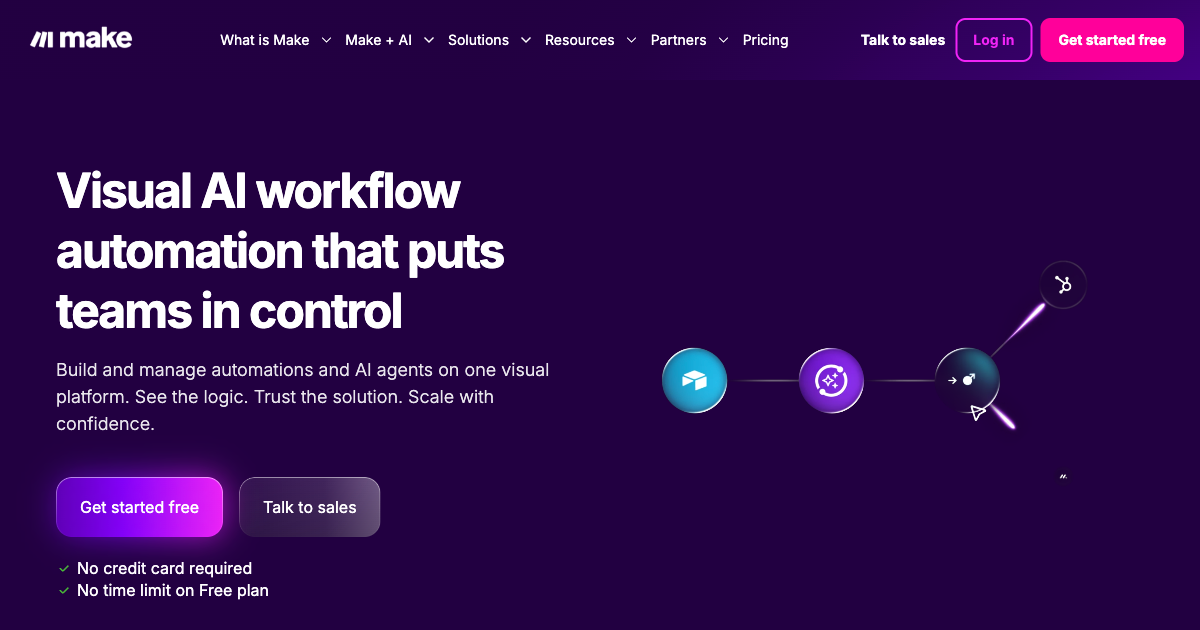
These consultants connect your existing tools using no-code and low-code platforms like n8n, Make, and Zapier. They eliminate manual handoffs. Someone enters a lead in your CRM and it automatically gets scored, assigned, and followed up with. A customer submits a support ticket and it gets triaged and routed without a human touching it. Most small business AI projects fall into this category. Budget: $1,500 to $25,000 per project.
AI Application Developers
These consultants write code, typically in Python or TypeScript, to build custom AI-powered tools. Internal chatbots trained on your documentation. Document analysis pipelines that extract data from invoices or contracts. Lead qualification systems that use language models to score inbound inquiries. These projects require proper software development skills, not just platform knowledge. Budget: $15,000 to $80,000 depending on complexity.
AI Strategists
These consultants audit your processes before anything gets built. They map your workflows, identify the three or four places where AI could deliver the most ROI, and create a roadmap. A good strategist saves you from spending $20,000 automating the wrong thing. Budget: $3,000 to $15,000 for a full audit and roadmap.
Most businesses don't know which type they need before the first conversation. That's normal. Take the free AI readiness assessment first. It takes about seven minutes and tells you exactly which category of automation fits your current situation.
Finding an AI Automation Consultant Near Me: Does Location Actually Matter?
Honestly? Less than you'd think.
The instinct behind the search is reasonable. You want someone you can meet in person if things go wrong. You want accountability. You want a handshake, not just a Zoom. I get it.
But the reality of AI automation consulting is that almost all of it is done remotely. Screen sharing is how consultants show their work. Your tools live in the cloud. The actual implementation happens over API keys, not over conference room tables. The firms charging $500/hour are not driving to your office. They're in a different time zone from most of their clients.
The real question behind "near me" is usually one of three things:
- Accountability: You want to know they can't just disappear. A better filter for this: are they reachable? Do they respond to messages within a day? Do they have a contract with deliverable-based milestones?
- Trust: You want to know they're real and credible. A better filter: do they have case studies with measurable outcomes? LinkedIn with a real history? Verifiable client references?
- Ongoing support: You worry about being stranded post-launch. A better filter: do they offer a retainer for maintenance? What's their support policy after delivery?
That said, if you genuinely want someone local for the relationship aspect, it's a perfectly valid preference. Just don't sacrifice expertise for proximity. A mediocre consultant in your zip code is a far worse outcome than an excellent one in another state.
Where to Find AI Automation Consultants
There are five main channels. Each has tradeoffs.
Freelance Platforms
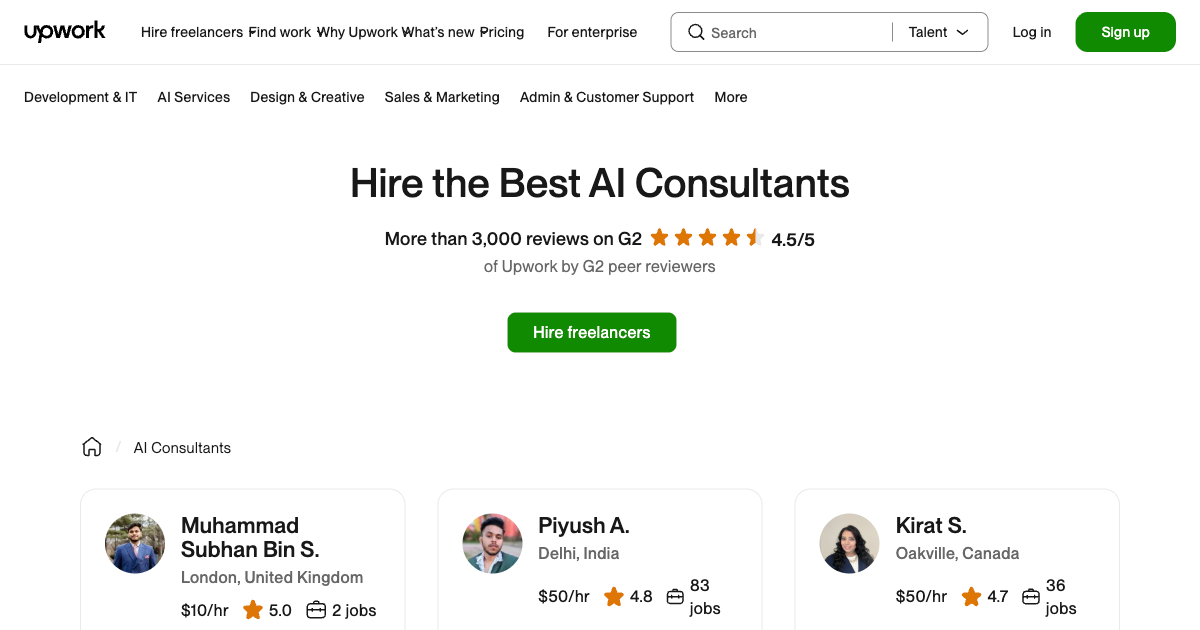
Upwork has the largest pool. The quality range is enormous, from people who took a weekend course to people with ten years of actual deployment experience. Filter by: Top Rated Plus badge, minimum $100/hour rate (anything lower usually signals someone building their portfolio at your expense), and real case study descriptions in their profile, not generic service bullets.
Boutique AI Agencies
Smaller than a Big Four firm, larger than a solo operator. These agencies typically have two to fifteen people. The advantage: you get more structure and accountability than a freelancer. The risk: the person who sold you is rarely the person who builds the work. Ask specifically who will be hands-on with your project.
Direct Referrals
The most reliable channel. If a business similar to yours has already deployed AI automation successfully, their consultant is pre-vetted by a peer who had skin in the game. Ask in your industry peer groups, trade associations, or LinkedIn network. "Who did you use to build your lead follow-up system?" is a better search query than any Google result.
Industry-Specific Directories
Platforms like Advisably focus specifically on AI automation consultants and let you filter by specialization, tools, and industry. More curated than Upwork but smaller pool.
Solo Operators via Content
Many of the best AI consultants publish their work publicly. They write detailed blog posts, post case studies on LinkedIn, and explain their architecture decisions. If someone has built 20 public examples of exactly your type of automation, that's a stronger signal than any badge or certification. This is how I get most of my inquiries.
The 5 Questions That Filter Out 80% of Bad Candidates
Ask these in the first call. The quality of the answers tells you everything.
1. Walk me through a recent project similar to mine
Not a case study PDF. Not a slide deck. Tell me what the client wanted, what tools you used, what problems came up during build, and what the measurable outcome was three months after launch. A consultant who has done real work gives you a messy, specific answer. One who is faking it gives you smooth marketing language.
2. What tools do you actually work with, and what are the tradeoffs?
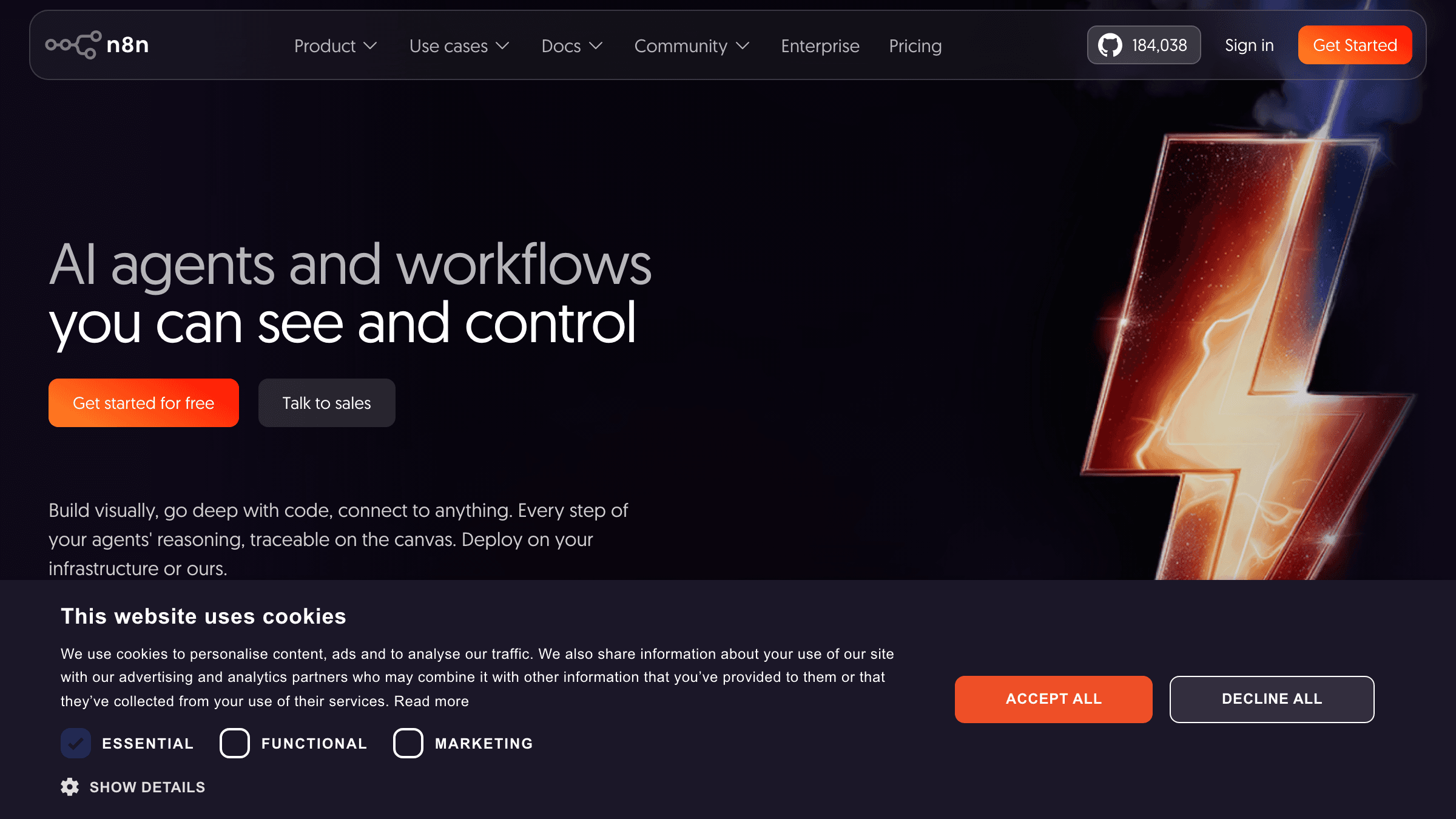
If they say "n8n or Make or whatever you prefer" without any opinion on the differences, they don't understand the tools deeply. A real answer sounds like: "I default to n8n for most of my clients because it handles complex branching logic better and doesn't charge per task, but if you're on a team that already lives in the Google ecosystem, Make's integrations are cleaner there."
3. What would you NOT automate in my situation?
This question catches strategy. The right answer is a list of things that don't make sense: processes where the ROI is marginal, tasks that require too much human judgment, workflows that change too frequently to justify a build. A consultant who answers this question well is thinking about your money, not their billings.
4. How do you handle scope creep and mid-project changes?
AI automation projects almost always evolve once clients see the first working version. "Actually, can it also do X?" is a normal client reaction. The right answer describes a clear change request process, how new work gets quoted, and how the project timeline adjusts. No process here means you'll either pay overages you didn't agree to or get a consultant who stops responding when the scope gets complicated.
5. What does your post-launch support look like?
This is the one most people forget to ask. AI automation systems break when the underlying tools update, when API endpoints change, or when your business process shifts. What happens when that occurs at 2pm on a Thursday? A good answer includes a specific support window, a retainer option for ongoing maintenance, and a clear handoff process so you're not completely dependent on them forever.
What It Costs in 2026
I'm going to give you real numbers here, not the "it depends" non-answer most articles resort to.
The global AI consulting market hit $14.07 billion in 2026, growing at 26.49% annually. That growth is driving pricing pressure both directions: more supply from inexperienced consultants bringing rates down, and more enterprise demand from serious firms pulling rates up. Here's what the actual market looks like for small and mid-size businesses:
| Type | Hourly Rate | Fixed Project Range | Monthly Retainer |
|---|---|---|---|
| No-code workflow automator | $75 to $150/hr | $1,500 to $8,000 | $1,000 to $3,000 |
| Low-code integrator | $100 to $200/hr | $5,000 to $25,000 | $2,000 to $5,000 |
| Custom AI application developer | $150 to $350/hr | $15,000 to $80,000 | $4,000 to $12,000 |
| AI strategist / roadmap | $200 to $400/hr | $3,000 to $15,000 | $5,000 to $15,000 |
| Enterprise firm (Big Four) | $300 to $1,000+/hr | $50,000 to $5M+ | $25,000+ |
For context: my own work sits in the custom AI application developer range. A typical first engagement with a small business runs $12,000 to $35,000 depending on what we're building. The full pricing and package breakdown is on my packages page.
A few cost realities worth knowing:
- Data prep costs are hidden: If your data needs cleaning before automation can touch it, add 20 to 50% to any quote you receive
- Third-party tool costs stack: n8n, Make, OpenAI API, and your CRM all have their own pricing. A $10,000 build might carry $500 to $2,000/month in ongoing tool costs
- Retainers beat per-hour maintenance: One-off fixes at $200/hour add up fast. A $1,500/month retainer is usually better value if you have more than two active systems
Red Flags (and the Green Ones)
After watching enough projects go wrong, the warning signs are predictable. Most bad engagements show at least two of these before the contract is signed.
Red Flags
- They can't name specific platforms or tools when you ask. Real consultants have strong opinions about their stack.
- They promise ROI numbers upfront without understanding your processes. "We'll save you 40 hours/week" before they've seen your workflows is a sales line, not a projection.
- They use words like "revolutionary", "cutting-edge", and "seamless" frequently. Experienced consultants talk in specifics, not superlatives.
- Their proposal is mostly about their methodology and barely about your specific problem. Good proposals flip this ratio.
- They push you toward the largest engagement immediately without suggesting a smaller discovery phase first. This is a billing incentive, not a client interest.
- No contract with milestone-based payment structure. If they want 50% upfront with no deliverable milestones, walk away.
Green Flags
- They ask more questions than they answer in the first call
- They tell you something they won't do and explain why
- They suggest starting smaller than what you asked for
- They can show you a live system they built for a previous client
- They give you a clear answer to the post-launch support question
Is an AI Automation Consultant Right for You?
Not every business needs a consultant. Here's a quick decision framework.
You probably need a consultant if:
- You have at least one process that takes more than 10 hours per week of manual work
- That process is repetitive, rule-based, and doesn't require judgment calls on every step
- You've tried a no-code tool yourself and hit a wall (either technically or on time)
- Your team is spending time on tasks that feel obviously automatable
- You're losing leads because follow-up takes too long
You can probably wait if:
- Your manual processes are small, less than two to three hours per week total
- You're in the middle of a major business model change
- Your data is completely unstructured and would need significant cleanup first
- You don't have budget for both the build cost and the ongoing tool costs
If you're on the fence, the fastest way to get clarity is the free AI readiness assessment. It walks through your specific workflows and gives you a concrete starting point.
If you're ready to talk: book a call here. I do a genuine 30-minute assessment of what's worth building, what isn't, and what it would cost. No pitch, no pressure.
Frequently Asked Questions
How much does an AI automation consultant cost?
Most small business projects run $1,500 to $25,000 for no-code and low-code automation, and $15,000 to $80,000 for custom AI application development. Hourly rates range from $75 to $350 depending on the consultant's specialization. Enterprise engagements with large firms start at $50,000 and go much higher. The best way to get a real number is to scope your specific workflow first.
Do I need a local AI automation consultant?
Not typically. The vast majority of AI automation work is done remotely. Screen sharing, async collaboration tools, and cloud-based deployments mean location rarely affects quality. What matters more: can they respond quickly, do they have verifiable results, and do they use a contract with milestone payments?
What's the difference between AI automation and regular automation?
Traditional automation follows fixed rules: if X happens, do Y. AI automation adds a layer that can interpret language, classify inputs, make judgment calls, and handle variation. An AI automation consultant can build a system that reads an email, understands the customer's intent, decides which department to route it to, drafts a response, and only escalates to a human when genuinely uncertain. Traditional automation can't do that.
How long does an AI automation project take?
Simple workflow automations take two to four weeks. Complex custom AI applications with multiple integrations typically take six to twelve weeks. A full strategy audit and roadmap engagement runs two to three weeks. Timelines stretch when data preparation is needed or when the client has many approval stakeholders involved in the build process.
What should I automate first?
Start with the process that is most repetitive, most time-consuming, and where errors are most costly. For most small businesses, that's either lead follow-up (the highest revenue impact) or invoice and document processing (the highest time savings). Avoid starting with customer-facing AI that speaks for your brand until you've built internal confidence with the technology.
Can I automate my business without a consultant?
Yes, for simpler workflows. If your needs are basic CRM triggers, email sequences, or simple Zapier connections, there are good no-code tools you can set up yourself. A consultant becomes worth it when the workflow involves custom logic, multiple integrated systems, AI-powered decisions, or when your time is more valuable than the cost of hiring someone who's done it before. See: when no-code is enough vs when you need a consultant.
What results can I expect from AI automation?
According to 2026 AI automation statistics, businesses report an average 35% reduction in operational costs and 91% report revenue improvements. Specific to lead follow-up: companies that automate within five minutes of lead submission convert at 9x the rate of those that follow up after 10 minutes. Your actual results depend entirely on which processes you automate and how well the system is built.
How do I verify a consultant's claims before hiring?
Ask for three things: a live system they built (not a demo environment, a real client deployment), a reference you can actually call, and their response time during the project. Fake consultants have case study PDFs. Real ones can show you a working system and give you a client's phone number. If they hesitate on any of these, that's your answer.
AI consulting market size $14.07 billion in 2026 growing at 26.49% CAGR: Business Research Insights 2026. 68% of U.S. small businesses use AI regularly: AdAI Small Business AI Statistics 2026. 35% average reduction in operational costs from AI automation: AdAI Automation Statistics 2026. SMB AI adoption doubled from 22% to 38% in two years: Digital Applied 2026. McKinsey: intelligent automation reduces process cycle times by up to 70% and operational costs by 30%: Moxo AI Automation Consulting 2026.
Last updated
July 26, 2026
Category
Implementation
Jahanzaib Ahmed
AI Systems Engineer & Founder
AI Systems Engineer with 126 production systems shipped. I run AgenticMode AI (AI agents, RAG systems, voice AI) and ECOM PANDA (ecommerce agency). I build AI that works in the real world for businesses across home services, healthcare, ecommerce, SaaS, and real estate.
Related articles
What an AI Automation Consultant Actually Delivers: Week by Week, Start to Finish
Most businesses don't know what an AI automation consultant actually delivers. Here's the real week-by-week project timeline, the six artifacts you should receive, and how to spot the consultants worth hiring.
GuideImplementationAI Automation Consultant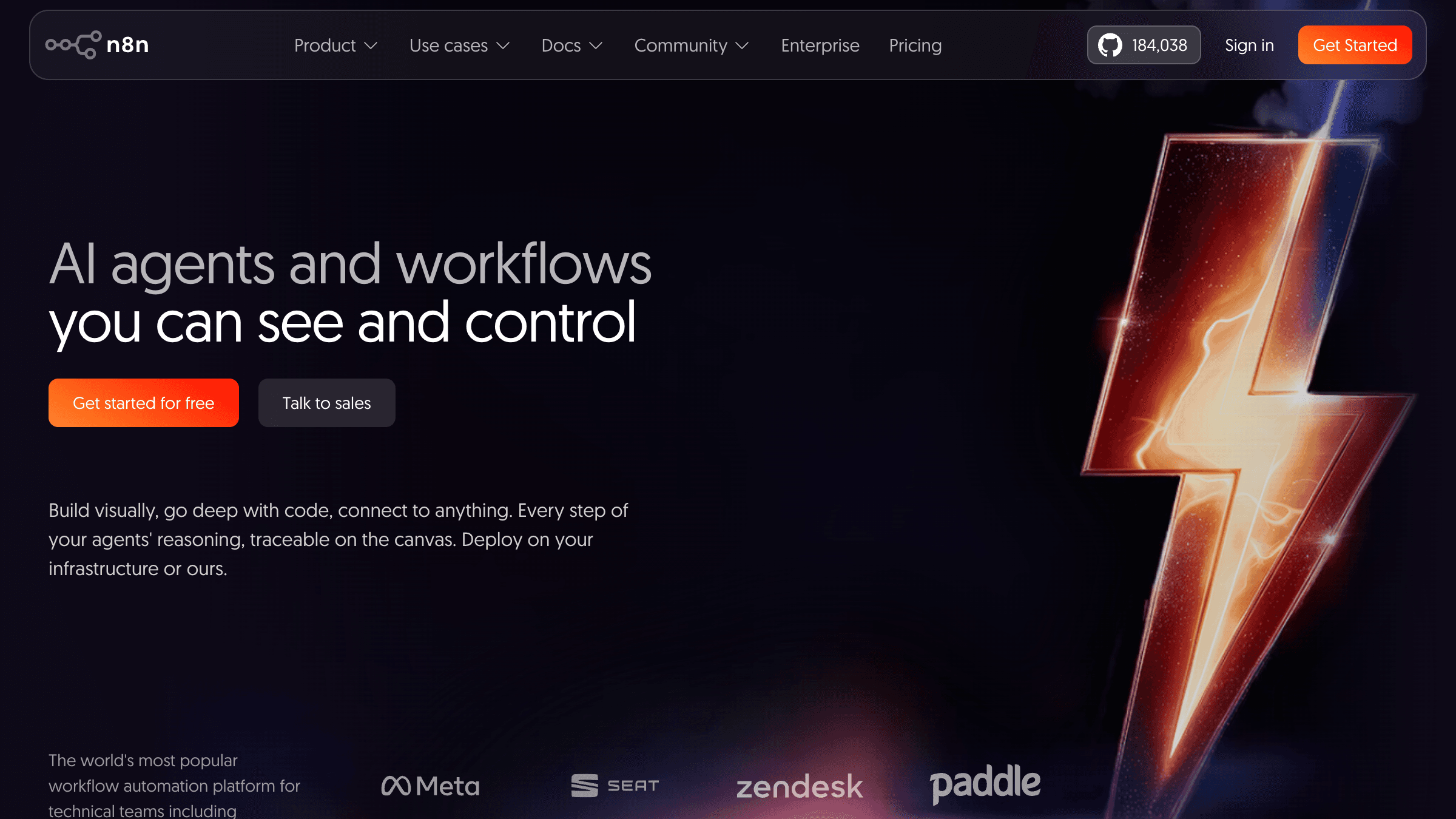
How to Automate Workflow for Small Business Owners: What Actually Works in 2026
A plain-English guide to workflow automation for small business owners. Learn what to automate first, which tools to use, and how to get ROI without hiring a developer.
How toImplementationWorkflow Automation
How to Use AI to Automate Your Small Business: A Practical 2026 Guide
A step-by-step guide for non-technical small business owners on how to use AI to automate repetitive tasks, save 10+ hours per week, and start for under $100/month.
How toIndustry GuidesBusiness Automation