Three People Control Anthropic's Board. The Only Thing They're Recorded Doing Is Narrowing a Rollout.
A breakdown of the three person trust that appoints most of Anthropic's board, the single intervention it is actually on record for, and what a $2tn IPO changes for anyone shipping on Claude.

Table of Contents
Anthropic's Long-Term Benefit Trust now picks four of its seven directors. Its trustees hold no equity in the company, they are financially disinterested by design, and they can remove a majority of the board at will. On Friday the Financial Times reported that this arrangement is meant to survive an IPO that could value Anthropic at as much as $2 trillion.
Most of the coverage read that as an investor risk story. Will three financially disinterested people torch shareholder returns in the name of mission? I've shipped agent systems on Claude for two years, so I read it as something narrower and more annoying: a dependency in my deployment path with no changelog, no status page, and no version number.
So I went back to the trust's founding document, which Anthropic published in September 2023, and read it against Friday's reporting. One thing doesn't line up. It's the part nobody covered, and it's the only part that would actually change what I build.
What is Anthropic's Long-Term Benefit Trust, and what can it actually do?
The Long-Term Benefit Trust is an independent body of up to five financially disinterested trustees, and it holds a special class of Anthropic stock, called Class T, which carries no economic return and exists only to elect and remove directors. The FT describes the trust as holding no equity in the company. Anthropic said in 2023 the trust would elect a board majority within four years.
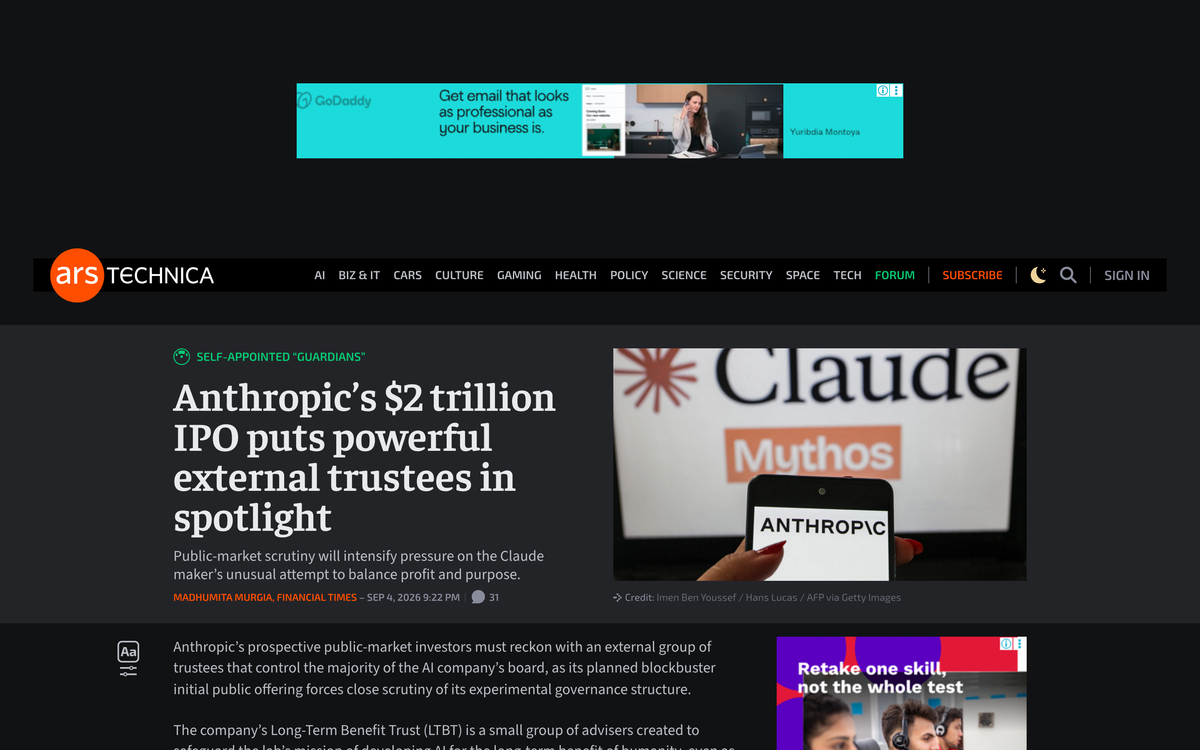
It got there. As of this week the trust has selected four of Anthropic's seven directors, including Netflix co-founder Reed Hastings and Novartis chief executive Vas Narasimhan. Three years after the Series C, roughly on the schedule Anthropic published, the phase in is complete.
The trust currently seats three of a possible five members. Neil Buddy Shah, who runs the Clinton Health Access Initiative, chairs it. Ben Bernanke, the former Federal Reserve chair, joined in July. Richard Fontaine runs the Center for a New American Security. A fourth, former California Supreme Court justice Mariano-Florentino Cuéllar, left after a few months and took a job as Anthropic's chief global affairs officer, which tells you something about how porous the line between trustee and executive turned out to be.
Two powers matter to anyone building on the platform. The first is board appointment, which is slow and indirect. The second is quieter and comes straight from the charter: the Class T stock carries protective provisions requiring the trust to receive notice of actions that could significantly alter the company. Per the FT, that notice covers the launch of new AI models. Trustees meet weekly among themselves and sit with leadership as often as every other week.
Read that again with a builder's eye. A three person body gets advance notice of every model launch, as a matter of corporate charter, not courtesy.
What has the trust actually done in three years?
Almost nothing visible, and that absence is the most useful fact in the whole story. The FT reports the trust has operated largely in an advisory capacity, that it has not attempted to draw red lines, and that it has never forced a significant trade-off between profit and purpose. Three years of weekly meetings produced no public veto.
There is exactly one intervention on the record. Trustees encouraged a limited rollout of Anthropic's Mythos cybersecurity model through something called the Glasswing Project. They were also involved in the company's dispute with the US government over automated weapons.
Look at the shape of that one action. It didn't stop a product. It didn't sacrifice revenue for mission in any way a shareholder would notice. It narrowed who could get access to a capability.
That's the part I think the coverage has backwards. The investor framing assumes the risk runs one direction: mission people restrain commerce, returns suffer. But the trust's only observable output so far is a decision about distribution. If you are an investor, a body with an unbroken record of deference is close to harmless. If you are an engineer with a roadmap that assumes a capability ships broadly, a body whose single recorded act was gating a rollout is the more relevant one.
I want to be fair about the limits here. One data point is one data point, and the reporting on Glasswing is thin. It's entirely possible the trustees have pushed back hard in private on things we'll never see. But I can only build against what is observable, and what is observable is an access decision.
Why does the failsafe threshold matter more than the trustees?
Because the trustees can be removed, and the number that governs their removal is the one moving part in this whole structure. The FT reports the trust has a built in kill switch: trustees can be fired with the support of 85% of shareholder voting power, and that supermajority "could change when the company goes public."
Here's what doesn't line up. Anthropic's 2023 document describes those failsafe provisions and then says something specific about their direction. Changes to the trust and its powers can be made without trustee consent if sufficiently large supermajorities of stockholders agree, and, in Anthropic's words, "the required supermajorities increase as the Trust's power phases in, on the theory that we'll have more experience and less need for iteration as time goes on, and the stakes will become higher."
The design says the threshold should be ratcheting up. The reporting says it's in play. And it is in play at precisely the moment the phase in finished and the stakes, by Anthropic's own reasoning, became highest.
Nobody in the coverage asked which direction the number moves. That's the question I'd want answered before I wrote another quarter of roadmap against a single provider, because the answer separates two very different structures wearing the same name. At 85% and rising, the trust is a real constraint that a hostile investor base can't easily unwind. At some lower post IPO number, it is an advisory committee with good branding, and the governance story that made Anthropic look different from every other lab is mostly a story.
I could be wrong about this. The threshold may well be going up, and a routine recapitalisation at IPO changes the share math without changing the intent. But "could change" in a story about public market pressure isn't a neutral phrase, and I'd rather be early on the question than surprised by the answer.
How does this compare to OpenAI's structure?
Anthropic's trust is generally read as the less fragile of the two experiments, mostly because it has a defined exit rather than an open ended standoff. OpenAI's November 2023 board crisis is the reference case here: a board tried to fire Sam Altman, lost the confidence of investors and employees, and was itself replaced within days, which was followed by a broader restructuring.
| Question a builder should ask | Anthropic LTBT | Conventional board |
|---|---|---|
| Who appoints the majority? | The trust, via Class T stock | Common stockholders |
| Do they own equity? | No, deliberately disinterested | Usually yes, often paid in stock |
| Advance notice of model launches? | Yes, a charter level protective provision | Board reporting, no special right |
| Can they be removed? | Yes, at 85% of voting power, which may change at IPO | Yes, by ordinary shareholder vote |
| Observable interventions to date | One, narrowing a model rollout | Not applicable |
| What you can read as a customer | Nothing, no published minutes | Nothing |
Harvard's Jesse Fried put the tension plainly in a July paper. Anthropic "raises funds from profit-seeking investors, then lets self-appointed individuals decide how much profit to sacrifice for the firm's mission," and "a deep and potentially unmanageable tension is thus hard-wired into the firms' corporate DNA." His advice to investors was to scrutinise both companies' arrangements and price shares accordingly.
Elizabeth Pollman, a corporate governance scholar at the University of Pennsylvania, framed the open question more carefully: "Will this governance structure work in the way intended, serving dual or more interests over time? That's the real challenge."
Neither of them is writing for engineers. But "price shares accordingly" has a build side equivalent, which is the rest of this post.
What does a governance decision look like from inside your codebase?
It never looks like governance. You won't get an email saying the trustees met and recommended a narrower rollout, and there aren't any minutes to subscribe to. What you get instead is an ordinary platform event: a capability that arrives behind an access request form, a model ID that quietly stops accepting new traffic, a rate tier that doesn't open up when you ask.
The Glasswing Project is the clean example. "Limited rollout" is a governance phrase on the way in and an allowlist on the way out. From my side of the API those are the same thing, and only one of them shows up in the docs.
This is why I have stopped treating provider announcements as the surface to watch. The deprecations page and the model versioning docs carry more operational signal than the newsroom does, because that's where a decision made upstairs finally becomes a string in my config.
None of this is unique to Anthropic, and it isn't an argument against building on Claude. I run production workloads on it, and in my experience a capability tier you cannot get into is indistinguishable from one that does not exist. It is an argument against pretending your provider's internal politics are somebody else's problem. The same logic applied when both major labs converged on 30 day retention windows and the real fight turned out to be over who can switch it off, and when Nvidia's acquisition moves quietly reshaped what sits in your serving stack.
What should you actually change this week?
Five things, and four of them take under an hour. None of them require you to have an opinion about corporate governance, which is the point, because a good architecture decision should survive being wrong about the politics.
Pin the model ID, not the alias. If your config says a floating pointer rather than a dated version, you have handed the upgrade decision to someone else's release calendar. A floating alias burned me on a Friday deploy once, and the diff that explained it lived in someone else's changelog. Pin it, then schedule the upgrade deliberately.
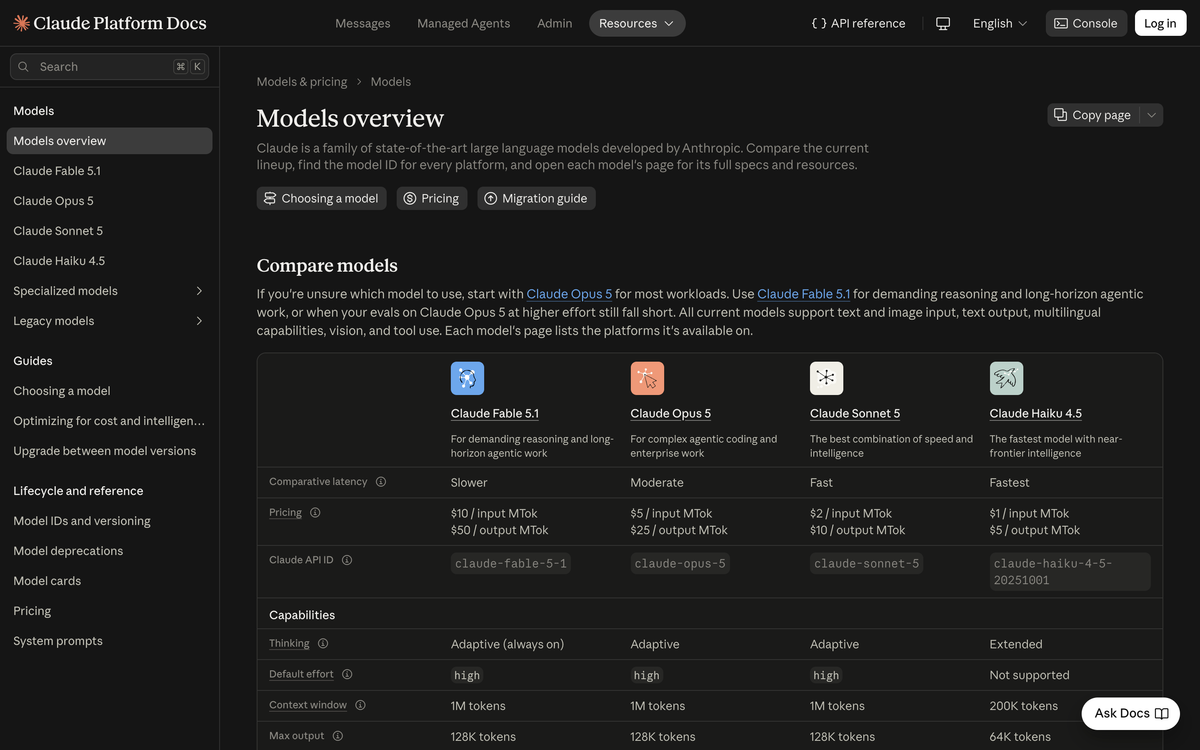
Run your eval suite against a second provider. Not to migrate, just to know the number. Anthropic publishes the prices on the page above, so the hedge is costed before you start: Claude Opus 5 runs $5 per million input tokens and $25 per million output, Sonnet 5 runs $2 and $10. Re-running a suite against a cheaper tier costs less than a single incident bridge call. This is the practical case for a routing layer, and it is why default settings in that layer are worth real money.
Write the one page fallback answer. If the capability tier you depend on closes to new customers next quarter, what ships? If nobody's written it down, the answer is nothing ships and you find out in a standup.
Treat access gated capability as unavailable for planning. Anything behind a request form is a maybe. I keep seeing teams put a maybe on a roadmap and call it a commitment, and Glasswing is a reminder that the gate can be a governance artefact rather than a capacity one.
Watch the deprecations page, not the newsroom. Put it in a feed reader. It's the only channel where these decisions arrive in a form you can act on.
If you want a structured way to find where your stack is single threaded on one provider, the AI readiness assessment walks through it, and the agent build pages cover how I set up fallbacks in practice.
The uncomfortable version of all this is that every serious agent deployment now carries a vendor governance risk that no architecture diagram shows. It sits next to the failure modes that show up when you run many agents on one codebase, and next to the safety limits you end up writing yourself when agents touch the physical world. The difference is that you can test for those. You cannot test for a trustee meeting.
Frequently asked questions
Does the Long-Term Benefit Trust own part of Anthropic?
No. The trust holds Class T stock, a special class whose power is electing and removing directors, and the FT reports the trust holds no equity in Anthropic. Anthropic designed the trustees to be financially disinterested so their judgment would not track the share price.
Can Anthropic's shareholders remove the trustees?
Yes. The FT reports a supermajority of 85% of shareholder voting power can dismiss them, and that this threshold could change when the company goes public. Anthropic's own 2023 document says the required supermajorities were designed to increase as the trust's power phased in.
Has the trust ever blocked an Anthropic product?
Not that has been reported. The FT says it has operated largely in an advisory capacity and has not drawn red lines. Its one documented intervention was encouraging a limited rollout of the Mythos cybersecurity model through the Glasswing Project.
When is the Anthropic IPO expected?
Reuters reported on 4 September 2026 that Anthropic is expected to begin marketing the offering in mid October at the earliest, with the listing completed days before the US midterm elections in November. The FT separately reported that Morgan Stanley and Goldman Sachs are close to being awarded top roles.
Should this change which model provider I use?
On its own, no. Governance structure is a weak signal compared to latency, cost and eval scores. It should change how much single provider concentration you are willing to carry, which is a different decision and a cheaper one to hedge.
Sources: Anthropic's Long-Term Benefit Trust announcement, including the Class T structure, the four year board majority schedule and the failsafe supermajority design. Anthropic (19 September 2023). Reporting on the trust's current membership, the four of seven board seats, the 85 percent removal threshold, the Glasswing rollout and the Fried and Pollman quotes, by Madhumita Murgia. Financial Times via Ars Technica (4 September 2026). IPO timing toward mid October and a listing before the US midterms, by Echo Wang. Reuters wire copy (4 September 2026). Underwriter roles: Financial Times (4 September 2026).
Published
September 6, 2026
Category
Trends & Insights
Jahanzaib Ahmed
AI Systems Engineer & Founder
AI Systems Engineer with 126 production systems shipped. I run AgenticMode AI (AI agents, RAG systems, voice AI) and ECOM PANDA (ecommerce agency). I build AI that works in the real world for businesses across home services, healthcare, ecommerce, SaaS, and real estate.
Want this built for your business? See The AI Audit, or browse the free tools and guides.
Related articles
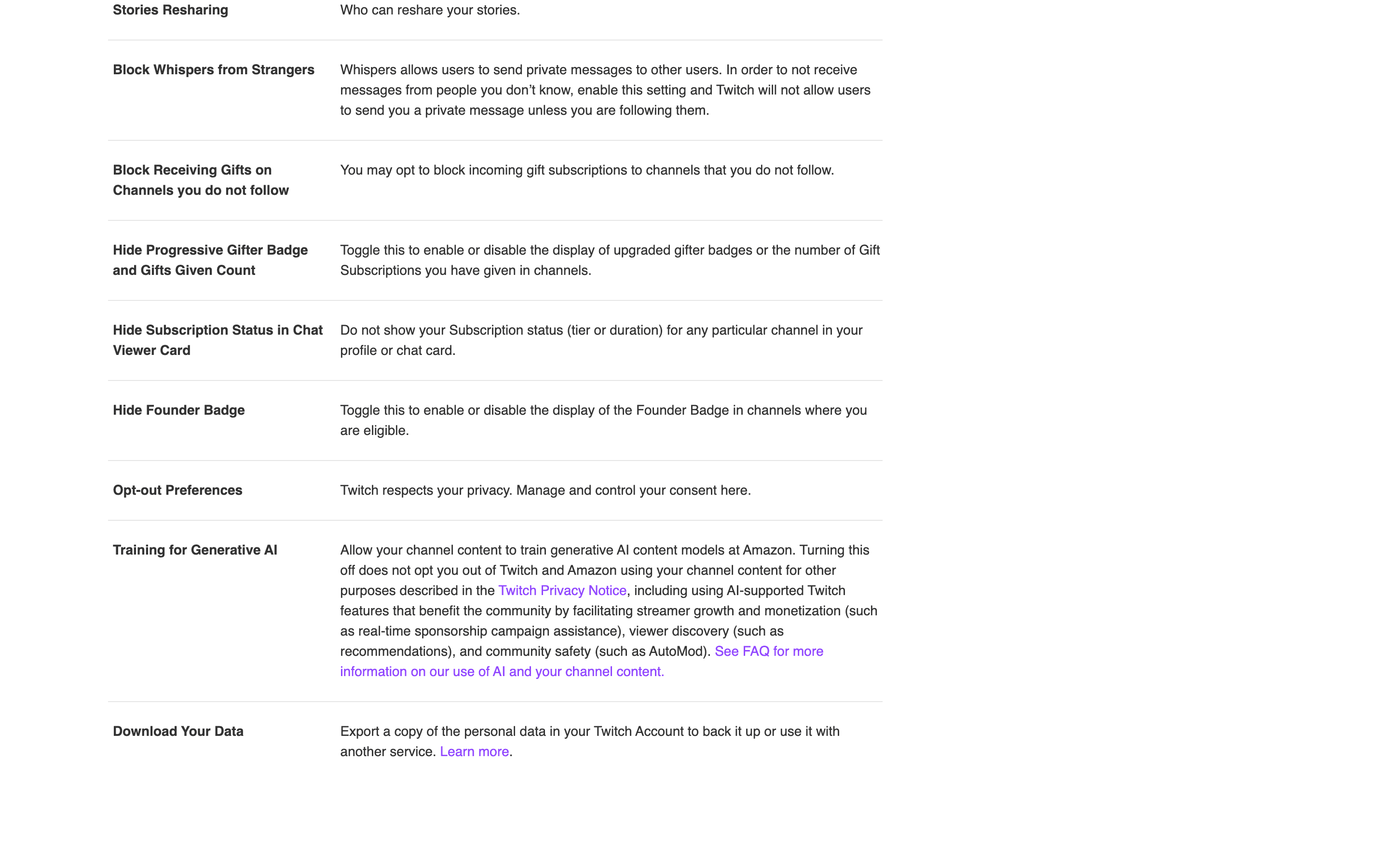
Twitch Says It Respects Your Consent. The AI Training Toggle Was Already On.
Twitch added a switch to stop Amazon training generative AI on your streams. Its own product chief explained on stream why it defaults to on, and that answer tells you what the setting is really for.
NewsTrends & InsightsAI Governance
The music publishers sued Anthropic over its data pipeline, not its model
A read of the actual 48 page complaint against Anthropic, why the DMCA count aimed at boilerplate removal reaches every retrieval pipeline, and what your provider indemnity quietly does not cover.
NewsAI AgentsAI Agents
CVE-2026-61500: Rejetto HFS Fixed in July, Attacked a Day After the Mythos Write Up
Horizon3 used Anthropic's Mythos to find a Math.random flaw in Rejetto HFS. The fix shipped July 13, the technical write up landed September 30, and attacks began the next day.
NewsTrends & InsightsAnthropic