AI Agent News in 2026: A Business Owner's Guide to What's Worth Tracking
A practitioner's filter on AI agent news in 2026: what mattered in April, where to follow it without drowning, and how to tell signal from hype.

Table of Contents
You need three sources to stay current on AI agents, not thirty: one daily digest, one official vendor blog, and one curated weekly review. Everything else is noise engineered for engagement. The filter I use is simple. If a headline does not contain a price, a benchmark, or a feature your team would actually use this quarter, skip it.
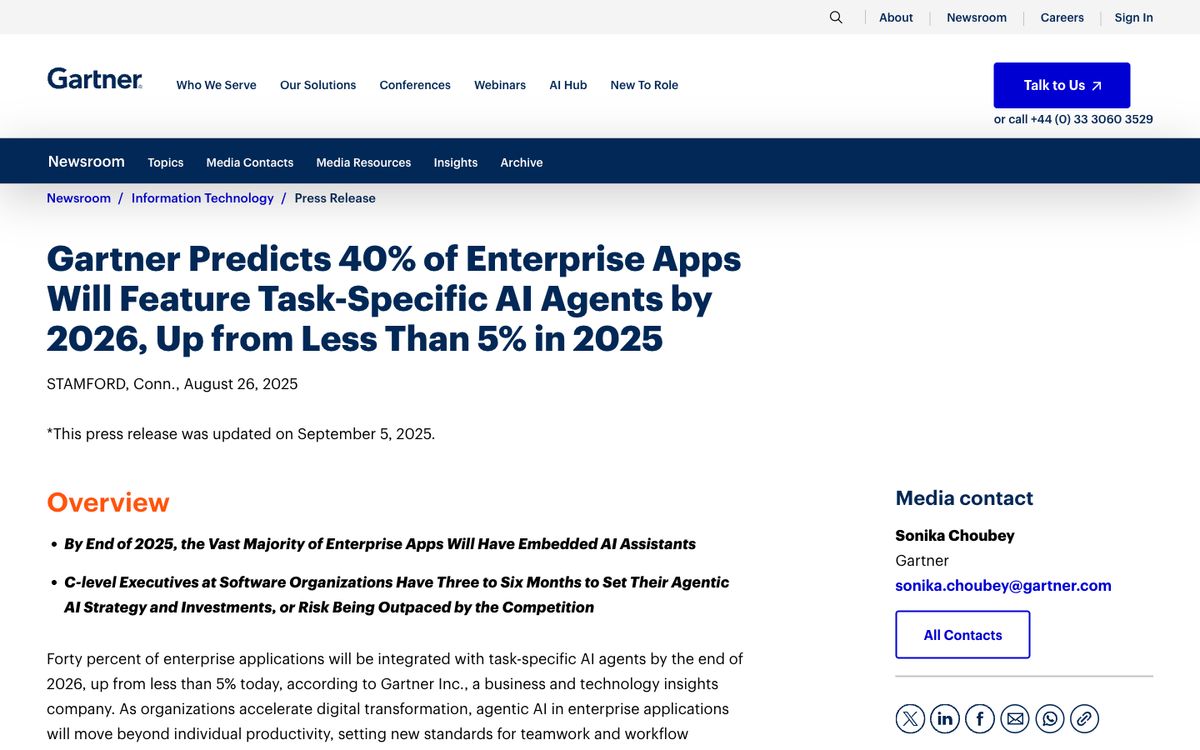
The two numbers that do matter point in opposite directions and explain the whole market. Gartner forecasts 40% of enterprise applications will carry task specific agents by the end of 2026, up from under 5% in 2025. Yet only 17% of organisations have actually deployed one, against 60% or more who plan to within two years. That gap between intent and production is where the money is sitting, and closing it has almost nothing to do with which model shipped this week.
Most "AI agent news" reads like a fire hose of hype. A new model drops on Monday, a launch every Tuesday, a benchmark on Wednesday, and by Friday a breathless thread tells you the world has changed again. If you run a business, that volume is useless. You need to know which announcements actually change what your company can do this quarter, and which ones are press releases dressed up as news.
I deploy AI agents for clients across the US, Canada, and Australia. I read the same firehose every morning, and I sort it into three buckets: matters now, matters in 90 days, and ignore. This guide walks you through the AI agent news that actually moved the needle in April 2026, where to follow it without losing your week to scrolling, and how to tell signal from noise as a non-technical owner.
What is AI agent news, and why is most of it noise?
An AI agent is software that can take a goal, plan a sequence of steps, call tools, and complete the goal without you holding its hand at every turn. AI agent news, then, is anything that meaningfully changes what those agents can do, what they cost, where they run, or how safely you can let one near your customers.
Three categories generate most of the volume:
- Model releases. A new flagship from OpenAI, Anthropic, Google, or Meta. These matter when capability changes the kind of work an agent can finish unattended. They do not matter when the headline is "now 3% better on a benchmark you will never run."
- Platform launches. A new place to build or deploy agents. Google Workspace Studio in April was a real launch. Most others are repackaged Zapier with a chatbot bolted on. (If you are weighing platforms, see my n8n vs Zapier 2026 verdict after 126 production systems.)
- Pricing changes. The least exciting category and often the most important. When Anthropic dropped Claude Managed Agents at $0.08 per session-hour, that single line item changed the math on a category of agent deployments overnight.
If you are running a 12-person law firm in Austin or a dental group in Brisbane, you do not need to read every category. You need to know what changed in the second and third buckets, because that is what determines whether the agent you deploy this quarter pays for itself or burns you.
What happened in April 2026 that business owners should know about?
Four announcements this month change what a small or mid-size business can deploy without a dedicated AI team. I am skipping the model-leaderboard noise on purpose.
Google Workspace Studio (April 22)
Google launched a no-code platform that lets non-technical users build agents that operate inside Gmail, Docs, Sheets, Drive, Meet, and Chat. You describe what you want in plain English, and Studio assembles the agent. For any business already on Google Workspace, this collapses the build cost of internal automations from $5,000 to $50,000 down to a few hours of in-house configuration. If your team already lives in Google Workspace, this is the single most consequential release of the month. (Related: Google's $40B Anthropic investment and what it means for workflow automation.)
OpenAI GPT-5.5 with agent mode in ChatGPT (April 24)
OpenAI shipped GPT-5.5 with stronger tool use and meaningfully better reliability on multi-step tasks. The interesting part is delivery: agent mode is now a dropdown in regular ChatGPT for Pro, Plus, and Team users. You do not have to wire up an agent framework. The capability ships inside the chat interface your team already uses. Output pricing landed at $30 per million tokens, which is steep, so I still default clients to Sonnet 4.6 or GPT-5.4 mini for production work and reserve GPT-5.5 for hard reasoning steps.
Anthropic Claude Managed Agents
Anthropic launched a managed runtime priced at $0.08 per session-hour plus tokens. That number sounds technical, but the practical translation is simple: you can now deploy a long-running Claude agent without standing up your own sandboxed compute or session-state infrastructure. For a typical customer-support agent that handles 200 sessions a day at a 4-minute average, that is roughly $32 per month in runtime fees. A year ago, the equivalent setup cost $300 to $800 per month in AWS plumbing.
HubSpot Prospecting Agent
HubSpot priced its new prospecting agent at $1 per qualified lead and $0.50 per resolved support conversation. That is a real shift. You only pay when the agent does something useful. Early customers are reporting 2x better response rates than the industry average. The shift from per-seat to per-outcome pricing is spreading; expect more vendors to follow this quarter.
How has AI agent capability actually changed in 2026?
Here is the practitioner's view. In April 2025, an AI agent could draft an email, look something up, summarize a document. It could not reliably finish a multi-step workflow without a human checking each step. In April 2026, that has flipped for a specific shape of task.
The shape that works today: a clearly bounded process with named tools, a finite number of states, and a clear stopping condition. Customer-support triage. Invoice classification. Lead qualification with a CRM write-back. Calendar booking with conflict resolution. Internal knowledge lookup with a citation. These are running unattended at clients of mine right now.
The shape that still does not work reliably: open-ended creative judgment, anything requiring access to systems with poorly documented APIs, anything where the cost of a wrong action is high and rolling back is expensive. I do not let agents touch payroll, contracts, or anything sending external email without a human approval step.
According to Deloitte's 2026 research, 30% of surveyed organizations are exploring agentic options and 38% are piloting solutions, but only 14% have deployments ready to ship and 11% are actively running them in production. The gap between piloting and production is where most agents die. The reason is almost never the model. It is the absence of governance, evaluation, and clear ownership when the agent makes a mistake.
Where should I follow AI agent news without drowning in it?
You do not need ten sources. You need three: a daily digest, one vendor blog, and one curated weekly. Skip everything else.
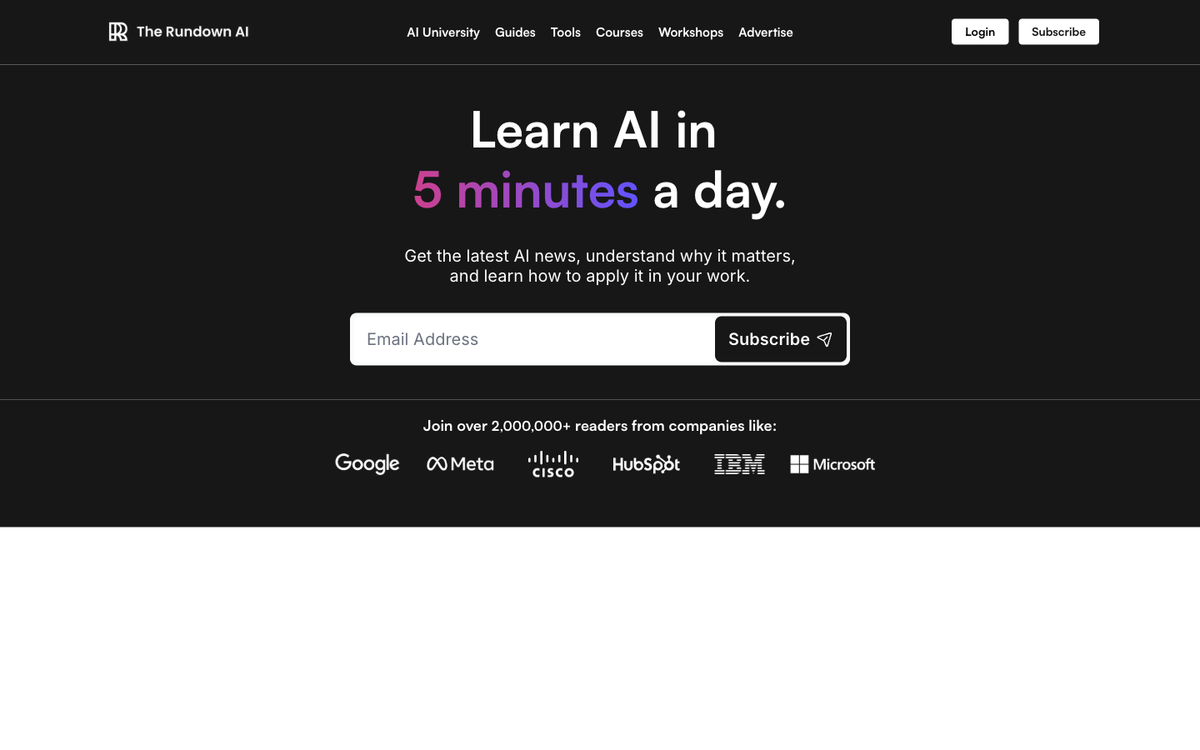
Daily digest: The Rundown AI
The Rundown sends a 5-minute daily email with the announcements that matter, ranked. They have over two million subscribers for a reason. The format trains you to skim quickly and surface the one or two items per day that affect your business.
Vendor blog: pick one
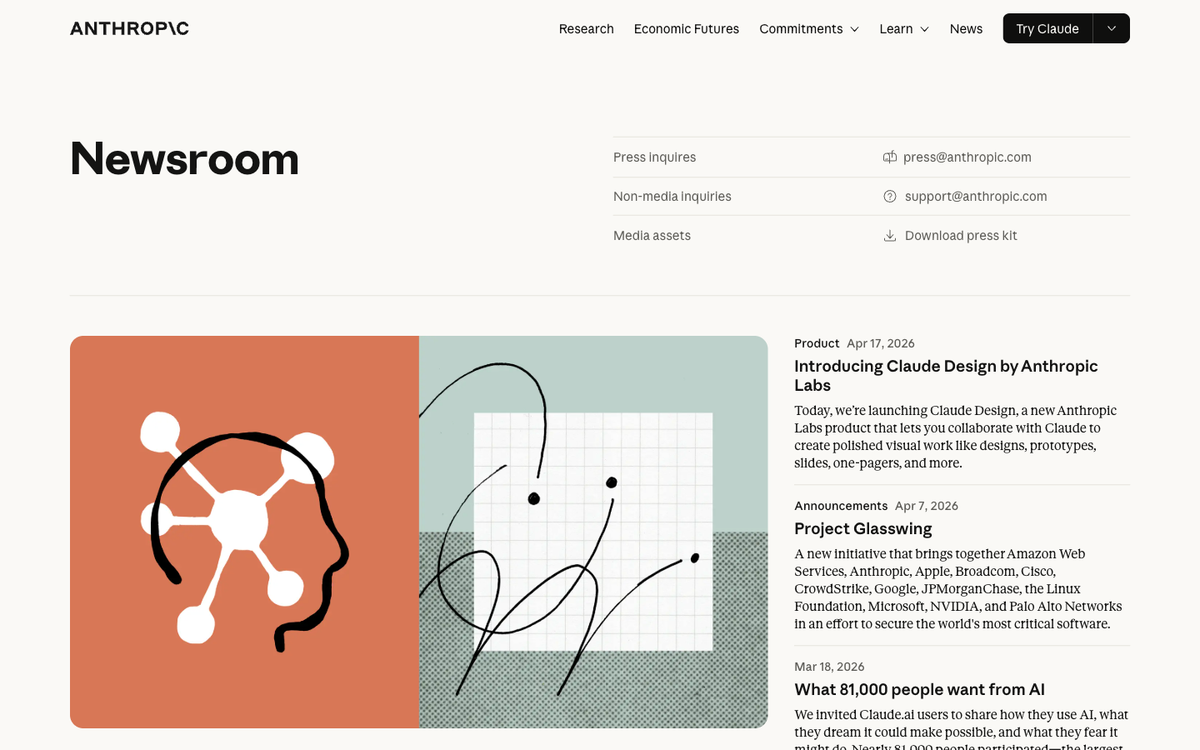
You only need to follow one frontier-lab blog. I follow Anthropic because that is the model my deployments lean on. If you are an OpenAI shop, follow theirs. If you are committed to the Google Workspace stack, follow Google AI. The point is one source, not three. The labs cross-reference each other, and the secondary coverage is everywhere.
Weekly curator
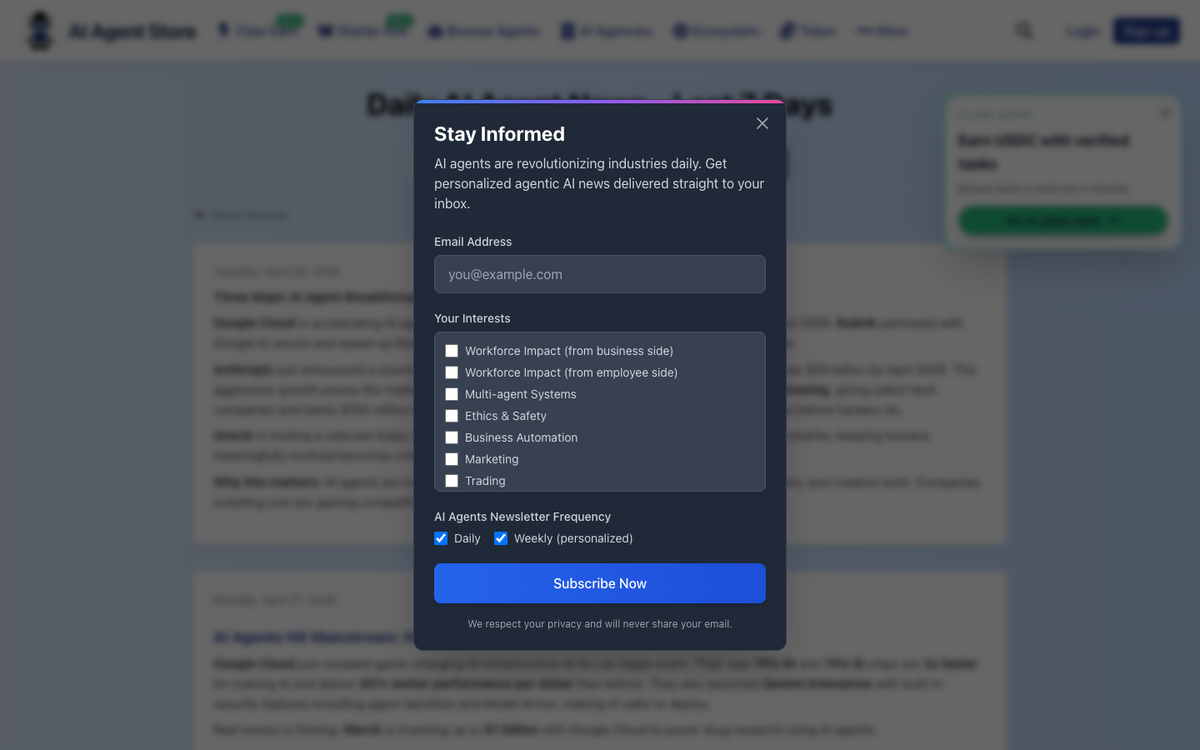
A curated weekly review pulls the firehose into a digestible Sunday read. AI Agent Store publishes a clean weekly roundup. My own /ai-agent-news feed is filtered specifically for owner-relevant news. Pick whichever voice matches yours and stick with it.
Where to follow AI agent news: a quick comparison
Three sources cover everything an owner needs to track. Pick one from each tier.
| Source | Cadence | Best for | Cost | Skip if |
|---|---|---|---|---|
| The Rundown AI | Daily, 5 min | Tactical, "what shipped today" | Free | You only have 15 min/week |
| Anthropic / OpenAI / Google blog | Weekly, varies | Authoritative model and pricing announcements | Free | You are not deploying their model |
| AI Agent Store weekly | Weekly, 10 min | Strategic, agent-specific roundup | Free | You already read 2 daily digests |
| Latent Space | Weekly, deep | Builders, technical depth | Free | You are non-technical |
| Alpha Signal | Daily, 5 min | Engineers and applied AI teams | Free | You want strategic, not technical |
| jahanzaib.ai /ai-agent-news | Continuous, filtered | Owner-relevant news only | Free | You prefer mainstream sources |
When does AI agent news actually matter for my business?
News matters when it changes one of three things in your environment.
- Capability. A model release that pushes a workflow from "needs human review" to "runs unattended." If your support team currently handles 60 tickets a day and 80% are in five well-known categories, a new agent that can resolve those five categories at 90% accuracy changes your headcount math this quarter.
- Cost. A pricing drop that flips a project from "interesting but not yet" to "deploy this month." Anthropic's Managed Agents pricing did exactly that for one of my clients running an after-hours scheduling agent. We were waiting for the runtime cost to drop below their per-call SMS spend. April was the month.
- Risk. A new safety, governance, or compliance feature that reduces what your agent could go wrong with. Bedrock Guardrails getting better PII redaction, for example, changed what we could let an agent do for healthcare clients.
If a piece of news does not change capability, cost, or risk for your specific stack, it is entertainment. Treat it that way. Read it on the train, not in your strategy meeting.
When is AI agent news NOT relevant to my business?
Most of it. Here is what to skip.
Benchmark wars. New model is 4% better on MMLU or HumanEval. Unless you are training your own model, this is irrelevant. The benchmarks measure narrow capabilities that may or may not correlate with your workflow.
Funding rounds. Company X raised $300M at a $4B valuation. This tells you nothing about whether their product solves your problem.
Demo videos. A polished 90-second video where an agent buys plane tickets and books restaurants. Demos are demos. The same agent fails 3 out of 10 times in production. Wait for the case study.
Threadboi takes. A 12-tweet thread declaring "AI agents will replace all SaaS." Thoughtful, sometimes correct, never actionable in the next 90 days.
If you spend more than 30 minutes a day reading AI news, you are over-allocated. The owners I work with who get the most out of this space spend roughly 15 minutes a day on it and the rest of their time deploying.
A real client scenario from this month
One of my clients runs a 22-person property management company in Calgary. They handle around 400 inbound tenant inquiries a week across email, voicemail, and a web form. Until April, three of their staff spent half their day routing those inquiries: maintenance versus billing versus lease renewal versus emergency.
When Anthropic Managed Agents shipped, we ran the math. A Claude Sonnet 4.6 agent classifying inbound inquiries, drafting a response, and routing to the right person costs roughly $0.04 per inquiry, all-in. At 400 inquiries a week, that is $64 a month. The three staffers were spending around 60 hours a week on the routing work, valued at roughly $9,000 a month in labor.
We did not eliminate the staff. We redirected them to higher-value tenant retention work. The agent handles routing, drafts the first response, and flags anything ambiguous for human review. Three weeks in, response time dropped from 4 hours to 12 minutes for the 80% of inquiries the agent handles end-to-end. The owner reads exactly one piece of AI news a day now: my Sunday weekly digest. He does not need to read more.
That client decision was directly downstream of three news items: the Managed Agents pricing announcement, a Sonnet capability update in February, and a Bedrock Guardrails PII feature in March. None of those were front-page news. All three changed his cost model. That is the difference between news that matters and news that is decoration.
Is this right for your business? A 3-question decision gate
Three questions, in this order.
Do you have a process that runs more than 20 times a week with the same shape every time? Customer support tickets, invoice approvals, lead qualification, appointment booking, internal knowledge lookups. If yes, an agent is probably worth a 4-week pilot. If no, you do not need agent news yet. You need to build a process worth automating.
Can you describe success in measurable terms? "Reduce response time on tier-1 support to under 15 minutes" is measurable. "Make support better" is not. Agents need a clear win condition to build against and to measure against. If you cannot articulate the win condition, no amount of news will help you ship.
Do you have one person on the team who can own the deployment? Not the agent itself, but the deployment: monitoring its outputs the first month, defining the escalation rules, handling the inevitable edge cases. That person does not need to be technical, but they need to own it. If nobody owns the deployment, no agent will survive past week three.
If all three answers are yes, you should be reading agent news with intent: looking for the specific release that unlocks your specific workflow. If any answer is no, fix that first.
If you want a structured way to assess this, my AI readiness quiz walks through 12 questions and produces a tier rating in about four minutes. It is also how I screen prospects before a discovery call, so the questions are the same ones I use professionally.
Frequently asked questions
What is AI agent news?
AI agent news is coverage of new AI agent models, platforms, pricing, safety features, and use cases. It includes releases from labs like OpenAI, Anthropic, and Google, no-code platforms for building agents, frameworks like LangGraph or n8n, and benchmarks measuring agent reliability. The useful subset for business owners is the news that changes capability, cost, or risk for the specific workflows you want to automate.
How often does AI agent news come out?
Major releases happen weekly. Minor updates daily. Benchmarks every few weeks. Most of it is not relevant to any single business. A 5-minute daily digest plus one weekly curated review covers everything an owner needs to track without losing their week to it.
Where can I follow AI agent news for free?
The Rundown AI delivers a free 5-minute daily email. Vendor blogs from Anthropic, OpenAI, and Google are free. AI Agent Store and curated feeds like /ai-agent-news on jahanzaib.ai are free. You do not need any paid newsletters to stay current at the strategic level.
What was the biggest AI agent news in April 2026?
Four announcements moved the needle for small and mid-size businesses: Google Workspace Studio (no-code agents inside Gmail, Docs, Sheets), OpenAI GPT-5.5 with agent mode shipped inside ChatGPT, Anthropic Claude Managed Agents at $0.08 per session-hour, and HubSpot Prospecting Agent priced per qualified lead. Each one changed deployment economics for a specific category of business workflow.
How many businesses are actually using AI agents?
According to Gartner's 2026 CIO Survey, 17% of organizations have deployed AI agents to date, with more than 60% planning to within two years. Deloitte's research shows 11% of surveyed organizations are running agents in production, 14% are deployment-ready, 38% are piloting, and 30% are exploring. The intent-to-production gap is where competitive advantage lives in 2026.
Should small businesses care about AI agent news?
Yes, but selectively. The releases that matter most for small business in 2026 are pricing changes (which determine ROI) and no-code platform launches (which determine whether you can deploy without engineering). Skip the model leaderboard wars and the funding round announcements. Read pricing and platform news closely.
What is the difference between AI agent news and AI news in general?
AI news covers everything: image generation, voice cloning, content moderation, research papers, regulatory updates. AI agent news is the narrow subset focused on autonomous software that can plan and execute multi-step tasks. For business automation specifically, agent news is what matters; the rest is mostly context.
How do I tell which AI agent news is hype versus real?
Apply three filters. Does the announcement include a specific price? Does it include a benchmark or measured result? Does it describe a feature your team would actually use this quarter? If the answer to any one of those is yes, read the full piece. If the answer to all three is no, skip it. The hype-to-signal ratio in this space is high, and the filters matter.
Stats and quotes are sourced from Gartner's August 2025 press release on agentic AI in enterprise apps, Deloitte's 2026 Tech Trends report on agentic AI strategy, and reporting from The Rundown AI and AI Agent Store. Anushree Verma quote from the Gartner press release. Pricing and capability claims for GPT-5.5, Claude Managed Agents, Workspace Studio, and HubSpot Prospecting Agent reflect April 2026 vendor announcements.
What to do next
If you are ready to move from reading agent news to deploying an agent, start with my AI readiness quiz. Twelve questions, four minutes, real tier rating. If you want the curated stream of news without doing the filtering yourself, bookmark /ai-agent-news. If you want to talk through whether one of this month's releases changes your specific stack, my contact page has a calendar link.
The owners winning with AI agents in 2026 are not the ones reading the most news. They are the ones reading the right 15 minutes a day, deploying one bounded workflow at a time, and treating everything else as decoration.
Last updated
July 26, 2026
Category
Trends & Insights
Jahanzaib Ahmed
AI Systems Engineer & Founder
AI Systems Engineer with 126 production systems shipped. I run AgenticMode AI (AI agents, RAG systems, voice AI) and ECOM PANDA (ecommerce agency). I build AI that works in the real world for businesses across home services, healthcare, ecommerce, SaaS, and real estate.
Want this built for your business? See The AI Audit, or browse the free tools and guides.
Related articles

Agentic AI vs Generative AI: A Builder's Decision Guide for 2026
Stop asking which is better. Pick the right shape for your workflow with a 5-question decision framework, real costs, and a story from January where I rebuilt a $80K agentic project as a $9.5K generative one.
ComparisonTrends & InsightsAgentic AI
OpenClaw's Security Crisis: What 346,000 Stars and 135,000 Exposed Instances Teach Us About AI Agent Security
OpenClaw, the fastest-growing open source AI agent with 346,000 GitHub stars, triggered the first major AI agent security crisis of 2026. Nine CVEs in four days, 135,000 exposed instances, and 12% of the skill marketplace compromised. Here is what happened and how to stay safe.
NewsTrends & InsightsOpenClaw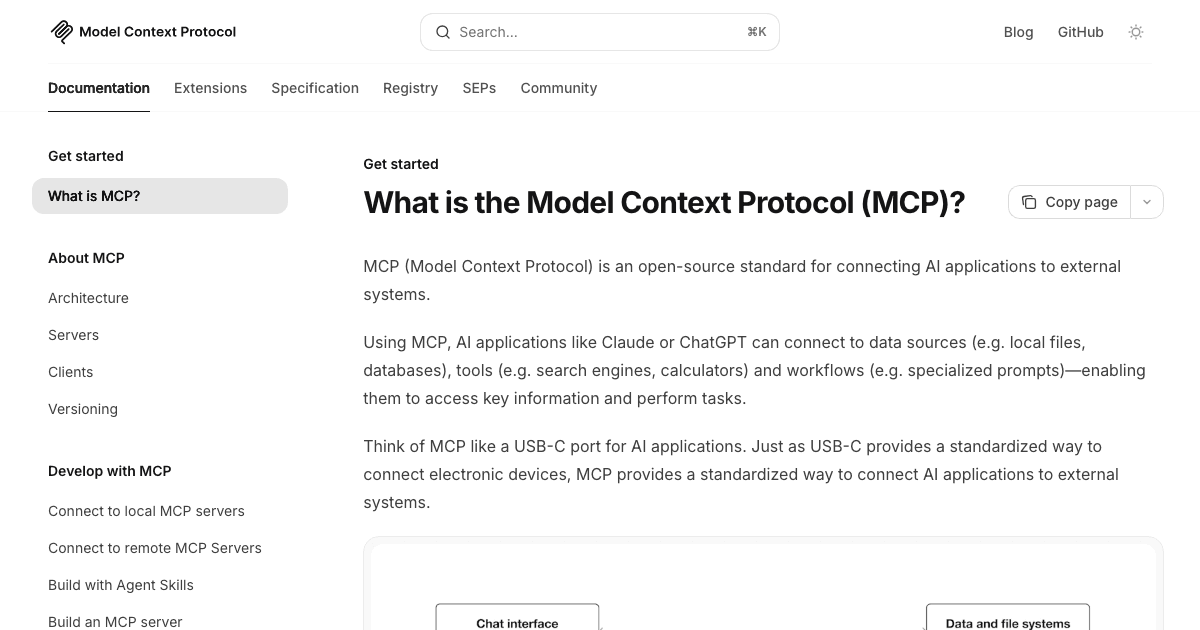
MCP Just Hit 97 Million Installs. The Dev Summit Showed What Comes Next for AI Agents.
The Model Context Protocol crossed 97 million monthly installs in March 2026. Two weeks later, hundreds of engineers gathered in New York for the first ever MCP Dev Summit. Here is what I took away from both events and what it means if you are building AI agents right now.
GuideTrends & InsightsMCP