What Is Agentic AI, Really? An Honest 2026 Guide for Business Owners
What agentic AI actually is, how it differs from generative AI and chatbots, what it costs in 2026, and an honest checklist for when it's the right fit for your business.

Table of Contents
Agentic AI is software that decides and acts toward a goal you set. Generative AI creates something when you prompt it. That is the entire distinction, and it is the one most vendors blur. The test that cuts through a demo is a single question: which tools can this system call without my approval? If the answer is none, you are looking at a chatbot with extra steps.
Gartner expects 40% of enterprise apps to carry task specific agents by the end of 2026, up from under 5% in 2025, and separately expects more than 40% of agentic projects to be cancelled by 2027 on cost, governance, or unclear value. Both are true at once, which is the honest shape of this market. Real costs start around $4,000 a month for a small production agent and scale with traffic. Agentic is right for a multi step process with clear success criteria, and wrong when you want creative or one shot output.
Two weeks ago I sat across from an operations director at an accounting firm in Toronto who had just signed a $40,000 annual contract for what the vendor called an "agentic AI platform." When she walked me through the demo, I realized the tool was a chatbot. A good one, but a chatbot. The salesperson had used the word agentic six times in thirty minutes. She paid for outcomes. She got a fancy autocomplete.
This confusion is everywhere right now, so let me cut through it. The honest answer to what is agentic AI is short. Agentic AI is software that makes decisions and takes actions on its own to finish a goal you give it. That is the entire definition. If a tool waits for you to type a prompt and then writes a reply, it is generative AI. If a tool takes one instruction and then plans, calls other software, checks results, and adjusts until the job is actually done, it is agentic AI. The difference is who does the work between the goal and the outcome.
I've shipped 126 production AI systems across small businesses, accounting firms, law practices, ecommerce, and home services since 2022. About 30 of those involved real agents. The rest were chatbots, automations, or RAG search dressed up as something more. So I want to give you the honest version of this topic, not the vendor pitch.
What is agentic AI in plain English?
An agentic AI system is software that takes a goal, breaks it into steps, decides what to do at each step, calls other software to do the work, checks if it worked, and tries something else if it didn't. It runs in a loop until the goal is met or it gives up. You set the destination. It picks the route.
The simplest mental model I use with clients: generative AI gives you a draft, agentic AI gives you a finished task. A generative tool can write you a draft refund response. An agentic tool can read the customer's order, check the return policy, verify the item is eligible, issue the refund through Stripe, send the confirmation email, and update the support ticket, all from one input like "handle ticket 4421."
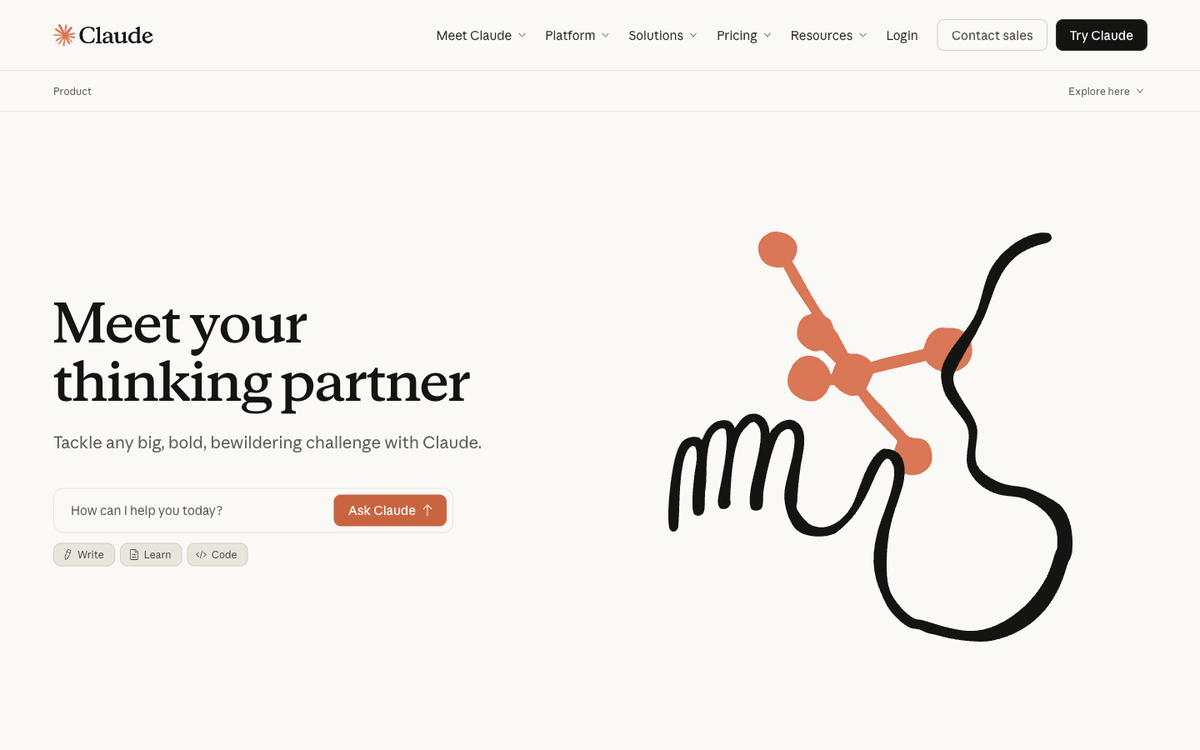
The MIT Sloan School describes agentic AI as systems that "perceive, reason, and act on their own" with the ability to "pursue complex goals with limited supervision" (MIT Sloan, 2025). That academic framing matters because it captures the loop. Perception means reading context, like a database row or a customer message. Reasoning means deciding what to do next. Action means actually doing it, usually by calling a tool or API.
If you want the deeper technical comparison, I wrote a full decision guide for agentic AI vs generative AI that covers cost, control, and a five question framework for picking between them.
What agentic AI is not
This is where the marketing gets messy. Three things keep getting called agentic that are not.
A chatbot is not an agent. A chatbot answers questions. Even a smart one with retrieval, like a RAG chatbot, is reactive. It waits for input, responds, and waits again. If the only thing your "agent" does is answer questions in a chat window, it's a chatbot. Useful. Just not the same thing.
An automation is not an agent. Zapier, Make, n8n, and the workflow tools are if this then that pipelines. They follow a fixed path. Agents pick the path at runtime. If the workflow always runs the same sequence regardless of what it finds, it's an automation. I built a guide on when to use AI agents vs automation because picking wrong here is the most expensive mistake I see.
A copilot is not an agent. Copilots suggest. Agents act. GitHub Copilot writes code that you accept or reject. An agent writes the code, runs the tests, checks the output, and deploys if everything passes. The act part is the line.
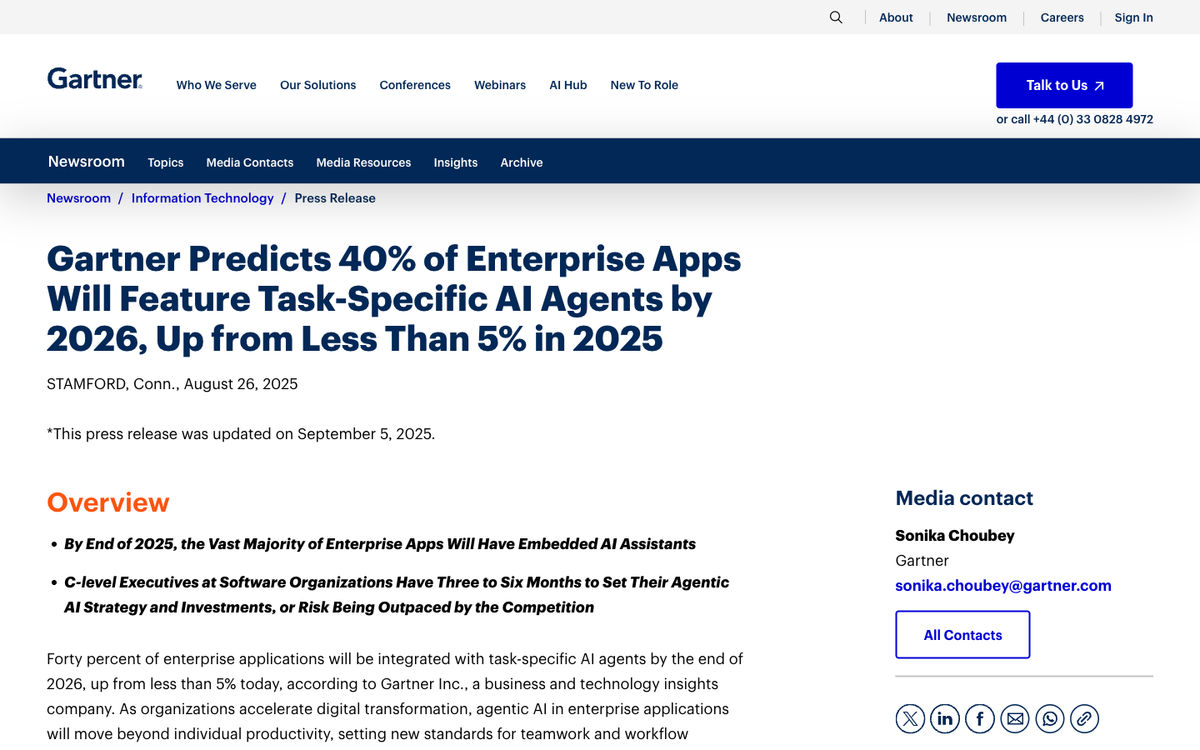
Gartner calls this confusion "agentwashing" and says by end of 2025 most enterprise apps will have AI assistants embedded, while only a fraction will be true task specific agents (Gartner, August 2025). When you're shopping for an "agentic" product, ask the vendor exactly what actions it can take without you clicking approve. If the answer is "it suggests next steps," you're buying a copilot, not an agent.
How an AI agent actually works under the hood
You don't need to be technical to follow this, and it'll make you a much better buyer.
An agent has four parts. A brain (a large language model like Claude or GPT). A set of tools it can call (database queries, APIs, code execution, web browsing, email send, calendar booking). A memory (short term for this task, long term across sessions). And a loop that runs: observe state, think about next step, take action, check result, repeat.
Here's a real example from a client. A property management company wanted to automate tenant maintenance requests. The agent receives the tenant's text message. It reads the unit history (memory). It decides this is a plumbing issue based on the description (reasoning). It checks the on call vendor list and the tenant's lease for who pays (tool calls). It books the vendor through their scheduling API (action). It texts the tenant the appointment time (action). It updates the property management system (action). All from one inbound text.
That's six discrete steps. None of them were scripted in advance. The agent picked each one based on what it saw. That is what makes it agentic. The same input next time might lead to a different sequence if the context is different, like the tenant having an open balance or the vendor being unavailable.
The framework most teams use to build this in production is LangGraph by LangChain, which gives you the structure for the loop and the state management. There are alternatives, including OpenAI's Agents SDK, CrewAI, and Anthropic's tool use API. They all do the same fundamental thing: orchestrate the perceive, reason, act cycle reliably.
What agentic AI looks like in real businesses right now
The most public case study is Klarna. Their AI agent for customer service has handled the workload of 853 employees and saved an estimated $60 million annually, with average resolution time dropping from 11 minutes to under 2 minutes. That's a customer service agent: read ticket, check order, verify policy, take the action the customer needs, close the ticket.
From my own work in 2025 and 2026, here are five patterns I keep seeing:
- Customer service agents for ecommerce. Refund requests, shipping questions, return processing. Average ROI in 2 to 6 weeks. About $3,000 to $8,000 to build, $1,500 to $4,000 monthly to run.
- Lead qualification agents for service businesses. Ingest a form fill, enrich the company, score the lead, route to the right rep with a briefing, follow up if the rep doesn't respond. About $5,000 to $12,000 to build.
- Internal research agents for accounting and legal. Pull case law or tax citations, summarize, draft a position. The biggest ROI lever I've seen, but the highest accuracy bar.
- Booking and scheduling agents for home services. Tenant maintenance, dental rebookings, contractor estimates. The work I described above with the property management company.
- Document processing agents for any business that handles invoices, contracts, or applications. Read PDF, extract fields, validate against rules, route for approval, file in the system.
What these have in common: clear inputs, clear success criteria, and a finite set of tools the agent can call. That last part is the difference between an agent that ships and one that stays in pilot forever.
When agentic AI is the right choice for your business
Use this checklist. If you can answer yes to four or more, you have a real agent use case.
- Is the work multi step, with three or more discrete actions per task?
- Are the steps not always the same? Does context change what should happen next?
- Does each task end with a clear, verifiable outcome (refund issued, appointment booked, ticket closed)?
- Do you do this work at least 50 times a week?
- Is there an API or integration available for every system the work touches?
- Is the cost of getting it wrong recoverable (not a regulated decision, not a $500K+ contract)?
If you said yes to four or more, an agent likely pays back inside a quarter. If you said yes to three or fewer, you probably want a workflow automation or a chatbot, not an agent.
When agentic AI is the wrong choice
I lose deals when I tell prospects this honestly, and I tell them anyway.
Skip agents when the work is creative or one off. Writing a brand voice doc, designing a logo, drafting an opinion piece. These are generative AI tasks. An agent loop adds latency and cost without improving the output.
Skip agents when the cost of error is high and the action is irreversible. Anything involving money over a few hundred dollars, anything legally binding, anything affecting healthcare decisions. Build a copilot that drafts and a human that approves. Agents work great as research assistants in regulated fields. They cause expensive problems when they have full action authority.
Skip agents when you don't have the tools or APIs. If your stack is mostly desktop software with no API, manual spreadsheets, or systems that require browser based clicks to operate, you're going to spend more on screen scraping infrastructure than you save in labor. Fix the integration story first.
Skip agents when you don't have volume. A one off task you do twice a quarter is not worth the build. The math only works at scale.
Gartner predicts more than 40% of agentic AI projects will be canceled by 2027 due to escalating costs, unclear business value, or inadequate risk controls. The cancellations will mostly come from people who skipped this section and built agents for the wrong problems.
What it actually costs to build an agentic AI system in 2026
Honest numbers, from real engagements I've shipped this year.
| Agent type | Build cost | Monthly run cost | Time to ROI |
|---|---|---|---|
| Customer service (ecommerce) | $3,000 to $8,000 | $1,500 to $4,000 | 2 to 6 weeks |
| Lead qualification | $5,000 to $12,000 | $2,000 to $5,000 | 1 to 3 months |
| Booking and scheduling | $6,000 to $15,000 | $2,500 to $6,000 | 2 to 4 months |
| Document processing | $8,000 to $20,000 | $3,000 to $8,000 | 3 to 6 months |
| Internal research (legal/accounting) | $15,000 to $40,000 | $4,000 to $12,000 | 4 to 9 months |
Monthly costs include LLM tokens, infrastructure, vector database if needed, and observability. They scale with traffic. A customer service agent running 5,000 tickets per month is on the high end. One running 500 tickets per month is on the low end.
I built a free tool that lets you plug your own numbers in: AI agent cost calculator. It models LLM choice, infrastructure, build approach, and ROI for any agent shape. Use it before any vendor conversation.
One number to push back on: any vendor quoting under $50 per month for a "production agent" is selling you a chatbot. The token costs alone for a real agent doing meaningful work in 2026 are usually $150 to $1,500 per month, before infrastructure.
How to start with agentic AI without burning money
Three steps, in order. Don't skip any of them.
Step 1: Pick one painful, repetitive process. The best first agent is the one you'd hire a junior person for if you had unlimited budget. Customer refund processing. New customer onboarding. Weekly competitor research. Lead qualification. The job has to be specific and have a clear definition of done.
Step 2: Document the steps a human takes today. Write the workflow out as 8 to 15 numbered steps. Note every system the human touches and what data flows between them. This document is the spec for the agent. Skipping this step is why so many agent projects fail. You can't automate a process you can't describe.
Step 3: Build the smallest possible version first. One use case. One agent. One success metric. Run it shadow mode (it suggests, a human approves) for two weeks. Measure where it gets things right and where it doesn't. Tune. Then turn on autonomous mode for the easy 60% of cases. Keep humans in the loop for the hard 40%. Expand from there.
If you want to know which use case is your highest ROI starting point, the AI readiness assessment walks you through 12 questions and gives you a tier and a specific recommendation in about 4 minutes. It's free and it's the same diagnostic I use on day one of paid engagements.
Frequently asked questions
What is agentic AI in simple terms?
Agentic AI is software that makes its own decisions to achieve a goal. You give it the outcome you want, like "process this refund" or "qualify this lead," and it figures out the steps, calls the right tools or APIs, checks the results, and finishes the job. Generative AI just generates content when you ask. Agentic AI generates outcomes.
What's the difference between agentic AI and generative AI?
Generative AI is reactive. It waits for a prompt, generates a response, and stops. Agentic AI is proactive. It takes a goal, plans a sequence of actions, calls tools to perform them, and adapts when something goes wrong. Most agentic systems use generative AI as their reasoning engine, so they're related, not opposed.
Is ChatGPT agentic AI?
The base ChatGPT chatbot is generative AI. ChatGPT with Agent Mode (which can browse, run code, and use tools autonomously) is agentic AI. The distinction is whether the system can take actions in the real world without waiting for the next user prompt. If it can, it's agentic. If it just talks back, it's generative.
How much does an agentic AI system cost in 2026?
Production agents in 2026 typically cost $3,000 to $40,000 to build and $1,500 to $12,000 per month to run, depending on complexity and traffic. Customer service agents are at the lower end. Internal research agents for regulated industries like legal or accounting are at the higher end. Plug your own numbers into the AI agent cost calculator linked above for a tailored estimate.
Will agentic AI replace employees?
Not the way most people think. In my work shipping these systems, agents replace tasks, not people. The Klarna case where one agent did the work of 853 employees is real, but those employees were doing a narrow task (tier one customer service). For most businesses, an agent handles the repetitive 60 to 80% of a process and your team handles the harder edge cases. Net effect is usually that the same team handles 3x to 10x the volume.
What are the risks of using agentic AI?
Three big ones. First, hallucination, where the agent confidently does the wrong thing. Mitigated with tool result validation and human approval gates on irreversible actions. Second, runaway cost, where the agent loops too long or calls expensive APIs too often. Mitigated with budget caps and observability. Third, prompt injection, where a malicious input tricks the agent into bad actions. Mitigated with input sanitization and limited tool scopes. None of these are unsolved. They just require thinking before you ship.
Can I build an agentic AI system myself?
If you have a software engineering team, yes. The frameworks (LangGraph, OpenAI Agents SDK, CrewAI, Anthropic tool use) are all production grade in 2026. If you don't have that team, working with someone who's shipped production agents is faster and cheaper than learning by doing. The first agent build is where most of the expensive lessons happen.
How do I know if my business is ready for agentic AI?
Three readiness signals: you have at least one process that runs more than 50 times a week, the systems involved have APIs or integrations, and you have a clear definition of what done looks like for each task. If you're missing any of those, fix that first. Run the AI readiness assessment for a structured diagnostic.
The honest answer to "should we use agentic AI"
Most businesses don't need an agent yet. They need cleaner data, better integrations, and one or two well placed automations. Agents shine when those foundations are already there and you have a high volume process with real complexity.
If you're not sure where you stand, take 4 minutes for the AI readiness assessment. It will tell you whether agents make sense for your situation right now or whether you should fix something else first. If you already know you want an agent built, see my packages or book a call. I'll tell you honestly whether it's worth the build.
The technology is real. The hype is wildly ahead of the reality. Use this guide to know which is which when the next vendor pitches you.
Agentic AI definitions and statistics in this article are sourced from Gartner's August 2025 enterprise apps forecast, the MIT Sloan agentic AI primer, IBM Think on agentic vs generative AI, and the OneReach 2026 adoption and ROI report. Cost ranges and case patterns are from my own engagements building 126 production AI systems since 2022.
Published
April 27, 2026
Category
Industry Guides
Jahanzaib Ahmed
AI Systems Engineer & Founder
AI Systems Engineer with 126 production systems shipped. I run AgenticMode AI (AI agents, RAG systems, voice AI) and ECOM PANDA (ecommerce agency). I build AI that works in the real world for businesses across home services, healthcare, ecommerce, SaaS, and real estate.
Want this built for your business? See AI Agent Development, or browse the free tools and guides.
Related articles
What Is an AI Agent? A Plain English Definition for Small Business Owners and SaaS Founders
A practical AI agent definition with the four part architecture I use across 126 production builds, real cost ranges, a Melbourne client case, and the questions to ask before you spend a dollar.
GuideIndustry GuidesAI Agent Definition
Agentic AI Updates 2026: A Business Owner's Cheat Sheet for What Actually Matters
The agentic AI updates that matter from April 2026, translated for non-technical business owners. What changed, what's hype, and what to do this quarter.
GuideIndustry GuidesAgentic AI Updates
Agentic AI vs Generative AI: A Builder's Decision Guide for 2026
Stop asking which is better. Pick the right shape for your workflow with a 5-question decision framework, real costs, and a story from January where I rebuilt a $80K agentic project as a $9.5K generative one.
ComparisonTrends & InsightsAgentic AI