How Much Does a Virtual Receptionist Cost in 2026? Real Pricing After 40+ Deployments
Real US virtual receptionist pricing in 2026: $25-$1,400/month for human, AI, or hybrid setups. After 40+ deployments, here is what each tier actually delivers.

Table of Contents
The honest answer to what a virtual receptionist costs is that it depends which kind, because the range runs from $25 a month to well over $1,400. Human services in the US land at $129 to $1,400 a month for typical small business volume. An in house hire costs $2,900 to $4,100 a month once benefits, taxes, and PTO are loaded. AI receptionists run $25 to $299 a month for unlimited or near unlimited calls.
The number that catches people is not on the pricing page. It is the per minute overage on human plans, which can double a bill in a busy month and is precisely when you least want a surprise. Most businesses I work with end up hybrid rather than choosing: AI takes after hours and overflow, humans take the complex and high value calls, and the overage problem disappears because the volume spikes never reach the metered plan.
Every week, a business owner asks me how much does a virtual receptionist cost, and almost every answer I give starts with the same question back: which kind? Because the price tag for a US virtual receptionist in 2026 swings from $25 a month to over $4,000, and the gap is mostly about whether a human, an AI, or both are picking up the phone.
I have shipped 40+ voice agent deployments and reviewed pricing pages from every major answering service my clients have considered. This is the breakdown I wish someone had handed me three years ago.
What Does a Virtual Receptionist Actually Cost in 2026?
A US virtual receptionist costs $129 to $1,400 per month for a typical small business with 50 to 500 minutes of monthly call volume. AI virtual receptionists run $25 to $299 per month for unlimited or near-unlimited calls. A full-time in-house hire fully loaded runs $2,900 to $4,100 per month.
That is the answer in three sentences. Now here is what nobody tells you on the pricing page.
The plan you sign up for is rarely the bill you pay. Most human virtual receptionist services price the base plan to look approachable, then charge $1.50 to $3.00 per minute the moment you cross your included minutes. I had a client running a Phoenix HVAC company sign up for Ruby's $319 plan and pay $874 the first month because their summer call volume blew through the included 100 minutes by week two. That is not the receptionist's fault, it is just how per-minute pricing works.
If you want a 30-minute discovery call to map your real call volume against pricing tiers before you commit, book one here. I will tell you whether AI, human, or hybrid makes sense for your specific call pattern.
How Much Does a Human Virtual Receptionist Service Cost?
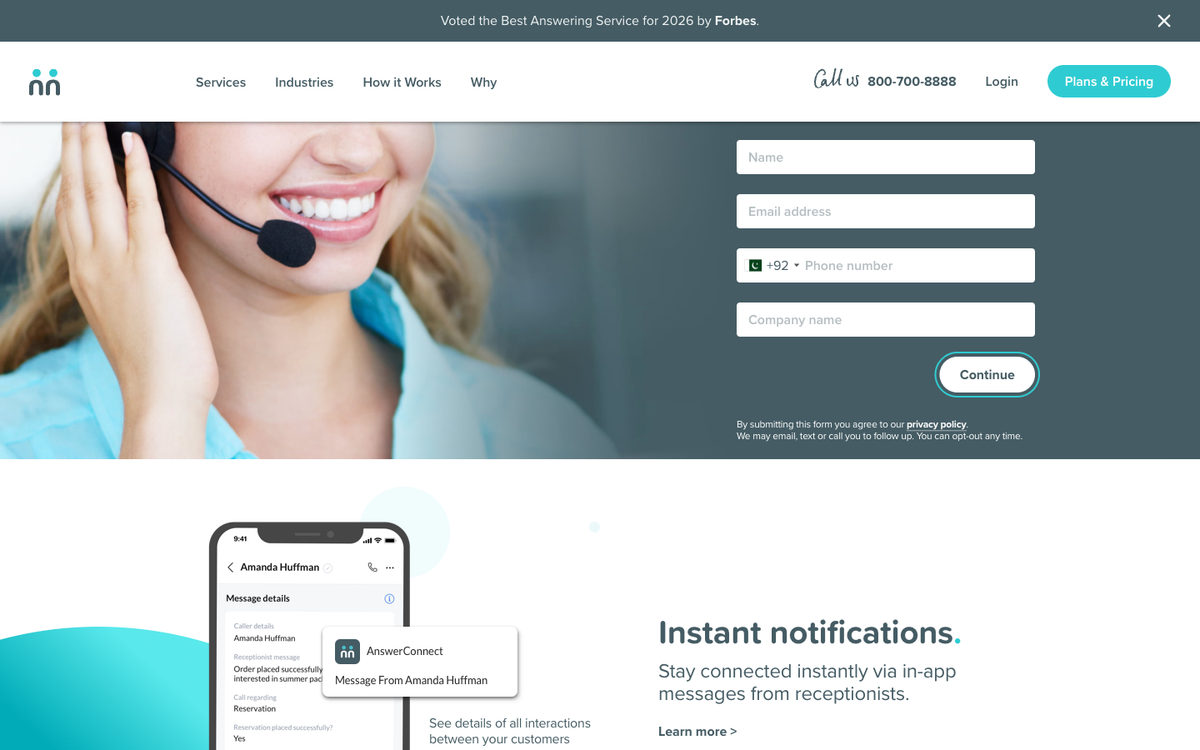
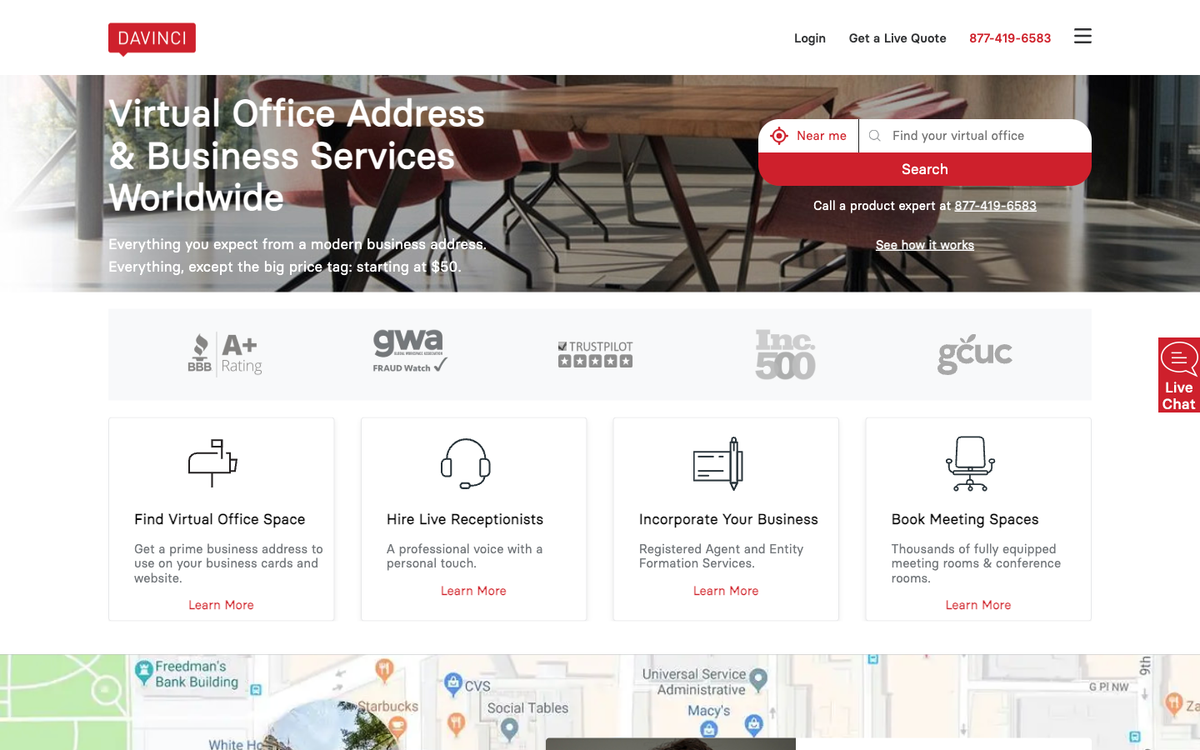
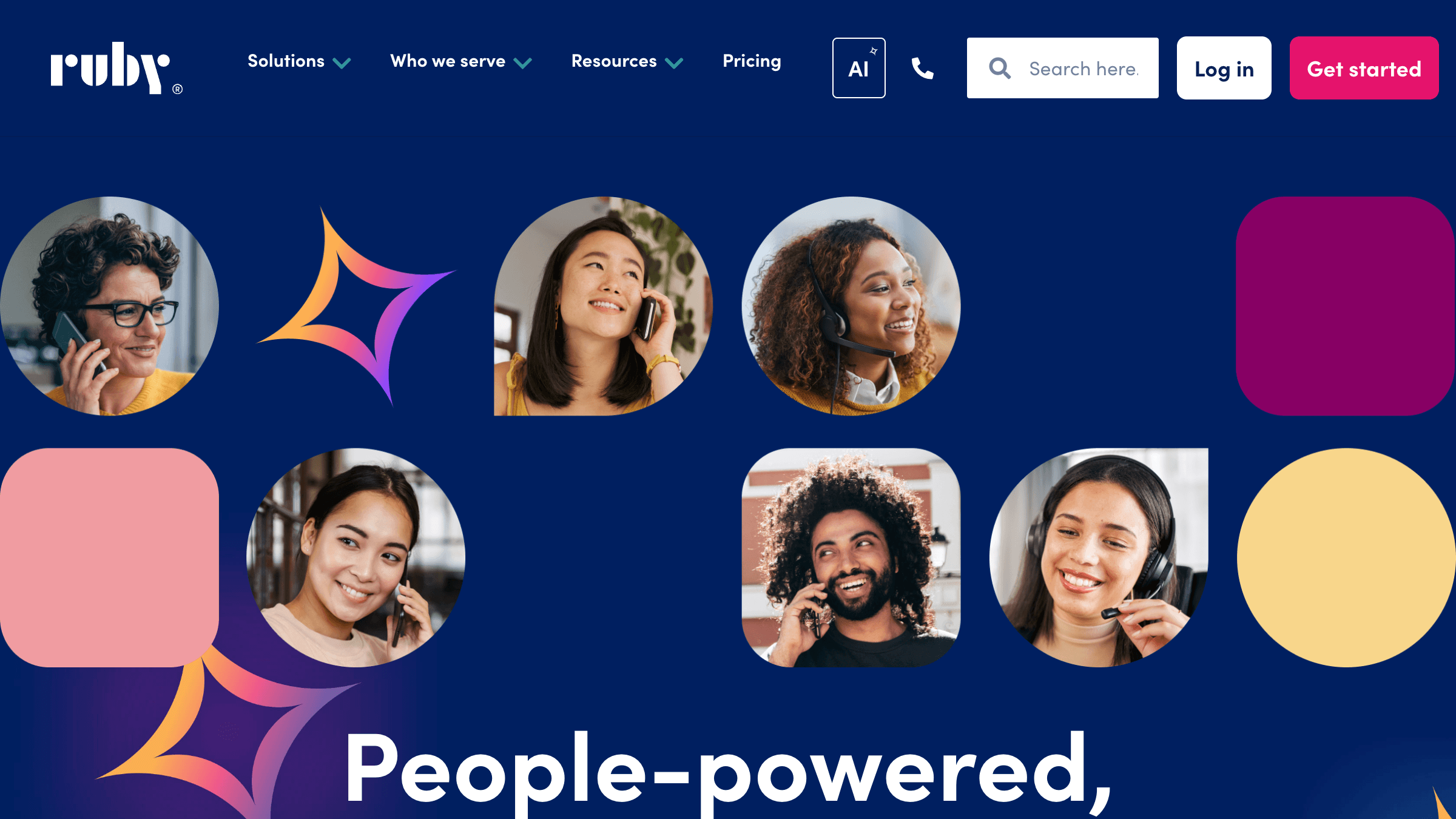
Human-staffed services charge by minutes or by call. The five providers small businesses ask me about most are Ruby Receptionists, Smith.ai, AnswerConnect, AbbyConnect, and Davinci Virtual. Here is what their 2026 pricing pages actually say.
| Provider | Entry Plan | Mid Plan | Top Plan | Setup Fee | Overage |
|---|---|---|---|---|---|
| Ruby Receptionists | $235 / 50 min | $319 / 100 min | $1,079 / 500 min | None | $3.00 / min |
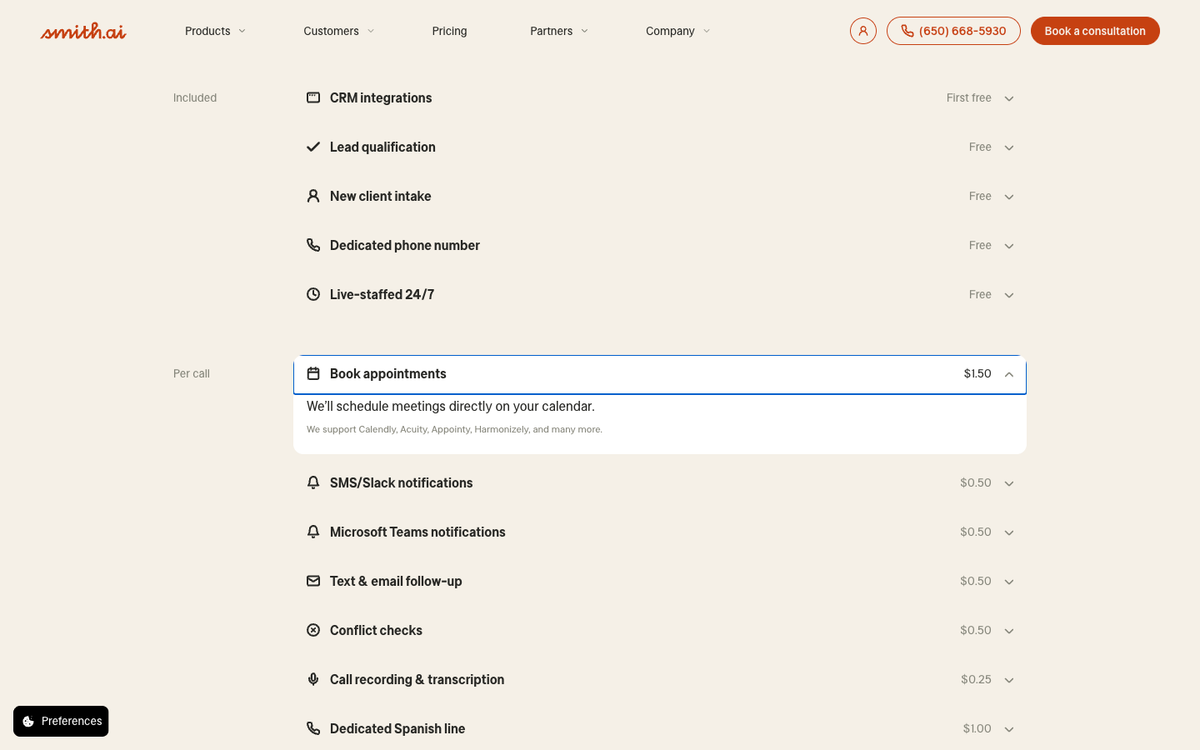
| Smith.ai | $292.50 / 30 calls | $600 / 60 calls | $1,275 / 120 calls | $95 | ~$8 / extra call |
| AnswerConnect | $325 / 100 min | $425 / 300 min | $825 / 450 min | None | $2.75–$2.95 / min |
| AbbyConnect | $329 / 100 min | $599 / 200 min | $1,380 / 500 min | None | $2.99 / min |
| Davinci Virtual | $129 / 50 min | $329 / 100 min | $649 / 300 min | $99 | $1.99–$2.49 / min |
Source: Ruby Receptionists pricing, Smith.ai receptionist plans, AbbyConnect pricing, AnswerConnect plans, and Davinci Virtual, accessed May 2026.
A few patterns are worth flagging. Smith.ai prices by call, not minute, which protects you from chatty callers but punishes high-volume periods. Ruby is the highest-touch service and charges for it. Davinci is the cheapest entry point but the lowest-volume tier, so if you grow past 50 minutes you are looking at $1.99 to $2.49 every extra minute.
What an Average Small Business Actually Pays
I pulled 12 months of phone data from 11 of my clients across home services, dental, legal, and real estate. The median was 240 inbound minutes per month. At Ruby's rates, that is a $629 plan. At AbbyConnect, $599. At AnswerConnect, $1,012 because of the overage on their $325 entry plan. At Smith.ai, you would need the $600 plan and likely overage on top.
So the real answer to "how much does a virtual receptionist cost" for a typical SMB hovers around $600 to $1,000 per month for human-staffed services. Not $235.
What About a Full-Time In-House Receptionist?
If you are weighing virtual against an actual employee, the math changes shape. According to the US Bureau of Labor Statistics, the median annual wage for a receptionist was around $37,850 in 2024, or roughly $3,150 per month before benefits. Once you load taxes, healthcare, PTO, and turnover, employer cost lands at $2,900 to $4,100 per month per seat. That is for one shift covering business hours only.
Cover nights and weekends with humans and you double or triple the staff cost, which is exactly why most small businesses leave 62% of inbound calls unanswered after hours. According to aggregated 2026 industry data, that 62% miss rate costs the average SMB about $126,000 per year in lost revenue. Each unanswered call averages $1,200 in foregone sales for businesses where customer lifetime value is $500 or more.
How Much Does an AI Virtual Receptionist Cost?
This is where the price floor falls out. AI virtual receptionists in 2026 run from $25 a month for self-serve tools to $299 per month for fully managed deployments with unlimited calls, CRM integration, and emergency routing. Custom-built voice agents I deploy for clients on platforms like Retell or VAPI typically come in at $0.15 to $0.25 per minute all-in (LLM, STT, TTS, telephony) which works out to $36 to $60 a month for a 240-minute volume. The orchestration platforms charge a small monthly fee on top, usually $99 to $399.
The headline difference is unlimited concurrency. Three callers ringing at once on a human plan means two go to voicemail. Three callers on an AI plan means three calls handled simultaneously, and the marginal cost is roughly the cost of a few more API tokens.
What You Lose With AI (And Where It Wins)
Honest disclosure: AI is not a drop-in replacement for a great human receptionist. I have built voice agents that answer in 1.2 seconds and book appointments while the caller is still explaining their problem. I have also seen them mishandle accents, panic on background noise, and book the wrong day when a caller said "next Thursday" two weeks before Thanksgiving.
What AI does win at: 24/7 coverage, zero hold time, unlimited concurrent calls, instant CRM lookup, and consistent script adherence. What humans still win at: emotional triage, edge-case judgment, complex sales, and hostile callers. If your phone work is 80% appointment booking and basic FAQ, AI wins on cost and coverage. If it is 80% complex consultation, keep the humans.
I went deeper on this tradeoff in AI Answering Service vs Human Answering Service, with the numbers from 40+ deployments.
The Hybrid Setup Most of My Clients Land On
After running the math with dozens of business owners, the most common architecture is not human-only or AI-only. It is hybrid.
- AI handles tier 1: after-hours calls, overflow when staff is on another line, appointment booking, FAQ, intake form completion. Cost: $99 to $299/month for a managed AI receptionist plus $0.15-0.25/min on top.
- A human team handles tier 2: complex consultations, hostile callers, anything the AI flags as "uncertain." Either an in-house person during business hours or a small Smith.ai or Ruby plan for human escalation. Cost: $235 to $600/month for the human service, sized to volume.
- Total monthly: $400 to $900 for a SMB doing 200-400 minutes of monthly volume. Compared to a $1,000+ pure-human plan, you get 24/7 coverage and unlimited concurrency for less money.
One of my real estate clients in Austin runs exactly this. Total spend is $440 a month. Before the hybrid, they were on a $799 Ruby plan and still missed 18% of calls because Ruby's queue got backed up during open house weekends. Now they miss zero. If you want the same setup mapped to your business, my four deployment packages are listed here.
What's Actually Included at Each Price Point?
Pricing pages bury the feature differences. Here is what I tell clients to look for.
Under $200/month
You are getting AI-only or barebones human service. AI in this range usually means a self-serve platform with a small monthly call cap and basic intent recognition. Human services this low are typically per-call billing on a free-tier-style plan that ramps fast. Expect no CRM integration, no scheduling, no after-hours human coverage.
$200 to $500/month
The sweet spot for either a managed AI receptionist with unlimited calls plus integrations, or a human entry plan with 50 to 100 minutes. At this tier you should get caller name and number capture, basic call routing, message taking, and SMS or email notification. Calendar integration is hit or miss with humans, table-stakes with AI.
$500 to $1,000/month
Human services with 200 to 300 included minutes plus full-feature AI on the high end. Bilingual support starts here. CRM integration, appointment booking against your live calendar, and dedicated team learning your business become standard. If you are paying this much for a human plan, ask whether you are getting a dedicated team of 5 to 10 receptionists who learn your business, like AbbyConnect provides, or a rotating pool.
Over $1,000/month
You should be getting either 500+ included minutes with a human-staffed service, or a fully custom AI build with deep integrations and dedicated infrastructure. At this price point, an in-house receptionist starts looking competitive if you only need business-hours coverage. The math flips toward the employee around 400 to 500 monthly minutes if you do not need nights or weekends.
Is a Virtual Receptionist Worth It for Your Business?
I run this same back-of-the-envelope check with every client.
- Average revenue per new customer. If a new customer is worth $500+ in lifetime value, the math almost always works.
- Calls you currently miss per month. Look at your phone log. Count after-hours, busy-line, and unreturned voicemails. Multiply by your conversion rate on answered calls.
- Cost of receptionist option. Use the numbers above for the tier matching your call volume.
A dental practice doing $2,000 per new patient that misses 10 new-patient calls a month is leaving $20,000 a month on the table. A $400 AI receptionist that recovers half those calls returns $9,600 a month net. A law firm where one missed inquiry is $5,000 in fees has an even shorter payback period. According to PCN's 2026 missed call revenue study, the average answering-service ROI for businesses missing 20+ calls per month is 8 to 12x within the first quarter.
If you have not benchmarked where you sit on the AI readiness curve before making a buying decision, take the free AI Readiness Quiz. It will tell you whether you are ready for an AI receptionist, a human service, or a hybrid.
Frequently Asked Questions
Is a virtual receptionist cheaper than hiring someone in-house?
Yes, for most small businesses. A virtual receptionist service costs $235 to $1,400 per month depending on call volume, while a full-time in-house receptionist costs $2,900 to $4,100 per month fully loaded with benefits and taxes. The in-house option only wins on cost if you have very high call volume and need only business-hours coverage.
How much does an AI virtual receptionist cost compared to a human one?
AI virtual receptionists cost $25 to $299 per month for unlimited or near-unlimited calls in 2026. Human virtual receptionist services start at $129 per month for 50 minutes and climb to $1,400+ for 500 minutes. AI is roughly 5 to 15 times cheaper per call once you factor in volume.
What is the average cost of a virtual receptionist for a small business?
The average small business with 200 to 400 monthly inbound minutes pays $400 to $900 per month for a virtual receptionist, including any overage charges. Pure AI deployments come in lower at $99 to $299 per month. Hybrid setups (AI plus human escalation) average $400 to $700 per month.
Are there hidden fees with virtual receptionist services?
Yes. The biggest hidden cost is per-minute or per-call overage when you exceed your included plan minutes, typically $1.99 to $3.00 per minute on human-staffed plans. Some providers charge $95 to $99 setup fees. Add-ons for bilingual support, CRM integration, and appointment booking can run $30 to $150 per month each.
Can a virtual receptionist book appointments and take payments?
Most can book appointments against your live calendar (Calendly, Google Calendar, Acuity, or your CRM). Taking payments is less common because of PCI compliance, but services like Smith.ai and Ruby offer payment collection on higher tiers. AI receptionists handle appointment booking natively and can route payment to a secure portal link via SMS.
How many minutes do most small businesses use per month?
Across 11 of my clients in home services, dental, legal, and real estate, the median was 240 inbound minutes per month. Industry-specific patterns: dental practices average 180 to 280 minutes, law firms 200 to 350, home services contractors 250 to 500 (with summer spikes), and real estate teams 150 to 400 (with weekend spikes during open house season).
Do virtual receptionist services work after hours and on weekends?
Most do, but at extra cost on human-staffed plans. Ruby, AnswerConnect, and AbbyConnect offer 24/7 coverage included. AI receptionists are 24/7 by default at no extra charge, which is one of the strongest arguments for using AI for after-hours overflow even if a human team handles your business hours.
How fast can I get a virtual receptionist set up?
Human services like Smith.ai and Ruby typically onboard in 5 to 10 business days. Self-serve AI receptionists can go live in under an hour for basic configurations. Custom-built AI voice agents I deploy for clients usually take 2 to 4 weeks because of CRM integration, calendar wiring, and call-flow testing across edge cases.
So How Much Does a Virtual Receptionist Cost? The Honest Answer
A US virtual receptionist costs $25 to $1,400 per month, and where you land depends almost entirely on whether you need a human, an AI, or both. For most of the small businesses I work with, the right answer is hybrid AI plus human escalation, totaling $400 to $900 a month, which beats both pure-human plans and full-time hires on cost while delivering 24/7 coverage with zero missed calls.
The right move is not to pick a plan from a pricing page. It is to count your missed calls, multiply by your customer lifetime value, and back into the receptionist tier that pays for itself. If you want help running that math against your actual phone logs, book a 30-minute discovery call and I will tell you whether AI, human, or hybrid is the right fit. Or take the free AI Readiness Quiz first to see where your business sits on the buying curve.
Pricing data verified May 2026 from official vendor pages. Sources: Ruby Receptionists Plans and Pricing 2026, Smith.ai Receptionist Plans 2026, AbbyConnect Pricing 2026, AnswerConnect Plans 2026, Davinci Virtual Live Receptionist Pricing 2026, US Bureau of Labor Statistics Occupational Wage Data 2024, Aira 62% Missed Business Calls Statistics 2026, PCN Small Business Missed Call Revenue Study 2026.
Related Posts
Virtual Receptionist Companies: What They Cost in 2026, and the AI Option Nobody Quotes You
Voice AIVirtual ReceptionistAI Receptionist
Virtual Receptionist Adelaide: Real 2026 Pricing, and the AI Version That Costs A$52 a Month
Industry GuidesVirtual ReceptionistAdelaide
What Is a Virtual Receptionist? A No-Hype 2026 Guide for US Small Business Owners
Industry GuidesVirtual ReceptionistAI Receptionist

Jahanzaib Ahmed
AI Systems Engineer & Founder
AI Systems Engineer with 126 production systems shipped. I run AgenticMode AI (AI agents, RAG systems, voice AI) and ECOM PANDA (ecommerce agency). I build AI that works in the real world for businesses across home services, healthcare, ecommerce, SaaS, and real estate.