AI Answering Service vs Human Answering Service: What 40+ Deployments Taught Me About the Real Choice
What AI and human answering services cost in October 2026, where a human still wins, and the hybrid setup most businesses end up running, from someone who has deployed both.

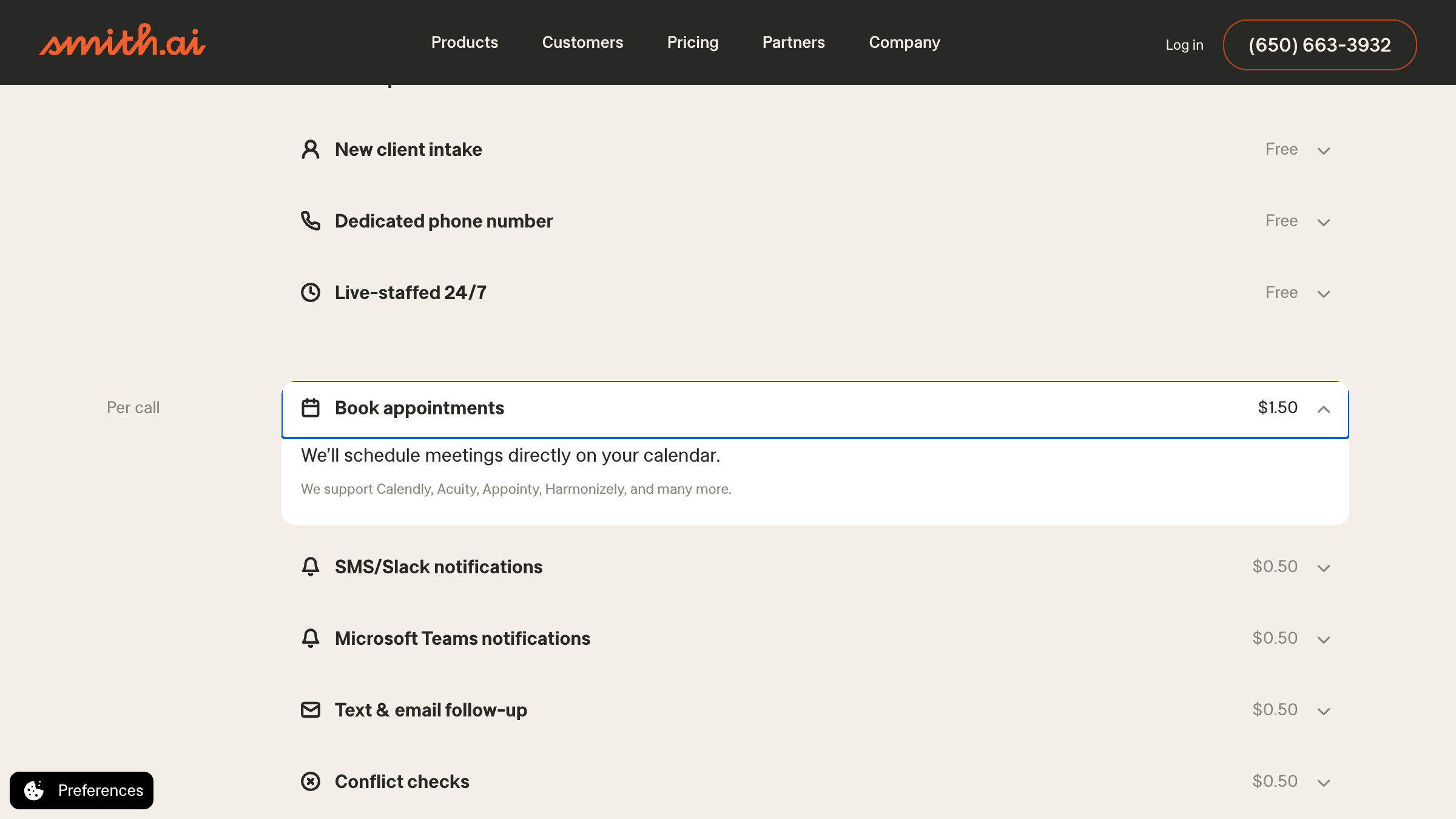
Table of Contents
AI answering services start at $29 to $199 a month on the plans I checked in October 2026, and Smith.ai even offers a free AI tier with 25 calls. Human live answering starts at $99 to $300 a month for just 50 minutes or 30 calls, and on the entry plans that publish a rate, every extra minute costs $2.29 to $3.30, or $11.50 per extra call at Smith.ai. Both are usually metered now, but the AI meter runs at about $0.25 to $0.50 a minute, and some AI plans are flat rate with unlimited calls. That difference decides most of these comparisons before quality enters the conversation, because a cheap or flat meter is predictable in your busiest month and an expensive one is not.
Choose on call complexity rather than price. AI handles the repetitive inbound well, answering instantly at any hour without overtime or turnover. Humans stay better wherever the call needs judgment, empathy, or the ability to improvise around something the script never anticipated. Most businesses that get this right end up running both, with AI taking after hours and overflow so the metered human plan never sees the spike that would have doubled the bill.
Every week I talk to a business owner stuck on the same decision: should they pay for a human answering service or switch to AI? The question of ai answering service vs human answering service sounds deceptively simple. AI is newer and cheaper. Humans are familiar and reliable. The real choice is more nuanced than any comparison article will tell you, including this one, unless you bring your specific situation to it.
I have built and deployed AI phone systems for over 40 businesses including law firms, HVAC companies, medical practices, real estate agencies, and professional service firms. I have also talked clients out of AI when their situation called for something else. This is what those deployments actually teach you about choosing correctly.
Quick Verdict
- Pick AI if: you need 24/7 coverage, your callers mostly ask routine questions or want to book appointments, and your monthly budget is under $300
- Pick human if: your callers are in distress (medical emergencies, legal crises), your average deal value exceeds $5,000, or your industry has strict HIPAA requirements your legal team has not reviewed for AI compliance
- Pick hybrid if: you get 100+ calls per month, need around the clock coverage, and have a meaningful portion of complex calls that need real human judgment
- Still unsure: book a 20-minute call and I will look at your call volume and call types and give you a specific answer
What Is Actually Being Compared
There are three fundamentally different things people mean when they say "answering service."
The first is an in-house receptionist: a full-time or part-time employee who answers your phones from your office. Cost starts with the wage: the Bureau of Labor Statistics puts the median receptionist wage at $38,010 a year (May 2025), about $3,168 a month before benefits, payroll taxes, and training. Coverage is limited to their working hours. Sick days and vacations create gaps. For most small businesses, this is what they are trying to move away from.
The second is a human live answering service: a third-party company with trained human agents who answer calls on your behalf, typically following a script you provide. They take messages, transfer calls, book appointments if you give them calendar access, and escalate emergencies. On the published plans I checked in October 2026, that works out to $1.38 to $5.00 per included minute, or $7.00 to $10.00 per call, with small business packages (50 to 200 minutes, or 30 to 90 calls) running $99 to $810 per month.
The third is an AI answering service: a software system using voice AI to answer calls, recognize speech, understand intent, and respond naturally. Modern AI answering services use large language models and can handle booking, FAQ responses, lead qualification, and basic intake workflows. Paid plans I checked in October 2026 run from $29 to $800 a month depending on the minutes or calls included, and Smith.ai has a free tier for 25 calls.
This post compares options two and three. An in-house receptionist is a different category entirely. If you are weighing AI against a full employee, the economics of AI are so stark that the comparison barely needs making.
How an answering service differs from a website chatbot
An answering service picks up your phone. A website chatbot answers typed questions from people who are already on your site. They catch different people: a chatbot only reaches visitors who found your website and chose to type, while calls come from your Google listing, ads, referrals, the number on a van, and anyone who wants a voice on the line right now. A chatbot can deflect some of the questions that would otherwise become calls, but it does nothing for a phone that rings out.
Vendors increasingly sell the two together. As of October 10, 2026, My AI Front Desk includes 100 chatbot conversations and 400 SMS alongside 200 voice minutes in its $99 a month plan, Dialzara includes 100 website chat sessions a month free with any voice plan ($0.15 per extra session, or $39 a month for the chatbot on its own), and Ruby sells live chat as a bundle on top of a receptionist plan, starting at 10 chats for $115 a month. If your problem is missed calls, fix the phone first. If most of your inbound already arrives through the website, a chatbot may be the cheaper first step.
AI Answering Services: Real Costs and Capabilities in 2026
Modern AI answering services have moved well past the robotic phone trees of five years ago. The best ones today sound natural, understand context across a conversation, and can complete meaningful tasks on the first call without a human ever getting involved.
These prices come from each vendor's own pricing page on October 10, 2026. Dialzara starts at $29 a month for 60 minutes. My AI Front Desk (its pricing page now calls it Frontdesk) charges $99 a month for 200 voice minutes, or $79 a month billed annually. NextPhone is flat rate at $199, $299 or $599 a month with unlimited calls and no overage. Smith.ai's AI Receptionist bills per call: a free tier covers 25 calls, and paid plans run from $150 for 75 calls to $800 for 500 calls. Allo has become a business phone system and sells its AI Receptionist as a $32 a month add on per agent, billed yearly, on top of a paid Allo plan. At the top end, custom AI voice agents built for specific business processes run $500 to $2,000 per month with full CRM integration and workflow automation.
AI answering service pricing, checked October 10, 2026
Dialzara shows how most AI plans are now built: a monthly bundle of minutes, with a lower overage rate on bigger plans. Business Lite is $29 for 60 minutes and $0.48 per extra minute; Business Elite is $349 for 1,000 minutes and $0.35 per extra minute. Every Dialzara plan includes 24/7 answering, call recordings, and call summaries, and warm transfer to your team starts on Business Pro. NextPhone is the exception in this list, with unlimited calls at a flat price.
| Service and plan | Monthly price | Included | Extra usage | Price per included unit |
|---|---|---|---|---|
| Dialzara Business Lite | $29 | 60 minutes | $0.48 per minute | $0.48 per minute |
| Dialzara Business Pro | $99 | 220 minutes | $0.45 per minute | $0.45 per minute |
| Dialzara Business Plus | $199 | 500 minutes | $0.40 per minute | $0.40 per minute |
| Dialzara Business Elite | $349 | 1,000 minutes | $0.35 per minute | $0.35 per minute |
| My AI Front Desk Business-in-a-Box | $99 | 200 minutes | $0.25 per minute | $0.49 per minute |
| NextPhone Pro | $199 | unlimited calls | none | unlimited calls |
| NextPhone Growth | $299 | unlimited calls | none | unlimited calls |
| NextPhone Scale | $599 | unlimited calls | none | unlimited calls |
| Smith.ai AI Receptionist Free | $0 | 25 calls | $3.00 per call | free |
| Smith.ai AI Receptionist Pro (75 calls) | $150 | 75 calls | $2.50 per call | $2.00 per call |
| Smith.ai AI Receptionist Pro (150 calls) | $270 | 150 calls | $2.30 per call | $1.80 per call |
| Smith.ai AI Receptionist Pro (300 calls) | $500 | 300 calls | $2.17 per call | $1.67 per call |
| Smith.ai AI Receptionist Enterprise (500 calls) | $800 | 500 calls | $2.10 per call | $1.60 per call |
My AI Front Desk's extra minutes draw 25 credits ($0.25) each from a pool of 1,000 credits included every month, which covers about 40 minutes before paid credits ($10 per 1,000) kick in. All prices in this post are in USD; if you are comparing in Canadian dollars, I covered virtual receptionist pricing in Canada separately.
What they can do well in 2026:
- Answer calls 24/7 with no hold time and no off-hours voicemail
- Handle FAQ questions with high accuracy when connected to a knowledge base
- Book appointments directly into scheduling software (most platforms now integrate with Calendly, Acuity, and Google Calendar)
- Collect caller information for lead capture and CRM entry
- Qualify leads against your criteria before routing to a human
- Handle high call volume without any degradation in quality
What they still struggle with:
- Emotionally complex conversations where a caller is distressed, angry, or in crisis and needs a human who can read tone and respond appropriately
- Calls that require real-time judgment beyond a defined workflow, like a plumbing emergency requiring on-the-spot prioritization and scheduling negotiation
- Complex multi-party coordination where three or more people or systems need to be involved in real time
- Callers who simply refuse to talk to AI, particularly in older demographics, who will hang up or ask to speak to a person immediately
For a deeper look at how AI voice agent pricing breaks down across different deployment types, I covered that in detail in the AI voice agent pricing breakdown, including what you actually pay when you factor in integration, testing, and ongoing maintenance costs.
Human Answering Services: What You Are Actually Paying For
Human answering services have one thing AI will not replicate in 2026: a real person who can deviate from a script when the situation demands it.
Ruby Receptionists starts at $250 per month for 50 minutes and scales to $1,725 per month for 500 minutes (checked October 10, 2026), which is $5.00 down to $3.45 per included minute. For a small business taking 200 calls per month at an average of 3 minutes per call, that is 600 minutes, more than Ruby's largest published plan, so Ruby would quote you a larger plan above $1,725 a month.
Smith.ai prices by the call. Its human receptionist plans are $300 per month for 30 calls ($10.00 per call), $810 for 90 calls, and $2,100 for 300 calls, with overage at $11.50, $10.50, and $8.50 per extra call (checked October 10, 2026). Spam calls are not charged. Their AI receptionist is far cheaper, at $1.60 to $2.00 per included call on paid plans.
Across the four human services I checked (Ruby, PATLive, Abby Connect, and Smith.ai), published plans work out to $1.38 per minute on PATLive's 5,000 minute plan up to $5.00 per minute on Ruby's 50 minute plan, and $7.00 to $10.00 per call on Smith.ai. All four include 24/7 answering in the plan price and none lists a setup fee, but add ons cost extra: Smith.ai, for example, charges $1.50 per call to book appointments on your calendar and $0.50 per call for each additional CRM integration.
Human answering service pricing, checked October 10, 2026
PATLive is the cheapest per minute of the four, from $99 for 50 minutes. Abby Connect sits in the middle and now counts human and AI answering against the same pool of minutes. Ruby does not publish an overage rate, and Abby bills overage at the plan's own per minute rate, which I calculated as the plan price divided by its minutes.
| Service and plan | Monthly price | Included | Extra usage | Price per included unit |
|---|---|---|---|---|
| Ruby 50 minute plan | $250 | 50 minutes | not published | $5.00 per minute |
| Ruby 100 minute plan | $395 | 100 minutes | not published | $3.95 per minute |
| Ruby 200 minute plan | $720 | 200 minutes | not published | $3.60 per minute |
| Ruby 500 minute plan | $1,725 | 500 minutes | not published | $3.45 per minute |
| PATLive 50 minute plan | $99 | 50 minutes | $2.29 per minute | $1.98 per minute |
| PATLive 100 minute plan | $189 | 100 minutes | $2.09 per minute | $1.89 per minute |
| PATLive 200 minute plan | $349 | 200 minutes | $1.99 per minute | $1.75 per minute |
| PATLive 500 minute plan | $759 | 500 minutes | $1.79 per minute | $1.52 per minute |
| Abby Connect Starter | $165 | 50 minutes | $3.30 per minute (plan rate) | $3.30 per minute |
| Abby Connect Essential | $329 | 100 minutes | $3.29 per minute (plan rate) | $3.29 per minute |
| Abby Connect Professional | $599 | 200 minutes | $3.00 per minute (plan rate) | $3.00 per minute |
| Abby Connect Growth | $1,380 | 500 minutes | $2.76 per minute (plan rate) | $2.76 per minute |
| Smith.ai receptionists Starter | $300 | 30 calls | $11.50 per call | $10.00 per call |
| Smith.ai receptionists Basic | $810 | 90 calls | $10.50 per call | $9.00 per call |
| Smith.ai receptionists Pro | $2,100 | 300 calls | $8.50 per call | $7.00 per call |
PATLive also sells larger plans up to 5,000 minutes, plus pay as you go at $49 a month and $2.99 per minute. The Abby figures above are human minutes; one minute of AI answering uses half an Abby Minute.
What you get for those prices:
- A trained human who can go off-script when the situation requires it
- Empathy and tone management for callers in distress or high-stress situations
- Complex call handling where the right answer is not in a knowledge base
- Better conversion on high-value inbound leads, where a warm human voice is meaningfully different from an AI intake flow
- HIPAA compliant handling for medical practices, from services that will sign a Business Associate Agreement (Ruby's pricing page says HIPAA compliant services are available; confirm the agreement directly)
What you do not always get:
- After hours coverage that leaves your plan alone: the services I checked include 24/7 answering, but every night and weekend minute counts against the same metered bundle
- Instant answer times, since human services have hold queues and peak-hour delays
- Consistent quality across every agent on every call, as variability between human agents is real
- Unlimited call volume at a fixed price, since overage charges hit fast
Where human answering services fall short for home services
Home services is where the limits of a metered human service show up fastest, because demand follows the weather. A heat wave or a hard freeze can push a month's calls far above normal, and on a per minute or per call plan the bill rises with every one of them. Using the published rates above, if a surge doubles a company's month from 200 to 400 calls of 3 minutes each, the cheapest PATLive bill rises from $938 to $1,837 and the Smith.ai receptionist bill from $1,965 to $2,950. NextPhone stays at $199, and Dialzara moves from $239 to $419.
Many of those surge calls are short and routine: is anyone free today, what does a service call cost, can you come Saturday. Per call billing charges the same for a 40 second availability question as for a ten minute intake. A human agent can only book the job if you have given the service access to your calendar or booking software; otherwise the call ends as a message your team has to return, which is the delay a homeowner with a broken AC does not wait for. AI handles that kind of call well, answers several at once (Allo and NextPhone both list simultaneous calls as a feature), and books straight into the calendar.
Put together, those are the limitations of a traditional answering service compared to AI for a home service business. The bill grows with every call in a busy month. On per call plans, a 40 second availability question costs as much as a full intake. Agents can only book a job when they have access to your calendar or booking software, so many calls end as a message someone still has to return. Hold queues form at peak hours, which in home services is exactly when the weather turns, while an AI line picks up several calls at once. And nights and weekends draw down the same metered bundle as the daytime. AI has its own limits, listed earlier in this post: distressed callers, judgment calls a workflow never anticipated, and callers who will not talk to a machine.
Where human answering still wins in home services is the genuine emergency: a burst pipe, a gas smell, no heat with a vulnerable person in the house. Those callers need someone who can reassure them and make a judgment call about urgency, which is why the HVAC company in the client examples below chose a human service.
For contractors, the comparison usually comes out this way. HVAC, plumbing, electrical and roofing businesses get many of their calls while the crew is on a job or after the office has closed, and what the caller wants is a technician booked into a time slot. A traditional answering service takes the message and pages whoever is on call. An AI answering service can also check the schedule and book the visit while the caller is still on the line: NextPhone lists ServiceTitan among its CRM integrations, with CRM updates on its $299 a month Growth plan, and Dialzara adds warm transfer to your team from its $99 a month Business Pro plan (both checked October 15, 2026). Which setup fits depends on the call mix. When most calls are routine bookings, AI can take every call, with clear emergency triggers (a gas smell, an active leak, no heat with someone vulnerable in the house) that warm transfer the caller to the on call technician or to a human service. When most calls are emergencies, a human service is the better fit, which is what the HVAC company in the client examples below chose. For the wider picture beyond the phone, from estimates to follow up, see my guide to AI for contractors, and AI voice agents for home services covers the call side in more depth.
Alternatives to a human answering service
If a human answering service costs too much or bills too unpredictably, there are four realistic alternatives. Each one gives up something different, and the prices below come from each vendor's own page, checked October 15, 2026.
| Alternative | Starting price | What you get | Main limitation |
|---|---|---|---|
| AI answering service | $29 a month for 60 minutes (Dialzara), $199 a month flat with unlimited calls (NextPhone), or free for 25 calls (Smith.ai) | Instant 24/7 answering, booking, call recordings and summaries | Weak with distressed callers and with calls the workflow never anticipated |
| Hybrid AI plus live agents | $150 a month for 75 calls (Smith.ai AI Receptionist, which can transfer a caller to its 24/7 live agent network), or $165 a month for 50 Abby Minutes (Abby Connect, where an AI minute uses half an Abby Minute) | AI on the routine calls, a person on the hard ones | Costs more than AI alone, and the human share is still metered |
| In house receptionist | $38,010 a year median wage (BLS, May 2025), about $3,168 a month before benefits | Someone who knows your business and your customers | Business hours only, with gaps for sick days and vacations |
| Voicemail to text | $10 per user a month (Google Voice Starter, added to a Google Workspace plan, includes voicemail transcription) | A written copy of every message, on your phone | Fewer than 3% of callers pushed to voicemail leave a message (Invoca platform data, 2024) |
Human services are moving toward the hybrid row too: Ruby says optional AI enhancements are available on all its plans at no extra cost, from $250 a month for 50 minutes. For most small businesses the real choice is between the first two rows. An in house hire makes sense when the job covers more than the phone, such as greeting visitors and running the front office; I break down every option's monthly cost in how much a virtual receptionist costs, and the AI vs human employee cost calculator puts a number on an employee against AI from official wage data.
Switching away from a human answering service does not have to drop calls. Most answering services work through call forwarding, so the change is a forwarding rule rather than a new phone number. Send after hours and overflow calls to the AI first, keep the human plan on daytime calls for a few weeks while you read the transcripts, then move the main line once the AI handles your common calls the way you want.
The Missed Call Problem: Why This Decision Has Real Revenue Consequences
Before you get deep into the AI vs human debate, there is a more important number: how many calls is your business actually missing right now?
Ambs Call Center, citing a 411 Locals study, reports that businesses answered only 37.8% of inbound calls: another 37.8% went to voicemail and 24.3% got no response at all. That is roughly 62% of callers who never reached a person.
Voicemail does not rescue those calls. Invoca's platform data shows that fewer than 3% of callers who get pushed to voicemail leave a message, and its research found that 27% of calls to home services businesses go unanswered. Invoca's own worked example puts one missed furnace replacement at about $900 of profit: a $4,500 job at a 20% margin.
The framing I use with clients: if your business is currently missing 60 calls per month and your average job value is $400, you are walking away from $24,000 per month in potential revenue. Whether you solve that with a $200 per month AI service or a $600 per month human service, you are getting positive ROI within the first week.
The real question is not AI or human. It is which option fits the kind of calls you are missing, and what does a caller expect when they dial you?
Head-to-Head Comparison
| Dimension | AI Answering Service | Human Answering Service |
|---|---|---|
| Monthly cost (small business) | $29 to $199 to start (Smith.ai has a free tier with 25 calls) | $99 to $300 to start, for 50 minutes or 30 calls |
| Per-minute cost | About $0.25 to $0.50 on minute plans; $1.60 to $2.00 per call at Smith.ai | $1.38 to $5.00 per included minute; $7.00 to $10.00 per call at Smith.ai |
| 24/7 availability | Yes, included in base price | Yes, included on the plans I checked, but every after hours minute is billed |
| Call wait time | Zero (answers instantly) | Depends on agent availability; queues can form at peak hours |
| Handles routine FAQ | Excellent | Good (depends on agent training) |
| Handles distressed callers | Limited | Strong (with right training) |
| Appointment booking | Yes (most platforms) | Yes (requires calendar access) |
| HIPAA compliance | Some providers (verify individually) | Available from providers that sign a Business Associate Agreement |
| Scalability | Unlimited on flat plans like NextPhone; otherwise $0.25 to $0.48 per extra minute or $2.10 to $3.00 per extra call | $1.49 to $3.30 per extra minute or $8.50 to $11.50 per extra call |
| Caller preference | 8% prefer AI (SurveyMonkey 2025) | 79% prefer human (SurveyMonkey 2025) |
| Setup time | Minutes to days (NextPhone and My AI Front Desk advertise 5 minute self setup) | Days to weeks |
| Consistency | 100% consistent across every call | Variable across agents and shifts |
What 200 calls a month costs on each service
Using the published plans above, here is the cheapest way to cover 200 calls a month at an average of 3 minutes each (600 minutes), as of October 10, 2026. It assumes every call is billed at exactly 3 minutes; a service that rounds each call up will cost more.
| Service | Type | Cheapest published plan | Monthly cost |
|---|---|---|---|
| NextPhone | AI | Pro (unlimited calls) | $199 |
| My AI Front Desk | AI | Business-in-a-Box, plus 400 extra minutes (the first 40 come from the included credit pool) | $189 |
| Dialzara | AI | Business Plus, plus 100 extra minutes | $239 |
| Smith.ai AI Receptionist | AI | Pro (150 calls), plus 50 extra calls | $385 |
| PATLive | Human | 500 minute plan, plus 100 extra minutes | $938 |
| Abby Connect | Human | Growth, plus 100 extra minutes | $1,656 |
| Smith.ai receptionists | Human | Basic, plus 110 extra calls | $1,965 |
| Ruby | Human | more than the largest published plan (500 minutes) | more than $1,725 (larger plans are quoted by sales) |
Even the cheapest human option here, PATLive at $938, costs more than double the most expensive AI option, Smith.ai's AI Receptionist at $385.
The 6 Questions That Tell You Which One to Pick
These are the questions I ask every client before recommending AI or human answering. Answer honestly and the right answer usually becomes clear.
1. What percentage of your calls are routine?
If 70% or more of your calls are appointment bookings, FAQs about hours and pricing, or basic information requests, AI handles those better than human agents at a fraction of the cost. If 40% or more of your calls require real judgment or negotiation, lean human or hybrid.
2. What happens when the caller is upset?
Medical practices get calls from anxious patients. Law firms get calls from people in crisis. HVAC companies get calls from families with no heat in January. If your calls regularly include people under significant stress, a human who can read tone and respond with genuine empathy is worth the premium. AI is improving here but is not ready for emotionally charged intake in 2026.
3. What is your average inbound call value?
A pest control company with $200 jobs can absorb an AI that misses the mark on 15% of calls. A commercial real estate firm with $50,000 transactions cannot. Higher deal values justify the premium for human handling on first contact, especially for inbound leads.
4. Do you need coverage beyond business hours?
If 30% or more of your calls come in between 6 PM and 9 AM, AI is the practical answer. The human services I checked include nights and weekends in the plan, but every overnight minute is billed at the same $1.38 to $5.00 per minute rate, against a bundle your daytime calls may already have used up. AI does not charge extra for 3 AM calls either, and its meter runs at a fraction of the price.
5. What is your current monthly call volume?
Under 100 calls per month: most services will work. 100 to 500 calls: AI economics start to look compelling versus per-minute human billing. Over 500 calls: the cost differential between AI and human is significant enough to drive the decision unless you have strong quality requirements for human handling.
6. Does your industry have compliance requirements that affect phone handling?
Healthcare practices covered by HIPAA need to verify that any answering service has a signed Business Associate Agreement and compliant data handling. Legal practices in some jurisdictions have confidentiality rules around intake. If you run a law firm in Australia, I compared the local options in my guide to the best virtual receptionist for law firms in Australia. If compliance is a factor, confirm it with the specific vendor before signing. If you want to understand where your business stands on AI readiness overall, the AI readiness assessment scores your business on eight dimensions, including technical readiness and data readiness.
Three or more questions pointing to AI: go AI, ideally with a human escalation path for the edge cases.
Two or fewer pointing to AI: lean human or hybrid, and revisit AI in 12 months as the technology continues to improve.
What Most Comparisons Get Wrong
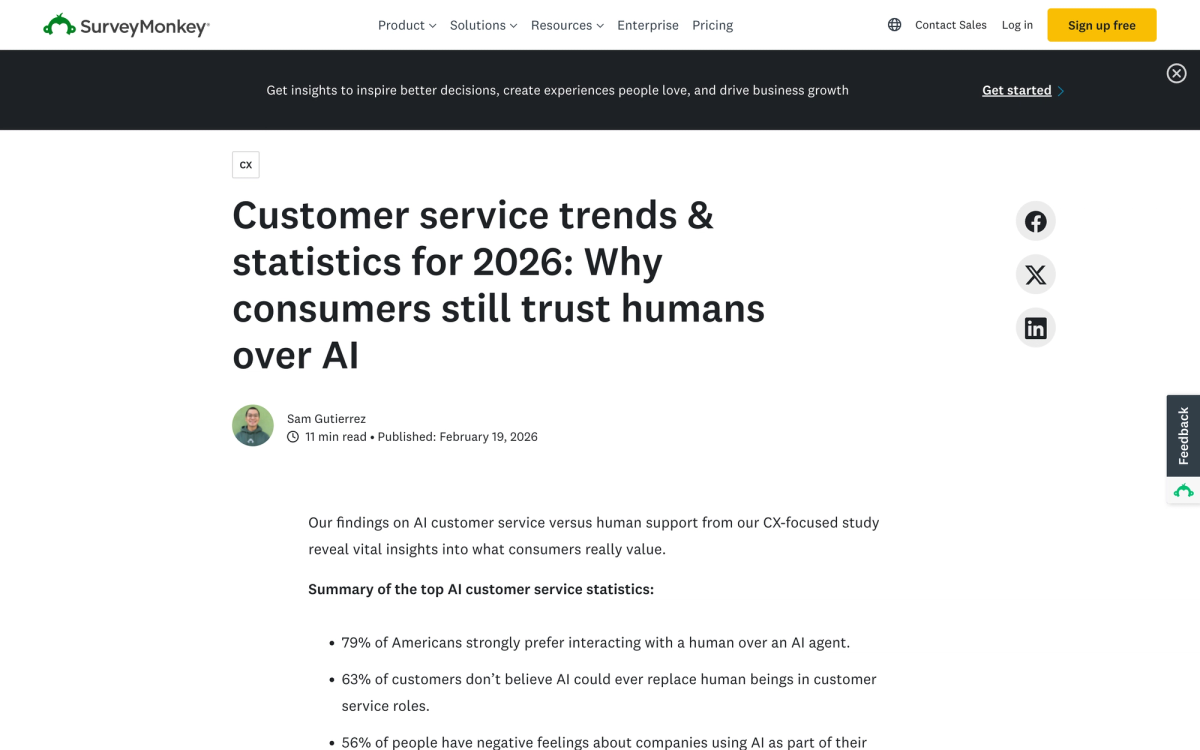
Most comparison posts treat the 79% human preference stat as a reason to avoid AI entirely. That is the wrong read.
The SurveyMonkey 2025 study did find that 79% of Americans strongly prefer interacting with a human over an AI agent for customer service, and only 8% prefer AI. The number most posts skip comes from a 2025 Kinsta survey of 1,011 consumers: 88.8% say companies should always offer the option to speak with a human. And the 8% who prefer AI give availability (41%) and speed (37%) as their top reasons, which are exactly the things an AI answering service is good at.
The framing shift this points to: the goal is not to force callers to accept AI. The goal is to use AI for calls where AI genuinely serves them better (instant answer, no hold time, 3 AM availability) while ensuring a clean path to a human for calls that need one.
A caller who dials at 11 PM wanting to book an appointment for tomorrow morning does not need a human. They need their appointment confirmed. AI does that better. A caller who was referred by an attorney and wants to discuss a sensitive legal matter needs a human on the first call. Routing them incorrectly is a conversion problem, not a technology problem.
The other thing most comparisons miss: AI answering services are evolving fast. What was available in 2024 is meaningfully different from what is available now. Resolution rates, call quality, and handling of ambiguous situations have all improved. If you dismissed AI answering services 18 months ago, the current generation is worth a fresh look.
The broader context on where AI is heading for service businesses is covered in my post on when to use AI agents versus automation, which explains when answering services are a starting point versus when they are the whole solution.
Two Real Clients, Two Different Answers
A law firm came to me wanting to reduce their answering service cost, which was running about $900 per month for human receptionists. Most of their after-hours calls were appointment requests or basic questions about consultation fees and areas of practice. Complex intake calls with real case details represented about 15% of their call volume.
We built a hybrid: AI handles 100% of routine calls (appointment booking, FAQ, directing callers to the right attorney), with a direct escalation path to a human agent for callers who explicitly ask for one or who mention time-sensitive legal matters. The monthly cost dropped from $900 to $280. Their attorneys stopped losing after-hours leads to voicemail. The 15% of complex calls still get a human.
An HVAC company had the opposite situation. Their calls were almost entirely distressed customers with broken equipment: emergency tone, technical problem description, urgency assessment, and scheduling a technician fast. Almost zero routine call volume. I looked at AI for them and told them it was the wrong fit for their call profile. Their callers are under stress and need someone who can reassure them, assess urgency on the fly, and make real scheduling decisions. They went with a specialized home services answering company. The right tool for the actual problem.
That is the honest answer: the right choice depends on what your callers actually need when they dial you. Not on which technology is currently trending.
My Recommendation for 2026
For most service businesses with fewer than 50 employees: start with AI and add a human escalation path for the call types that need it. The economics are too strong to ignore. A $150 per month AI service that answers 100% of calls at any hour versus a $500 to $800 per month human service that bills every minute, after hours included, and charges overage in high volume months is not a close comparison on cost.
The caveat: your callers' expectations need to match the technology. A plumber who mostly gets "I need someone to come look at a pipe" calls is an excellent AI candidate. A psychiatrist whose callers are in emotional distress is not.
The path forward for most businesses is not either/or. It is AI first with a defined escalation path to humans for the calls that need them. That hybrid model delivers the cost efficiency of AI for the 80% of calls that are routine, and the conversion quality of human handling for the 20% that are not.
Human answering services now sell that hybrid themselves. Abby Connect counts one minute of AI answering as half an Abby Minute, so a plan stretches up to twice as far when AI takes the routine calls, and Ruby says optional AI enhancements are available in all its plans at no extra cost (both checked October 10, 2026).
If you are not sure which category your calls fall into, pull three months of call data and categorize them by type. What percentage are routine bookings or FAQ? What percentage need judgment calls or emotional sensitivity? That data drives the architecture decision more accurately than any comparison article.
If you want someone to do that analysis with you and build the right system from scratch, that is the work I do through the Inbound Voice Agent, built for businesses that are losing revenue to missed or poorly handled calls. It answers every call, qualifies the caller, books straight into your calendar, texts a confirmation, and logs each call with a recording, transcript, and summary.
Frequently Asked Questions
What is the difference between an AI answering service and a human answering service?
An AI answering service uses voice AI to answer calls automatically, handle routine questions, and book appointments without any human involvement. A human answering service employs trained agents who answer on your behalf following your script. AI is cheaper and available 24/7 at no extra cost. Human agents handle complexity and emotional situations better but cost significantly more per minute of call time.
How much does an AI answering service cost per month in 2026?
On the plans I checked on October 10, 2026, Dialzara starts at $29 a month for 60 minutes, My AI Front Desk is $99 a month for 200 minutes, NextPhone is flat rate from $199 a month with unlimited calls, and Smith.ai's AI Receptionist has a free tier with 25 calls and paid plans from $150 for 75 calls. Most AI plans include a bundle of minutes or calls and then charge $0.25 to $0.48 per extra minute or $2.10 to $3.00 per extra call. Custom AI voice agents built for specific business processes cost $500 to $2,000 per month.
How much does a human answering service cost per month?
On published plans checked October 10, 2026, human answering services work out to $1.38 to $5.00 per included minute. Ruby starts at $250 a month for 50 minutes, PATLive at $99 for 50 minutes, Abby Connect at $165 for 50 minutes, and Smith.ai at $300 for 30 calls ($10.00 per call). For a small business taking 200 calls per month at 3 minutes average, that is 600 minutes, or $938 to $1,965 a month on the cheapest published plans, and more than $1,725 on Ruby.
Do customers prefer AI or human when calling a business?
According to SurveyMonkey's 2025 customer service research, 79% of Americans strongly prefer interacting with a human over AI. Only 8% prefer AI. However, a 2025 Kinsta survey found that 88.8% say companies should always offer the option to speak with a human. This means the goal is hybrid design, not full AI replacement: AI for routine calls, with a clear path to a human for everything else.
Can AI answering services handle appointment booking?
Yes. Most modern AI answering services now integrate directly with calendar platforms like Google Calendar, Outlook, Acuity, and Calendly (NextPhone, for example, lists all four as of October 2026). They can check availability in real time, offer specific time slots, and confirm bookings without any human involvement. This is the use case where AI typically delivers the best ROI for service businesses.
Are AI answering services HIPAA compliant for medical practices?
Some are, some are not. HIPAA compliance requires a signed Business Associate Agreement with the vendor and verified data handling practices. Always verify directly with the vendor's legal documentation and have your compliance team review the BAA before deploying for patient calls. Do not assume compliance based on marketing claims alone.
What is the best AI answering service for small businesses?
It depends on your use case. For low volume and basic message taking: Dialzara Business Lite at $29 a month or Smith.ai's free AI tier. For appointment booking at steady volume: My AI Front Desk at $99 a month, Dialzara Business Pro or Plus at $99 to $199, or NextPhone from $199 with unlimited calls (prices as of October 10, 2026). For a fully custom voice AI built around your specific workflow: a custom build. For businesses where missed calls represent real revenue loss, a custom AI phone system combined with CRM integration delivers significantly better ROI than any off the shelf product. That is the scope of the Inbound Voice Agent.
When should I use a hybrid AI and human answering service?
Hybrid makes sense when you have meaningful call volume (100+ per month) and your calls split between routine (booking, FAQ) and complex (judgment calls, distressed callers, high-value leads). Use AI to handle routine calls around the clock at no additional cost, and route complex calls to a human. Most businesses in the 100 to 500 call per month range end up here after running pure AI for 60 to 90 days and seeing where the escalations actually cluster.
Consumer preference stats (79% strongly prefer a human, 8% prefer AI): SurveyMonkey 2025 study. 88.8% want the option to speak with a human: Kinsta 2025 survey. Businesses answered 37.8% of inbound calls (411 Locals study, as cited by Ambs Call Center). Fewer than 3% of callers pushed to voicemail leave a message, and 27% of calls to home services businesses go unanswered: Invoca. Receptionist median wage: BLS, May 2025. Pricing checked October 10, 2026 on each vendor's own page: Ruby, PATLive, Abby Connect, Smith.ai receptionists, Smith.ai AI Receptionist, Dialzara, My AI Front Desk, NextPhone, Allo.
Last updated
October 14, 2026
Category
Trends & Insights
Jahanzaib Ahmed
AI Systems Engineer & Founder
AI Systems Engineer with 126 production systems shipped. I run AgenticMode AI (AI agents, RAG systems, voice AI) and ECOM PANDA (ecommerce agency). I build AI that works in the real world for businesses across home services, healthcare, ecommerce, SaaS, and real estate.
Related articles
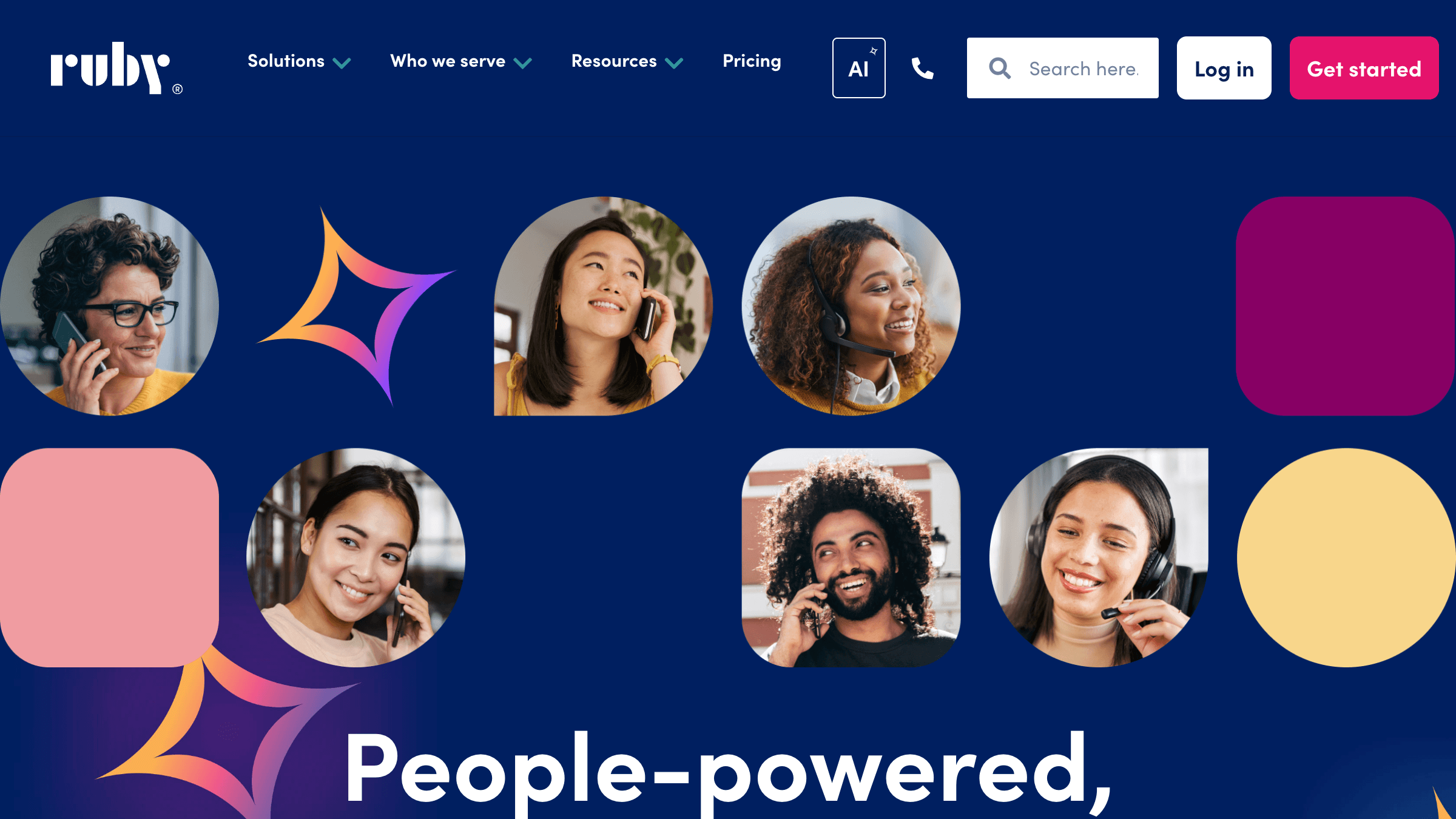
Virtual Receptionist Companies: What They Cost in 2026, and the AI Option Nobody Quotes You
Virtual receptionist companies compared on October 2026 prices: Ruby, Smith.ai, Abby Connect, Moneypenny, PATLive and AnswerConnect, with AI minute rates and after hours coverage.
GuideVoice AIVirtual Receptionist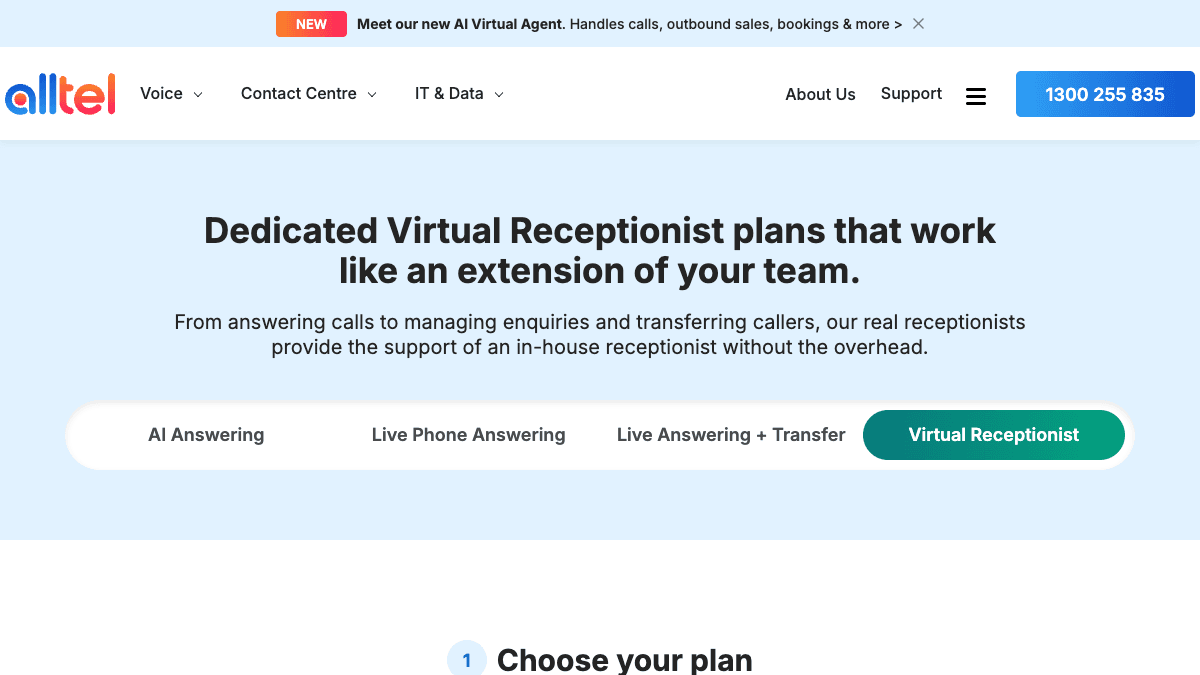
Virtual Receptionist Adelaide: Real 2026 Pricing, and the AI Version That Costs A$52 a Month
A plain English breakdown of what Adelaide businesses pay for call answering in 2026, with published AUD rates, the ACST timezone trap that quietly breaks bookings, and real numbers from a Prospect plumbing deployment.
GuideIndustry GuidesVirtual Receptionist
What Is a Virtual Receptionist? A No-Hype 2026 Guide for US Small Business Owners
A no-hype 2026 guide to virtual receptionists for US small business owners, with real pricing across AI, live human, and hybrid options, plus a real Florida HVAC client deployment that paid for itself in the first 6 hours of every month.
GuideIndustry GuidesVirtual Receptionist