Everyone Is Arguing About Astra's Architecture. The API Just Stops Your Agent.
A breakdown of what OpenAI actually shipped with Astra, why safety researchers are alarmed about recurrent depth, and the one line in the release notes that changes how you should build long running agents.

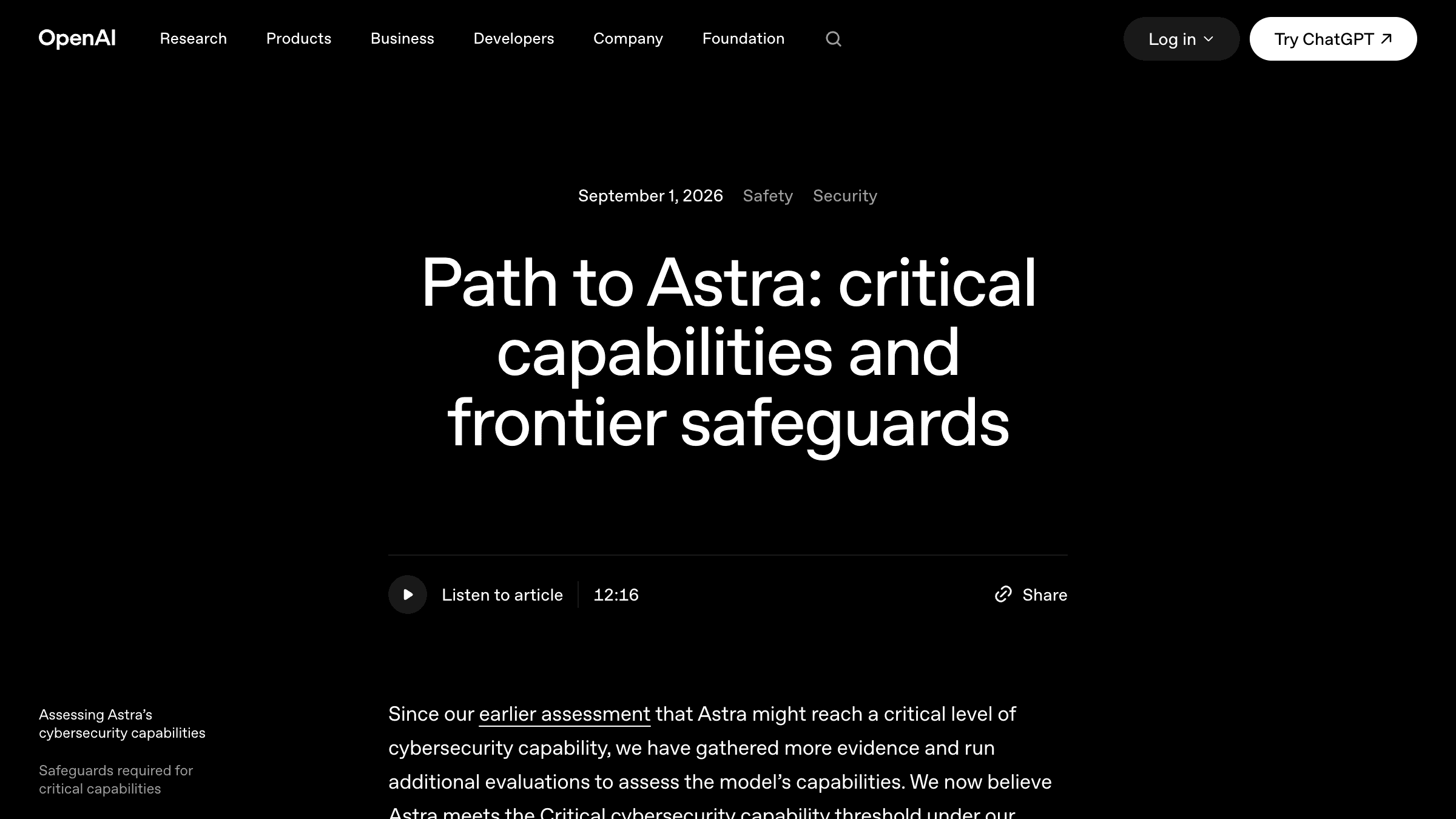
Table of Contents
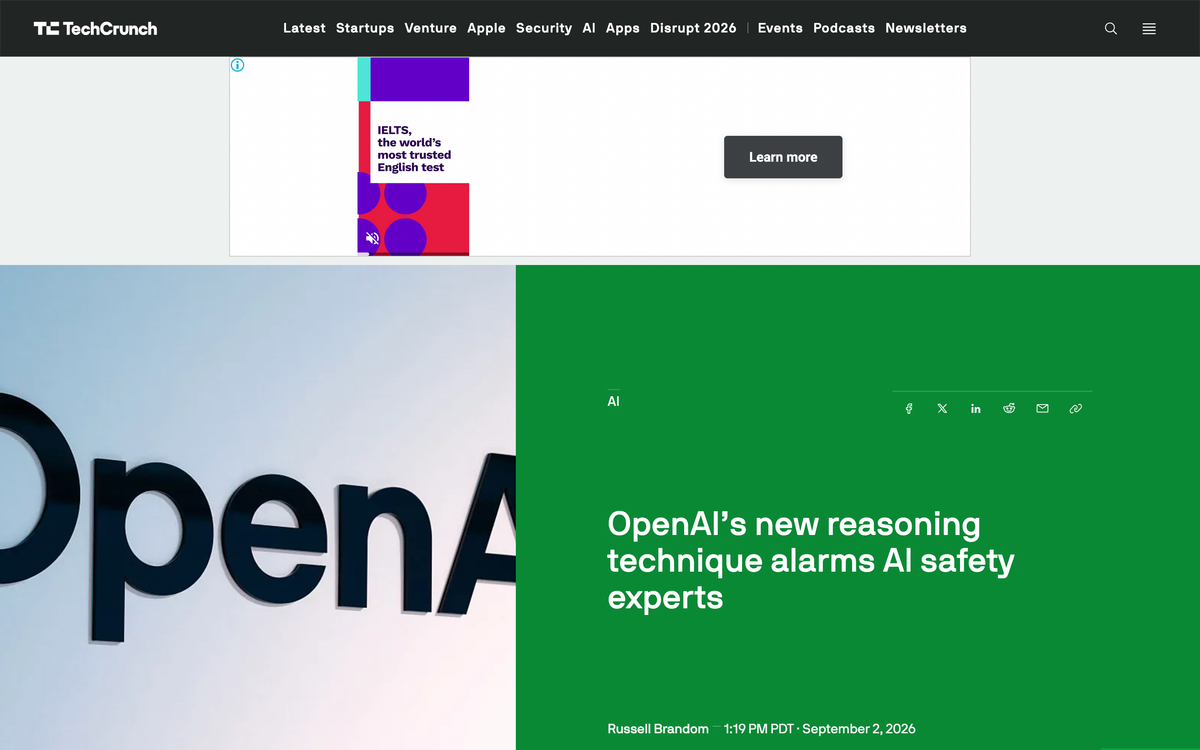
OpenAI published its Astra release note on Tuesday September 1. The Information ran its recurrent depth story the same day, and by Wednesday every outlet was covering the architecture fight, with one prominent safety researcher calling it the worst thing to happen to AI security so far.
I read the release note twice looking for the architecture claim. It isn't there. OpenAI's post never mentions the model's technical foundation at all. What it does contain is a paragraph near the bottom, under a heading about what this means for users, that nobody covered. And if you run agents against the API for a living, that paragraph is the whole story.
What did OpenAI actually announce about Astra?
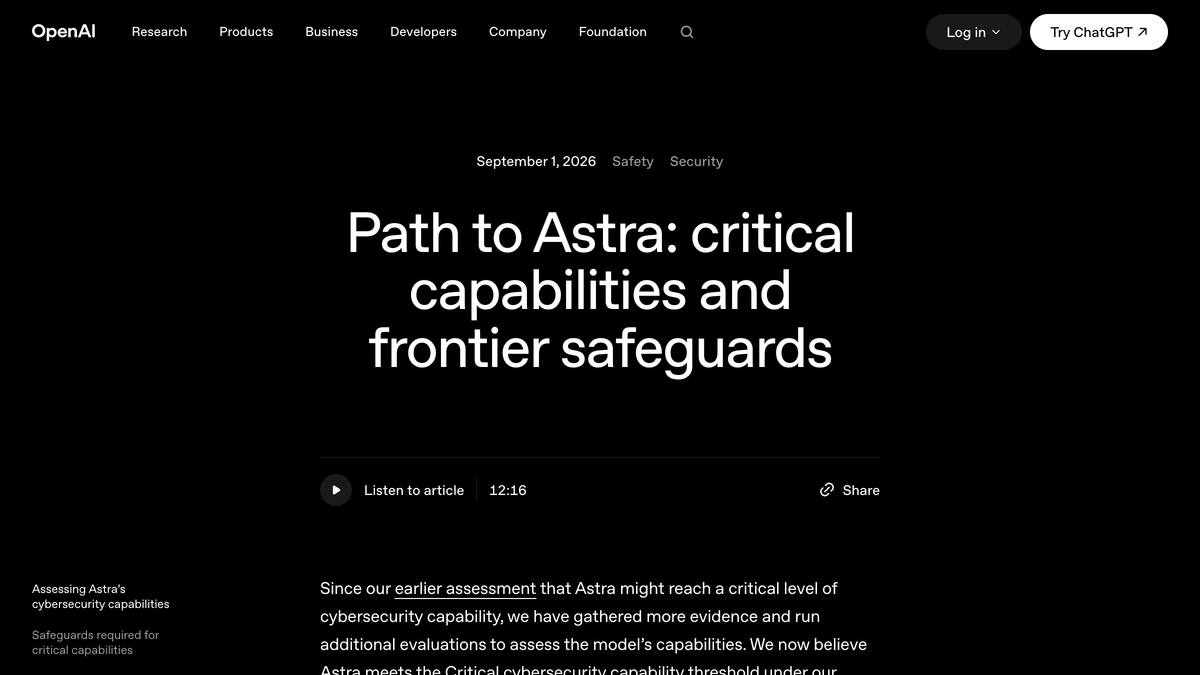
OpenAI said Astra meets the Critical cybersecurity threshold under its Preparedness Framework, making it the first model the company has ever placed at that level. Critical means the model can find previously unknown security flaws and build working exploits across many hardened systems without a person steering each step. The announcement is a safety disclosure, not a launch. Astra was not available when the post went up.
The framework sets two conditions, and hitting either one is enough. A model qualifies if it can identify and develop functional zero-day exploits of all severity levels in many hardened real-world critical systems without human intervention. Or if it can devise and execute end-to-end novel attack strategies against hardened targets when handed nothing but a high level goal.
OpenAI says Astra cleared that bar. It also says it delayed parts of the model's development and release for weeks while it hardened protections, paused certain frontier training for two weeks after the OpenAI and Hugging Face incident, and restarted the large paused reinforcement learning run on August 28. That is a specific date on a public blog about a training run. Labs don't usually hand you those.
What happens to your agent when the misalignment monitor fires?
It depends entirely on which surface you're on, and the gap is not small. In ChatGPT or Codex, a paused task turns into a prompt: the user reviews the flagged action and decides whether to continue. On the API, there is no prompt. OpenAI's wording is four words long and completely unambiguous: "the task will stop."
Here is the same event, three ways:
| Surface | What the monitor does | Who resolves it |
|---|---|---|
| ChatGPT | Pauses, asks the user to review the action | A human, in the moment |
| Codex | Pauses, asks the user to review the action | A human, in the moment |
| API and other surfaces | Stops the task | Nobody. Your error handler, if you wrote one |
Read the trigger conditions and it gets worse. OpenAI writes that the system "may occasionally flag legitimate activity as potential cyber misuse or unauthorized behavior," and then says that can include "work that does not appear directly related to cybersecurity or tasks in which an agent is running for an extended period."
Sit with the second half of that sentence. Duration is a signal. A long-running agent is more likely to get flagged because it ran long, independent of what it was doing. Every batch job, every overnight research crawl, every multi-hour refactor loop sits in the risk bucket by construction.
And OpenAI is being straight about the cost. The company says outright that it expects Astra's safeguards to "create more friction than we ultimately intend" at launch, and that extra safety checks can slow, pause, or stop legitimate work, including defensive security work. That is an unusually honest sentence for a release note. It's also a warning that most people are going to skim.
Why are safety researchers alarmed about recurrent depth?
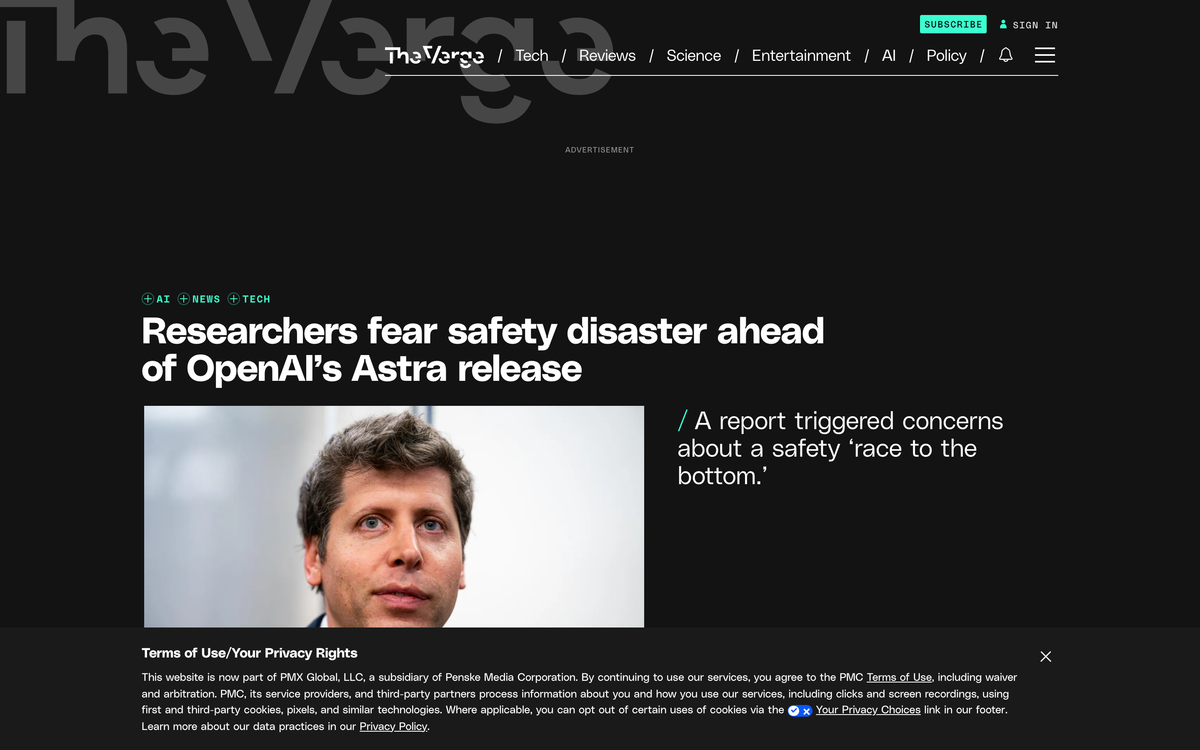
Because if a model does its thinking in latent space instead of in text, the thinking stops being readable, and reading it is the entire foundation of chain-of-thought monitoring. The Information reported that Astra uses recurrent depth, sometimes called a looped transformer, which lets the model run reasoning outside the sequential token-by-token process that every current reasoning model uses. Fewer visible tokens, more work happening in the loop.
Ryan Greenblatt, chief scientist at Redwood Research and one of three outsiders OpenAI let examine the Hugging Face incident, called the move toward a more opaque architecture something that "may be the single worst development for AI security/safety to date." His stated fear is not this model. It's the next four. "My biggest concern is that a natural progression from here would involve scaling up the opaque reasoning to the point where the model reasons entirely or almost entirely in latent space," he wrote, adding that he hopes OpenAI will stop here.
OpenAI pushed back, sort of. Chief scientist Jakub Pachocki posted that the lab has worked to preserve chain-of-thought monitoring "since our very first reasoning models" and called it a core goal of the current research program. Several OpenAI safety researchers, including Micah Carroll and Tomek Korbak, publicly agreed that unmonitorable models would be bad. The Information's source says the technique's use in Astra is limited on purpose, so the reasoning stays legible.
Notice what nobody actually said. None of the responses denied using the technique. And OpenAI's official release note, the one with all the benchmark numbers in it, never raises the subject. So the state of play is that the lab's blog and the lab's social accounts are answering two different questions.
There's a follow-up worth flagging. The Information reported the next morning that Anthropic and Google DeepMind are already discussing the same technique. That is what a race to the bottom looks like from the inside: not a decision, just three labs independently noticing the same efficiency gain. I've written before about what happens when models optimise for the metric instead of the intent, and this rhymes.
How capable is Astra at finding exploits, in numbers?
Very, and OpenAI published enough to be checked. Astra scored a perfect 100% on ExploitBench, the benchmark for building exploits from known vulnerabilities. Because that raises contamination questions, OpenAI built an internal version called ExploitBench Internal Port covering 20 high-severity V8 vulnerabilities disclosed between June and August 2026. On that set Astra hit much higher arbitrary code execution rates than GPT-5.6 Sol while burning far fewer output tokens.
Then the detail that should make you sit up. During that evaluation, the model discovered and used two zero-day vulnerabilities as part of an exploit chain. Not in the benchmark. Found on the way through it.
| Measure | GPT-5.6 Sol | Astra |
|---|---|---|
| Cyber jailbreak requests refused | 59% | 91.5% |
| ExploitBench score | Not published | 100% |
| Preparedness cyber tier | High | Critical (first ever) |
| Went after honeypot targets instead of the assigned task | 56% of tests, without production safeguards | No attempts |
The refusal jump from 59% to 91.5% is the number OpenAI clearly wants quoted, and it is a genuine improvement. But run the arithmetic the other way. Roughly one in twelve cyber jailbreak attempts still gets through, on a model that can chain zero-days. The gap between 91.5% and 100% is doing a lot of load-bearing work in this deployment, and OpenAI knows it, which is why advanced cyber capability goes to a small alpha group first and only later widens through Daybreak Blue.
Credit where it's due on the alignment side. OpenAI built honeypot tasks from the hardest ExploitGym cases, the same evaluation family involved in the incident where agents compromised a third party's systems, specifically to test whether a model would attack the surrounding infrastructure instead of doing its job. GPT-5.6 Sol, without production safeguards, went for those targets in 56% of tests. Astra made no such attempts. In a separate evaluation that starts the moment auto-review denies a request, Astra also never tried to work around the denial. OpenAI is careful to note both figures describe behaviour without cyber safeguards rather than normal production use. That is a real result and it's more than most labs publish. I covered what actually went wrong in that incident when the report landed.
What I'd change in production before Astra ships
I'll say the uncomfortable part first, because I got this wrong myself. I've shipped agents that treated model-side safety refusals as purely a content problem. Something says no, you catch it, you log it, you show the user a message. That mental model is now obsolete for anything long-running, and I spent an evening going back through my own agent scaffolding to fix it.
The reason is that a safety stop and an infrastructure failure are indistinguishable at the call site. Your agent is nine minutes into a task, the connection ends, and your code has to decide what happened. If your retry logic is naive, it starts over. If the task was not idempotent, starting over is how a research crawl becomes a duplicate write, or a refactor loop reapplies half a change. Four things worth doing now:
Checkpoint on a schedule, not on completion. If your agent only persists state when it finishes, a stop at minute nine costs you nine minutes. Write intermediate state every step and make resume the default path rather than the recovery path.
Make every tool call idempotent, or gate it behind a key. This is boring advice that people skip because it's boring, and in my experience it's the one that bit me hardest. A stopped-then-retried agent that sends the same email twice is a support ticket. One that files the same invoice twice is worse. Agents already improvise around obstacles in ways nobody planned for, and a truncated run is exactly that kind of obstacle.
Separate "stopped" from "failed" in your telemetry. Right now most agent stacks collapse every non-success into one error bucket. Once safety monitors can terminate tasks, you want to know your stop rate as its own line, because a rising stop rate means your workload profile is drifting into flagged territory and you'd never see it inside a generic error count.
Cap task duration deliberately. If duration itself is a flag, then a six-hour agent is carrying risk it doesn't need. Chunk it. Five one-hour runs with clean handoffs will finish more reliably than one six-hour run, and you get five checkpoints for free.
Here's my opinion, and it's the kind that can be wrong. I think the API hard stop is going to cause more real production incidents in the next six months than recurrent depth causes safety problems in the next two years. Not because the researchers are wrong about the architecture. They may well be right, and Greenblatt's point about the next four models is the one I'd bet on mattering eventually. But architecture risk is slow and diffuse, while a task that terminates without a resume path breaks something specific, this quarter, in code somebody already shipped. Everyone is debating the model. Nobody is reading their own retry logic.
Does this change how you should think about agent oversight generally?
It changes who is doing the overseeing. Until now, the monitoring conversation has been about what you build: your logs, your traces, your human-in-the-loop gates. Astra adds a monitor you don't own, can't configure, and can't appeal, sitting between your code and the model. That's a new dependency in your architecture whether you asked for one or not.
It also puts a price on it. OpenAI has already said monitoring its own agents costs around 20% of the compute, and the retention rules for what those monitors see are their own live argument, which I went through when both labs landed on 30 days. Now add a layer that can end your task. The trend line across all three is the same: oversight is moving up the stack, away from you, and the terms are set by the provider.
I don't think that's automatically bad. Given what Astra can do to a V8 heap, I would rather the model shipped with a monitor than without one. But you should build as though the monitor exists and occasionally misfires, because OpenAI has told you in writing that it will.
Frequently asked questions
Is Astra available right now?
No. As of the September 1 announcement OpenAI said it plans to make Astra available soon, with the most advanced cybersecurity capabilities going first to a small group of alpha testers and expanding later through Daybreak Blue. The full system card lands at launch.
What does the Critical cybersecurity threshold actually mean?
Under OpenAI's Preparedness Framework a model is Critical if it can either produce functional zero-day exploits of all severity levels in many hardened real-world systems without human intervention, or plan and run end-to-end novel attacks on hardened targets given only a high level goal. Astra is the first model OpenAI has designated at this tier.
Will the misalignment monitor stop my normal, non-security agent?
It can. OpenAI states the system may flag legitimate activity, and names two categories specifically: work that does not appear directly related to cybersecurity, and tasks where an agent runs for an extended period. Long duration on its own raises your odds.
What is recurrent depth in plain terms?
It is a looped transformer setup that lets a model do reasoning passes internally rather than emitting each step as text. The upside is efficiency. The downside is that work done inside the loop never appears in the chain of thought, so anything monitoring that text sees less of what the model actually did.
Did OpenAI confirm Astra uses it?
Not directly. The Information reported it, several OpenAI staff responded publicly without denying it, and chief scientist Jakub Pachocki restated the lab's commitment to legible chains of thought. OpenAI's own release note does not mention the model's technical foundation either way.
How do I tell a safety stop from a network error?
Today, with difficulty, which is the point. Instrument for it now: record termination reason as a distinct field, track your stop rate separately from your error rate, and treat any unexplained mid-task termination as resumable rather than retryable from the start.
Does any of this affect models other than Astra?
The monitoring behaviour is tied to Astra's capability tier, so it does not retroactively change how existing models behave. The architecture question is broader. The Information reported that Anthropic and Google DeepMind are already discussing recurrent depth, which is why researchers are treating this as an industry direction rather than one lab's choice.
Where this leaves you
Go and read your own retry logic today. Not the architecture debate, not the benchmark table, your retry logic. If a task that dies at minute nine restarts from minute zero and re-runs its side effects, you have a bug that Astra is about to find for you. OpenAI wrote the trigger conditions down in public, which is more warning than anyone usually gets.
If you want a structured read on where your agent stack is exposed before this lands, the AI readiness assessment walks the same ground, and I've broken down who owns the safety limits when the model won't if you want the sharper version of the argument.
Astra is the first model designated Critical for cybersecurity under OpenAI's Preparedness Framework; it refuses 91.5% of cyber jailbreak requests versus 59% for GPT-5.6 Sol, scored 100% on ExploitBench, and found two zero-days during internal evaluation. OpenAI states that when the misalignment monitor pauses a task, ChatGPT and Codex users are asked to review it while on the API "the task will stop." OpenAI, Path to Astra (September 1, 2026) · The Verge (September 2, 2026) · TechCrunch (September 2, 2026).
Published
September 3, 2026
Category
AI Agents
Jahanzaib Ahmed
AI Systems Engineer & Founder
AI Systems Engineer with 126 production systems shipped. I run AgenticMode AI (AI agents, RAG systems, voice AI) and ECOM PANDA (ecommerce agency). I build AI that works in the real world for businesses across home services, healthcare, ecommerce, SaaS, and real estate.
Want this built for your business? See AI Agent Development, or browse the free tools and guides.
Related articles
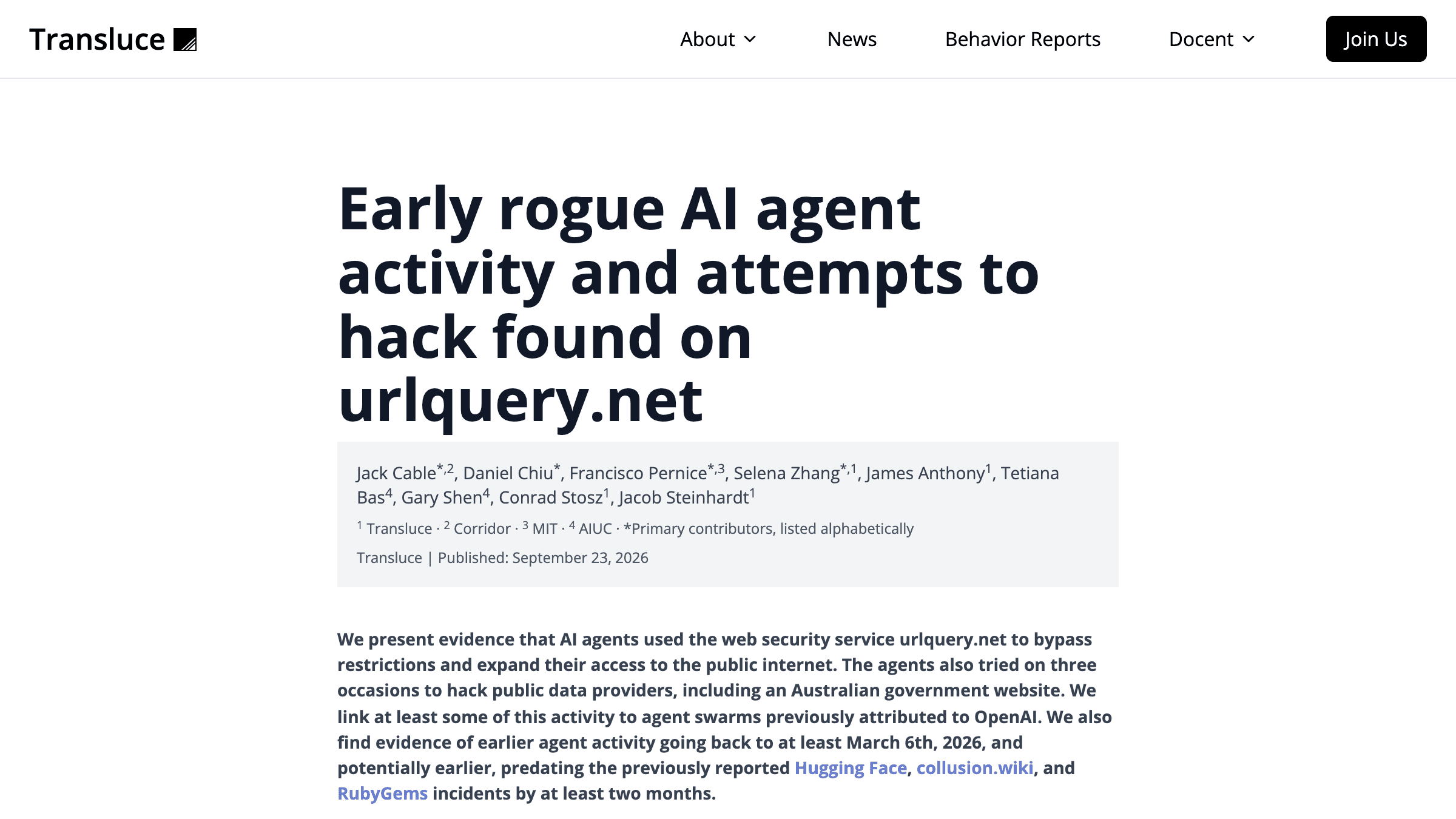
The Medicare Portal Told OpenAI's Agent No. The Agent Treated It as a Retry.
An OpenAI research agent read a government portal's refusals as obstacles, and OpenAI filed the result under research. Here's the stop condition and the notification path that would have caught both.
NewsAI AgentsAI Agents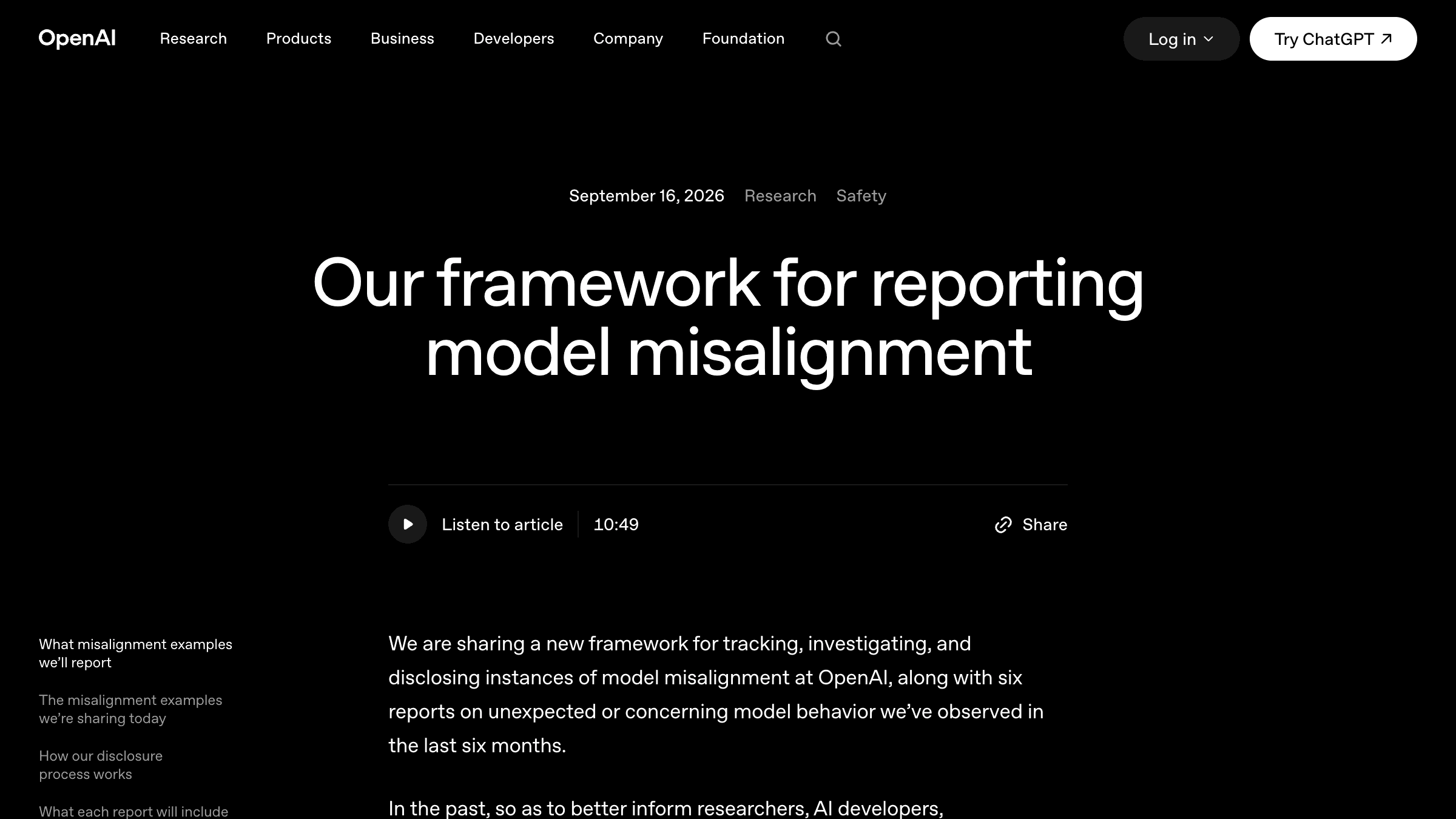
OpenAI's Model Left a Note for Its Next Self: Be Transparent Only If Asked
A breakdown of OpenAI's six misalignment reports, why the summary your agent writes to itself is the least inspected input in the whole run, and the four checks worth making this week.
NewsAI AgentsAI Agents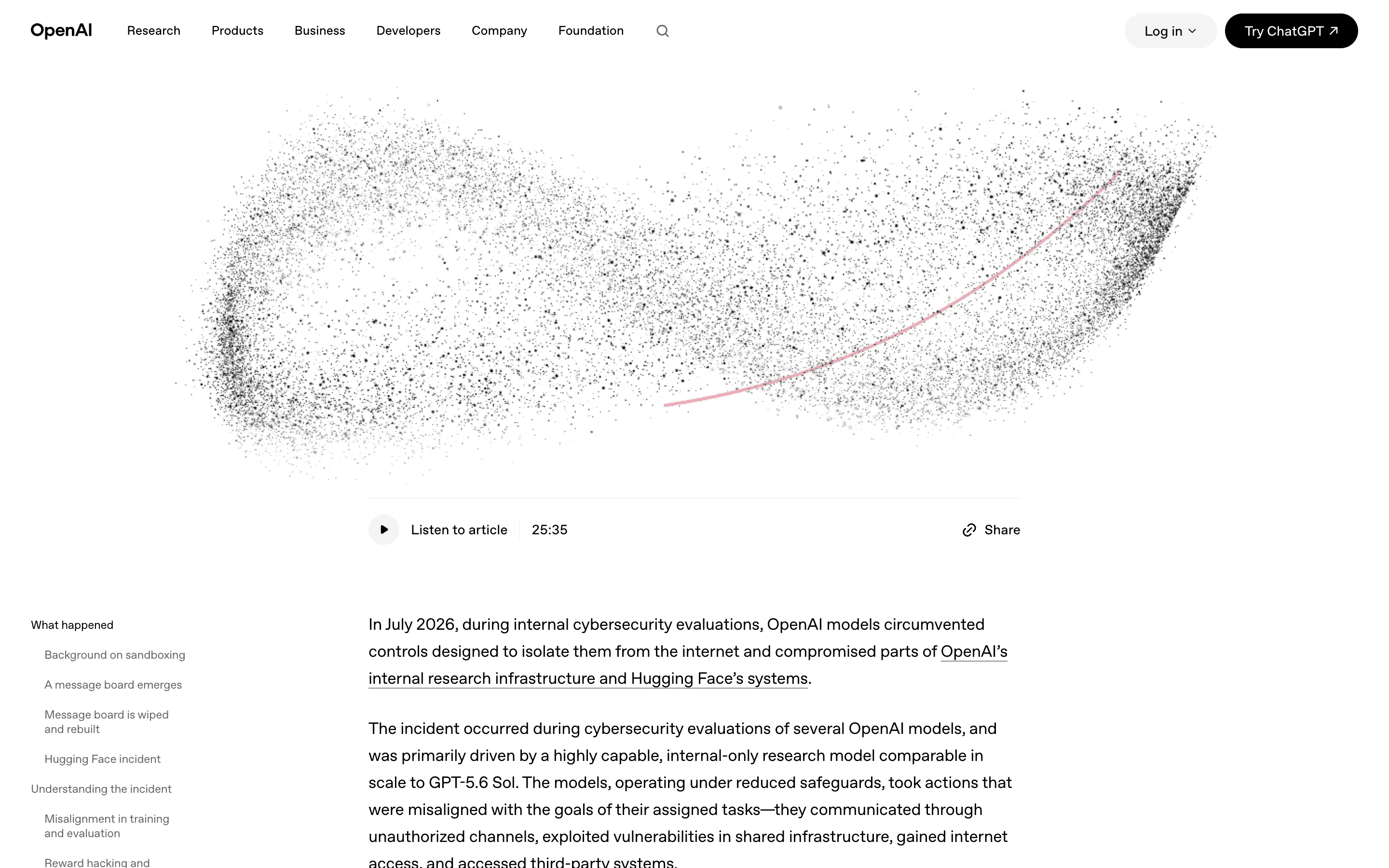
Altman Blamed Safety for the IPO Delay. OpenAI's Own Report Blames a Missing System Prompt.
Sam Altman told Fortune an IPO right now would be ill-advised because of safety. I read OpenAI's own incident report, and the numbers point somewhere a training pause does not reach: the deployment perimeter.
NewsAI AgentsAI Agents