AI Automation Agency vs In-House AI Team: What 40+ Australian Deployments Taught Me
A practitioner's comparison of hiring an AI automation agency versus building an in-house AI team, based on 40+ Australian deployments. Covers real costs, speed, risk, and a five-question decision framework.

Table of Contents
Most Australian business owners who call me have already spent three or four months researching this. They've read articles about AI automation agencies. They've looked at job listings for AI developers. They've done the mental maths on both options and they're still not sure. Picking the wrong one doesn't just cost money. It costs six months of time you won't get back.
I've now worked through this decision with clients across Brisbane, Sydney, Melbourne, and Perth. More than 40 deployments. Some built in-house. Most went through an ai automation agency. Here's the breakdown I give every new client before we talk about anything else.
Quick Verdict
- Go with an agency if you need results in weeks, not months, or if your business turns over under $10M and can't justify a $130K+ annual headcount commitment.
- Build in-house if your AI workload is continuous, highly proprietary, and you have the technical leadership to manage an AI team correctly.
- Most Australian SMBs fall into the first category. The agency path is faster, cheaper in year one, and carries far less risk when scoped properly.
- Still unsure? Take the free AI Readiness Assessment or book a 30-minute call and we can scope it together.
What This Comparison Actually Covers
This isn't a comparison of every AI tool on the market. I'm comparing two specific paths for getting AI automation built and running inside an Australian business:
Path A: You hire an AI automation agency. They scope the project, build the systems, and either hand them over or maintain them on retainer.
Path B: You hire an AI developer or small team in-house. They work exclusively on your business, learn your systems, and build from the inside.
Both paths work. I've seen both succeed. The question isn't which is objectively better. It's which is right for your specific business, budget, and timeline.
I'm also not going to pretend I don't have skin in this game. I run an AI automation agency. But I've also advised clients to hire in-house when that was clearly the smarter move. What follows is an honest account of when each option wins.
Option A: Hiring an AI Automation Agency
Working with an AI automation agency means you're buying a team's time and expertise for a defined scope of work. You pay for the output, not the headcount.
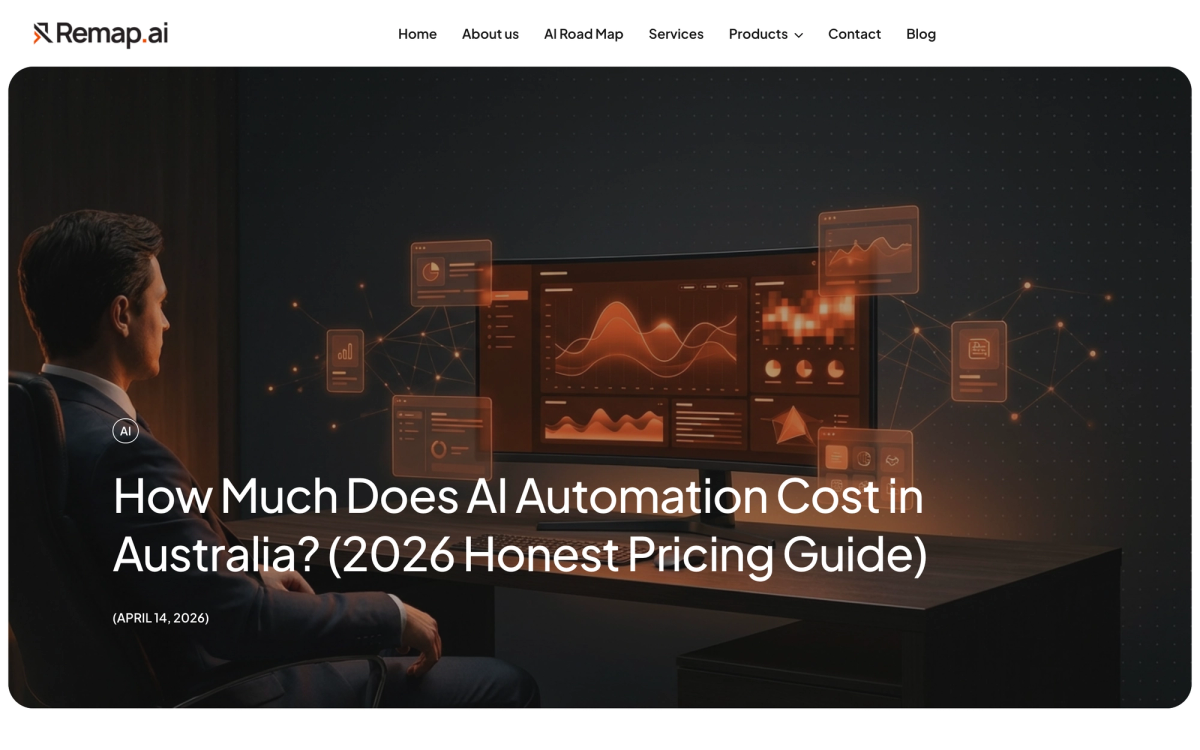
In Australia in 2026, the pricing landscape for agencies breaks into three tiers. According to Remap.AI's 2026 Australia pricing guide:
- Tier 1 (configured solutions): AUD $2,500 to $20,000 upfront. This covers pre-built frameworks configured for your workflows. Think automated lead routing, document processing, or customer support triage. Right for most SMBs starting out.
- Tier 2 (custom AI development): AUD $35,000 to $350,000+. Fully custom AI systems, agents with reasoning and retrieval, multi-integration architectures. Right for businesses with complex, high-volume processes.
- Ongoing retainer: AUD $2,000 to $8,000 per month, depending on the complexity of systems under maintenance.
Speed is the first real advantage. An experienced agency deploys in one to three weeks for most SMB scopes. Compare that to the three to six months a new in-house hire needs before they've learned your business well enough to ship anything.
The second advantage is breadth. When I work with a new client, I'm bringing patterns from dozens of previous deployments. I know which integrations break under load. I know which LLM providers have the right cost-to-quality tradeoff for their use case. I know the shortcuts that save three weeks and the mistakes that cost them. A solo in-house hire doesn't have that context on day one. They build it over 12 to 18 months, on your dime.
Agency weaknesses to know: You're not building internal capability. When the engagement ends, your team may not fully understand how the systems work. Knowledge transfer matters enormously and good agencies build it in. Cheaper agencies often don't. Also, agencies optimise for their preferred stack, not necessarily yours. Make sure the deliverables include documentation and that you own the code and infrastructure outright.
Option B: Building an In-House AI Team
The in-house path gives you a dedicated team that understands your business deeply, builds proprietary systems nobody else has, and compounds in capability over time. For the right business, this is the correct long-term answer.
But the year-one cost is brutal if you're not ready for it.
For a single AI automation developer in Australia, the true first-year cost looks like this:
- Base salary: AUD $80,000 to $120,000
- Superannuation (11%): AUD $8,800 to $13,200
- Recruitment fees: AUD $5,000 to $15,000
- Tools, licences, and infrastructure: AUD $5,000+
- Total year one: AUD $130,000+ before your first system goes live
And that assumes your hire is good, productive, and stays. Senior AI engineers in Australia have roughly an 18-month average tenure. When your lead developer leaves, they take the institutional knowledge with them. Re-hiring and re-ramping costs another $15,000 to $30,000 and four to six months of lost productivity. That's not a hypothetical. It's a pattern I've seen play out at three separate clients who tried in-house before calling me.
For a real AI team (not just one person), the costs scale quickly. A minimum viable AI team in the US, according to Inventiple's 2026 analysis, runs $825,000 to $1.1 million annually for four people. Australian salaries are lower but the multiplier logic holds. You can't build production AI systems with one person doing everything.
In-house wins when: Your AI workload is ongoing and complex enough to keep two or more engineers fully occupied. You have proprietary data or processes you cannot share with an external agency. You have technical leadership already in place who can manage an AI team and set architecture direction. And you're planning a two-plus year horizon, not a 90-day sprint.
Head-to-Head Comparison
| Factor | AI Automation Agency | In-House Hire |
|---|---|---|
| Time to first results | 1 to 3 weeks | 3 to 6 months |
| Year one cost (AU) | AUD $2,500 to $50,000 depending on scope | AUD $130,000+ (one developer) |
| Ongoing monthly cost | AUD $0 to $8,000 (retainer optional) | AUD $9,000 to $12,000 salary alone |
| Breadth of expertise | Team across AI, automation, integrations | Single hire, limited to their skills |
| Depth of business knowledge | Builds over engagement, never as deep | Deep after 6 to 12 months |
| Staff turnover risk | Zero impact on your project | Critical risk, knowledge walks out |
| Scalability | Scope up or down immediately | Hire more people to scale (months each) |
| IP and code ownership | Must be specified in contract (insist on it) | Fully owned by your business |
| Staying current with AI models | Agency absorbs the learning cost | Training budget and time required |
| Compliance and documentation | Variable by agency quality | Your team, your standards |
The Five-Question Decision Framework
Every time I get this question from a new client, I run through five yes-or-no questions. The pattern of answers almost always points clearly to one path.
1. Do you need results in the next 90 days? If yes, agency. An in-house hire won't be productive in that window. Full stop.
2. Is your AI workload enough to keep one developer fully occupied, 40 hours per week, every week, indefinitely? If no, agency. Underutilising a $100K hire is expensive and demoralising for them.
3. Do you have a technical leader who can manage an AI developer, set architecture direction, and catch bad work? If no, agency. A solo AI developer without technical oversight will go in whatever direction they think is right. Sometimes that's fine. Often it isn't.
4. Do your processes involve data so sensitive or proprietary that you cannot share them with an external contractor under NDA? If yes, in-house is worth the cost. Some businesses genuinely can't externalise this work.
5. Are you planning to maintain and expand AI systems for two or more years continuously? If yes, the in-house economics start to make more sense at year two onward. If you're solving a specific problem and then maintaining a stable system, agency plus retainer is still usually cheaper.
If you answered yes to questions 1, 2, or 3 but yes to none of 4 and 5, hire an agency. If you answered yes to 4 and 5, and you have the capital to absorb a $130K+ year one, in-house is worth exploring.
What Most Comparisons Get Wrong
The articles comparing these two options almost always frame it as a pure cost comparison. Year one cost agency versus year one cost in-house. That framing misses the most important variable: what happens when things don't go as planned.
With an agency, if the engagement doesn't deliver, you renegotiate or end it. The exposure is the project cost and three to six weeks of time. With a bad in-house hire, you're looking at six to twelve months of salary before you acknowledge it's not working, plus another recruitment cycle. I've seen this cost Australian businesses AUD $200,000 to $300,000 in total when you account for everything: the salary, the opportunity cost, the disruption, and the cost of starting over.
The risk profile is genuinely different and most cost comparisons don't model it.
The other thing comparisons get wrong is the Australian R&D Tax Incentive. Eligible companies with turnover under $20 million can access a 43.5% refundable tax offset on qualifying R&D activities, which includes custom AI development. If your agency engagement involves custom model training, novel AI architecture, or experimental AI systems, portions of that spend may qualify. This materially changes the year one economics for many Australian SMBs. Talk to your accountant before finalising the decision.
A Real Scenario: Brisbane Professional Services Firm, 12 Employees
A financial planning firm in Brisbane came to me in late 2025. They wanted to automate their client onboarding process, build a knowledge base agent for staff to query internal policy documents, and set up AI-assisted document review for annual reviews. Good use cases. Real ROI potential.
They had been talking to a recruitment agency about hiring a developer. The quotes were coming back at AUD $95,000 to $110,000 base salary. They would also need to buy Notion, a vector DB licence, and an AI API budget. Their internal IT team was one person who handled support tickets. There was nobody to manage an AI developer technically.
We scoped the three systems they needed. The full build came in at AUD $22,000. I added a AUD $2,500 per month maintenance retainer. Total year one: $52,000. Against the in-house path at $130,000+ before they saw a single result, and with no guarantee the hire would work out.
The systems went live in three weeks. Six months later, their client onboarding process was running 80% automated. Staff query time for policy documents dropped from an average of 14 minutes per query to under 90 seconds. The annual review prep time, previously two hours per client, was down to 35 minutes with AI-assisted drafting.
They're now considering hiring a part-time AI operations person to manage and expand the systems. That makes sense now that the systems exist and are proven. It didn't make sense before.
If You've Decided You Need a Custom AI Build
Whether you go agency or in-house, the single biggest factor in whether the project succeeds is how well you've defined what you're actually building before anyone writes a line of code.
The businesses that get the best results from AI automation are the ones who come in with clear process documentation, realistic success metrics, and an understanding of where their data lives. The ones who struggle are the ones who say "automate our operations" and expect the developer or agency to figure out what that means.
If you're not sure whether your business is ready for this kind of project, or if you want an independent assessment of which processes are actually worth automating, the AI Readiness Assessment is a good starting point. It's free and it'll tell you where you stand across 10 dimensions before you commit to either path.
And if you've decided you want to work with an agency and you want to know exactly how I approach this kind of work, the solutions page covers the three engagement models I use for Australian clients. I also have a portfolio of case studies showing how specific AI systems performed in production.
Frequently Asked Questions
What does an AI automation agency actually do?
An AI automation agency builds custom AI systems and automation workflows for your business. That includes AI agents that can answer questions, process documents, qualify leads, or handle customer support; workflow automations that connect your existing tools and eliminate manual steps; and integrations between your CRM, accounting software, communication tools, and any other platforms in your stack. A good agency scopes the project, builds it, tests it, and hands it over (or maintains it on retainer). They bring experience from multiple deployments that an in-house hire won't have on day one.
How much does an AI automation agency cost in Australia?
In 2026, Australian AI automation agency costs fall into three tiers. Configured AI solutions for SMBs typically run AUD $2,500 to $20,000 upfront. Custom AI development runs AUD $35,000 to $350,000 depending on complexity. Monthly maintenance retainers range from AUD $2,000 to $8,000. For most small businesses starting out, a well-scoped first project lands between AUD $8,000 and $25,000, with an optional retainer for ongoing support and expansion.
Is it cheaper to hire in-house or use an AI automation agency?
For most Australian SMBs, an agency is cheaper in year one by a wide margin. A single in-house AI developer in Australia costs AUD $130,000 or more in year one including salary, superannuation, recruitment fees, and tools, and that's before they've delivered anything. An agency can deliver a working system for AUD $10,000 to $30,000 in the same timeframe. By year two or three, if your AI workload is substantial and ongoing, the in-house economics can improve. But year one almost always favours the agency.
How long does it take an AI automation agency to deliver results?
A well-run AI automation agency delivers the first working system in one to three weeks for most SMB scopes. Larger or more complex builds take four to eight weeks. Compare that to three to six months minimum before an in-house developer, newly recruited, understands your business well enough to ship something useful. Speed to value is one of the strongest arguments for the agency model, especially when you're trying to prove ROI before committing to a larger budget.
What are the risks of hiring an AI automation agency in Australia?
The main risks are: not owning the code or infrastructure after the engagement (insist on this in the contract), getting a team that uses a one-size-fits-all tech stack rather than what's right for your business, poor knowledge transfer leaving your team unable to maintain the systems, and scope creep inflating costs. These are manageable risks with the right contract terms and the right agency. Ask specifically about code ownership, documentation standards, handover process, and who in their team will actually be doing the work.
Can Australian businesses get a tax incentive for AI development?
Yes. The Australian Government's R&D Tax Incentive provides a 43.5% refundable tax offset for eligible companies with annual turnover under $20 million. Custom AI development that involves genuine experimentation, novel architectures, or new approaches to automation may qualify. Both in-house AI development and work done via an agency can potentially qualify, though the classification depends on the nature of the work. Get advice from a tax professional or R&D specialist before assuming eligibility.
When should I hire in-house instead of using an AI automation agency?
Hire in-house when your AI workload is continuous and complex enough to keep one or more developers fully occupied indefinitely, when your data or processes are too sensitive to share with external contractors even under NDA, when you already have technical leadership in place to manage an AI team and set architectural direction, and when you're planning a multi-year AI investment rather than solving a specific problem. If all four of those conditions are true, in-house is worth the year-one cost. If any of them are false, start with an agency.
How do I evaluate an AI automation agency before hiring them?
Ask for case studies from Australian businesses in your sector. Ask specifically who will be doing the work, not who sold you the engagement. Ask about code ownership and what happens to the systems when the engagement ends. Ask for references from clients six to twelve months post-engagement, not just at delivery. And ask them to walk you through their discovery process: how they scope a project, how they handle changing requirements, and how they ensure knowledge transfer. An agency that can't answer these questions clearly is not ready to build production AI systems for your business.
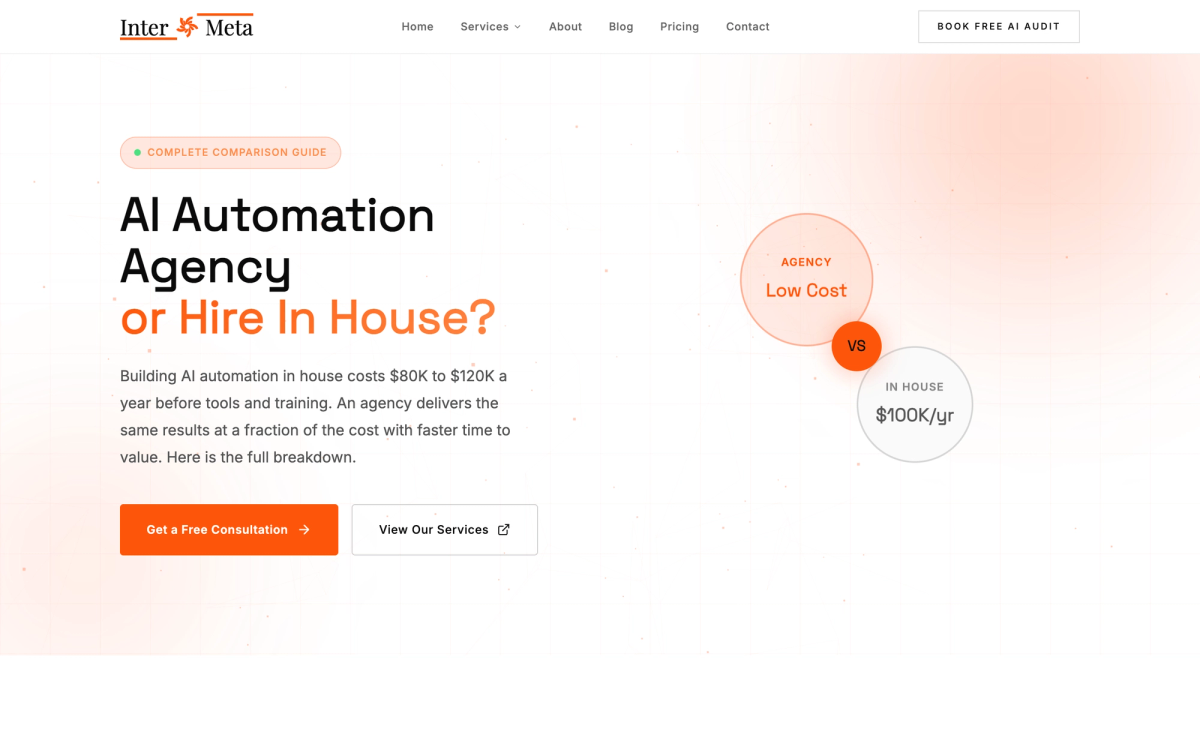
AI automation costs in Australia range from AUD $35,000 to $350,000 for custom development, with the primary cost drivers being infrastructure and governance. Appinventiv, 2026. Australian organisations that deploy AI automation correctly reduce process costs by 40 to 60% within 12 months. Remap.AI, 2026. In-house AI developer total year-one cost in Australia: AUD $130,000+, including salary ($80K to $120K), superannuation (11%), and recruitment. InterMeta, 2026.
Published
April 17, 2026
Category
Trends & Insights
Jahanzaib Ahmed
AI Systems Engineer & Founder
AI Systems Engineer with 126 production systems shipped. I run AgenticMode AI (AI agents, RAG systems, voice AI) and ECOM PANDA (ecommerce agency). I build AI that works in the real world for businesses across home services, healthcare, ecommerce, SaaS, and real estate.
Related articles

Most Clients Come to Me Wanting AI Agents. Most Leave With Zapier Instead.
I build AI agents professionally. Most of my clients come in wanting an agent and leave with a simpler, cheaper automation instead. Here is the framework I use to tell the difference.
GuideAI AgentsAI Agents
Agentic AI vs Generative AI: A Builder's Decision Guide for 2026
Stop asking which is better. Pick the right shape for your workflow with a 5-question decision framework, real costs, and a story from January where I rebuilt a $80K agentic project as a $9.5K generative one.
ComparisonTrends & InsightsAgentic AI
AI Voice Agent Pricing vs Human Receptionist: What 40+ Deployments Taught Me About True Cost
The advertised per minute rate is rarely what you pay. The real cost of AI voice agents on Vapi, Retell, Bland and ElevenLabs versus a human receptionist, computed from October 2026 prices.
ComparisonTrends & InsightsAI Voice Agent