AI Automation Agency vs Hiring In-House: What Every Canadian Business Owner Gets Wrong
Comparing an AI automation agency to hiring in-house for your Canadian business. Real 2026 cost data, timelines, a 6-question decision framework, and the sequencing strategy that actually works.

Table of Contents
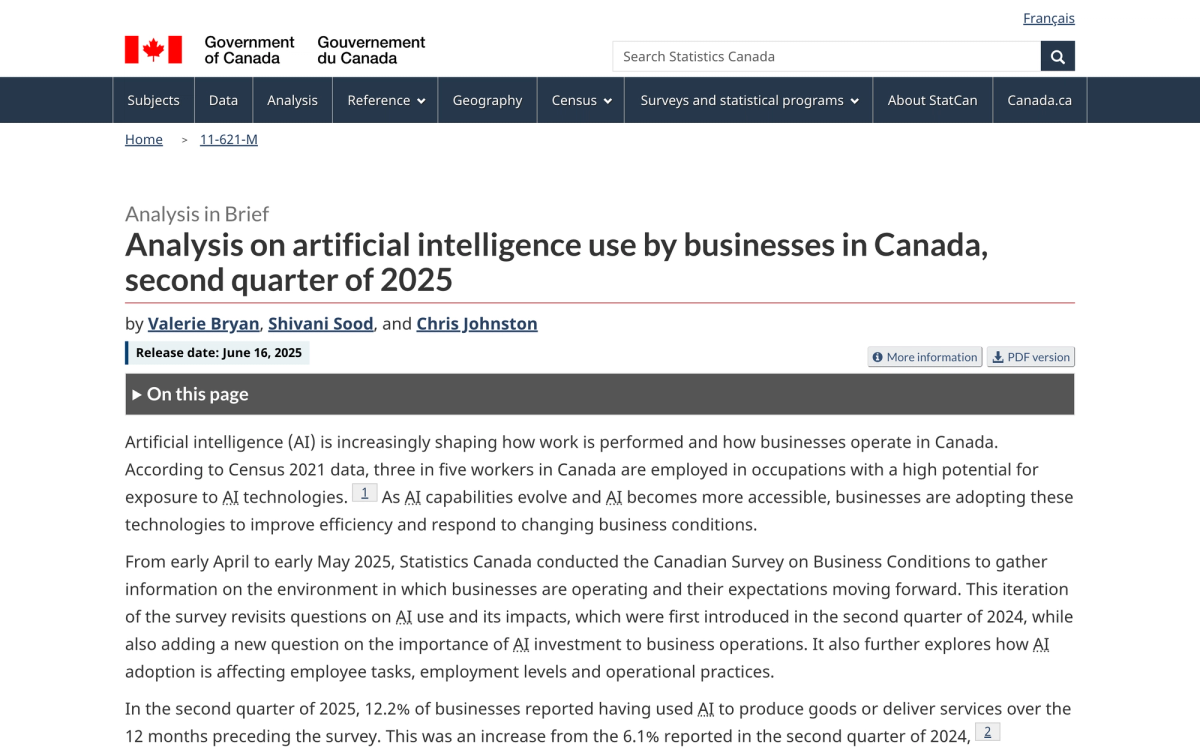
The build versus hire question in Canada resolves on system count, not company size. Statistics Canada put AI use at 12.2% of Canadian businesses in 2025, double the prior year but still early, which means most companies are running one or two automations rather than a portfolio, and that is exactly where an agency wins.
The numbers are unforgiving on the hiring side. A mid level AI engineer costs $103,000 to $130,000 CAD in base salary and ships nothing for the first three to six months while they learn your systems. An agency delivers working automation in 8 to 14 weeks for $10,000 to $50,000 CAD. Start with an agency, validate which automations actually matter to your business, and hire in once you have enough running systems that maintenance is a full time job. Hiring first is how you pay six figures to discover which workflow you should have automated.
You've decided AI automation is worth pursuing for your Canadian business. That's the easy part. Now comes the question that actually determines whether this succeeds or drains your budget: who builds it?
Two paths form almost immediately. The first: hire an AI automation agency, pay for expertise, get results in weeks, skip the hiring headaches. The second: build internal capability, own the stack, develop knowledge that stays with the company.
Both camps have burned businesses that followed them without thinking it through. I've worked with Canadian clients who spent $60,000 on agency retainers and ended up with systems nobody on their team could maintain. And I've seen others spend 14 months trying to hire an AI engineer, delay every initiative, and watch a competitor take their accounts while they posted job listings on LinkedIn.
Here's the honest comparison, based on 126 deployments across Canada, Australia, and the US.
Quick Verdict
Pick an agency if: You need results in the next 90 days, you're under 50 employees, or this is your first AI initiative. Budget $10,000 to $35,000 CAD for a solid first project.
Hire in-house if: You already have 2 or more AI systems running, need someone to own the full roadmap, AND can budget $130,000+ CAD plus benefits year one.
Still unsure? Answer the 6 questions in the decision framework section below. They'll tell you.
What We're Actually Comparing
Before the numbers, let's define terms. An AI automation agency is a firm that specialises in building AI-powered workflows, chatbots, voice agents, data pipelines, or custom systems for client businesses. They scope, build, deliver, and typically offer maintenance or retainer support after launch.
Hiring in-house means bringing on an AI engineer or automation specialist on your payroll. Not a team. Not a department. One person, for most Canadian SMBs asking this question.
This distinction matters because most comparisons model in-house as a full 4-person ML team versus an agency. That's an enterprise comparison. For the 98% of Canadian businesses with under 100 employees, the real question is: agency, or one AI hire? Those are very different trade-offs.
Option A: The AI Automation Agency
The strongest argument for working with an agency is speed. A good agency has already made the mistakes on someone else's budget. They've built lead routing systems, voice agents, document processing pipelines, and client intake workflows dozens of times. They know where the edge cases hide and which configurations break under production load.
The typical engagement for a Canadian SMB: a scoping call or two, a two-week discovery phase, then 4 to 8 weeks of build, then launch. From first conversation to working system: 8 to 14 weeks. That's realistic for a system of real complexity.
What agencies actually charge in Canada
Agency pricing for Canadian businesses in 2026 breaks down into three ranges based on project scope, not company size:
- Entry-level single workflow ($5,000 to $15,000 CAD): One automation with narrow scope. Lead capture to CRM, invoice processing, or scheduling automation. Good starting projects. Don't expect anything sophisticated at this range.
- Mid-tier multi-workflow system ($15,000 to $40,000 CAD): The most common first engagement size for a Canadian SMB. A lead qualification agent, a client-facing chatbot, and a notification system. 4 to 6 weeks of build time.
- Full custom AI platform ($50,000+ CAD): End-to-end automation covering sales, operations, and support. Enterprise territory. Monthly retainers of $3,000 to $8,000 CAD after delivery.
Those retainers matter. A $20,000 build with a $2,000 per month maintenance retainer costs $44,000 in year one and $24,000 in every year after. Factor that in before you sign anything.
Where agencies fall short
The biggest problem with the agency model isn't cost. It's iteration speed. Every change goes back through the agency queue. Your sales team wants to modify the lead scoring logic? Submit a ticket. Marketing wants a new intake question added? That's a change request, a scope discussion, and probably a $500 invoice. For a business that moves fast, this overhead compounds quickly.
The second problem is knowledge transfer. When the agency wraps the engagement, the institutional knowledge of how your system works often walks out with them. I've inherited agency-built systems where the documentation was three paragraphs and a Loom video recorded at 2x speed. Good agencies guard against this. Average ones don't.
Best fit for agencies: First AI initiative, under 50 employees, no existing AI engineering staff, need results inside 90 days, or testing whether automation actually moves the needle before committing to a full-time hire.
Option B: Hiring an AI Engineer In-House
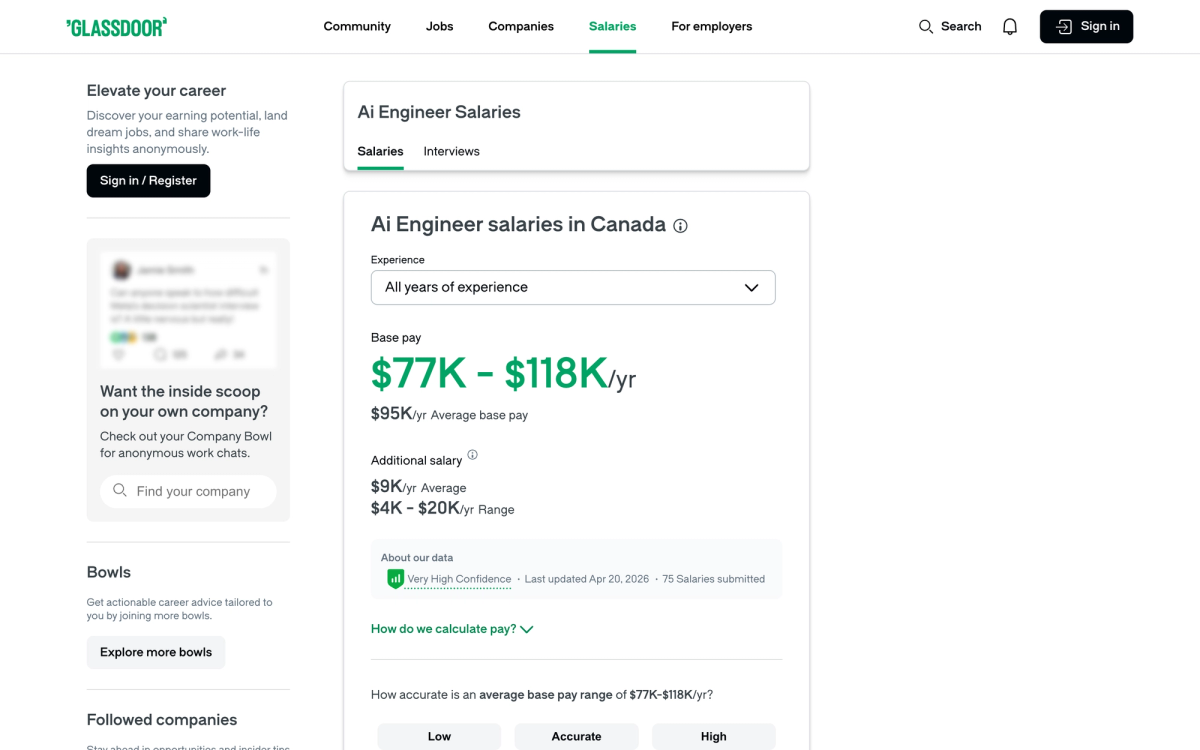
Let me give you the real numbers. An AI engineer or automation specialist in Canada right now commands $103,000 to $130,000 CAD in base salary, depending on experience and location. Toronto skews toward $120,000 to $150,000+. Montreal and Calgary are somewhat lower. Add employer-side payroll taxes, benefits, and equipment and you're looking at $130,000 to $160,000 CAD in fully loaded cost before a single feature ships.
The timeline problem
The average time to hire a senior AI engineer in Canada is 45 to 75 days from posting to offer acceptance. That assumes you have a clear job description, a competitive compensation package, and a structured interview process. Most SMBs don't have all three.
Then add 30 to 90 days for the new hire to understand your business, your stack, and your actual automation needs before they can build anything production-ready. You're looking at 3 to 5 months from "we decided to hire" to "first working system." In that same window, an agency would have already delivered your first project.
Where in-house wins
The case for a full-time hire gets dramatically stronger once you have running AI systems that need continuous development. If you have 3 or more automations in production and a clear 12-month roadmap of what to build next, the economics flip entirely.
An in-house engineer who deeply understands your business, data, and customers can build things an agency never would. They catch the edge cases. They instrument systems properly. They refactor when the data model changes. Over a two-year horizon with active development, the in-house hire is almost always cheaper than sustained agency retainers.
The problem is that most Canadian SMBs don't have 3 automations in production. They have zero or one. Hiring before you have validated use cases is expensive guesswork.
Best fit for in-house hiring: You have 2 or more working AI systems, a validated product roadmap, budget for a fully loaded $150,000+ CAD annual headcount, and the internal project management capacity to onboard a technical hire effectively.
Head-to-Head Comparison
| Factor | AI Automation Agency | In-House AI Engineer |
|---|---|---|
| Time to first result | 8 to 14 weeks | 4 to 6 months |
| Year 1 cost | $15,000 to $50,000 CAD | $130,000 to $160,000 CAD |
| Iteration speed | Slow (ticket-based changes) | Fast (same-day updates) |
| Cross-industry patterns | High (seen it all before) | Depends on individual background |
| Business knowledge | Limited (short engagement) | Deep over time |
| Risk on departure | Low (agency continues) | High (knowledge walks out) |
| Maintenance flexibility | Low (retainer-bound changes) | High (fully responsive) |
| Year 2+ cost | $24,000 to $48,000 CAD (retainer) | $130,000 to $160,000 CAD |
| 5+ systems running | Costs compound fast | Much better ROI per system |
| Best for | First 1 to 2 initiatives | Active multi-system roadmap |
The Decision Framework: 6 Questions That Settle This
Answer these honestly. Tally your points and the answer appears.
1. Have you deployed any AI automation at all yet?
No: Agency (1 point). Yes: continue.
2. Do you have more than 2 AI systems in production today?
No: Agency (1 point). Yes: continue.
3. Can you wait 4 to 6 months for your first working result?
No: Agency (1 point). Yes: continue.
4. Do you have $130,000 to $160,000 CAD in budget for fully loaded headcount?
No: Agency (1 point). Yes: continue.
5. Do you have a clear 12-month AI development roadmap with at least 5 distinct projects?
No: Agency (1 point). Yes: In-house (1 point).
6. Is maintaining full control over your system architecture and IP critical to your business model?
Yes: In-house (1 point). No: Agency (1 point).
Score of 4 or more: Agency first. Score of 2 or less: Serious case for in-house. Score of 3: Hybrid model (agency for current project, hire after validating ROI).
What Most Comparisons Get Wrong
Most articles treat this as a permanent decision. It isn't.
The pattern that actually works: agency first, hire after. Use an agency to build your first two or three systems. Validate that automation moves actual business metrics. Develop a concrete view of what you need over the next 12 months. Then hire an AI engineer to own it.
By the time you're hiring, you're not guessing what you need. You have production systems, real usage data, and specific capability gaps to interview against. That makes the hire dramatically better. Your new engineer walks into a company that already knows what it's doing, not one still debating whether AI is worth the investment.
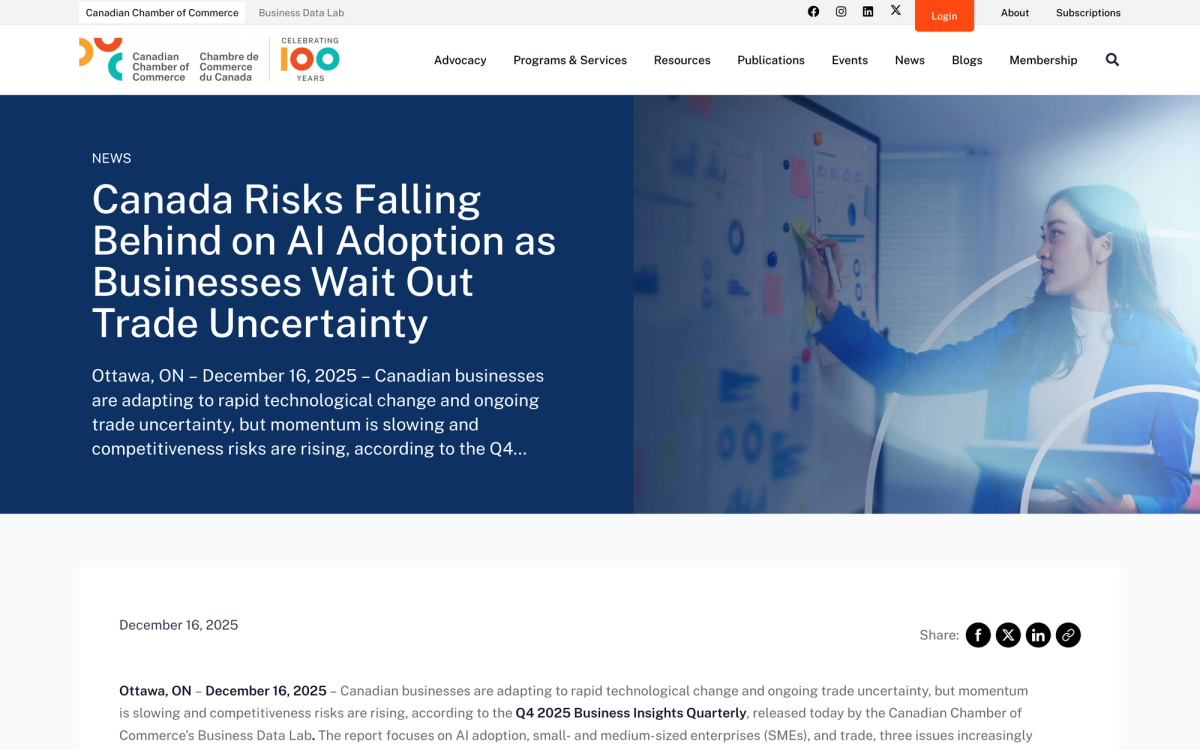
The Canadian Chamber of Commerce flagged in December 2025 that Canadian businesses risk falling behind on AI adoption partly because the debate gets stuck in "whether to invest" rather than "how to start." Don't wait for a perfect in-house setup before beginning. Start with an agency. Prove the ROI. Then build the team.
The second thing comparisons get wrong is treating "agency" as a monolith. There's a meaningful difference between a 50-person agency that outsources your project to a junior developer overseas, and a small specialist who's spent three years solving exactly the problem you have. The right agency is often not the biggest name in the search results.
If you want to understand what AI automation actually costs before committing to either path, the 2026 AI automation services pricing guide gives you the full cost breakdown by project type. And the AI automation consultant pricing guide covers exactly how engagements are scoped and what you should expect to pay per deliverable.
A Real Scenario: Ontario Professional Services Firm
One of my clients runs a 22-person professional services firm in Ontario. In early 2025 they were deciding whether to hire an AI specialist or bring in an agency for client intake and follow-up automation.
They had one developer on staff, no AI experience on the team, and a 90-day deadline to show the CEO measurable ROI before a board review. They went with an agency.
The agency delivered a working lead scoring system and automated follow-up sequence in 9 weeks. Response time to new leads dropped from 4 hours to under 3 minutes. Conversion on qualified leads went up 22% in the first quarter. The system paid for itself in month three.
After validating the ROI, they returned to the hiring conversation. This time they knew exactly what to hire for. They brought on a part-time automation specialist 8 months later to own the system and extend it into billing and project management workflows.
That sequence, agency first, hire after, validate before committing headcount, is the one I recommend to almost every Canadian SMB at this stage of adoption.
The AI readiness assessment on this site is a good starting point if you haven't decided yet. It takes 8 minutes and identifies which systems to build first based on your business type and current operations.
FAQ: AI Automation Agency vs In-House in Canada
How much does an AI automation agency cost in Canada?
For a Canadian SMB, expect $10,000 to $40,000 CAD for an initial multi-workflow project, plus monthly retainers of $1,000 to $5,000 CAD for maintenance. Larger implementations run $50,000 to $150,000+ CAD. The right size depends on scope and complexity, not headcount.
What is the average AI engineer salary in Canada in 2026?
Glassdoor data from March 2026 shows an average of $103,000 CAD per year, with senior engineers in Toronto commanding $120,000 to $150,000+ CAD. Add employer-side costs and you're looking at $130,000 to $160,000 CAD fully loaded, before a single line of code ships for your business.
How long does it take an AI automation agency to deliver results?
For a mid-tier SMB project, 8 to 14 weeks from first scoping call to live deployment is realistic. Simple single-workflow automations can ship in 3 to 5 weeks. Larger builds run 3 to 6 months. The agency should commit to a milestone timeline before you sign anything.
Is it worth hiring an AI specialist in Canada for a small business?
Not until you have validated use cases in production. The most common mistake I see is hiring an AI engineer before the business knows what it actually needs to automate. Build one or two systems with an agency first. Once you have production data and a concrete roadmap, a full-time hire becomes defensible.
What percentage of Canadian businesses currently use AI?
Statistics Canada reported that 12.2% of businesses used AI to produce goods or deliver services in Q2 2025, up from 6.1% in 2024. Professional, scientific, and technical services led at 31.7%. The majority of Canadian SMBs are still in early stages, which is why agency-first makes more sense than building an AI team for most businesses right now.
Can a small Canadian business afford an AI automation agency?
Yes, if you scope correctly. A $10,000 to $20,000 first project is within reach for most 10 to 50 person businesses in Canada, and the ROI timeframe is typically 3 to 6 months for well-scoped automations. The error most businesses make is signing a multi-year retainer before validating ROI. Start small, measure, then expand.
What is the hybrid approach to AI automation for Canadian businesses?
Hire an agency to build V1, validate the ROI, then hire in-house to own ongoing development. The agency de-risks the investment. The in-house hire takes over once the business case is proven. This sequence typically delivers the lowest total cost of ownership over 2 to 3 years.
Which industries in Canada are using AI automation most?
According to Statistics Canada Q2 2025, information and cultural industries led at 35.6% adoption, followed by professional, scientific and technical services at 31.7%, and finance and insurance at 30.6%. Accommodation, food services, and agriculture lagged at under 2%. If you're in professional services or finance, your competitors are likely ahead of you already.
If You've Decided You Need a Custom Build
I've built custom AI automation systems for professional services firms, law firms, real estate agencies, healthcare practices, and accounting businesses across Canada, Australia, and the US. Work ranges from simple lead follow-up sequences to multi-agent document processing systems and AI voice receptionists that handle after-hours calls.
If you're ready to move from evaluating to building, the solutions packages page breaks down exactly what I offer, how engagements are structured, and what you can expect to pay. There's no locked-in retainer structure and no long-term commitment before we've demonstrated value together.
And if you're not sure whether your business is ready, the AI readiness assessment gives you a concrete picture of where you stand and what to build first.
Statistics Canada Q2 2025 AI adoption analysis: statcan.gc.ca 2025. Canadian Chamber of Commerce Q4 2025 Business Insights Quarterly: chamber.ca 2025. Glassdoor AI engineer salary Canada (March 2026): glassdoor.ca 2026. In-house vs agency AI cost breakdown: inventiple.com 2026. Agency vs in-house scale analysis (February 2026): moxo.com 2026.
Published
April 21, 2026
Category
Implementation
Jahanzaib Ahmed
AI Systems Engineer & Founder
AI Systems Engineer with 126 production systems shipped. I run AgenticMode AI (AI agents, RAG systems, voice AI) and ECOM PANDA (ecommerce agency). I build AI that works in the real world for businesses across home services, healthcare, ecommerce, SaaS, and real estate.
Want this built for your business? See Workflow Automation, or browse the free tools and guides.
Related articles
Best AI Chatbot Alternatives to ChatGPT in 2026: An Engineer's Decision Guide After 126 Production Builds
A breakdown of when to keep ChatGPT, when to switch, and which alternative actually fits your job. Picks for coders, researchers, privacy first teams, and anyone tired of the upsell wall.
ComparisonAI AgentsChatgpt Alternatives
Best AI Chatbot Builder in 2026: 5 Platforms Compared After 126 Production Builds
A comparison of Chatbase, Voiceflow, Botpress, Tidio with Lyro and Intercom Fin, with October 2026 pricing, the models each lets you pick, where each breaks, and how to choose.
ComparisonTrends & InsightsAI Chatbot Builder
Best Virtual Receptionist for Law Firms (Australia, 2026): What I'd Pick After Building 126 AI Systems
An engineer’s comparison of every virtual receptionist option for Australian law firms in 2026: human services, AI platforms, hybrids and custom builds, with checked AUD prices and the privacy rules that apply.
ComparisonTrends & InsightsVirtual Receptionist