Best AI Chatbot Alternatives to ChatGPT in 2026: An Engineer's Decision Guide After 126 Production Builds
A breakdown of when to keep ChatGPT, when to switch, and which alternative actually fits your job. Picks for coders, researchers, privacy first teams, and anyone tired of the upsell wall.

Table of Contents
The right ChatGPT alternative depends on the job you are doing, not on a benchmark table. Coders, researchers, privacy first teams, and people optimising for cost each land somewhere different, and three of the six options worth considering cost less than ChatGPT Plus or are free outright. The market has genuinely opened up: ChatGPT fell from 86.7% to 64.5% web share between January 2025 and January 2026, and Claude's developer adoption reached 43%, the largest jump of any rival, almost entirely on coding workflows.
One caveat that saves people a wasted month. If what you actually want is a chatbot on your own product, answering from your own content, no consumer subscription solves that no matter which one you pick. That is a custom build with an API, retrieval, and guardrails, and switching from ChatGPT to Claude will not get you closer to it.
You opened ChatGPT this morning, hit a refusal, watched it forget context mid task, or saw the upgrade prompt for the third time this week, and now you are typing "best ai chatbot alternatives to chatgpt" into Google. I have been there. I have shipped 126 production AI systems and I run two of those alternatives every day, not because ChatGPT is bad, but because no single chatbot is best at every job.
This guide is the short version of what I would tell a friend who asked which one to pay for in 2026. There are six alternatives that actually replace ChatGPT for real work. The rest are wrappers, demo toys, or "ChatGPT but with a different logo." I will tell you which one fits your job, what each costs as of May 2026, and when to stay on ChatGPT anyway.
Quick Verdict (read this if nothing else)
- Pick Claude if you write code, draft long documents, or want the highest answer quality on hard prompts. Pro is $20/mo, Max 5x is $100/mo.
- Pick Perplexity if you need cited research with live web sources. Pro is $20/mo and shows you where every claim came from.
- Pick DeepSeek if you want a serious model for free with no daily cap on the web chat. Best for budget conscious power users.
- Pick Mistral Le Chat if you need EU data residency and GDPR clean output. Pro is $14.99/mo and undercuts everyone.
- Pick Gemini if you live in Google Workspace and need million token context for huge documents. $19.99/mo through Google One AI Premium.
- Self host Llama 3.3 with Ollama if your work involves data that cannot leave your machine. Free, slower, and worth the setup if compliance is the gate.
- Stay on ChatGPT only if you specifically need DALL-E image editing, Computer Use for desktop automation, or you already pay for Pro and use Deep Research weekly.
Why are people leaving ChatGPT in 2026?
The "best AI chatbot alternatives to ChatGPT" search query barely existed two years ago. It is now a genuine cluster, and the reasons cluster too. Reading complaints across Reddit, Hacker News, and developer forums, four patterns repeat.
Quality regression. Output feels shorter, refusals more frequent, and the model less willing to take a position than the GPT-4 era. Whether the model actually got worse or whether expectations climbed faster than the product, the perception is real. ChatGPT app uninstalls spiked 295% in the days after the Pentagon partnership announcement, per Tom's Guide reporting in early 2026.
Upsell fatigue. Free tier users now get prompts to upgrade, model switching interruptions, and feature gates inside the chat itself. The product feels designed to convert rather than to help.
Better alternatives. Claude's developer adoption climbed to 43% in 2026 according to Built In's switching analysis. Perplexity scores 92% factual accuracy on real time queries vs ChatGPT's 87% on the same benchmark, per G2 testing. The gap closed, then opened the other way for specific jobs.
Privacy and ethics concerns. Anthropic publicly refused certain defense contracts that OpenAI accepted. Open source self hosted options matured to the point where Open WebUI alone has crossed 282 million downloads. None of this matters for casual users. It matters a lot for legal, healthcare, finance, and any team handling regulated data.
What are the best AI chatbot alternatives to ChatGPT in 2026?
I narrowed the field to six. The criteria: actually replaces ChatGPT for at least one common job, available to individual users (not just enterprise), and stable enough in May 2026 that I would put a paying client on it. Then for each one, the job it wins.
Claude: best ChatGPT alternative for coding and writing
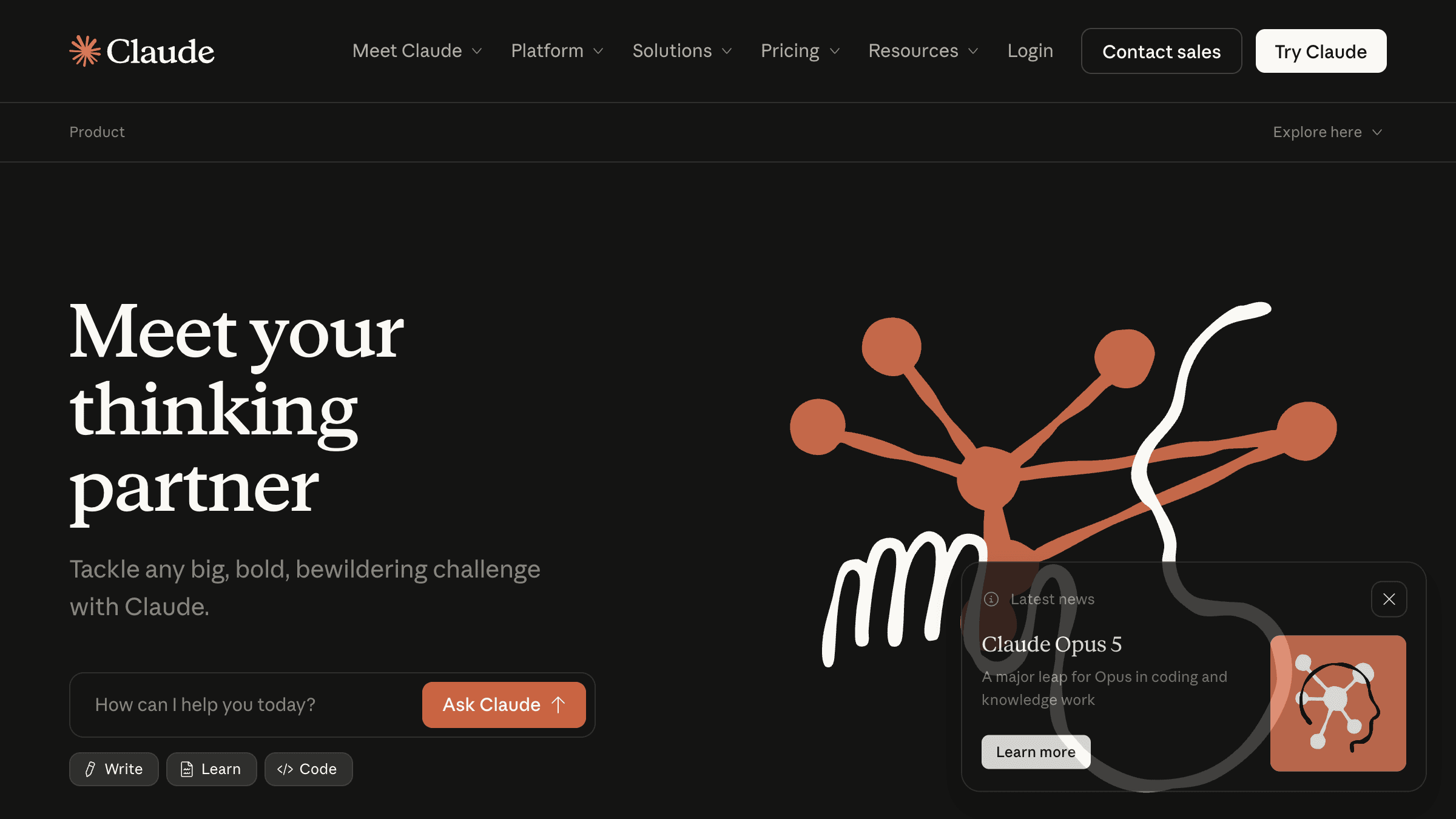
Anthropic's Claude is the alternative I recommend most often. It writes code that actually compiles, holds long conversations without losing the thread, and produces prose that does not need to be rewritten before you ship it. The Claude Code CLI made it the default tool for most engineers I work with.
Pricing as of May 2026: Free tier (limited daily messages), Pro at $20/mo or about $17/mo annual, Max 5x at $100/mo, Max 20x at $200/mo, Team from $25 per seat per month. claude.com/pricing has the current breakdown.
What it does better than ChatGPT: code generation (especially multi file refactors), long form writing, document analysis up to 200K tokens of context per conversation, and agentic coding tasks via the CLI. Claude Opus 4.6 is the strongest coding model I have used in production.
What it does worse: no native image generation, voice mode is limited compared to ChatGPT Advanced Voice, and the free tier hits its ceiling fast.
Who should pick it: developers, technical writers, anyone whose workflow involves more than 1,000 words of input or output per session. If you are paying for ChatGPT Plus mostly for the chat, Claude Pro is the swap to make.
Perplexity: best ChatGPT alternative for research with citations
Perplexity solves a specific ChatGPT failure mode: "I cannot trust this answer because I do not know where it came from." Every Perplexity response shows source links inline, in order, and you can click through to verify before you act on anything. For research, journalism, due diligence, or any job where you need to cite back to a primary source, this changes the workflow.
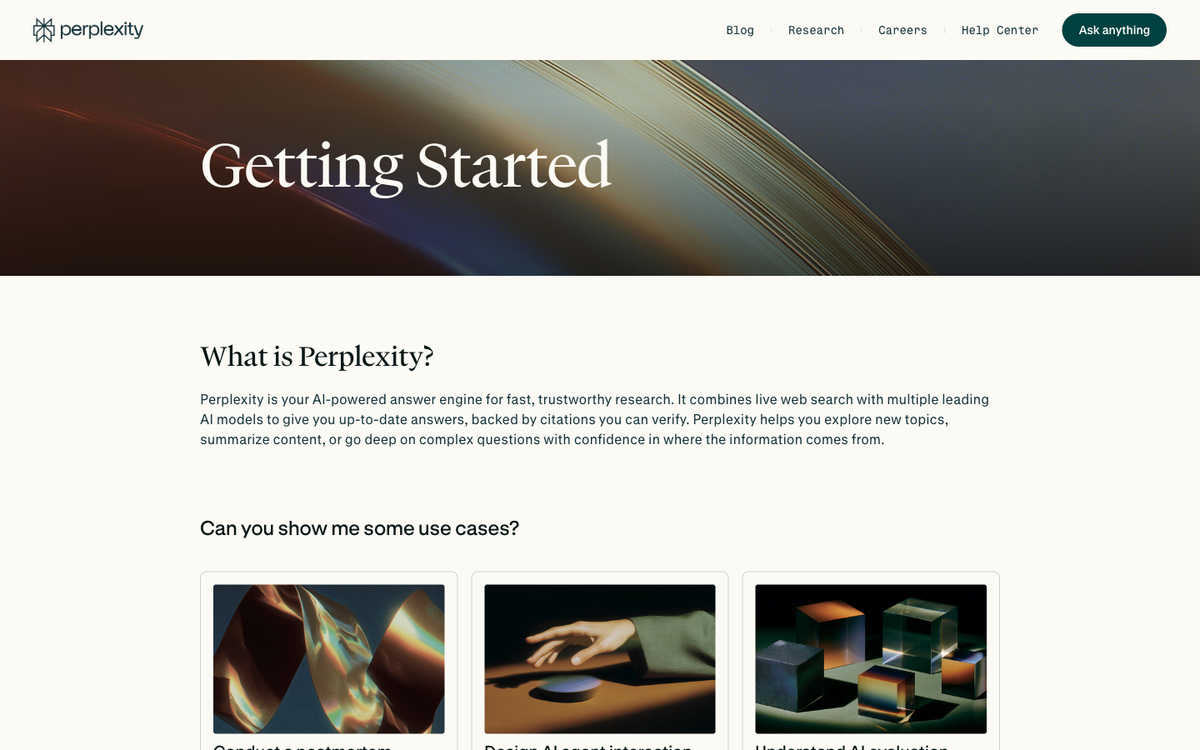
Pricing as of May 2026: Free tier (limited Pro Searches per day), Pro at $20/mo, Max at $200/mo for power users. Perplexity Pro lets you switch between frontier models (GPT, Claude, Gemini) inside the same interface, so you can A/B test which one answers your question best. Detail at perplexity.ai.
What it does better than ChatGPT: cited answers (every claim has a clickable source), live web data without extra tool calls, Pro Search expands and follows up your question automatically, and Deep Research produces structured reports with sources organised by section.
What it does worse: conversational depth is shallower than Claude or ChatGPT for non research tasks, code generation is weaker, and creative writing feels generic.
Who should pick it: analysts, researchers, journalists, sales teams writing prospect briefs, anyone who currently opens ChatGPT then immediately pastes "give me sources for that" into the next message.
DeepSeek: best free ChatGPT alternative with no usage cap
DeepSeek is the answer when someone says "I just want a good chatbot for free without daily limits." The web chat at chat.deepseek.com runs DeepSeek V4 Pro at no cost with no rate limit for normal usage and no subscription required. For most casual prompts, the model is genuinely competitive with GPT-4 era ChatGPT, and on math and code reasoning tasks the R1 reasoning model holds its own against o1.
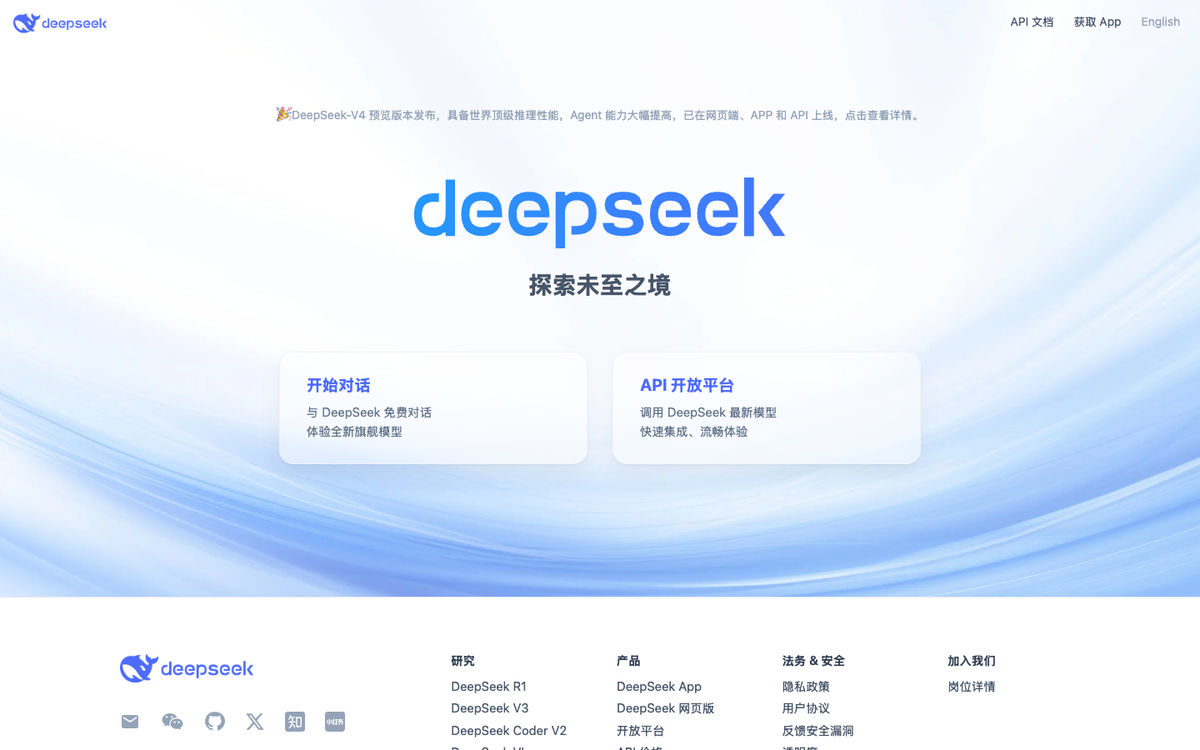
Pricing as of May 2026: Web chat is free with no Plus or Pro tier. API costs are the lowest in the market: V3.2 at $0.28 input and $0.42 output per million tokens, R1 at $0.55 input and $2.19 output. Cache hits drop input to $0.028 per million (a 90% discount). Live pricing at api-docs.deepseek.com.
What it does better than ChatGPT: free unlimited normal usage, API cost roughly 96% cheaper than OpenAI o1 for reasoning workloads, transparent reasoning traces in R1 mode, and a 131K token context window.
What it does worse: ChatGPT and Claude beat it on hard prompts, the chat UI is more basic, and the company is based in China. That last point is a firm no for some legal, finance, or government teams. Not a privacy issue for casual use, but worth knowing.
Who should pick it: students, hobbyists, indie developers, anyone who needs a serious LLM and cannot or will not pay $20/mo. Also a smart pick for API workloads where cost dominates.
Mistral Le Chat: best European and GDPR friendly ChatGPT alternative
Mistral is the only frontier model lab headquartered in the EU. Le Chat is its consumer chatbot, and the entire stack is engineered for European data sovereignty and GDPR compliance from the ground up. If you are a European business that has been told by legal that ChatGPT is "not a great look," Mistral is the obvious switch.
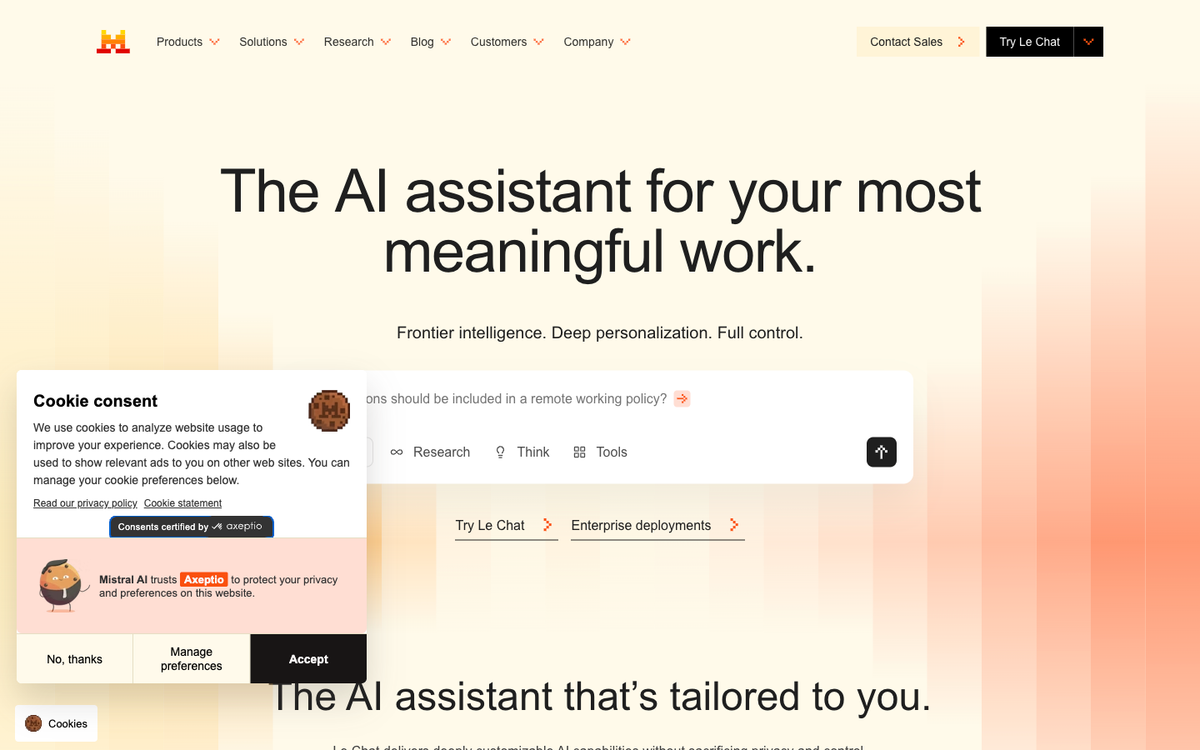
Pricing as of May 2026: Free tier (most features with daily cap), Pro at $14.99/mo (cheapest of any frontier chatbot), Team and Enterprise on quote. Pricing detail at mistral.ai/pricing.
What it does better than ChatGPT: EU data residency, GDPR compliance baked in, the fastest text generation of any chatbot I have benchmarked (close to 1,000 words per second on flash answers), strong multilingual output across 100+ languages including regional dialects, and a partnership with Agence France Presse for live news data.
What it does worse: the model is a step behind Claude Opus and GPT-5.4 on the hardest reasoning prompts, code generation is solid but not best in class, and the ecosystem (plugins, integrations, mobile apps) is younger.
Who should pick it: EU based companies, especially anyone in regulated industries (healthcare, finance, public sector), French speaking users, and budget conscious paid users who want a real subscription under $20.
Gemini: best ChatGPT alternative for Google Workspace and long context
If your work day is mostly Gmail, Docs, Sheets, and Drive, Gemini is the obvious pick. The Google One AI Premium plan bundles Gemini Advanced into the Google Workspace integrations, so the model lives inside the apps you already use. The 1 million token context window also means you can feed it an entire codebase, a full year of meeting notes, or a 500 page contract without chunking.
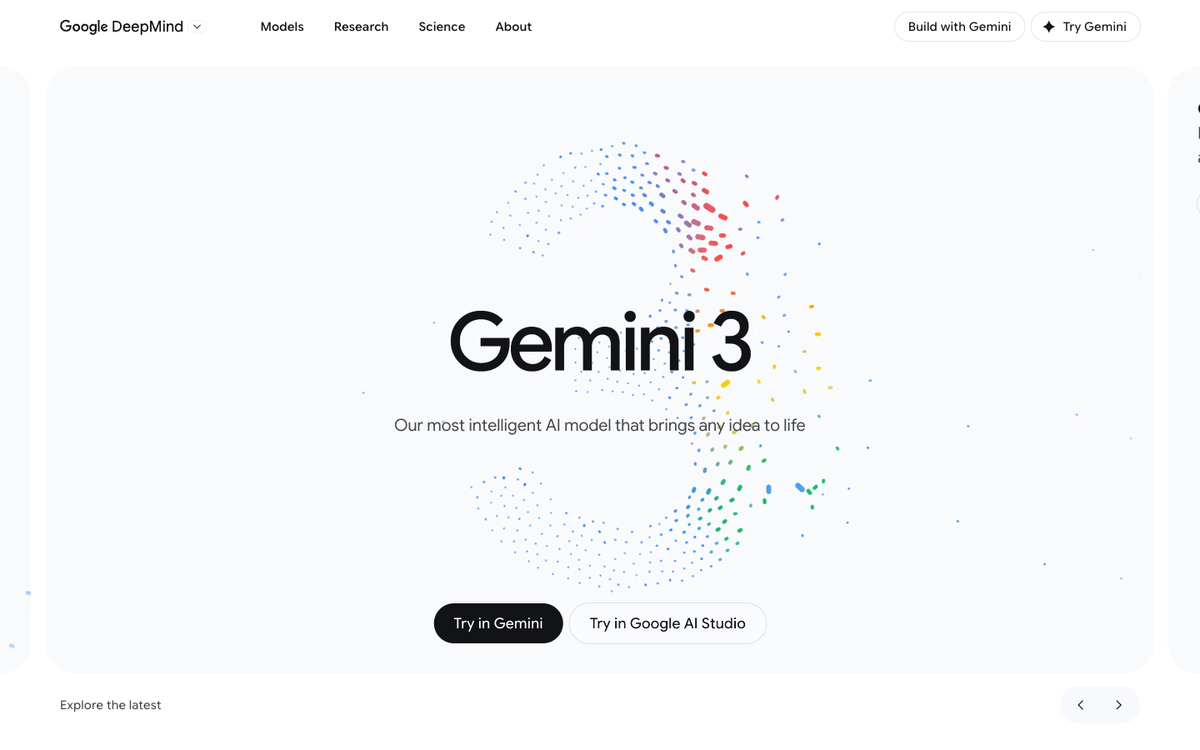
Pricing as of May 2026: Gemini Advanced is bundled into Google One AI Premium at $19.99/mo (which also includes 2TB of Drive storage). API pricing for Gemini 2.5 Pro is $1.25 per million input tokens (up to 200K context) and $10 per million output. Above 200K context, input rises to $2.50 and output to $15 per million. Live pricing at ai.google.dev.
What it does better than ChatGPT: 1 million token context window (the largest of any major chatbot), native integration with Google Docs and Sheets, multimodal understanding of video and audio out of the box, and the bundled storage makes the subscription fee easier to justify.
What it does worse: answer quality on hard reasoning prompts is one notch below Claude Opus and GPT-5.4, the model has more cautious refusals than any other major chatbot, and code generation is weaker than Claude.
Who should pick it: Google Workspace heavy users, students with long PDFs and study material, anyone editing video or audio, and anyone who already pays for Google storage and would rather consolidate billing.
Self hosted Llama 3.3 (or Qwen, or DeepSeek): the privacy first ChatGPT alternative
The category that did not really exist for casual users two years ago is now realistic. With Ollama plus Open WebUI, you can run a Llama 3.3 70B model on a modern Mac or Linux box and get a private chatbot with no data leaving your machine. Open WebUI alone has crossed 282 million downloads. The setup takes about an hour if you are comfortable with a terminal.
Cost as of May 2026: the software is free. Hardware: a Mac M4 Pro with 48GB unified memory runs Llama 3.3 70B at usable speed. A workstation GPU (RTX 4090 or 5090) handles bigger models. Cloud option: rent a single A100 or H100 from Lambda or RunPod for around $1.50 to $3 per hour when you need it.
What it does better than ChatGPT: 100% data privacy (no prompts leave your machine), zero subscription, no rate limits, no refusals beyond what you explicitly configure, and you can fine tune on your own data. For regulated industries, this is the only path I trust for prompts containing client data.
What it does worse: answer quality is still a step below frontier closed models on hard tasks, you maintain the stack yourself (updates, drivers, model downloads), and inference speed depends on your hardware.
Who should pick it: healthcare, legal, finance, government, anyone with a "no cloud AI" policy, security researchers, and engineers who want full control of the model. I run a self hosted Llama instance for any client work involving PII or proprietary code that should not touch a third party API.
ChatGPT alternatives compared head to head
The table below is the version I keep on my own laptop. Pricing reflects what each provider lists in May 2026. Strengths are the job each one actually wins.
| Alternative | Cheapest paid plan | Free tier? | Best for | Cited sources? | Self hostable? |
|---|---|---|---|---|---|
| Claude | $20/mo (Pro) | Yes (limited) | Coding, long writing | No | No |
| Perplexity | $20/mo (Pro) | Yes (limited) | Cited research | Yes (every answer) | No |
| DeepSeek | Free web chat | Yes (no cap) | Free unlimited use | No | Yes (open weights) |
| Mistral Le Chat | $14.99/mo (Pro) | Yes (daily cap) | EU/GDPR users | No | Yes (open weights) |
| Gemini Advanced | $19.99/mo (Google One) | Yes (limited) | Google Workspace, 1M context | Sometimes | No |
| Self hosted Llama 3.3 | $0 software | N/A | Privacy, regulated data | No | Yes (entirely local) |
| ChatGPT Plus (for reference) | $20/mo | Yes (limited) | Multimodal, voice mode | Sometimes | No |
The decision framework: pick yours in four questions
Skip the benchmarks. Answer these four questions and you will have the right pick in under a minute.
- Is your work mostly code or long form writing? Yes -> Claude Pro. The output quality gap is large enough that the switch pays for itself in time saved within a week.
- Do you regularly need cited, fact checked answers? Yes -> Perplexity Pro. ChatGPT Search and Claude with web search are usable but Perplexity makes citations the default, not a feature.
- Are you handling regulated data, or does your industry have a "no cloud AI" rule? Yes -> self hosted Llama 3.3 with Ollama. Nothing else clears the compliance bar.
- Is budget the binding constraint? Yes -> DeepSeek (free) for personal use, Mistral Le Chat ($14.99/mo) for paid. Both are real models, not toys.
If two answers are yes, run two subscriptions. The combined cost is still less than ChatGPT Pro at $200/mo, and you will use each tool for the job it wins.
What most "best AI chatbot alternatives" lists get wrong
I read a lot of these lists before writing this one. Three patterns came up over and over and I think they are wrong.
They list 20 tools. Most of these "alternatives" are wrappers around the same three or four underlying models. Listing Jasper, Copy.ai, Writesonic, and Rytr as four separate options is misleading. They are the same thing in different paint.
They rank by benchmarks. MMLU, HumanEval, and GPQA scores barely predict which chatbot you will actually enjoy using day to day. The right metric is "does this answer my real prompts well" and the only way to test that is to use the tool for a week on your real workload.
They never mention self hosting. For regulated industries, this is the only correct answer and most lists skip it because it is harder to monetise with affiliate links.
How I actually picked for a recent client
A US accounting firm I worked with had 14 staff all on ChatGPT Plus. Total spend: $280/mo. They wanted to know whether to consolidate to Team, switch to Claude, or build something custom. I asked them to track every prompt for one week.
The breakdown: 62% of prompts were "summarise this document" or "draft an email about this client situation", 23% were spreadsheet formulas and Excel work, 11% were research with citation needs, and 4% were creative or experimental.
What we did: moved 7 staff to Claude Pro (long document work), kept 4 on Microsoft 365 Copilot ($20/mo, replaced ChatGPT entirely for the spreadsheet team because Excel integration is native), put 2 on Perplexity Pro (the research analysts), and added one self hosted Llama 3.3 instance behind a private Open WebUI for any prompt involving client tax data. Total spend went from $280/mo to $234/mo, and the analysts said the cited research alone was worth the change.
That is the actual answer to "best AI chatbot alternatives to ChatGPT" for a real business: not one tool, three. Picked by job, not by hype. If you want a deeper look at the cost side, my AI chatbot pricing breakdown walks through what each tier actually buys you, the best AI chatbot 2026 head to head covers model quality across Claude, ChatGPT, and Gemini, and ChatGPT for business vs custom AI agents compares stock subscriptions against custom builds.
Frequently asked questions
Is there a free AI chatbot that is actually as good as ChatGPT?
DeepSeek's web chat is the closest. The V4 Pro model on chat.deepseek.com is free with no daily message cap, and on most everyday prompts it produces output comparable to ChatGPT Plus. The catch: ChatGPT Plus still wins on multimodal tasks (voice, image editing) and Claude Pro wins on hard coding prompts. For pure text chat, DeepSeek free is genuinely competitive.
What is the best ChatGPT alternative for coding?
Claude. Specifically Claude Opus 4.6 (or whatever the current top tier model is at time of read) accessed via either the Claude.ai web app or the Claude Code CLI. The gap on multi file refactors, complex debugging, and long form code review is large enough that most engineers I know moved their daily AI workflow off ChatGPT in 2025 or 2026.
What is the best ChatGPT alternative for research?
Perplexity. Every answer comes with inline citations to the sources it used, and Pro Search expands your question into a multi step web search automatically. For analysts, journalists, sales prospect briefs, and anyone whose next step after the AI answer is "verify this," Perplexity removes a step from your workflow.
Is Claude really better than ChatGPT?
Better at some things, worse at others. Claude wins on coding, long form writing, and document analysis. ChatGPT wins on image generation, voice mode, and ecosystem breadth (custom GPTs, Computer Use, the iOS app integrations). For a single subscription, most professional users get more daily value from Claude Pro than ChatGPT Plus at the same $20/mo. Casual users may prefer ChatGPT for the multimodal extras.
Are there any free ChatGPT alternatives with no signup?
Mistral Le Chat's free tier and DeepSeek's web chat both have generous free access. Both still ask for an account before you chat. The only true "no signup" option is to self host with Ollama and Open WebUI on your own machine, which is a one hour setup and then permanently free.
Which AI chatbot is best for business privacy?
For pure privacy, self hosted Llama 3.3 (or Qwen, or DeepSeek) on your own hardware or a private VPC. Nothing in the cloud option set beats local inference for compliance. Among hosted options, Mistral Le Chat (EU based, GDPR clean) and Anthropic's Claude (strict enterprise data handling commitments) are the two I trust for client work.
Should I cancel my ChatGPT subscription?
Only if you have already used Claude Pro, Perplexity Pro, or whichever alternative fits your job for at least two weeks and confirmed the switch holds up on your real workload. Switching tools costs muscle memory time. Do not cancel based on a hot take (mine or anyone else's). Run the alternative in parallel for two weeks, then decide.
What about Grok, Llama via Meta AI, or Microsoft Copilot?
Grok has a place if you specifically want X integration and its more permissive content guardrails. Meta AI is fine for casual use inside Instagram, WhatsApp, and Messenger but not where I would run real work. Microsoft Copilot Pro is genuinely good if you live in Word, Excel, and Outlook (the spreadsheet integration is native in a way ChatGPT cannot match), but it lacks ChatGPT Plus features like Advanced Voice and Deep Research at the same $20 price.
If you have decided you need a custom AI build, not a subscription swap
Sometimes the right answer is "none of these." If your team is using ChatGPT to do something that should be automated (the same prompts every day, internal data lookups, customer support triage, document generation against a template), no subscription will be the right fix. You need a custom AI agent built around your data, with the right model picked per task, the right guardrails, and a UI built for your team's workflow.
That is the work I do. I have shipped 126 production AI systems for businesses in legal, healthcare, accounting, and ecommerce, and the pattern is almost always the same: a $20/mo subscription is the right answer until your team is using it as a workflow tool, at which point a $5K to $50K custom build pays back inside a quarter.
If that sounds like your situation, I detail the approach in my solutions page, my case studies show real builds across verticals, and the AI readiness assessment is a 5 minute quiz that tells you whether you are ready for a custom build or whether the right move is still a subscription. If you want to talk it through, the contact page has my booking link.
Claude developer adoption hit 43% in 2026 per Built In, 2026. ChatGPT app uninstalls spiked 295% after the Pentagon partnership announcement per Tom's Guide, 2026. Perplexity 92% factual accuracy vs ChatGPT 87% per G2, 2026. Open WebUI 282M+ downloads per Pinggy, 2026. Pricing verified at claude.com/pricing, mistral.ai/pricing, api-docs.deepseek.com, and ai.google.dev on May 10, 2026.
Related Posts
OpenAI vs Claude for Small Business: I've Shipped 126 Systems on Both. Here Is How I Actually Choose.
AI AgentsOpenai Vs ClaudeAI Agents
Best AI Chatbot for Customer Service Software 2026: Intercom Fin vs Zendesk AI vs Ada vs Sierra vs Decagon Compared
Trends & InsightsAI ChatbotCustomer Service
Best AI Chatbot Builder in 2026: 5 Platforms Compared After 126 Production Builds
Trends & InsightsAI Chatbot BuilderChatbot Platforms

Jahanzaib Ahmed
AI Systems Engineer & Founder
AI Systems Engineer with 126 production systems shipped. I run AgenticMode AI (AI agents, RAG systems, voice AI) and ECOM PANDA (ecommerce agency). I build AI that works in the real world for businesses across home services, healthcare, ecommerce, SaaS, and real estate.