AI Voice Agent Pricing vs Human Receptionist: What 40+ Deployments Taught Me About True Cost
The advertised per minute rate is rarely what you pay. The real cost of AI voice agents on Vapi, Retell, Bland and ElevenLabs versus a human receptionist, computed from October 2026 prices.

Table of Contents
The advertised price is almost never what you pay. Vapi says $0.05 per minute. That is true if you ignore the LLM, the transcription engine, the voice synthesis, and the telephony carrier. Add those in, using the component prices on Vapi's own calculator plus a Twilio phone line as of October 10, 2026, and you are at $0.09 to $0.14 per minute before your first call ends, up to 2.7 times the headline.
I have deployed AI voice agents for over 40 businesses since 2023, across law firms, HVAC companies, healthcare practices, and property management firms. This post is what I wish existed before I spent months figuring out what everything actually costs.
The short version: AI voice agents are dramatically cheaper than humans at scale. But the path from a $0.07/min headline to a working production system is full of hidden costs that vendors do not lead with.
Quick Verdict
- Pick AI voice agent if your call volume exceeds 200 calls/month, most calls are routine (booking, FAQs, lead capture), and you need 24/7 coverage
- Stick with a human receptionist if your calls require empathy, complex judgment, or active upselling and your budget allows $4K+/month
- Use an answering service if you are under 200 calls/month and not ready to commit to AI infrastructure
- Still unsure whether AI voice fits your business? Book a call and I will tell you directly
If you want to model your own numbers rather than read mine, the free AI agent cost calculator lets you set your call volume, model and voice provider and see the monthly total. No email required.
What are you actually comparing?
This post covers four distinct options:
- AI voice agents (self serve developer platforms): Vapi, Retell AI, Bland AI, ElevenLabs Agents. You build on their infrastructure and pay per minute, and some of them bill the model, the voice and the phone line as separate items.
- AI voice agents (custom built): a developer or agency builds a voice system tailored to your workflow, CRM, and booking system.
- Traditional answering service: remote human operators handling your calls at per-minute rates.
- Full time in house receptionist: the employee option, with all associated costs.
I am not covering generic chatbots or IVR phone trees here. Those are different tools with different cost structures. If you want the agent vs chatbot comparison, I covered it in detail here.
What does an AI voice agent cost per minute?
The Platforms and What They Actually Cost
Most businesses looking at AI voice agents start with one of three developer platforms: Vapi, Retell and Bland. Here is what I have found deploying across all of them.
Vapi pricing
Vapi is the most developer-friendly platform. It advertises $0.05 per minute, but that only covers the orchestration layer. In practice, you pay separately for:
- STT (speech to text): $0.0095 to $0.0099/min via Deepgram
- LLM processing: $0.0077 to $0.0452/min for OpenAI models, passed through at cost, depending on the model you pick
- TTS (voice synthesis): $0.0146 to $0.0238/min via ElevenLabs
- Telephony via Twilio: $0.0085/min to receive a call on a local number and $0.014/min to place one, per Twilio's own rate card. Vapi's own numbers carry no transport fee.
Those component ranges come from the calculator on Vapi's pricing page, checked October 10, 2026. True all in cost: $0.090 to $0.137 per minute, which is $91 to $139 a month at 1,000 minutes and $453 to $688 at 5,000 minutes (full tables further down). Between 45% and 64% of every minute is something other than the $0.05 hosting fee. Vapi now bills model, voice and transcription usage at cost on its own invoice, or you can bring your own provider keys and pay each vendor directly. Either way you are watching five cost lines, not one. When Twilio has an outage, Vapi support cannot help you. That is your Twilio problem.
Retell AI pricing
Retell positions itself with more inclusive pricing. Its headline is $0.07 to $0.31/min with no mandatory monthly subscription, built from $0.055 per minute of voice infrastructure, a voice ($0.015 for Retell, Cartesia or OpenAI voices, $0.040 for ElevenLabs Flash) and an LLM ($0.008 for GPT 5 mini, $0.045 for GPT 4.1, up to $0.32 for GPT 6 Astra). Calls on a Retell number in the United States add $0.015/min, and phone numbers cost $2/month each. Those figures are from Retell's pricing page, checked October 10, 2026. At moderate volumes of 1,000 min/month, you are looking at $95 to $157/month all in.
Retell is my recommendation for teams with engineering resources who want more control than a fully managed product but do not want Vapi's fragmented billing.
Bland AI pricing
Bland switched to plan based pricing on December 5, 2025, and the structure in its billing docs was unchanged when I checked on October 10, 2026:
- Start (free): $0.14/min
- Build ($299/mo): $0.12/min
- Scale ($499/mo): $0.11/min
Unlike Vapi and Retell, Bland's rate already includes the LLM, transcription and voice, with no token charges, according to its pricing page. The phone line is not in that rate: Bland bills its built in Twilio line at Twilio's cost, and if you bring your own Twilio or SIP carrier, that carrier bills you directly. The public pricing page now shows Start, Build and Enterprise; Scale is still listed in the billing docs.
The monthly fee plus per-minute billing makes Bland expensive at lower volumes. A 500-minute month on the Build plan costs $359 ($299 plus $60 in call minutes). The phone line adds about $4.25 on top at Twilio's inbound rate. That is comparable to a managed answering service, without the simplicity. Bland makes more sense when you are doing 3,000+ minutes per month and need the high concurrency limits that come with Scale. On price alone, Build only beats Start above 14,950 minutes a month; below that, the reasons to upgrade are the Start plan's caps of 100 calls a day and 10 concurrent calls.
ElevenLabs Agents pricing
The figures in this section and the next come from public pricing pages. ElevenLabs charges $0.08 per call minute on every plan. The plan fee buys minutes at that same rate (Creator is $22 for 275 minutes, Pro is $99 for 1,238 minutes, Business is $990 for 12,375 minutes), and minutes beyond the plan cost $0.08 each. Speech to text, text to speech and knowledge base retrieval are included. The LLM is billed separately at cost, and ElevenLabs adds no telephony fee, but the carrier you connect (Twilio or a SIP trunk) bills you directly. Those terms are on the ElevenLabs agents pricing page, checked October 10, 2026, and its help center adds that silence longer than 10 seconds is billed at a 95% discount.
OpenAI voice API pricing
OpenAI sells two routes. GPT-Live 1, which runs on its own Live endpoint, costs $0.05 per minute of voice session, billed per second, and the backend model and tools that do the reasoning are billed separately at their normal rates. The token priced Realtime API route, gpt-realtime-2.1, charges $32 per million audio input tokens and $64 per million audio output tokens on OpenAI's pricing page (both checked October 10, 2026). Caller audio counts as one token per 100 milliseconds and the agent's audio as one token per 50 milliseconds, and each new turn sends the earlier conversation again as input. OpenAI's cost guide says automatic prompt caching can sharply cut the cost of that repeated input, and the pricing page lists cached audio input at $0.40 per million tokens, but caching is best effort, so the cost per minute still depends on how long the call runs. That is why I do not put a single per minute figure on it.
Flat rate versus per component pricing
Two pricing models sit under every platform above. Per component pricing (Vapi, Retell, ElevenLabs) bills the platform minute, transcription, the LLM, the voice and the phone line as separate lines, so you can swap in a cheaper model or voice and watch the rate move. Flat rate pricing folds those lines into one number: Bland bundles the model, transcription and voice (the phone line stays separate, at Twilio's cost), and managed receptionists such as NextPhone bundle everything, listing unlimited calls from $199 a month. In the stacks I priced below, per component pricing runs $0.090 to $0.155 per minute, while Bland's bundled rate is $0.11 to $0.14 from Scale to Start, or $0.118 to $0.149 with the Twilio line added, so a flat rate does not buy a cheaper minute. It buys a predictable one. On a per component stack, choosing a premium LLM and voice moves the rate by $0.04 to $0.06 per minute; a flat rate absorbs that choice. Per component wins when you have someone to tune it. Flat rate wins when nobody on your team wants to manage five cost lines.
All in one managed AI, the middle path
If you are not a developer, the BYOK platforms above are not the right fit. Managed AI receptionist products bundle everything into one invoice: the LLM, the voice, the telephony, the integrations. Published self serve plans I checked on October 10, 2026 run from $29 a month (Dialzara Business Lite, up to 60 minutes, then $0.48 per minute) to $599 a month (NextPhone Scale, unlimited calls). No API key juggling, no four-vendor billing management.
The custom built route
When I build a voice agent for a client, we are not deploying managed SaaS. We build on AWS Bedrock or OpenAI, integrate directly with their CRM (ServiceTitan, HubSpot, Salesforce), and connect to their existing phone numbers. Setup ranges from $3,000 to $12,000 depending on complexity. Monthly infrastructure runs $300 to $1,500. The advantage is the system does exactly what the client needs, including booking, lead qualification, call routing, and post-call summaries that go directly into the CRM. More on this below.
What does a human receptionist or answering service cost?
Full-Time In-House Receptionist
The fully-loaded cost most businesses underestimate:
| Cost Item (annual) | Lower paid (10th percentile) | Median | Higher paid (90th percentile) |
|---|---|---|---|
| Wages | $28,766 | $38,010 | $49,941 |
| Benefits and employer payroll taxes | $13,106 | $17,318 | $22,753 |
| Total compensation | $41,872 | $55,328 | $72,694 |
| Per month | $3,489 | $4,611 | $6,058 |
Wages are the Bureau of Labor Statistics figures for receptionists for May 2025: a median of $38,010 a year, with the lowest 10 percent under $13.83 an hour and the highest 10 percent over $24.01, annualized at 2,080 hours. Benefits and payroll taxes use the BLS employer cost data for June 2026, where wages are 68.7% of total compensation for private industry office and administrative support workers. Recruiting, training, desk space and equipment come on top of these totals.
That is $3,489 to $6,058 per month, $4,611 at the median. For 40 hours per week. Your phones go unattended nights, weekends, and whenever your receptionist calls in sick.
Think about what missed after-hours calls actually cost. If 20% of your evening calls would convert to a $500 job, and you take 100 calls per month after hours, that is $10,000 in revenue walking away because nobody answered.
Traditional Answering Service
Answering services charge for operator minutes. On the published plans I checked on October 10, 2026, that works out to $1.43 to $5.00 per included minute, from PATLive at the low end to Ruby at the high end:
| Monthly Call Volume | PATLive | Ruby |
|---|---|---|
| 500 minutes | $759 | $1,725 |
| 1,000 minutes | $1,499 | Not listed |
| 2,000 minutes | $2,899 | Not listed |
| 3,000 minutes | $4,299 | Not listed |
The hidden problem: operators handling your calls are simultaneously handling 40 other businesses. They are reading scripts. They often cannot book appointments directly into your system. For service-based businesses in HVAC, legal, or healthcare, the inability to actually schedule or qualify leads is a dealbreaker.
How do the options compare side by side?
| Factor | Full-Time Receptionist | Answering Service | AI Voice Agent (Managed) | AI Voice Agent (Custom) |
|---|---|---|---|---|
| Monthly cost | $3,489 to $6,058 | $759 to $4,299 (500 to 3,000 min) | $29 to $599 (published plans) | $300 to $1,500 (post-setup) |
| Setup cost | Recruiting and training | Minimal | $0 to $500 | $3,000 to $12,000 |
| Availability | 40 hrs/week | 24/7 | 24/7 | 24/7 |
| Concurrent calls | 1 | Multi (shared) | Unlimited | Unlimited |
| CRM integration | Manual | None/basic | Basic | Deep |
| Appointment booking | Yes | Rarely | Basic | Yes |
| Call empathy | High | Generic scripts | Consistent | Customized |
| Scales instantly | No (hire another) | Partial | Yes | Yes |
All in cost per minute by stack
These are the per minute totals for the platform stacks above, built only from the vendor prices I checked on October 10, 2026 and computed in a script rather than by hand:
| Stack | What the rate includes | All in per minute | Fixed per month |
|---|---|---|---|
| Vapi, low end of its calculator | Hosting, Deepgram, cheapest OpenAI model, ElevenLabs voice, Twilio inbound | $0.090 | $1.15 (Twilio number) |
| Vapi, high end of its calculator | Hosting, Deepgram, top OpenAI model, ElevenLabs voice, Twilio inbound | $0.137 | $1.15 (Twilio number) |
| Retell, GPT 5 mini and Cartesia voice | Voice infrastructure, voice, LLM, Retell telephony | $0.093 | $2.00 (Retell number) |
| Retell, GPT 4.1 and ElevenLabs Flash | Voice infrastructure, voice, LLM, Retell telephony | $0.155 | $2.00 (Retell number) |
| ElevenLabs Agents, cheap LLM | Call minute, LLM at cost, Twilio inbound | $0.096 | $1.15 (Twilio number) |
| ElevenLabs Agents, premium LLM | Call minute, LLM at cost, Twilio inbound | $0.134 | $1.15 (Twilio number) |
| Bland Start (flat rate) | One rate covering LLM, transcription and voice, plus the Twilio line at cost | $0.149 | $0 |
| Bland Build (flat rate) | One rate covering LLM, transcription and voice, plus the Twilio line at cost | $0.129 | $299 platform fee |
Assumptions: Twilio's local inbound rate of $0.0085 per minute is the carrier wherever the platform does not sell its own line, and it also stands in for the Twilio line Bland bills at cost. ElevenLabs publishes no per minute LLM price, so its LLM line reuses the at cost OpenAI range from Vapi's calculator ($0.0077 to $0.0452), which keeps the two at cost stacks on the same model spend.
Monthly totals at 1,000, 5,000 and 20,000 minutes
| Option | 1,000 min/month | 5,000 min/month | 20,000 min/month |
|---|---|---|---|
| Vapi, low end | $91 | $453 | $1,836 (with $29 Core package) |
| Vapi, high end | $139 | $688 | $2,778 (with $29 Core package) |
| Retell, GPT 5 mini and Cartesia | $95 | $467 | $1,862 |
| Retell, GPT 4.1 and ElevenLabs Flash | $157 | $777 | $3,102 |
| ElevenLabs Agents, cheap LLM | $97 (Starter plan) | $482 (Pro plan) | $1,925 (Pro plan) |
| ElevenLabs Agents, premium LLM | $135 (Starter plan) | $670 (Pro plan) | $2,675 (Pro plan) |
| Bland Start | $149 | $743 | Over the 100 calls a day cap |
| Bland Build | $428 | $942 | $2,869 |
| PATLive answering service | $1,499 | Not listed | Not listed |
| Receptionist at the BLS median | $4,611 (one person) | $4,611 (one person) | $9,221 (two people) |
The receptionist row assumes one full time person has 10,400 paid minutes a month (40 hours a week), so 20,000 minutes of calls needs at least two people. That flatters the human option, because nobody talks for every paid minute. Even so, every AI stack lands 80% to 90% below one median receptionist at 5,000 minutes and 66% to 80% below two at 20,000 minutes. The Bland Start cap assumes 3 minute calls: 20,000 minutes is about 222 calls a day. Vapi's default tier, with no package, stops at 4 concurrent calls, so the 20,000 minute Vapi rows include its $29 Core package (10 concurrent calls).
How to calculate your total monthly cost
Start with minutes, not calls. Multiply your inbound calls per month by your average call length, which your phone system's call log already shows. Next, build your all in rate per minute by adding every line your platform bills: the platform minute, transcription, the LLM, the voice and the carrier. On a bundled platform such as Bland, that is one rate plus the phone line. Multiply minutes by that rate. Then add the fixed monthly items: phone numbers ($1.15 for a Twilio local number, $2 on Retell), any plan or platform fee (Bland Build is $299), and extra concurrency if your busiest hour needs more simultaneous calls than the plan includes (Vapi charges $10 per extra line, Retell $8). Finally, price the calls the agent hands off. Transfer time is billed by some platforms (Bland charges $0.03 to $0.05 a minute, depending on plan) and it also costs your staff time. Spread any one time setup cost over the months you expect to run the system and add that too.
A worked example: 1,500 calls a month at 3 minutes each is 4,500 minutes. On the Retell stack with GPT 5 mini and a Cartesia voice ($0.093 per minute), that is $418.50, plus a $2 number, for $420.50. If 20% of those calls transfer to a person for 2 minutes each, that is 600 staff minutes, about $266 at the fully loaded median receptionist cost of $0.443 per paid minute, for a total of $686.50 before setup. The same method answers how much it costs to replace part of a support team: price the minutes the agent takes over with the method above, then compare that against the fully loaded cost of the people whose time it frees, which is $0.34 to $0.58 per paid minute for receptionists at the BLS 10th to 90th percentile.
Which option is right for your business?
Six questions that tell you which option wins for your business:
Do you take more than 200 calls per month?
Below 200 calls, AI infrastructure does not pay itself off fast enough. Stick with an answering service or part-time help.
Are more than 70% of your calls routine?
Routine means appointment booking, FAQ responses, lead qualification, call routing. If most calls require real judgment or emotional intelligence, humans win.
Do you need 24/7 coverage?
If after-hours calls represent real revenue and for home services, legal, and healthcare they always do, AI is the only cost-effective option. Human 24/7 coverage requires shift work and a much larger payroll.
Does your call handling need to touch your CRM or scheduling software?
A managed AI product gives you basic integrations. A custom-built system gives you deep ones. An answering service gives you a message relay at best.
What is your monthly call budget?
Under $500/month: answering service or self-serve AI platform. $500 to $2,000/month: managed AI voice agent. $2,000+/month: consider a full-time person or custom AI.
Can you tolerate 2 to 4 weeks of setup time?
AI agents need training time: building the knowledge base, testing call flows, tuning interruption handling. If you need coverage tomorrow, an answering service can go live in 24 hours.
What do most pricing comparisons get wrong?
Every blog post about AI voice agent pricing compares raw per-minute rates. That is the wrong metric. Three things actually determine your true cost:
Call length varies wildly by use case
A law firm taking intake calls averages 8 to 12 minutes per call. An HVAC company taking appointment requests averages 2 to 3 minutes. At $0.15/min true cost, that is $1.20 per successful intake versus $0.45 per appointment booking. Your call type determines your actual cost more than any platform's per-minute rate.
Containment rate is the real ROI lever
Containment rate is the percentage of calls fully handled by AI without human escalation. I have seen this range from 45% on poorly configured agents to 88% on well-trained ones with solid knowledge bases. Every escalation adds cost. Getting from 60% to 80% containment on 1,000 calls per month saves more money than switching platforms.
Integration depth changes the math
An AI agent that cannot book appointments is a sophisticated FAQ bot. The value of voice AI is in completing the task. A plumbing company I work with saw 34% of their after-hours AI calls convert to booked jobs because the agent could check availability and lock in times directly in ServiceTitan. Without that integration, conversion would have been near zero.
What does one real client actually pay?
A property management firm I work with was spending $4,200/month on a full-time front desk person plus an answering service for after-hours overflow. Their specific problem: maintenance calls after 6pm went to voicemail, and callbacks happened the next morning. Tenants escalated. Owners complained.
We deployed a custom AI voice agent that routes inbound calls 24/7 based on emergency versus routine, books maintenance appointments directly into their property management software, escalates true emergencies (flooding, fire, lockouts) to the on-call team via SMS, and records every call with a post-call summary into the system.
Cost breakdown:
- Setup: $7,500 one-time
- Monthly infrastructure: $480
- They kept their front desk person for relationship work and complex inquiries
Total ongoing cost: $480/month versus the $4,200 they were spending before. ROI positive in month 2. After-hours maintenance bookings increased 67% in the first quarter because calls were answered instead of going to voicemail.
Which voice platforms changed or disappeared in 2026?
Pricing pages in this market move faster than the articles that quote them. I rechecked every vendor below directly on 10 October 2026, and four of them are no longer what most comparison posts still say they are.
| Vendor | Status on 10 October 2026 | What it means for you |
|---|---|---|
| PlayHT / PlayAI | play.ht no longer resolves. The service is gone. | Any 2026 article still quoting a live PlayHT per minute rate has not been checked. Do not plan around it. |
| Air.ai | The air.ai domain now serves a company called Air titled "Enterprise Readiness". There is no voice agent product on it. | Air.ai still appears in voice agent roundups. It is not a voice vendor you can buy from today. |
| Synthflow | The pricing page now shows enterprise contracts starting at $30,000 annually. | Self serve pricing is gone. If you are a small business, Synthflow is effectively out of reach. |
| Voiceflow | The pricing page carries no published voice rate. Pricing is request a quote. | You cannot compare Voiceflow on price without talking to sales first. |
This is the part of pricing research that goes stale fastest, so I re-verify the vendor list on a monthly cadence and stamp the date above. If you are reading this well after that date, check the vendor page yourself before committing.
Frequently asked questions
How much does an AI voice agent cost per month for a small business?
For a small business under 500 calls per month, expect $29 to $599/month on the published managed AI receptionist plans I checked on October 10, 2026. Developer platforms like Retell AI or Vapi run about $91 to $157/month at 1,000 minutes if you have technical resources. Custom-built systems start at $3,000 to $7,000 in setup with $300 to $700/month ongoing, making them cost-effective only at higher volumes.
What is the true cost per minute for AI voice agents?
Advertised platform rates ($0.05 on Vapi, from $0.07 on Retell, $0.08 on ElevenLabs) cover only part of the minute. True all in costs run $0.090 to $0.155/min in the stacks I priced on October 10, 2026, once you add transcription, the LLM, the voice and telephony, and Bland's bundled rate is $0.11 to $0.14/min before the phone line. Managed AI receptionist plans charge $0.35 to $0.48 per minute beyond their included minutes (Dialzara). A human receptionist costs $0.34 to $0.58 per paid minute fully loaded, using BLS wage and benefit data.
Is AI voice agent pricing better than hiring a receptionist?
At scale and for routine calls, AI is 80% to 98% cheaper in my computed tables at 1,000 to 5,000 minutes a month. A full time receptionist costs $3,489 to $6,058/month fully loaded, $4,611 at the BLS median. An AI agent handling 5,000 minutes of routine calls costs $453 to $942/month. The AI also covers nights, weekends, and holidays without overtime. The question is not whether AI is cheaper. The question is whether your call type suits AI handling.
What are the hidden costs of AI voice agents?
Five costs most vendors do not lead with: LLM token costs that spike on complex conversations; phone number rental fees from $1.15 (a Twilio local number) to $10 (a Retell verified number) per number per month; setup and configuration time (often 20 to 40 hours); ongoing prompt tuning as your business changes; and integration development if you need deep CRM or scheduling connectivity. Custom-built systems avoid some of these through upfront design.
Which AI voice agent platform is cheapest?
At low volumes under 300 min/month, self-serve Retell AI or Vapi with your own LLM keys often wins on raw cost. At medium volumes of 1,000 to 3,000 min/month, a managed all in one platform with predictable monthly pricing can beat pay per minute stacking, but only when its price is truly flat and only past roughly 1,300 to 2,200 minutes a month, where NextPhone's unlimited calls for $199 a month undercut the stacks in my tables. A plan that caps minutes and charges overage does not (Dialzara's 1,000 minute plan is $349). At high volumes above 5,000 min/month, custom infrastructure on AWS Bedrock or similar typically has the lowest marginal cost.
Can AI voice agents replace receptionists completely?
For routine call handling, yes. I have deployed AI agents that handle 82 to 88% of inbound calls without human intervention. But businesses that thrive on relationship based selling, such as luxury services, financial advisory and high ticket B2B, still need humans for calls where relationships are built. The practical model for most businesses is AI for volume, humans for value.
How long does it take to deploy an AI voice agent?
A managed SaaS product can go live in 1 to 3 days for basic use cases. A properly configured agent with knowledge base training, call flow testing, and interruption tuning takes 1 to 2 weeks. A custom-built system with deep CRM integration typically takes 3 to 6 weeks from kickoff to production. Rushing deployment leads to low containment rates and high escalation costs that negate your savings.
What is a good containment rate for an AI voice agent?
Above 70% means AI handles most calls without escalation. Anything below 60% suggests knowledge gaps or poor call flow design. The best-configured agents I build hit 82 to 88% containment on routine inbound calls. Improving containment rate is usually more valuable than switching platforms. Going from 65% to 80% on 1,000 calls per month saves hundreds of dollars monthly in escalation costs.
If You Have Decided You Need Custom AI Voice
Most businesses reading this post do not need a custom-built system. A managed AI voice agent will handle routine calls well at reasonable cost.
But if your call handling requires deep CRM integration, custom booking logic, multi-location routing, or you are taking 3,000+ calls per month, that is where a custom deployment makes financial sense. The setup cost pays itself back faster than most business owners expect.
At AgenticMode, I build voice systems that connect directly to your existing software, your existing phone numbers, and your specific business logic. I have done this across 40+ production deployments.
Model your own numbers in the cost calculator, see how I build inbound voice agents, or take the AI readiness assessment to find out whether voice automation is the right next move for your business.
Receptionist wages: BLS, May 2025. Benefit share of compensation: BLS Employer Costs for Employee Compensation, June 2026. Vapi pricing components: Vapi.ai. Retell AI component pricing: Retell AI. Bland AI plan pricing: Bland AI Docs. Telephony: Twilio. Answering service plans: PATLive and Ruby. All vendor pages checked October 10, 2026.
Last updated
October 10, 2026
Category
Trends & Insights
Jahanzaib Ahmed
AI Systems Engineer & Founder
AI Systems Engineer with 126 production systems shipped. I run AgenticMode AI (AI agents, RAG systems, voice AI) and ECOM PANDA (ecommerce agency). I build AI that works in the real world for businesses across home services, healthcare, ecommerce, SaaS, and real estate.
Related articles
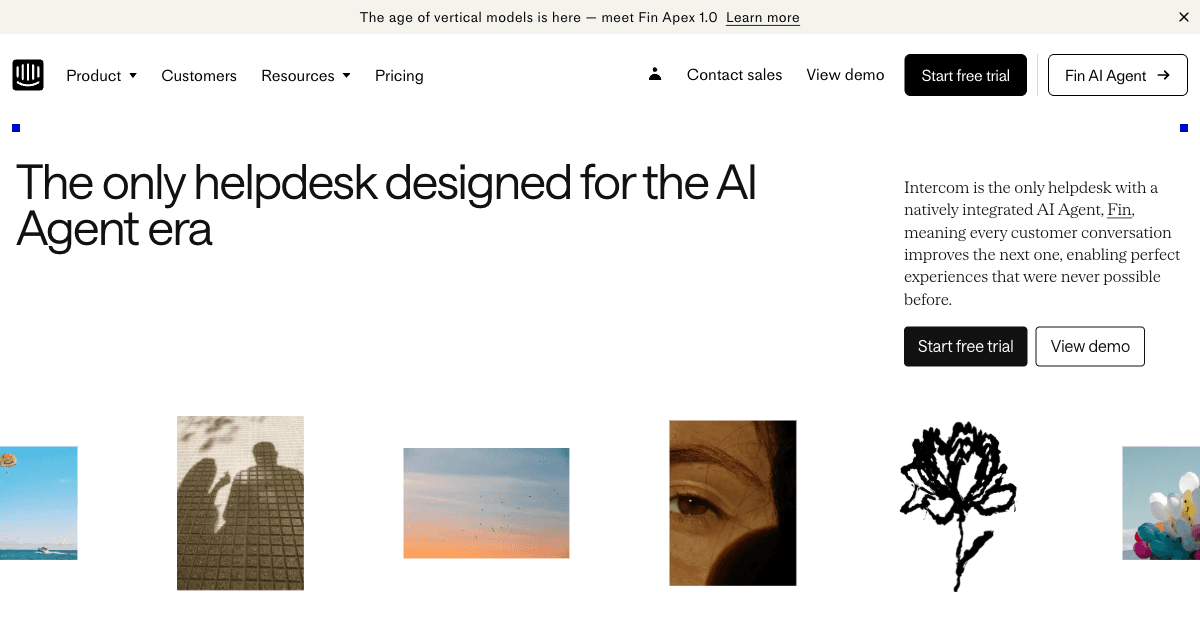
AI Agent vs Chatbot: I've Deployed Both. Here Is What Actually Matters.
I've built 126 AI systems for businesses. Most started by asking for a chatbot and needed something completely different. Here is how to know which one is right for you.
ComparisonTrends & InsightsAI Agents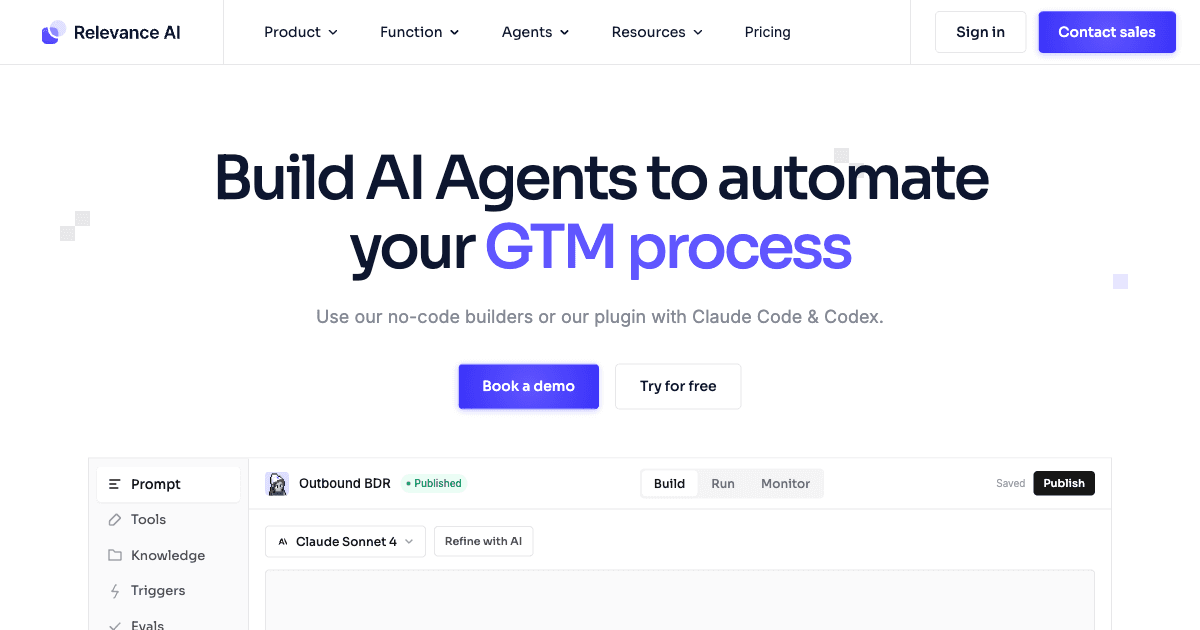
I've Built AI Agents for 40+ Businesses. Here's What No-Code Tools Can (and Can't) Do
Most guides on no-code AI agents are written by vendors. This one is written by someone who deploys them for clients. Here is what works, what does not, and how to decide if one fits your business.
GuideIndustry GuidesNo Code AI Agents
AI Automation Services: What They Actually Include, What They Cost, and Whether You Need Them
I've built 126 AI automation systems across industries. Here's what AI automation services actually include, what they cost in 2026, and how to tell whether you need a specialist.
GuideImplementationAI Automation