What Is a Medical Virtual Receptionist? A 2026 Guide for US Practices
A practical guide to medical virtual receptionists for US practices, with real pricing, HIPAA gotchas, EHR integration realities, and a decision framework drawn from 126 production AI deployments.

Table of Contents
A medical virtual receptionist is any off site service, human or AI, that answers patient calls and handles routine front desk work. The case for one is arithmetic: the average primary care physician takes 53 inbound calls a day, clustered at 8 to 9am and 3 to 5pm on Mondays and Fridays, and independent US practices lose roughly $150,000 a year to no shows alone at $200 or more per missed slot. Voicemail is a large part of how that happens.
An AI receptionist handling 1,000 minutes a month runs $200 to $500 all in, against roughly $3,100 a month for a full time front desk hire at the $17.90 median hourly wage plus benefits. HIPAA does not prohibit any of this: it requires a signed BAA, AES-256 at rest, TLS 1.2 or better in transit, audit logs, and a breach process. Integration is the real timeline risk, not compliance. 96% of US hospitals expose HL7 FHIR APIs and the major EHRs now offer scheduling endpoints, but genuine bidirectional Epic integration still takes 10 to 14 weeks. Use AI for routine repetitive volume, and keep humans on complex care navigation and any practice without an EHR API.
If you run a medical practice in the US, the front desk is probably your most expensive bottleneck. Phones ring at 8 a.m. on a Monday. A patient calls to reschedule, another wants a refill confirmation, a third has a question about an MRI prep. Your receptionist is on a call, the answering machine is full, and the no-show rate is creeping toward 15%. This is exactly the moment most practice managers I work with start Googling "medical virtual receptionist" and quickly fall into a tab explosion of HIPAA disclaimers and pricing pages that all start at "Contact Sales".
I deploy AI receptionists for healthcare practices across the US. I've shipped 126 production AI systems, and a meaningful chunk of those run inside primary care, dental, dermatology, and physical therapy clinics. This guide explains what a medical virtual receptionist actually is in 2026, how the AI version differs from a traditional answering service, what HIPAA and BAA realities look like in practice, and a clear decision framework for whether your practice should adopt one. No sales pitch.
What is a medical virtual receptionist?
A medical virtual receptionist is a service that handles front-desk work for a healthcare practice without sitting at the front desk. Two flavors exist:
- Human virtual receptionist services. A remote person, usually employed by a third-party answering service, picks up calls under your practice's name. Examples include Ruby, AnswerConnect, and PatientCalls. They handle live transfers, message taking, and basic scheduling through a shared portal.
- AI medical receptionist (voice agent). A software agent answers the call directly. It transcribes patient speech, runs through a structured workflow, looks up your schedule in your EHR or practice management system, books or reschedules the visit, and writes a structured note back to your charts. No human sits in the loop unless the call needs to escalate.
The category is older than people think. Telephone answering services have served physicians since the 1950s. What changed in 2024 and 2025 was the cost and quality of speech-to-text plus large language models. By the time we hit 2026, the AI version finally crossed the line where most patients on a routine call cannot tell they are not talking to a person, and the cost dropped below the breakeven point against a part-time hire.
How do AI medical receptionists actually work?
When a patient calls your practice and you have an AI receptionist set up, the flow looks like this. I'm describing what happens in production deployments I've configured:
- The call hits your phone system. Most practices keep their existing number through Twilio, RingCentral, or a SIP trunk into the AI vendor.
- The AI greets the patient: "Thanks for calling Mountain View Family Medicine, how can I help?". The greeting voice is cloned or pre-built, and the patient hears it within about 600 milliseconds, which is the latency threshold that stops people from feeling like they're on a robot call.
- Speech-to-text (usually Deepgram Nova or AssemblyAI) transcribes the patient. The agent classifies intent: scheduling, refill, billing, clinical question, or other.
- For scheduling, the agent calls into your EHR's API. If you're on Athenahealth, that means hitting
/v1/appointments/opento find slots. On Epic with FHIR R4, it's the$findand$bookoperations on the Appointment resource. - The agent reads back availability, confirms the appointment, and writes the booking into your schedule along with a structured note ("Patient called 5/6 to schedule annual physical, prefers afternoon, has Aetna PPO").
- If the call is anything the agent does not handle, it escalates. Either it transfers live to your front desk, or it takes a structured message and texts the on-call provider.
The piece that separates a real medical AI receptionist from a generic one is the EHR connection. A receptionist that can hear the patient but cannot book the appointment is a $200/month answering machine.
What jobs can a medical virtual receptionist actually handle?
This is where most practice managers get oversold. A vendor demo will show you the AI doing 14 different things flawlessly. In production, you usually get four or five jobs done very well, and that is enough to justify the deployment.
Here is what I see consistently work in real practices:
| Job | How well AI handles it (2026) | Notes |
|---|---|---|
| Booking new appointments | Reliable | Requires EHR slot API. Works on Epic, Athena, eClinicalWorks, NextGen, DrChrono. |
| Rescheduling and cancellations | Reliable | Often paired with proactive outbound calls 48 hours before the visit, which is where the no-show reduction comes from. |
| Insurance verification (basic) | Mostly reliable | AI confirms carrier, member ID, and group. Eligibility checks still need a clearinghouse like Availity or Change Healthcare. |
| Refill requests | Reliable | Captures medication, dose, pharmacy, and routes to the correct provider's queue. |
| FAQ deflection | Reliable | Hours, location, parking, accepted insurance, new patient process. The agent answers from your knowledge base, no escalation needed. |
| Bill questions | Mixed | Works for "what was that charge" lookups. Anything billing dispute related should escalate. |
| Triage and clinical questions | Avoid | This is not a job for an AI agent. Even with safety guardrails, the liability is too high. Always escalate to a clinician. |
| Sensitive calls (mental health, oncology, palliative) | Avoid | Always route to a human. The AI should detect the emotional tone and warm-transfer immediately. |
The realistic ceiling for AI handling without escalation is about 70 to 80% of inbound call volume in a primary care or specialty office. The remaining 20% to 30% needs a human, and that is fine. Your front desk goes from "drowning" to "handling the calls that actually need a human".
When is a medical virtual receptionist right for your practice?
Not every practice should run out and buy one. Here is how I size a clinic for it on a discovery call:
- You have at least one full-time receptionist (or you should). If your call volume is 10 calls a day, an AI receptionist is overkill. The math works once you cross roughly 30 calls per day, or about 600 minutes of answered call time per month.
- Your no-show rate is over 8%. National average is 5% to 18%. If you are above 8%, the proactive outbound reminder calls alone usually pay for the system. I have seen no-show rates drop from 14% to 6% in 60 days.
- You miss calls outside business hours. Most practices lose 15% to 25% of inbound volume to voicemail. An AI receptionist captures those at 100% and books visits the patient would have otherwise looked elsewhere for.
- You use a modern EHR. Epic, Athenahealth, eClinicalWorks, NextGen, DrChrono, Practice Fusion, Kareo, AdvancedMD all have appointment APIs in 2026. If your EHR does not, you cannot do real scheduling automation, only call answering.
- Your front-desk turnover is high. If you are losing receptionists every 9 months, the cost of hiring, training, and the gaps in between often dwarf the cost of the AI plus a smaller front-desk team.
- You have a clear escalation policy. AI receptionists fail gracefully when there is a defined human fallback. If your practice is "everyone is on a call all day, nobody can pick up", the AI cannot escalate to anyone, and patients hate that.
When is a medical virtual receptionist NOT right for your practice?
I'd rather lose a sale than watch a practice deploy an AI receptionist that should not exist. These are the situations where I tell people not to do it:
- You do not have an EHR with an API. Some legacy practices still run paper-and-Outlook scheduling, or EHRs without exposed APIs. Without the integration, the AI is glorified voicemail. Skip it.
- Your patient base is uncomfortable with technology. Geriatric-heavy practices and concierge medicine practices are usually a hard no. The expectation is "call my doctor's office and a person picks up". An AI breaks that expectation, and you will get complaints.
- Most of your inbound is clinical. If 60% of your calls are nurse triage, OB pregnancy questions, or oncology follow-up, the AI cannot help. You need a clinical contact center, not a receptionist.
- You want to avoid ongoing operational work. An AI receptionist is not "set and forget". You will review call transcripts weekly for the first 90 days, tune the prompt, add FAQs, and fix edge cases. Practices that want zero ongoing involvement should hire a virtual receptionist service instead.
- Your call volume is genuinely tiny. Under 200 calls a month, the math does not work. A part-time hire or a basic answering service ($75 to $150/month) is cheaper and simpler.
- You operate in a state with strict consent laws and your vendor has not handled it. Eleven US states require all-party consent for call recording, and California also requires CCPA-aware data handling. If your vendor cannot show you per-state recording disclosures, the legal risk is real.
How much does a medical virtual receptionist cost?
Pricing is the topic where vendors most deliberately confuse buyers, so let me lay it out cleanly. There are three pricing models:
| Model | Typical 2026 Pricing | Best for |
|---|---|---|
| Per-minute (AI) | $0.15 to $0.35/min all-in | Practices with predictable, high call volume |
| Monthly bundle (AI) | $200 to $1,500/month for 1,000 to 5,000 minutes | Most small to mid practices |
| Per-call (human service) | $1.25 to $2.75 per call | Practices with low or unpredictable volume |
| Bundle (human service) | $240 to $1,200/month for 100 to 500 calls | Practices that want a human voice but cannot staff one |
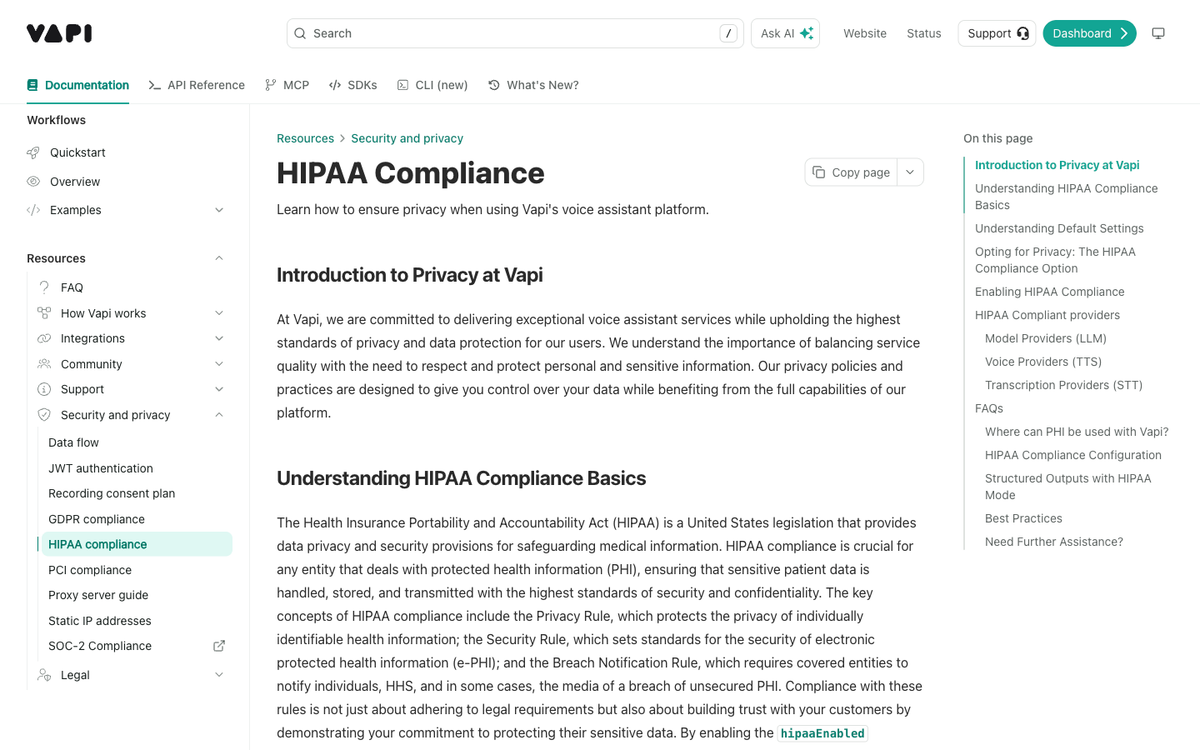
A note on the per-minute pricing: vendor websites for Vapi and Retell quote rates like $0.05 or $0.07 per minute. Those are orchestration only. They do not include speech-to-text (Deepgram, around $0.0043/min), the LLM that runs the conversation (Claude Haiku 4.5 or GPT-5.4 mini, around $0.04 to $0.10/min for a typical receptionist call), the voice synthesis (ElevenLabs, around $0.07/min), or the telephony minutes (Twilio, around $0.014/min for inbound US numbers). The realistic all-in for a healthcare-grade configuration is $0.15 to $0.25 per minute.
To put it against a human cost: the median US medical receptionist wage in 2026 is $17.90/hour. Loaded for benefits and PTO, a full-time receptionist runs roughly $46,000 to $52,000 per year. That is about $3,800 to $4,300 per month for one FTE. A typical AI deployment that handles 1,500 minutes a month all-in lands at $300 to $450 per month, plus $200 to $400 for the integration and tuning. The breakeven against a part-time hire is usually around month two.
What does HIPAA actually require for a medical virtual receptionist?
This is the section most articles get wrong, so I want to be precise. HIPAA does not "ban AI". It requires that any vendor handling Protected Health Information on behalf of your practice qualifies as a business associate, signs a Business Associate Agreement, and meets the technical safeguards in 45 CFR §164.
The minimum bar for a HIPAA-compliant AI medical receptionist in 2026:
- A signed BAA covering the AI use case specifically. Generic SaaS BAAs that predate AI often lack clauses for model training, prompt logging, and audio retention. A 2025 OCR-related industry survey found 70% of vendor BAAs did not address AI-specific risk. Ask the vendor for a BAA that explicitly says your audio and transcripts will not be used for model training.
- Encryption. AES-256 at rest, TLS 1.2 or higher in transit, SRTP for live audio streams.
- Audit logging. Every call, every API call into your EHR, every escalation, with timestamps and actor identity. Retain for at least 6 years per HIPAA, longer per state law.
- Access controls. Role-based access for staff who review transcripts. The AI vendor's engineers should not casually browse your patient calls.
- Breach notification process. Under 60 days for HIPAA, often shorter under state breach laws (Illinois, California, New York).
- Recording consent. If the AI records calls (most do, for transcription), you need state-aware disclosure. Eleven states require all-party consent: California, Connecticut, Delaware, Florida, Illinois, Maryland, Massachusetts, Montana, New Hampshire, Pennsylvania, Washington. Your vendor's prompt should automatically detect the caller's state and adjust.
One enforcement data point that practice managers should know: in 2025, the OCR fined 17 practices a combined $2.1M for AI-related documentation gaps. Most of those fines were not about leaked PHI. They were about practices that could not produce evidence that the AI vendor had a BAA, or could not show audit logs when the OCR asked for them. This is a paperwork problem, not a technology problem, and it is fixable.
A real client deployment: dermatology practice in Phoenix
One of the cleanest deployments I shipped was for a dermatology practice in Phoenix, Arizona. Single doctor, two PAs, around 4,000 active patients, running on Athenahealth. The practice manager called me in November because the front desk had been short two people for three months, and patient complaints about voicemail were piling up on Yelp. Here is what we built and what it returned, redacted but real.
The starting state:
- Inbound call volume: ~1,800/month
- Calls answered live: 62%
- No-show rate: 11.4%
- After-hours voicemails returned within 24 hours: 38%
- Front desk staff time on phones: ~6 hours/day combined
- Existing tools: Athenahealth, RingCentral, no scheduling SMS reminders
The deployment:
- AI voice agent on Vapi with a custom-trained system prompt covering 47 dermatology FAQs (Mohs prep, biopsy results, cosmetic vs medical visit triage, insurance accepted)
- Athenahealth integration via the public API for slot lookup, booking, and rescheduling
- Outbound 48-hour reminder calls with confirm/reschedule/cancel options
- Live transfer to a designated front-desk extension when intent was billing dispute, clinical question, or anything unclear
- Full HIPAA stack: signed BAA, AES-256 encryption, all-party consent recording prompt, audit log export to S3
The results 90 days in:
- Calls answered live (or by AI without voicemail): 97%
- No-show rate: 5.8% (was 11.4%)
- After-hours bookings captured: 84 new visits in month 3 alone
- Front desk time on phones: ~2 hours/day combined, repurposed to in-person check-in, prior auths, and patient pre-visit education
- Cost: $412/month (Vapi orchestration + Deepgram + ElevenLabs + Twilio) plus a one-time $2,400 build and integration fee
- Payback: month 2
The practice manager's quote that I think captures the actual value: "We didn't fire anyone. We just stopped feeling like we were drowning every Monday morning."
How do you evaluate a medical virtual receptionist vendor?
If you decide an AI medical receptionist is the right move, here is the short evaluation framework I give clients before they commit. Read it as a checklist for the demo call:
- Ask for the BAA template before the demo. Read it. If they refuse to send one without a signed NDA, walk away. Real vendors publish redacted BAAs.
- Ask which EHR APIs they integrate natively. "We can integrate with anything" is a red flag. The right answer is a specific list with named endpoints. If they have not done your EHR before, the project will take 4 to 8 weeks longer.
- Ask for the all-in per-minute cost. Force them to break out orchestration, STT, LLM, TTS, and telephony. If they cannot, they do not understand their own cost stack.
- Listen to a real call recording from a similar practice. Not a demo script. A real, unscripted patient call. Vendors who cannot produce one have not actually run production volume.
- Ask about escalation latency. When the AI hands off to a human, how many seconds does the patient wait? Anything over 4 seconds feels broken. Good vendors land at 1.5 to 2.5 seconds.
- Ask who owns the call data. You should. The vendor should be a data processor, not a data owner. Ask for export terms in writing.
- Pilot for 30 days, single workflow. Do not start with the full scope. Start with FAQ deflection and one scheduling workflow. Scale from there.
Frequently asked questions
Is a medical virtual receptionist HIPAA compliant?
It can be, but compliance is the vendor's responsibility plus yours. The vendor must sign a Business Associate Agreement, encrypt PHI at rest and in transit, maintain audit logs, and have a documented breach process. Your practice must keep a copy of the BAA, configure access controls, and review the vendor's compliance documentation annually. An AI receptionist without a signed BAA is a violation, regardless of how secure the technology is.
Can a medical virtual receptionist book appointments in Epic?
Yes, through Epic's FHIR R4 API. The relevant operations are $find on the Appointment resource for slot search, and $book for confirming the booking. The integration requires Epic App Orchard or a third-party connector, and a real bidirectional Epic integration typically takes 10 to 14 weeks to ship. Read-only integration is faster, around 4 to 6 weeks.
How much does an AI medical receptionist cost compared to a human?
For a small practice handling around 1,500 minutes per month, an AI deployment lands at roughly $300 to $500/month all-in. A full-time medical receptionist in the US in 2026 costs $3,800 to $4,300/month including benefits. The AI handles 70 to 80% of inbound call volume without escalation. Most practices keep at least one human on staff to handle escalations and in-person check-in.
What happens when a patient asks the AI a clinical question?
The agent should escalate immediately. A well-built medical receptionist has guardrails that detect clinical intent (symptom, dosage, concerning side effect) and route the call to a clinician or take a structured message. Any vendor whose AI tries to answer clinical questions itself is creating malpractice exposure for your practice.
Can a medical virtual receptionist reduce no-shows?
Yes, primarily through proactive outbound reminder calls 24 to 48 hours before the visit, with confirm, reschedule, and cancel options. National no-show rates run 5 to 18%. Practices that add AI-driven reminders consistently see no-show rates drop by 30 to 50%. The financial impact is significant since each missed appointment costs roughly $200+ in revenue and overhead.
What is the difference between an AI medical receptionist and a virtual answering service?
A traditional virtual answering service uses remote human agents. They answer the phone under your practice's name, take messages, and sometimes book appointments through a portal. An AI medical receptionist is software that handles the call directly, integrates with your EHR for live scheduling, and escalates to a human only when needed. Cost, scalability, and EHR integration depth are the main practical differences.
Will my patients hate talking to an AI?
The honest answer is that some will, especially older patients or those with strong relationships with your front desk. In production deployments I have shipped, complaint rates run 1 to 4% of calls. Most of those are resolved by adjusting the AI's greeting to make the option to talk to a human very explicit ("press 0 anytime to reach the front desk"). The 95% who do not complain often prefer the AI because they get answers faster and at any hour.
How long does it take to deploy a medical virtual receptionist?
For a single-EHR, single-workflow deployment with a vendor that has done your EHR before, expect 4 to 6 weeks from signed contract to first live patient call. Multi-EHR or multi-location deployments run 10 to 16 weeks. The longest single piece is usually the EHR integration certification, not the AI itself.
Where to go from here
If you've read this far, you probably have a sense of whether a medical virtual receptionist fits your practice. The next step depends on where you are:
- If you're not sure your practice is ready, run the AI readiness assessment. It's 12 questions and gives you a tier-graded report on what to automate first, with healthcare-specific scoring.
- If you want to compare voice agent platforms, my deeper post on AI voice agent pricing across 40+ deployments has the side-by-side cost data that vendors do not publish on their own sites.
- If you're benchmarking the cost, the AI agent cost calculator lets you run your own all-in numbers based on your actual call volume, EHR, and required HIPAA controls.
- If you want to see real implementation examples, the case studies include deployments across primary care, dental, and specialty practices.
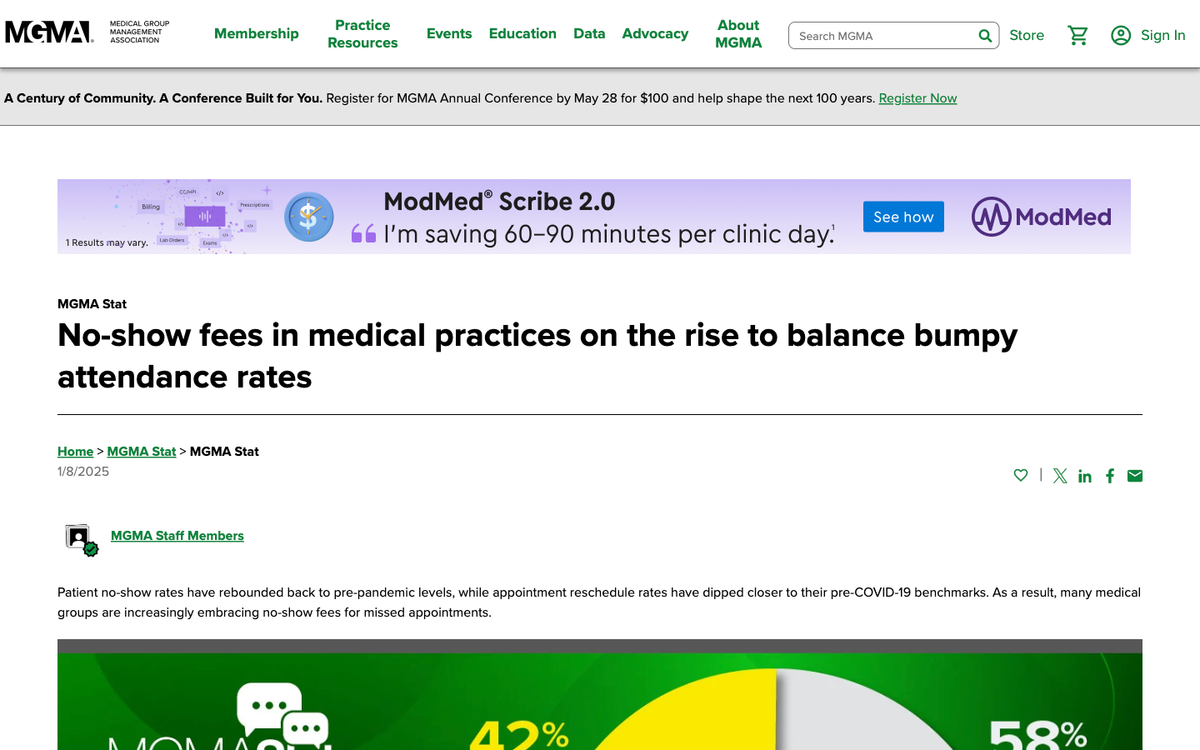
US healthcare loses roughly $150 billion per year to no-shows (Curogram). Independent practices lose $150,000/year on average (Kyruus Health). Average no-show rates run 5-18% across outpatient settings (Curogram no-show guide). Primary care physicians take ~53 inbound patient calls per day (AgentZap medical phone stats). Median US medical receptionist wage in 2026 is $17-21/hour (Salary.com; PayScale). 96% of US hospitals have adopted HL7 FHIR APIs (FHIR adoption survey). Epic exposes appointment scheduling via FHIR R4 (Epic FHIR specifications). HIPAA voice AI compliance requirements per Linear Health and Simbie's HIPAA BAA guide. MGMA no-show fee data from MGMA Stat.
Related Posts
Virtual Receptionist for Medical Practice: What Australian Clinics Get Wrong Before They Sign
Industry GuidesVirtual ReceptionistHealthcare
What Is a Virtual Receptionist? A No-Hype 2026 Guide for US Small Business Owners
Industry GuidesVirtual ReceptionistAI Receptionist
What a Bilingual Virtual Receptionist Costs a Small Business (And Why the AI Version Is 43x Cheaper)
Industry GuidesVirtual ReceptionistBilingual

Jahanzaib Ahmed
AI Systems Engineer & Founder
AI Systems Engineer with 126 production systems shipped. I run AgenticMode AI (AI agents, RAG systems, voice AI) and ECOM PANDA (ecommerce agency). I build AI that works in the real world for businesses across home services, healthcare, ecommerce, SaaS, and real estate.