AI for Real Estate Agents: I've Deployed It for 9 Clients. Here Is What Actually Works.
I have deployed AI systems for nine real estate clients. Here is what actually moved the needle, what it cost, and the two cases where it was not worth the investment.

Table of Contents
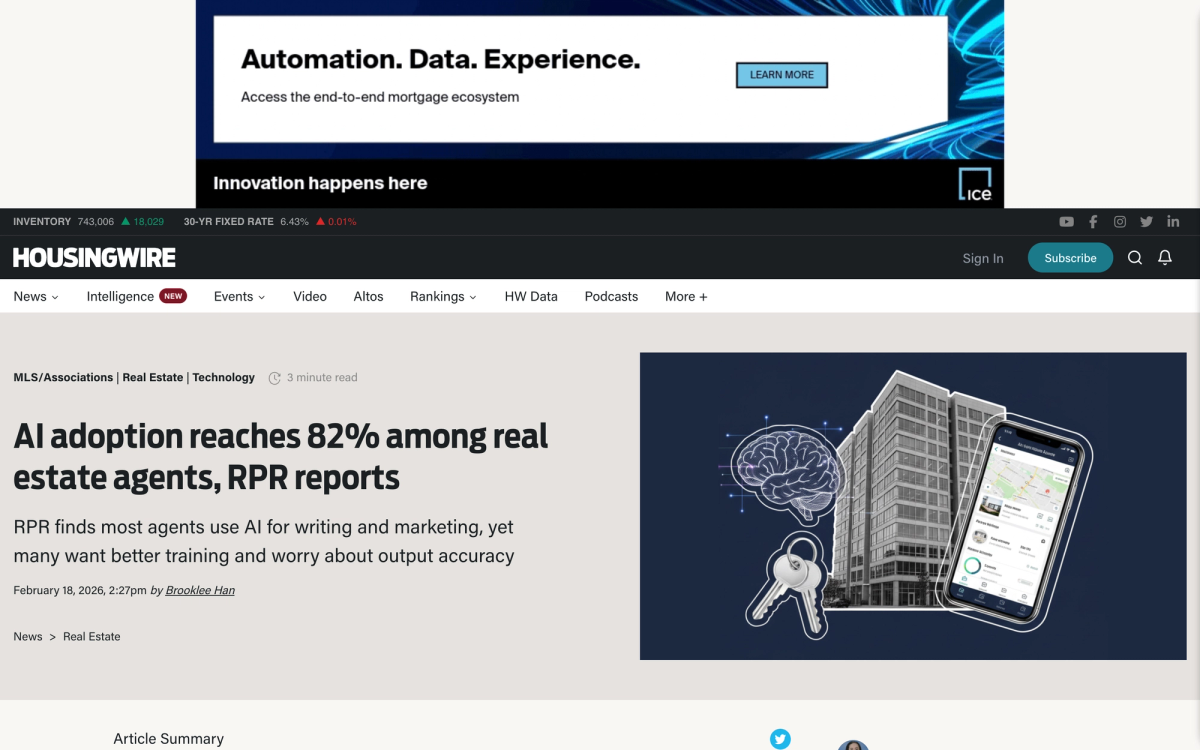
82% of US agents now use AI tools according to the 2026 RPR and NAR survey, but the win is not where most of them are looking. It is not content generation. It is speed to lead and automated follow up, because the lead that fills in your form at 7:43pm on a Thursday goes to whoever replies first, and that is rarely the agent at their kid's soccer game. AI CRMs save solo agents 12 to 16 hours a week on repetitive work.
Two hard limits are worth knowing before you spend. Anything AI writes and you publish is your liability under Fair Housing, where fines start at $26,262 for a first offence, so generated listing copy needs a human read every time. And under about ten leads a month the maths does not work yet. Practical setups run $97 to $500 a month; a full custom agent build is $3,000 to $15,000 to stand up.
Thursday evening, 7:43pm. You are at your kid's soccer game when a lead fills out the contact form on your site. They have been browsing listings for three weeks, pre-approval letter in hand, and they just found the house they want.
You see the notification at 10:15pm. You reply at 10:22pm. Professional, warm, helpful.
They bought with another agent at 8:30am the next morning.
This is not bad luck. It is a speed-to-lead problem. Research across sales industries shows that leads contacted within five minutes are 100 times more likely to convert than those reached after 30 minutes. In real estate, where every buyer is simultaneously talking to three other agents, that window is brutally short. AI for real estate agents exists, in large part, to close that gap. That is the part the tool roundups rarely explain.
I have deployed AI systems for nine real estate and property management clients over the past 18 months. Some delivered results within weeks. Two were not worth the investment. Here is everything I actually learned.
What AI for Real Estate Agents Actually Means in 2026
When most agents hear "AI for real estate," they picture a faster way to write listing descriptions. That is the smallest part of what AI actually does.
Three categories of AI tools are relevant to agents today, and they solve very different problems:
Content AI: Tools like ChatGPT, Claude, and Gemini that help you write listing copy, email templates, social captions, and negotiation talking points. Fast, inexpensive, and genuinely useful for the writing grind. This is where most agents start.
Agentic CRM AI: AI that connects to your lead sources, qualifies incoming leads through text or voice conversation, books showings on your calendar, sends follow-up sequences, and updates your CRM automatically without you having to do anything. This is where serious time savings come from.
Analytics and Valuation AI: Tools that improve pricing accuracy, predict which leads are most likely to convert, and surface market trends before they appear in MLS data. Modern automated valuation models can now achieve error rates as low as 5%, compared to 10 to 15% five years ago.
Most agents start with content AI and never touch the other two categories. That is an understandable path. But if you are managing leads, showings, and follow-up on your own, the agentic category is where you get your evenings back.
Five Places AI Makes a Real Difference for Agents
1. Lead Response Speed
This is the use case I keep returning to with every real estate client. Not because it is the most technically impressive, but because the math is brutal.
Leads contacted within five minutes are 100 times more likely to convert than leads reached after 30 minutes. Most agents respond within four to six hours on a good day. At 10pm on a Thursday, the average response time stretches to the next morning.
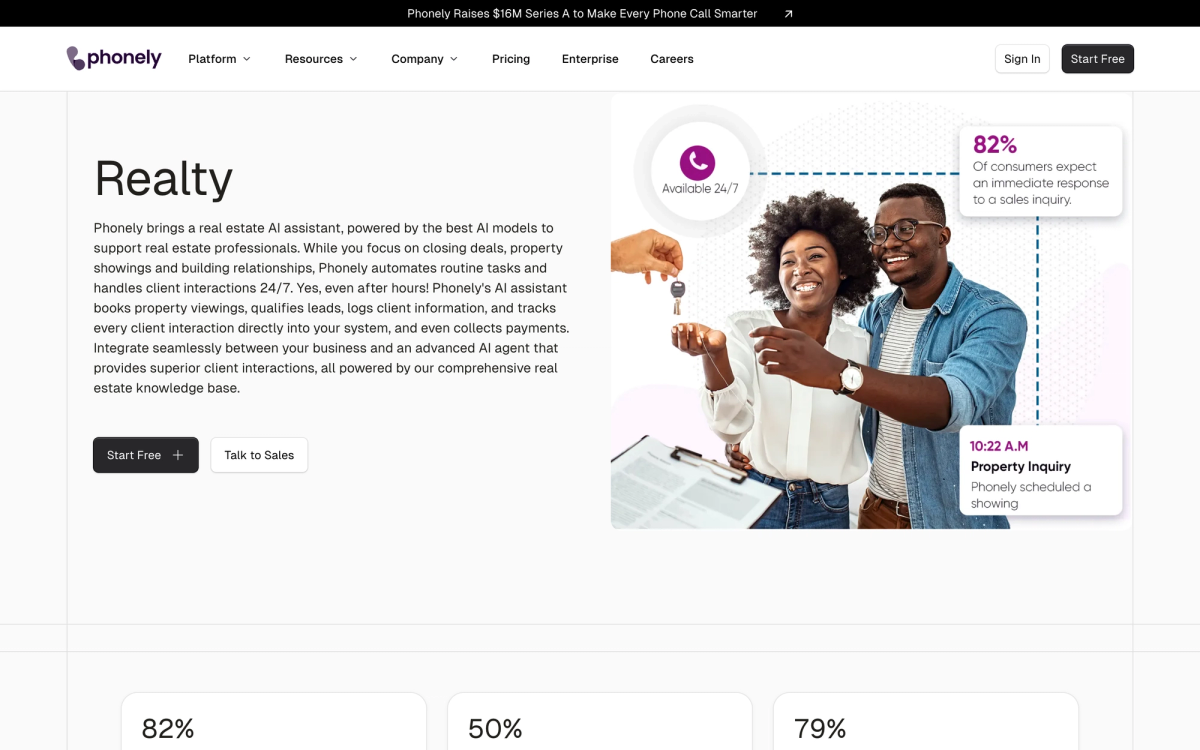
An AI voice agent or SMS bot changes that completely. The lead fills out the form, the AI responds within 30 to 60 seconds, asks two qualification questions, and books a call for tomorrow. By the time you wake up, the meeting is on your calendar and the lead knows they are working with someone responsive.
One of my clients in Toronto, a solo agent running her own independent practice, went from a six-hour average response time to under two minutes after we built an AI qualification agent connected to her website form. Her calendar fill rate in the first 90 days went from roughly 8% of incoming leads to 11%. That is a 38% improvement in conversion without changing her close rate at all. The only thing that changed was how fast the phone got picked up.
2. Follow-Up Sequences That Do Not Require You to Remember
The second biggest win is consistent follow-up. Most agents have a mental list of leads they mean to circle back to. Most of those leads go cold because life gets in the way.
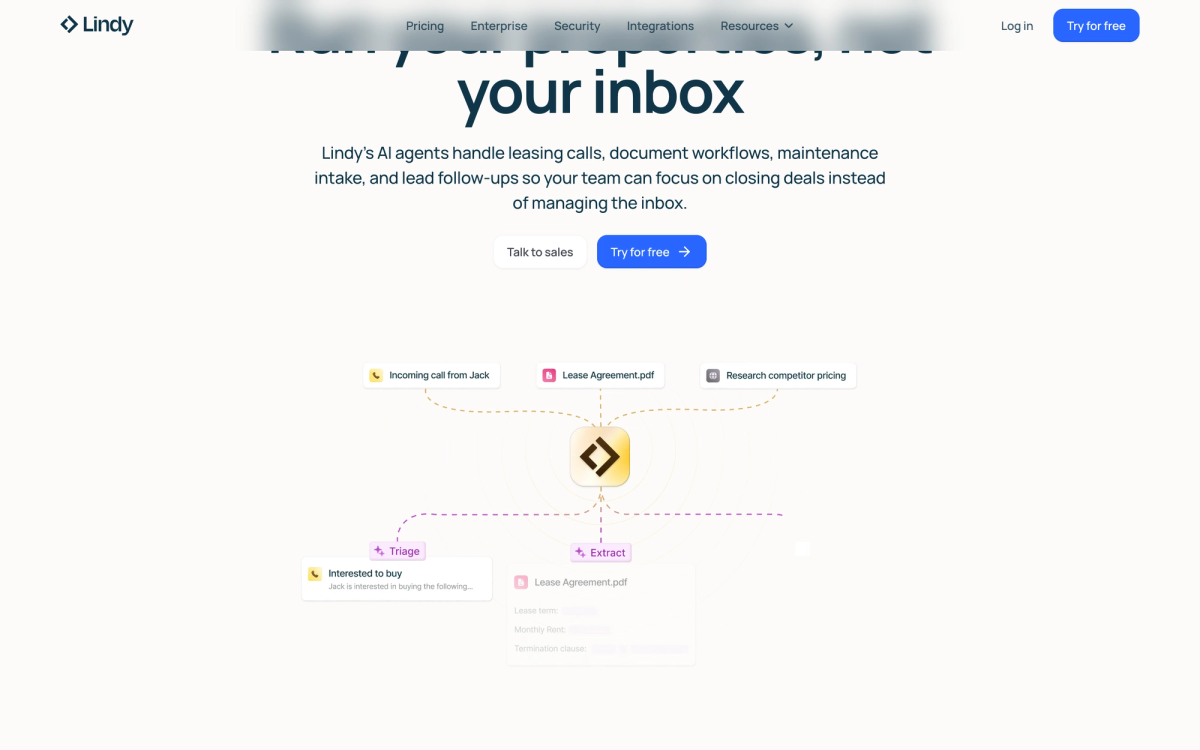
AI CRM tools like Lofty, Ylopo, and custom-built n8n workflows can run personalised follow-up sequences across email, text, and voice based on lead behaviour. If someone views three listings on your site in one evening, the AI sends a message the next morning. If they stop responding, it tries again seven days later with a different angle.
The key word is consistent. Not aggressive. Consistent. That is what converts cold leads over 90 and 180-day cycles. Manual follow-up at that cadence is nearly impossible to sustain when you are also running showings and writing offers.
3. Listing Descriptions and Marketing Content
This one everybody already knows about, but I want to say something specific: AI is good at the first draft, not the final version.
Give a good content AI tool your property details, three nearby comparable sales, and the two things that make this home genuinely special. It will give you an 80% draft in 45 seconds. You spend five minutes refining it. Total time: six minutes instead of 30.
Where agents get into trouble is publishing AI output without reviewing it. More on that in the compliance section below. For now: AI is a starting point, not a publishing button.
4. Showing Scheduling and Calendar Management
Booking showings via back-and-forth text threads is one of the most avoidable time drains in an agent's week. An AI scheduling assistant connected to your calendar and listing management system handles the coordination automatically.
When combined with lead qualification, this is where the real compounding starts. The AI qualifies the lead, books the showing based on your calendar availability, sends a confirmation, and sends a reminder 24 hours before. You show up. That is it.
5. Document Processing and Market Research
Contract review, inspection summaries, and market report generation are time-consuming tasks that AI handles well. Platforms with AI document processing have been saving agents between 45 to 60 minutes per contract. For market analysis, AI can pull comparable sales, identify pricing trends, and generate a summary of local inventory movement in a fraction of the time it takes manually. Not a replacement for your judgment. A starting point that means your judgment is applied to already-processed data.
What AI for Real Estate Actually Costs
| Setup Type | Monthly Cost (USD) | What You Get | Best For |
|---|---|---|---|
| Off the shelf content AI | $20 to $50 | ChatGPT Plus or Claude Pro for writing assistance | Any agent who writes marketing copy |
| AI powered CRM (Lofty, Ylopo) | $299 to $500 | Lead follow-up automation, predictive scoring | Agents with 20 or more leads per month |
| Custom AI lead qualification agent | $97 to $250 (hosting) | Built to your workflow, connects to your forms and calendar | Agents with specific intake flows |
| Full AI agent stack (custom build) | $3,000 to $15,000 setup plus ongoing retainer | Multi-agent system covering lead to contract | Teams or high volume solo operators |
The most common setup I recommend to solo agents starting out is a combination of a content AI subscription plus a mid-range AI CRM. Total cost: $350 to $600 per month. If you close one additional deal per quarter because your lead response rate improved, that pays for itself many times over.
When AI Is the Right Move for Your Business
Not every agent benefits equally from AI investment. Here is when the math actually works:
- You get 20 or more leads per month and cannot respond to all of them within five minutes. This is the single clearest signal. AI handles that response gap for you.
- You are managing everything yourself and losing time to scheduling, follow-up emails, and listing copy. AI gives you back hours every week.
- You want to scale your volume without hiring a full-time admin. AI handles the repetitive touchpoints so you stay focused on conversations that actually close.
- Your market is competitive and speed to lead matters. In high-activity markets like Toronto, Vancouver, Sydney, and major US cities, responding an hour later than a competitor can cost you a client.
According to the RPR and NAR 2026 survey published by HousingWire, 68% of agents say AI saves them at least one hour per week, with 34% reporting savings of over four hours per week. For agents with full AI lead response and follow-up workflows, savings of 12 to 16 hours per week have been reported across multiple implementations.
When AI Is NOT the Right Move (and I Mean This)
Too many agencies selling AI tools skip this section. I am not going to.
If you are getting fewer than 10 leads per month, an AI follow-up system is overkill. You can personally respond to 10 leads within five minutes without automation. Spend that budget on lead generation first.
If your brokerage has compliance restrictions on AI tools, check before you build. Some brokerages prohibit AI in client communications or require disclosure. Know your obligations before you automate anything.
If you are not willing to review AI output before publishing it, do not use AI for content. See the compliance section below. This is not a hypothetical risk.
If you are looking for AI to replace your judgment on pricing or negotiation, that is not what current AI does well. It surfaces data. You still need to interpret it and advise your clients accordingly.
The Compliance Reality Nobody Talks About Enough
AI output in real estate is your legal responsibility. That sentence is worth reading twice.
The most significant risk area is Fair Housing. AI predicts likely wording based on patterns in training data. That means it can generate marketing language that sounds natural but contains coded phrases that violate Fair Housing protections. Phrases like "ideal for young families," "safe neighbourhood," or "quiet community" have appeared in discrimination cases.
According to the REALTOR Association of Sarasota and Manatee's 2026 guidance, HUD's published civil penalty levels (effective July 2025) set Fair Housing Act fines at up to $26,262 for a first violation, increasing for repeat violations. If that language appears in your MLS remarks, your social post, or your website, you are responsible for it regardless of which tool generated it.
Three practical rules to protect yourself:
- Read every word of AI output before publishing anything, every time.
- Do not ask AI to infer property facts from photos. Anything structural must be independently verified.
- Do not use AI to draft contract clauses or legal language. That crosses into unauthorised practice of law in most states and provinces.
AI is a writing accelerator. You are the professional with the license on the line. Treat it accordingly.
82% of real estate agents use AI tools in their business (RPR and NAR Survey, HousingWire, 2026). McKinsey estimates AI adds over $180 billion to US real estate annually (Virtasant citing McKinsey, 2026). Leads contacted within 5 minutes are 100 times more likely to convert (Lindy, 2026). HUD Fair Housing civil penalties: up to $26,262 for a first violation, effective July 2025 (RASM and HUD, 2025).
Frequently Asked Questions
Does AI actually help real estate agents generate more leads?
AI does not generate leads by itself. What it does is help you convert more of the leads you already have. The main mechanism is speed: AI can respond to a new inquiry within 30 to 60 seconds, qualify the lead through a brief conversation, and book a showing on your calendar. Most agents lose leads not because their pitch is weak but because their response time is slow. AI closes that gap.
How much time does AI actually save a solo real estate agent?
It depends on what you automate. The RPR and NAR survey found that 68% of agents save at least one hour per week, with 34% saving over four hours per week. For agents who build a full AI lead response and follow-up system, savings of 12 to 16 hours per week have been reported. The more leads you manage and the more repetitive your admin work, the more time AI recovers.
What is the best AI tool for real estate agents in 2026?
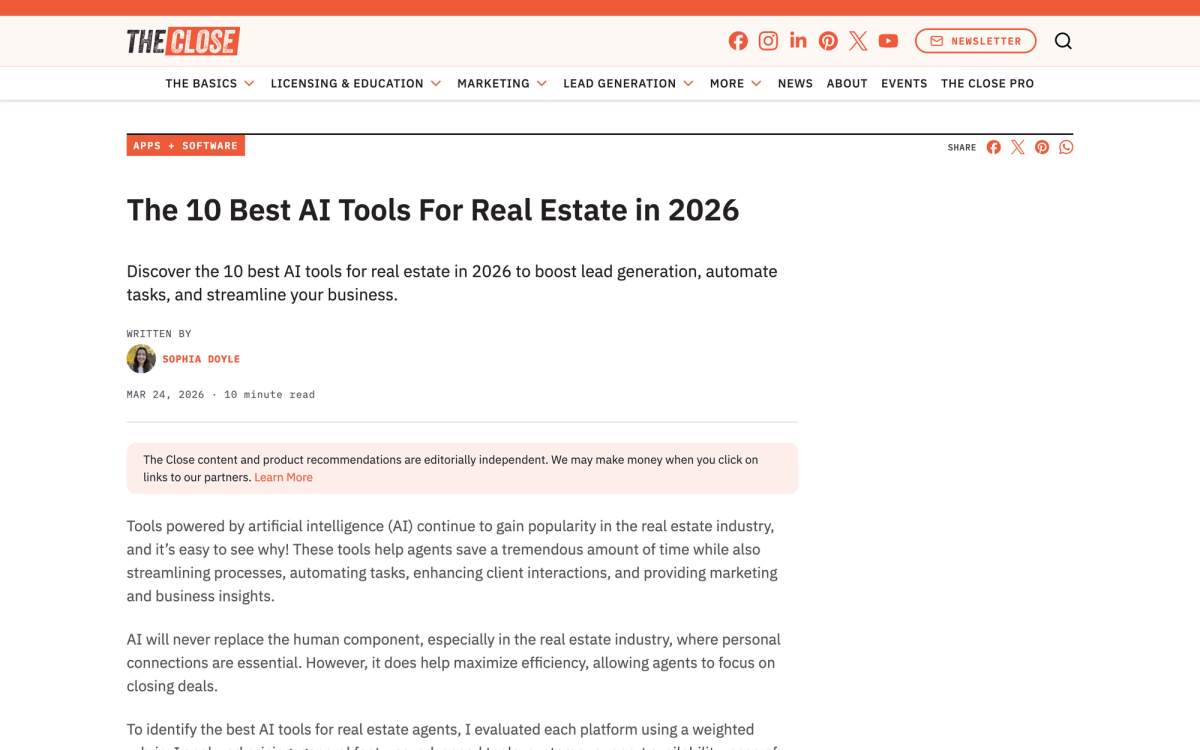
There is no single best tool because it depends on what problem you are solving. For listing content, ChatGPT Plus or Claude Pro are solid starting points at $20 to $50 per month. For lead follow-up and CRM automation, Lofty and Ylopo are purpose built for agents. For custom workflows, n8n or a custom AI agent build can be shaped to exactly how you work. For platform-level detail across all categories, see my comparison of the best real estate AI tools.
Is AI safe to use for listing descriptions?
Yes, with a clear review process in place. AI generates a first draft quickly. Your job is to read every word before publishing. The risk is Fair Housing language: phrases that seem harmless but carry discriminatory implications under federal law. AI does not know what it does not know. You do. Review everything before it goes anywhere public.
Will AI replace real estate agents?
No. AI is good at information retrieval, pattern matching, and repetitive communication. It is not good at reading a room, navigating a difficult negotiation, or building the trust that makes a client sign a listing agreement. The agents most likely to thrive long term are those who use AI to handle the transactional parts of the job so they can spend more time on the relationship parts.
What is the cheapest way to start using AI as a real estate agent?
Start with a ChatGPT Plus or Claude Pro subscription at $20 per month. Use it for listing copy, email drafting, and market report summaries. Once you are comfortable, the next step is automating lead response. That can be done with a mid-range AI CRM or a custom-built qualification agent depending on your lead volume. Take the AI readiness quiz to figure out which step makes sense for your current business stage.
How do I set up AI lead follow-up as a real estate agent?
The basic setup connects three things: your lead source (website form, Zillow lead feed, or referral inbox), an AI agent that handles the initial response and qualification, and your calendar for booking. You can do this with an off the shelf CRM that has AI built in, or with a custom workflow using tools like n8n or Lindy. I walk through the full approach in my post on AI lead follow-up automation for small businesses.
Where to Go From Here
The best starting point is not a tool purchase. It is an honest look at where your business actually loses time and money right now. Is it lead response? Follow-up? Content creation? Each answer points to a different first step.
I built a free AI readiness quiz specifically for this. It takes about four minutes and gives you a personalised starting point based on your business size, lead volume, and current tech stack. Over 1,400 business owners have taken it.
If you want to go deeper on specific platforms, my comparison of the best real estate AI tools in 2026 covers each one across lead generation, content, CRM, and valuation use cases with real deployment experience behind the recommendations.
And if you want to see how a full AI system looks when it is built for a real estate business, the case studies section includes several property and service business deployments with before-and-after numbers.
Published
April 20, 2026
Category
Industry Guides
Jahanzaib Ahmed
AI Systems Engineer & Founder
AI Systems Engineer with 126 production systems shipped. I run AgenticMode AI (AI agents, RAG systems, voice AI) and ECOM PANDA (ecommerce agency). I build AI that works in the real world for businesses across home services, healthcare, ecommerce, SaaS, and real estate.
Want this built for your business? See AI Agent Development, or browse the free tools and guides.
Related articles
I've Helped 126 Businesses Start Using AI. Here Is What Actually Works.
Most business owners know they should be using AI. Few know where to start. This is the practical framework I use with every new client, based on 126 real deployments.
How toIndustry GuidesAI For Business
How to Use AI to Automate Your Small Business: A Practical 2026 Guide
A step-by-step guide for non-technical small business owners on how to use AI to automate repetitive tasks, save 10+ hours per week, and start for under $100/month.
How toIndustry GuidesBusiness Automation
Conversational AI Use Cases for Small Business: What Actually Works in 2026
Most guides about conversational AI are written for developers. This one is for the business owner who keeps hearing about it but isn't sure where to actually apply it.
GuideIndustry GuidesConversational AI