How to Choose a Virtual Receptionist Service: A Small Business Buyer Guide to the Fine Print
A practical buyer guide to picking an answering service, with published 2026 rate cards, the call length that flips per minute against per call pricing, and the contract terms worth reading twice.

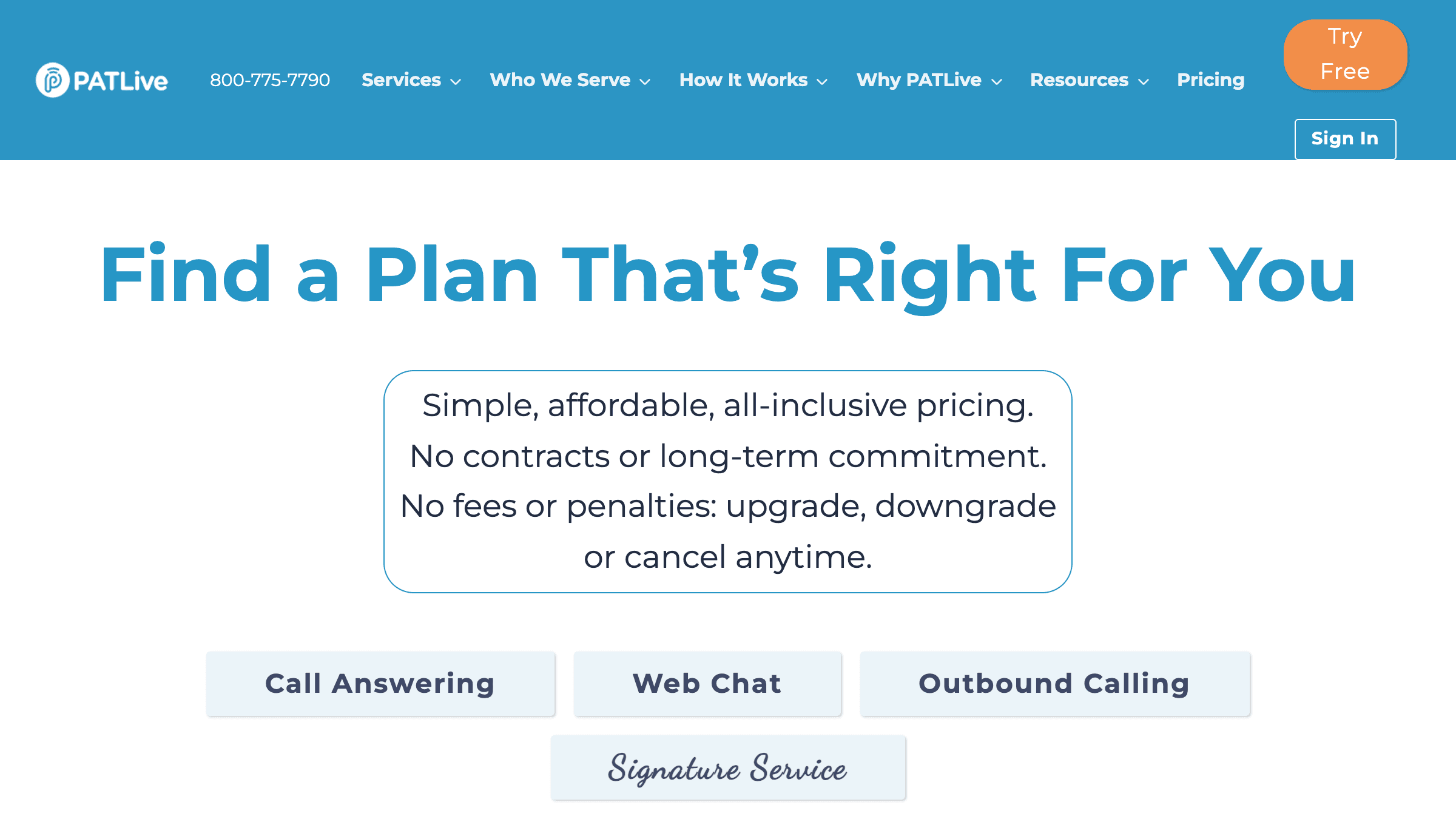
Table of Contents
The most common question I get about answering services is some version of "why is my bill double the plan price?" Almost every time, nothing's gone wrong. Nobody was overcharged and no vendor slipped anything past anyone. The buyer picked a plan by comparing headline prices, and the headline price is the one number on those pages with the least bearing on what you actually pay.
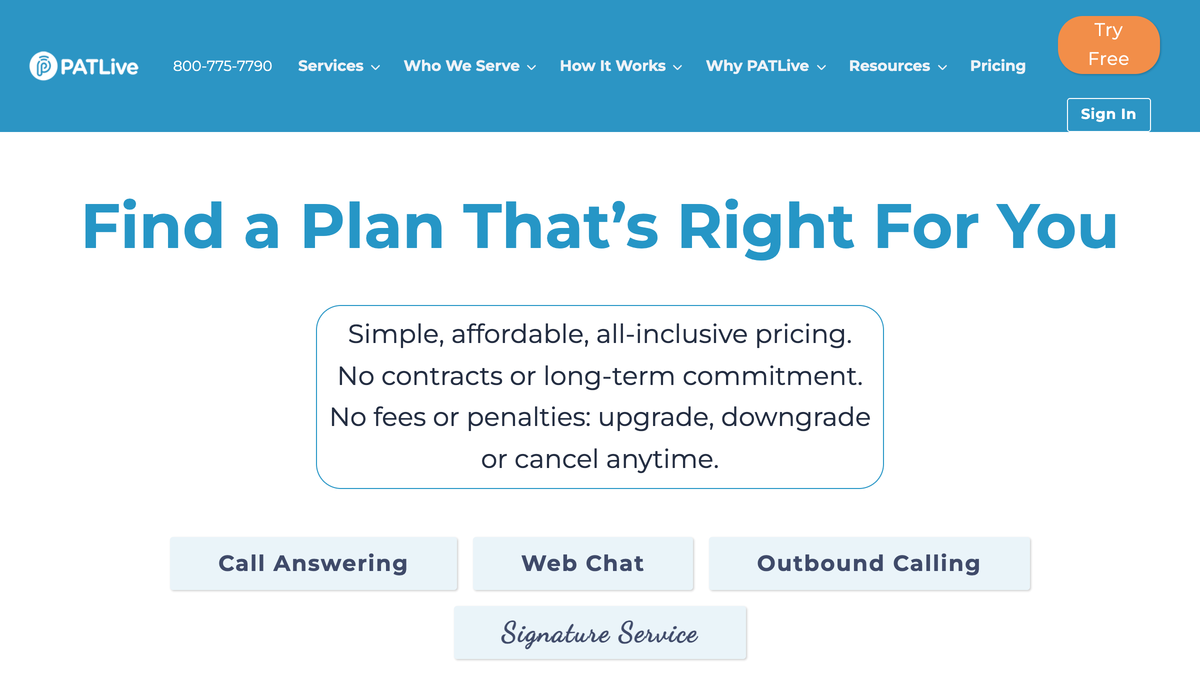
Run it yourself and you can see why. Take PATLive's published Starter plan at $250 a month for 75 minutes with additional minutes at $2.35. A business averaging three minutes a call doesn't have to be unlucky to reach 229 minutes in a busy month. That month costs $612. Same plan, same rate card, no surprises hidden anywhere, and two and a half times the number the buyer had in their head.
That is the whole problem. Learning how to choose a virtual receptionist service isn't really about ranking vendors, because the good ones are all competent at answering a phone. It's about understanding which billing unit you just agreed to, and what happens to your bill when your calls get longer or your volume moves.
I have spent the last few years building phone and intake systems, and most of what I do now is untangle the billing surprises that come out of contracts like the one above. If you'd rather skip the reading and have someone look at your actual call pattern, book a discovery call and bring one month of phone records.
How to choose a virtual receptionist service in one paragraph
Pull your last 30 days of phone records and find two numbers: how many calls you got, and how long the average one lasted. If your calls run short, under about 4.5 minutes, choose a vendor that bills per minute. If your calls run long, over about 5 minutes, choose one that bills per call. Then read the add on menu and the cancellation clause before you look at anything else. Everything below is just the arithmetic behind that.
Start with the billing unit, because it decides everything downstream
There are three ways these companies charge. Per minute of talk time, per call answered, or a flat monthly rate for a fixed allowance of either. The vendor picks the unit that flatters their cost structure. You need the one that flatters your call pattern.
Here is what the same business pays at two vendors that publish real rate cards. I built this from PATLive's published plans and Smith.ai's published plans, both checked on 6 August 2026, assuming a three minute average call and always picking the cheapest plan that fits.
| Calls per month | Talk minutes | Per minute vendor (PATLive) | Cost per call | Per call vendor (Smith.ai) | Cost per call |
|---|---|---|---|---|---|
| 20 | 60 | Basic (pay as you go), $231 | $11.55 | Starter, $300 | $15.00 |
| 50 | 150 | Starter, $426 | $8.53 | Starter, $530 | $10.60 |
| 100 | 300 | Standard, $680 | $6.80 | Basic, $915 | $9.15 |
| 200 | 600 | Pro, $1,170 | $5.85 | Basic, $1,965 | $9.82 |
At three minutes a call, per minute pricing wins at every volume, and the gap grows from $69 a month to $795 a month as you scale. That looks decisive. It isn't, and the reason it isn't is the most useful thing in this article.
Your average call length is the number that flips the answer
Three minutes was my assumption, not your reality. So I ran the same rate cards across call lengths to find where per call pricing starts beating per minute pricing.
| Monthly call volume | Per call pricing wins above |
|---|---|
| 20 calls | 4.9 minute average call |
| 50 calls | 4.7 minute average call |
| 100 calls | 4.5 minute average call |
| 200 calls | 5.0 minute average call |
The crossover barely moves. Between 4.5 and 5.0 minutes, across a tenfold range of call volume. That is a genuinely useful rule of thumb, and I have not seen a single vendor comparison page mention it, probably because it doesn't flatter anybody.
So the question isn't which vendor is cheapest. It is which side of five minutes you live on. A dental office booking routine appointments sits around two or three minutes and should be paying per minute. An immigration practice doing real intake on every inbound call runs eight or ten minutes and is being quietly punished by per minute billing. Same industry category, opposite answer.
One caveat I want to be straight about. Per minute vendors typically round up to the whole minute and bill you for junk calls. Ten wrong numbers a month costs you between $20.00 and $26.00 of plan value at PATLive's published rates. Smith.ai says it doesn't charge for spam or unsolicited sales calls as long as your forwarded lines pass Caller ID. If you get hammered by robocalls, that shifts the arithmetic back toward per call pricing regardless of length.
What the add on menu does to your real per call cost
Overage is only half of the gap between the plan price and the invoice. The other half is the menu. The plan price covers answering, and the things you'd assume were part of answering are priced separately.
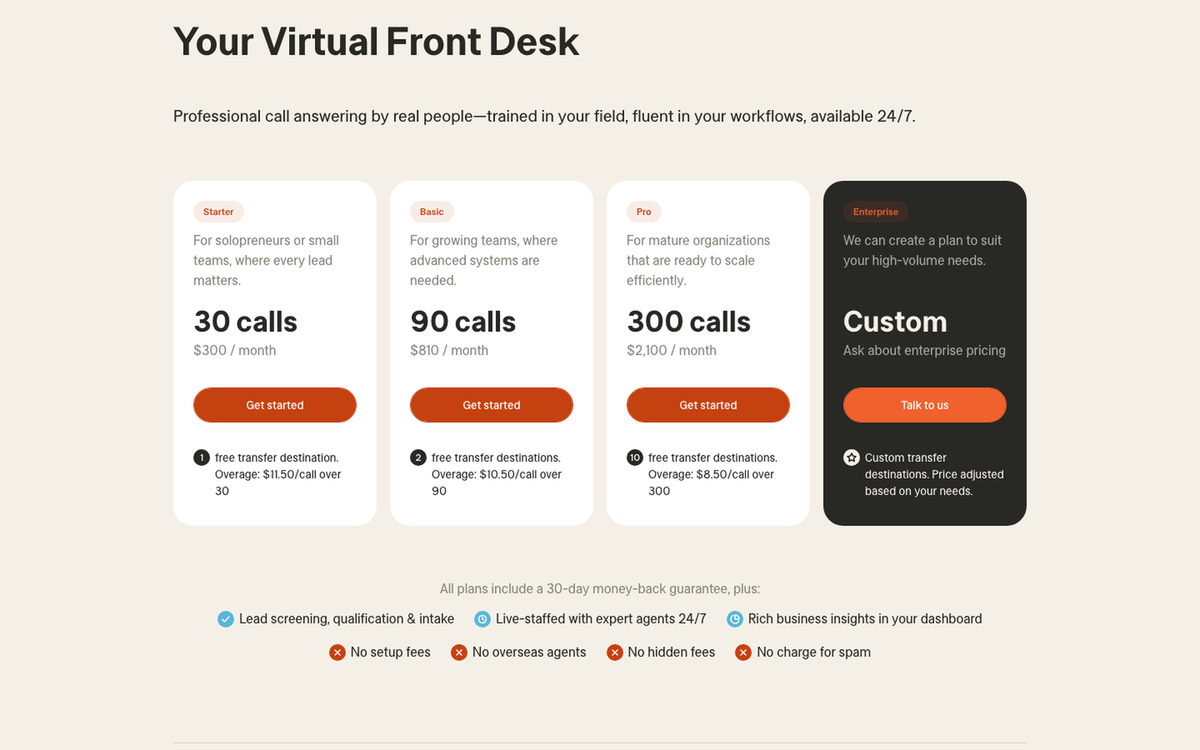
Smith.ai lists its extras openly, which I respect, and they are worth walking through because they are typical of the category. Booking an appointment is $1.50 per call. An SMS or Slack notification is $0.50. A text or email follow up is $0.50. A conflict check is $0.50. Call recording and transcription is $0.25. Stack those five onto the 30 call Starter plan and here is what happens to your effective rate.
| Configuration | Monthly cost | Effective cost per call | Increase over base |
|---|---|---|---|
| Starter plan, answering only | $300 | $10.00 | base |
| Plus appointment booking | $345 | $11.50 | 15% |
| Plus notifications | $360 | $12.00 | 20% |
| Plus follow up messages | $375 | $12.50 | 25% |
| Plus conflict checks | $390 | $13.00 | 30% |
| Plus recording and transcription | $398 | $13.25 | 32% |
A third more, and every one of those extras is something a law firm or a clinic would consider basic. None of it's hidden. It is published on the pricing page. But you won't find it by comparing headline plan prices in a spreadsheet, which is how almost everyone shops for this.
Then there is the overage cliff. On that same 30 call plan, call 31 costs $11.50, which is more than the $10.00 average you were paying for the first thirty. Go to 50 calls and you are at $530 for the month. Most people find this out in month two, right after a good marketing week.
Check whether the vendor publishes a price at all
Here is a filter that takes ten seconds and tells you something real. Open the pricing page and look for a dollar figure.
PATLive publishes five plans from $75 to $1,170 a month with the per minute overage printed on each one. Smith.ai publishes three plans from $300 to $2,100 with per call overage on each. Ruby describes its receptionist plans by size, at 50, 100, 200 and 500 minutes a month, and publishes no price for any of them. The page invites you to fill out a form and talk to sales.
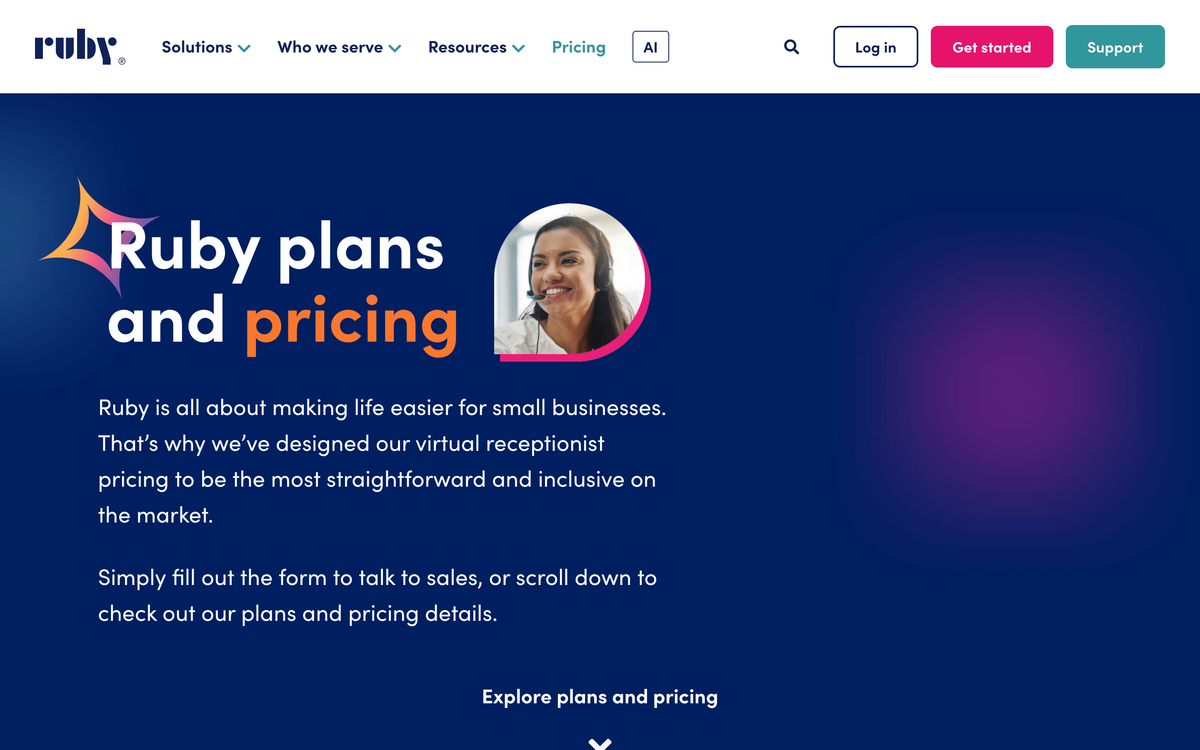
I'm not saying quote based pricing is a scam. Plenty of good vendors do it, and Ruby states plainly that there are no extra fees for activation, onboarding, setup or customization, which is a real commitment. But it does mean you can't compare Ruby to PATLive without booking a call, and it means the number you eventually get is the number they decided to give you. Factor the extra week into your timeline.
Read the cancellation terms yourself, because the federal rule got struck down
A lot of buyer guides still tell you that a federal rule guarantees you an easy cancellation path. That's out of date, and it matters here because answering services are sold as auto renewing subscriptions.
On 8 July 2025 the Eighth Circuit vacated the Federal Trade Commission's Click to Cancel rule in its entirety, days before it was due to take effect, on the grounds that the FTC failed to follow required rulemaking procedure. The Commission restarted the process, submitting an advance notice of proposed rulemaking on 30 January 2026 and seeking public comment in March 2026 with comments due 13 April 2026. Nothing's replaced the vacated rule yet.
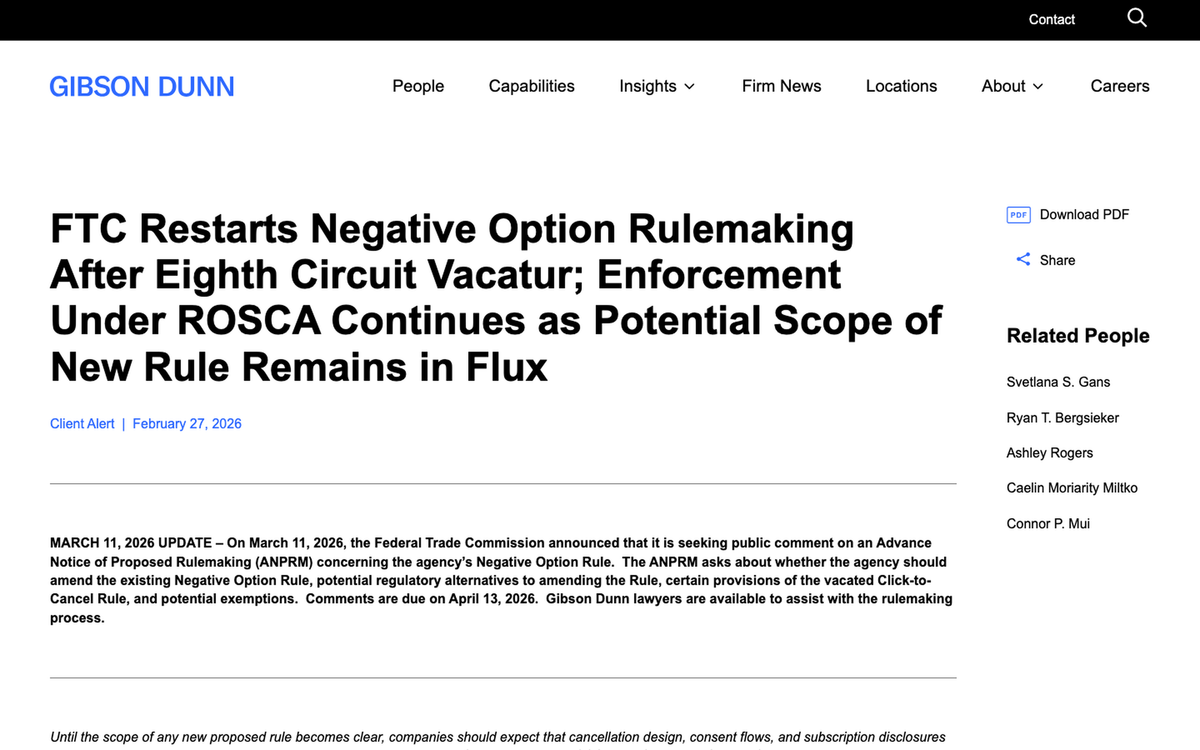
State auto renewal laws in places like California and New York still apply, and the FTC can still act under existing statute. But you don't get to assume a national easy exit any more. So read the clause. Look for the notice window, whether cancellation has to be in writing, and whether there is an early termination fee. PATLive states it has no contracts and lets you cancel, upgrade or downgrade at any time. Smith.ai offers a 30 day money back guarantee. Those are the kinds of terms you want in front of you in writing.
The five questions I ask before I let a client sign
These are the ones that actually change the number on the invoice.
- How is talk time measured and rounded? Per second, or rounded up to the whole minute? On a 200 call month, whole minute rounding on short calls is real money.
- Do I pay for spam, wrong numbers and hang ups? Get the answer in writing. It's the difference between a clean bill and a 10% surcharge on nothing.
- What is on the add on menu, and which of my requirements are on it? Booking, notifications, CRM writes and recording are the usual four. Price your actual configuration, not the base plan.
- What happens on call 31? Ask for the overage rate and compare it to your blended rate. If overage costs more per unit than your plan, you are being nudged into the next tier.
- What does month 13 cost? Ask about renewal pricing and notice periods now, while you still have room to negotiate.
If a vendor won't answer these in writing before you sign, that's your answer. And if you want a second pair of eyes on the quotes you have collected, that is what a discovery call is for.
Is this right for your business, or do you need something else
Not everyone asking this question needs an answering service. Work through these honestly.
- Can you name calls you actually lost? If you can't point to specific lost work, fix your routing before you buy anything.
- Do your callers need a decision, or just an outcome? If most calls end in a booking, a lookup or a message, that work is highly automatable and you may be overpaying for humans.
- Is your call volume spiky or steady? Spiky volume punishes fixed allowances. Steady volume makes them cheap.
- Does anything on the call touch regulated data? If you handle health information in the United States, your vendor is a business associate and needs to sign a business associate agreement before taking a single call. No agreement, no deal.
- Would you mind if a caller knew this was outsourced? If you would, rethink the script rather than the vendor.
If you answered yes to the second question, the honest answer is that a lot of this work doesn't need a person any more. I build AI phone and intake agents that handle booking, qualification and message taking at a flat monthly cost with no per minute meter running, which sidesteps the entire billing unit problem this article is about. That isn't right for every business. Complex, emotional or high value first conversations still belong to humans. If you're not sure which camp you're in, the AI readiness assessment will tell you in about five minutes.
For a wider view of what these services cost before you shortlist, I keep a running breakdown of what a virtual receptionist costs and a comparison of the major virtual receptionist companies. If you're weighing people against software, AI answering versus human answering covers that trade directly. And if round the clock cover is the actual requirement, 24 hour receptionist cover works through the arithmetic on the 128 hours a week most businesses leave uncovered.
Frequently asked questions
What should I look for when choosing a virtual receptionist service?
Start with the billing unit, per minute or per call, and match it to your average call length. Then price your actual configuration including add ons, check the overage rate, and read the cancellation clause. Vendor reputation matters far less than these four things because most established providers answer phones competently.
Is per minute or per call billing better?
It depends entirely on how long your calls run. Using published 2026 rate cards, per minute billing is cheaper below roughly 4.5 minutes per call and per call billing is cheaper above about 5 minutes. That crossover holds steady from 20 to 200 calls a month.
How much does a virtual receptionist cost per month?
Published plans run from $75 a month for pay as you go up to $2,100 a month for 300 calls. A typical small business handling 50 calls a month lands between $426 and $530 depending on the billing model, before add ons. Add ons can raise the effective rate by around a third.
Do virtual receptionists charge for spam and wrong numbers?
Some do and some don't, so ask directly. Per minute vendors typically round up to a whole minute for every answered call including junk, which at published rates costs $20.00 to $26.00 a month for ten wrong numbers. Smith.ai says it doesn't charge for spam when your forwarded lines pass Caller ID.
Are virtual receptionist contracts month to month?
Often, but get it in writing. PATLive says it has no contracts and allows cancellation, upgrade or downgrade at any time. The federal Click to Cancel rule that would have set one national standard for easy cancellation was vacated in July 2025 and has not been replaced, so your terms depend on the contract and your state law.
Does a virtual receptionist need to sign a HIPAA business associate agreement?
Yes, if the service will handle protected health information on your behalf in the United States. Under the HIPAA rules the provider is a business associate, and the agreement has to be in place before they take calls for you. Ask for it during evaluation, not after you sign.
How do I test a virtual receptionist before committing?
Ask for a trial or a short term plan, then call your own line at least a dozen times across different scenarios, including one that falls outside the script. Listen to how the receptionist handles the call it was not prepared for. That's the call your real customers will remember.
Should I use an AI receptionist instead?
If most of your calls end in a booking, a simple lookup or a message, AI handles that reliably now and at a flat cost that removes the per minute meter entirely. If your first conversation is complex, emotional or high value, keep a person on it. Many businesses run both, with AI taking overflow and after hours.
Published plan pricing and overage rates checked 6 August 2026. PATLive lists five call answering plans from $75 to $1,170 a month with per minute overage from $2.60 down to $2.00. Smith.ai lists three plans at $300 for 30 calls, $810 for 90 calls and $2,100 for 300 calls, with per call overage from $11.50 down to $8.50, plus per call add ons from $0.25 to $1.50. Ruby publishes receptionist plans at 50, 100, 200 and 500 minutes a month with no listed price. The FTC Click to Cancel rule was vacated by the Eighth Circuit on 8 July 2025; the Commission restarted rulemaking on 30 January 2026 with public comment due 13 April 2026. Sources: PATLive Pricing 2026, Smith.ai Plans and Pricing 2026, Ruby Plans and Pricing 2026, Mayer Brown 2025, Gibson Dunn 2026.
Related Posts
24 Hour Virtual Receptionist: What Round the Clock Cover Costs, and When It Pays for Itself
Industry GuidesVirtual ReceptionistAI Voice Agents
Virtual Receptionist Companies: What They Cost in 2026, and the AI Option Nobody Quotes You
Voice AIVirtual ReceptionistAI Receptionist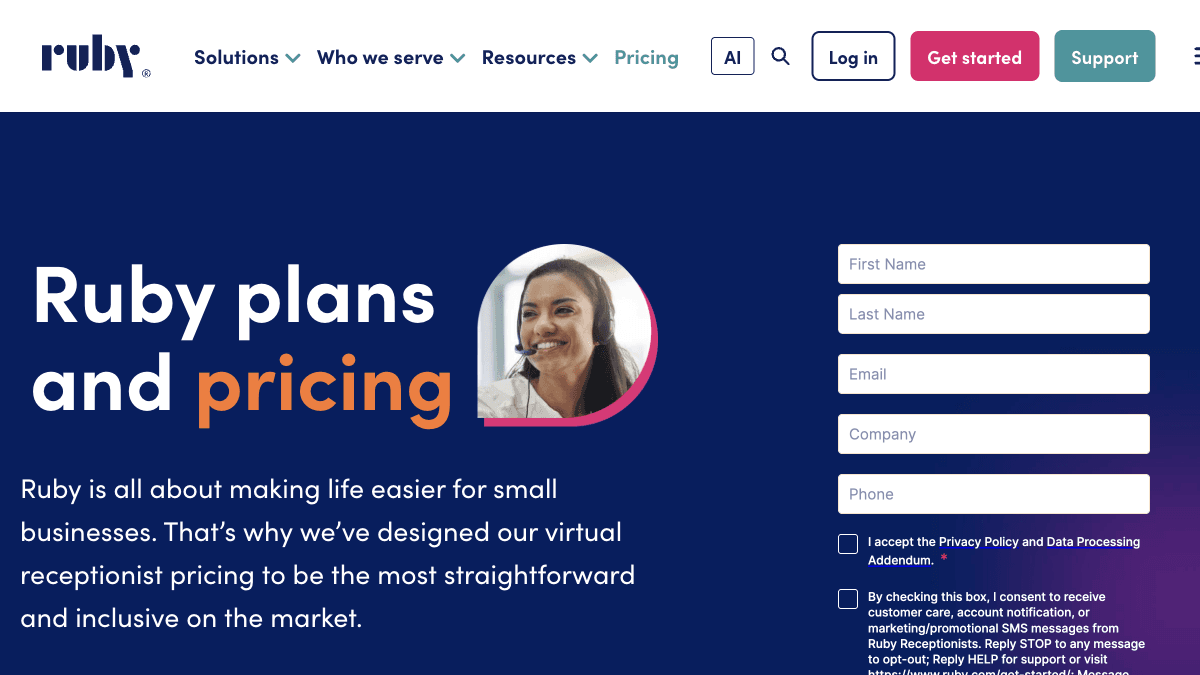
How Much Does a Virtual Receptionist Cost in 2026? Real Pricing After 40+ Deployments
Industry GuidesVirtual ReceptionistAI Receptionist

Jahanzaib Ahmed
AI Systems Engineer & Founder
AI Systems Engineer with 126 production systems shipped. I run AgenticMode AI (AI agents, RAG systems, voice AI) and ECOM PANDA (ecommerce agency). I build AI that works in the real world for businesses across home services, healthcare, ecommerce, SaaS, and real estate.