Virtual Receptionist Companies: What They Cost in 2026, and the AI Option Nobody Quotes You
Virtual receptionist companies compared on October 2026 prices: Ruby, Smith.ai, Abby Connect, Moneypenny, PATLive and AnswerConnect, with AI minute rates and after hours coverage.

Table of Contents
Live virtual receptionist companies in 2026 start at about $99 to $350 a month for a small bundle of minutes or calls, and climb steeply from there as volume grows. Ruby is the name most people think of first, with live US receptionists starting around $250 a month for 50 minutes, which works out expensive per call for anyone whose volume is lumpy.
The comparison worth making is not between two human providers but between the billing models. Metered human plans price your quiet months attractively and your busy months painfully, which is the wrong way round for a business whose call spikes coincide with its revenue. Weigh any provider on three things: what happens past the included minutes, whether calls are genuinely qualified or just answered, and whether appointments land in your calendar without a second step.
Every week someone asks me the same thing. They have called around to three or four virtual receptionist companies, the quotes are all over the map, and they can't tell what they are actually buying. So here is the short answer before anything else. In 2026 the published live answering plans at Ruby, Smith.ai, Abby Connect and Moneypenny run from $165 to $2,100 a month, and what moves you across that range is not quality so much as how many minutes or calls you get before the meter starts running.
I build phone systems for a living. I've shipped 126 production systems, and a good chunk of them either replace or sit right next to these services. So I'm not here to trash live receptionists. They're genuinely good at what they do. I'm here to give you the real numbers I pulled straight from the vendor pricing pages this week, the pricing trap most owners miss, and the AI option that almost nobody quotes you when you call around.
If you already know you're losing calls and you just want someone to look at your setup and tell you the honest fix, book a quick discovery call or run the free AI readiness check. No pitch. I will tell you if a $300 answering service is the right move for you, because sometimes it is.
What do virtual receptionist companies cost in 2026?
Ruby, Smith.ai, Abby Connect and Moneypenny charge between $165 and $2,100 a month on their published 2026 live answering plans, and the price is set almost entirely by volume. You're buying a bucket of minutes or a bucket of calls. When you run out, the overage kicks in, and that's where the friendly monthly number quietly doubles. I pulled the figures below directly from each company's own pricing page, last checked October 10, 2026, so these are real, not rounded marketing ranges.
| Option | What you get | Entry price (2026) | Included volume |
|---|---|---|---|
| Ruby | Live receptionists in the United States, 24/7, bilingual | $250 / mo | 50 minutes |
| Smith.ai | AI plus live agents, calls and chat | $300 / mo | 30 calls |
| Abby Connect | Dedicated live receptionist team, AI answering included | $165 / mo | 50 Abby Minutes (100 if every call goes to the AI) |
| Moneypenny | Live receptionists based in America, or an AI receptionist | $165 / mo (AI from $69) | 50 minutes (AI: 25 calls) |
| PATLive | Live receptionists based in America, 24/7 | $99 / mo | 50 minutes |
| AnswerConnect | 24/7 live answering, people not bots | $350 / mo plus $49.99 setup | 200 minutes |
| Internal hire | One receptionist, business hours only | ~$4,611 / mo | ~40 hours / week |
| AI voice agent | Answers every call, 24/7 | ~$0.09 to $0.16 / min usage | No bucket, billed per minute |
Now the step up tiers, because the entry plans are small. Ruby moves to $395 a month for 100 minutes, $720 for 200 minutes, and $1,725 for 500 minutes, per its published plans. Smith.ai jumps from $300 for 30 calls to $810 for 90 calls and $2,100 for 300 calls on its receptionist pricing. Abby Connect starts at $165 for 50 Abby Minutes, then $329 for 100, $599 for 200, and $1,380 for 500, according to its pricing page. Moneypenny charges $165 for 50 minutes of live answering, $265 for 100, $422 for 200, and $985 for 500 on its American pricing page. PATLive is the budget pick at $99 for 50 minutes, $189 for 100, $349 for 200, and $759 for 500, per its pricing, with a 14 day free trial and no contract. It also has a $49 pay as you go plan with no included minutes, billed at $2.99 a minute. AnswerConnect starts at $350 for 200 minutes plus a $49.99 setup fee on its direct plans page, and its 300 minute plan at $395 has no setup fee and works out cheaper per minute.
See the pattern? Doubling your volume raises your bill by 58% to 99%.
Abby Connect AI answering service pricing
Abby Connect no longer sells a separate AI tier. Its AI Receptionist page says the AI is included in every plan, and one minute of AI answering uses half an Abby Minute, so each plan covers twice as many AI minutes as human ones. You can send every call to the AI, every call to Abby's human team, or mix the two and change the split from the portal. Overage is billed at your plan's Abby Minute rate, every plan has a free trial and no setup fee, and the plans run month to month. If every call went to the AI, the numbers work out like this:
| Abby plan | Price per month | Abby Minutes | AI minutes if all AI | Cost per AI minute |
|---|---|---|---|---|
| Starter | $165 | 50 | 100 | $1.65 |
| Essential | $329 | 100 | 200 | $1.65 |
| Professional | $599 | 200 | 400 | $1.50 |
| Growth | $1,380 | 500 | 1,000 | $1.38 |
Two other receptionist companies sell AI answering by the call instead. Smith.ai's AI Receptionist has a free plan with 25 calls a month, then $150 for 75 calls up to $800 for 500 calls, which is $1.60 to $2.00 per included call. Moneypenny's AI answering runs $69 for 25 calls up to $435 for 250 calls, with extra calls at $1.89 to $2.49. Abby's $1.38 to $1.65 AI minute is still 9 to 18 times the all in rate of a self built AI voice agent, which I cover below. Part of that gap pays for the human receptionists sitting on the same plan.
The pricing trap: what you actually pay per call
Here's the trap. The advertised price is for a volume most growing businesses blow through by the third week. When you do, the overage is brutal. Smith.ai charges $11.50 for every call over your Starter allowance, $10.50 per call on Basic, and $8.50 on Pro. Minute based services bill $1.67 to $3.30 for each minute past your bucket on plans up to 500 minutes, from Moneypenny's 500 minute plan at the low end to Abby Connect's Starter plan at the high end. Ruby does not publish an overage rate at all. So the $300 plan isn't really $300. If you take 60 calls in a month on a 30 call plan, you're paying $300 plus roughly $345 in overage.
That's $645 for a month you thought was budgeted at $300.
I had a client, a plumbing outfit, run the numbers on this last year. Spring hit, calls tripled, and their answering service invoice went from a planned $400 to just over $1,400 in one month. Nobody warned them. The minutes were the whole story. They were paying premium human rates to have someone say "thanks, I will pass that along" to callers who mostly wanted to book a slot. That's the moment most owners start asking whether there is a better way to answer the phone.
Ruby, Smith.ai, and the live human option
Live human virtual receptionist companies are the right call when the conversation itself needs a human touch. Think a law firm doing sensitive intake, a medical office, or high value sales where the first thirty seconds decide the deal. Ruby is the polished pick for professional services that want warm, US based receptionists and don't mind paying for it. Smith.ai is the hybrid, pairing AI with live North America agents, which suits firms with heavy inbound that still want a person on the hard calls.
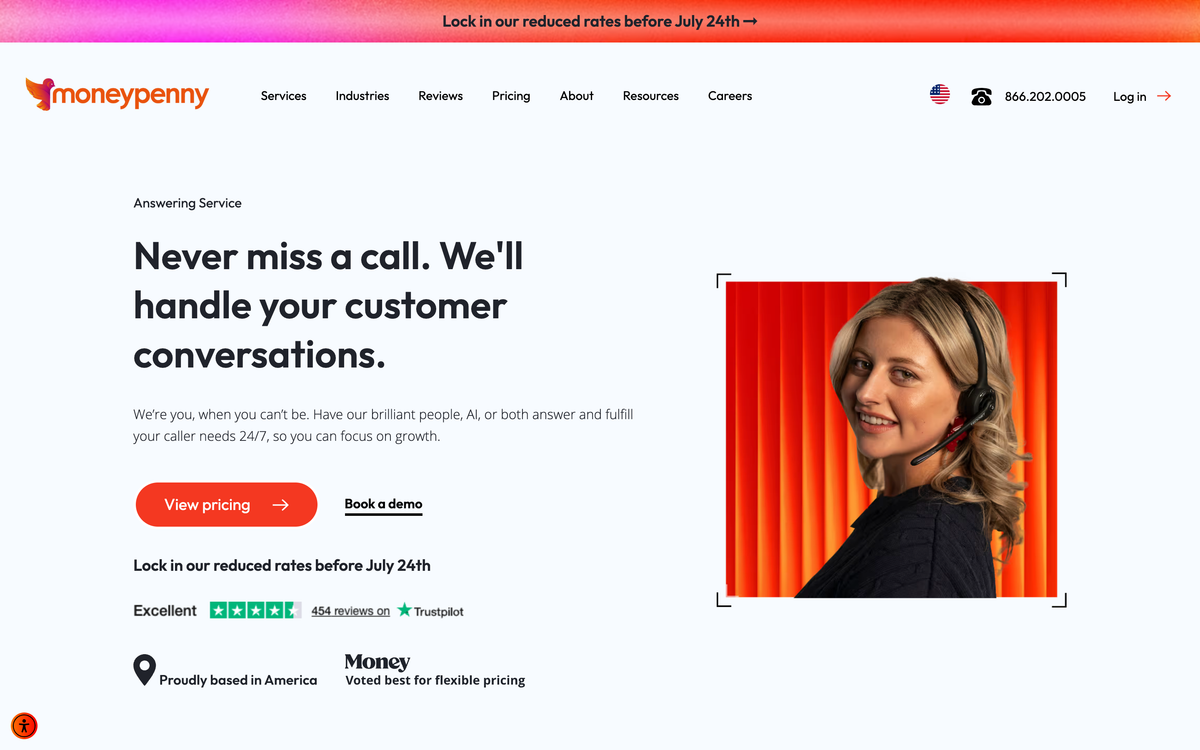
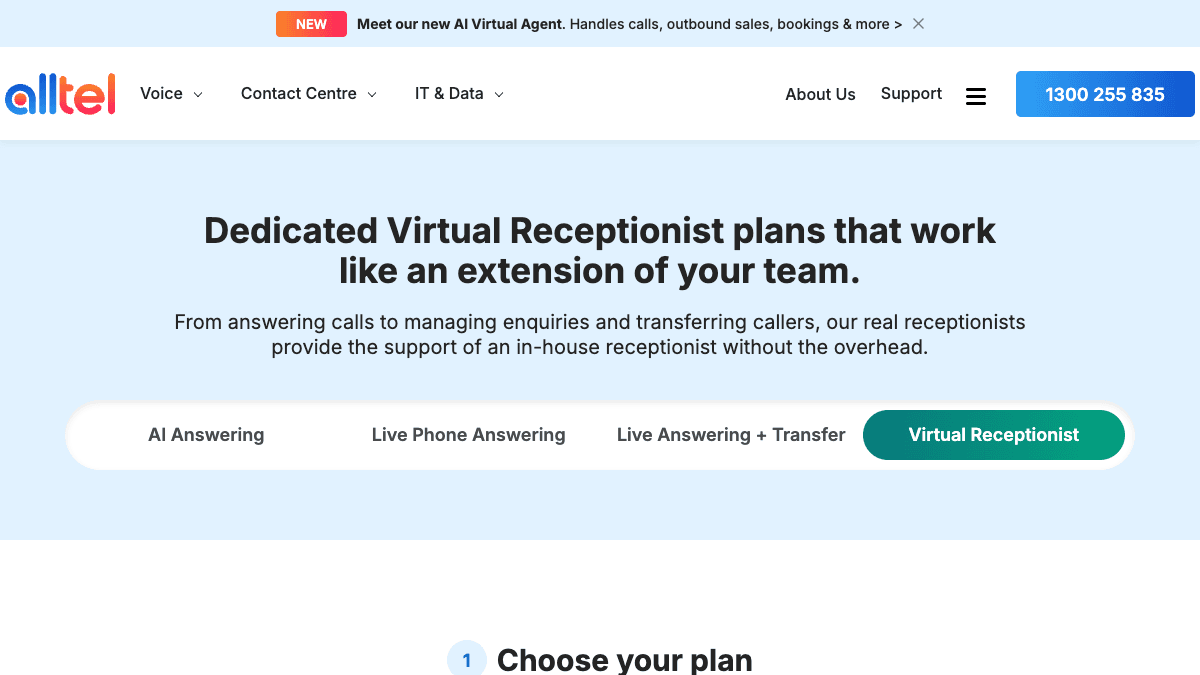
AnswerConnect and Moneypenny round out the field with 24/7 live coverage. Moneypenny now sells live receptionists, an AI receptionist, or both, and says all its receptionists are based in the United States. AnswerConnect goes the other way and pledges "people, not bots" on its homepage. The common thread across all of them is that you're renting people's time, and people's time is the most expensive input in the whole equation. The Bureau of Labor Statistics puts the median receptionist wage at $18.27 an hour, or $38,010 a year as of May 2025, before you add payroll taxes, benefits, software, and the cost of that person being out sick or on lunch, per its occupational data. Benefits, including legally required ones such as payroll taxes, make up 31.3% of compensation costs for office and administrative support workers in private industry, per the BLS employer cost data for June 2026. Load that in and one internal hire costs roughly $4,611 a month before software or sick day cover, and still clocks out at 5pm.
After hours coverage and scheduling, provider by provider
Every company in this post can answer around the clock, and none of them lists a night or weekend premium on its published plans. The differences are what counts against your allowance and what costs extra.
Ruby is live 24/7, 365 days a year, including nights, weekends and holidays, and its 24/7 answering page says every receptionist is based in the United States. Its pricing page lists no extra fee for "coverage during certain periods," so a 2am call draws down the same minutes as a 2pm call. Scheduling and Spanish answering are available on every plan at no extra cost.
Moneypenny includes 24/7 answering as standard in all its plans, and its phone answering page says after hours calls carry no additional cost. You can forward every call or only the ones you can't take. For scheduling, its receptionists book, rearrange and cancel appointments in real time in your calendar or booking software, with integrations that include Microsoft Bookings, Salesforce and Calendly, per its appointment scheduling page. It bills calls in 30 second increments instead of rounding every call up to a full minute, so included minutes last longer, and its AI receptionist also schedules appointments and can hand a call to a live Moneypenny receptionist at any hour.
| Provider | 24/7 answering | Night or weekend surcharge | Appointment scheduling |
|---|---|---|---|
| Ruby | Yes, including holidays | None listed | Included in every plan |
| Smith.ai | Yes, "Calls at 2 pm and 2 am cost the same" | None | $1.50 per booked call |
| Abby Connect | Yes, in every plan (custom hours if you want fewer) | No weekend or after hours upcharge | Included |
| Moneypenny | Standard in all plans | No additional cost | Booked in real time in your calendar; no add on fee listed ("no upsells") |
| PATLive | Yes | None listed ("No PATLive fees") | Included with every plan |
| AnswerConnect | Yes, 24/7/365 | No extra charge | Included in every plan |
Why missing calls costs more than any plan
Before you compare any of these prices, be clear on what you're really solving. You're not buying a receptionist. You are buying answered calls. And the cost of unanswered ones is worse than any plan on this page. Fewer than 3% of callers who get pushed to voicemail leave a message, according to Invoca's platform data published in 2024, and the same research found 27% of calls to home services businesses go unanswered. Invoca's own worked example values one missed furnace replacement at about $900 in profit. A single booked job in most trades is worth more than a month of any entry plan on this list.
Miss two or three of those and the "expensive" plan just paid for itself.
This is why I tell people to flip the question. Don't ask which virtual receptionist company is cheapest. Ask which setup answers the most calls for the least money and the least babysitting. When you frame it that way, the math changes.
The AI voice agent option nobody quotes you
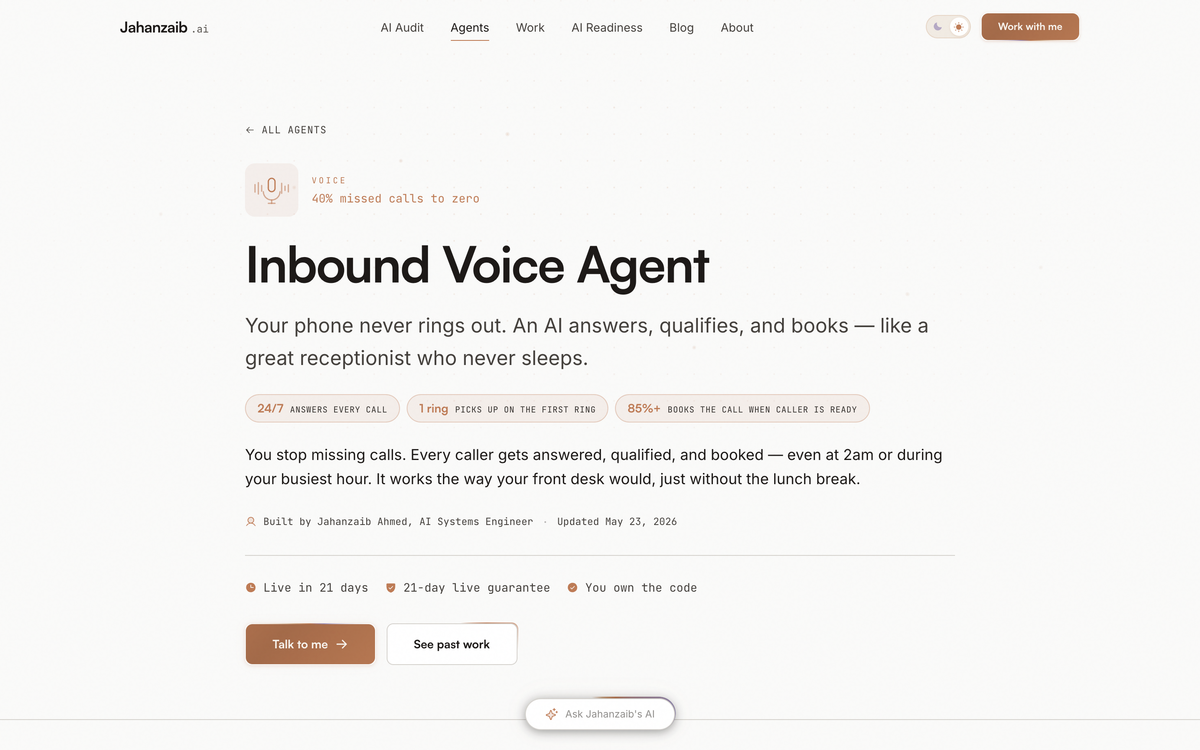
There's a third path that the answering services won't bring up on a sales call. An AI voice agent answers your phone directly. It picks up on the first ring, every time, at 2am and during your busiest hour. It qualifies the caller, answers the common questions, and books the appointment straight into your calendar. It doesn't take lunch, it doesn't call in sick, and it doesn't care whether you get 30 calls or 3,000.
The cost structure is completely different. Instead of buying minutes at a premium, you pay for what the AI actually talks. The all in rate, once you include speech to text, the language model, the voice, and the phone line, runs about $0.09 to $0.16 a minute on the public rate cards for Vapi, Retell, ElevenLabs and Bland as of October 10, 2026, which I break down stack by stack in my AI voice agent pricing guide. You can model your own numbers with my free AI agent cost calculator. Take 500 minutes of calls in a month. On Ruby that is $1,725. On an AI voice agent that's roughly $45 to $78 in usage, plus a phone number at a dollar or two a month.
Same volume of answered calls, a fraction of the cost, and the AI covers nights and weekends that the human plan never touched.
There's an honest tradeoff, and I won't hide it. The AI isn't something you sign up for and switch on in ten minutes. Someone has to build it, connect it to your calendar and your systems, and tune it so it sounds like your business and handles your specific calls. That is the work I do. The upside is that once it's built, you own it, the running cost stays low, and it scales without a bigger invoice. If you want to see what that looks like, the inbound voice agent page walks through it, and the full agent lineup covers the rest.
Is a virtual receptionist company right for you?
Not everyone should switch to AI, and not everyone needs a live service. Run through these five questions honestly. They will tell you which side of the line you are on.
- Do most of your calls need real human judgment or empathy? If yes, a live service like Ruby or Smith.ai earns its price. If most calls are "what are your hours" and "can I book," that is AI territory.
- Are you missing calls at night, on weekends, or during rush? If yes, a business hours receptionist won't fix it, and even 24/7 human plans get expensive fast at volume.
- Is your call volume unpredictable? If it spikes, minute based plans punish you with overage. Flat AI usage doesn't.
- Do you want to own the setup, or rent it forever? A service is a monthly rental. A built AI agent is an asset you keep.
- How much is one booked job worth? The higher that number, the more every missed call hurts, and the more any of these options pay for themselves.
If you went "AI" on three or more of those, that's worth a conversation. I'm happy to look at your actual call patterns and tell you straight whether a service, an AI agent, or a mix of both fits best. Start with a discovery call, or read how this plays out for trades in my guide to AI voice agents for home services. If you want the human versus AI question broken down on its own, I covered it in detail in AI answering service versus human answering service.
Frequently asked questions
What is a virtual receptionist company?
A virtual receptionist company answers your business phone with remote agents or AI instead of an in office front desk. It handles greetings, call routing, message taking, and often appointment booking, so you never send a live caller to voicemail. Ruby, Smith.ai, Abby Connect, AnswerConnect, and Moneypenny are among the best known in the US.
How much do virtual receptionist companies cost?
In 2026, Ruby, Smith.ai, Abby Connect and Moneypenny charge $165 to $2,100 a month on their published live answering plans, depending on your minute or call allowance. Ruby starts at $250 for 50 minutes, Smith.ai at $300 for 30 calls, and Abby Connect and Moneypenny at $165 for 50 minutes. PATLive is cheaper at $99 for 50 minutes. Overage of $1.67 to $3.30 per extra minute, or $8.50 to $11.50 per extra call at Smith.ai, is where bills climb.
Are virtual receptionists worth it for a small business?
Yes, if you are regularly missing calls that turn into revenue. Invoca's 2024 platform data found that fewer than 3% of callers sent to voicemail leave a message, so even one recovered booking a week can cover the fee. Whether a human service or an AI voice agent is the better value depends on your call volume and how many calls truly need a person.
What is the difference between a virtual receptionist and an AI receptionist?
A virtual receptionist is usually a remote human answering on your behalf. An AI receptionist is software that answers, understands the caller, and books the appointment on its own. The human option is stronger on nuanced conversations. The AI option is far cheaper per minute, answers every call instantly, and covers nights and weekends without extra charge.
Do virtual receptionist companies work 24/7?
Most do. Ruby, Smith.ai, Abby Connect, Moneypenny, PATLive and AnswerConnect all answer 24/7. None of them lists a night or weekend surcharge on its published plans, but every after hours minute or call still draws down your allowance. An AI voice agent covers 24/7 by default because there is no shift to staff, which is why after hours coverage is where AI usually wins on price.
Can an AI receptionist replace a human answering service?
For most routine inbound calls, yes. Booking, hours, pricing questions, lead qualification, and message taking are all well within reach of a well built AI voice agent. For sensitive intake or complex sales, a hybrid works best, where AI handles the volume and a human takes the calls that need a person.
Which virtual receptionist company is best?
There's no single best. Ruby is best for polished professional services, Smith.ai for AI plus human hybrids with heavy volume, Abby Connect for dedicated teams, and AnswerConnect or Moneypenny for flexible 24/7 human coverage. If your calls are mostly routine and you want the lowest ongoing cost, a custom AI voice agent usually beats all of them on price.
How do virtual receptionist minutes work?
Most live services bill a set number of receptionist minutes or calls per month. Time spent on your calls draws down that bucket, and once it is empty you pay a per minute or per call overage. Billing increments matter too: AnswerConnect rounds every interaction up to the nearest minute and counts the after call work of taking your message, though the first 30 interactions under 30 seconds in each billing cycle are free, while Moneypenny bills in 30 second increments. Because busy months burn through minutes fast, the effective cost is often well above the advertised plan price. AI usage pricing avoids this because you simply pay for talk time at a flat rate.
Ruby live receptionist plans run $250 to $1,725 a month in 2026. Smith.ai runs $300 to $2,100 with $8.50 to $11.50 per call overage. Abby Connect runs $165 to $1,380, and its AI minutes count at half rate. Moneypenny runs $165 to $985 for live answering and $69 to $435 for AI. The median receptionist wage in Bureau of Labor Statistics data is $18.27 an hour (May 2025). Fewer than 3% of callers pushed to voicemail leave a message (Invoca, 2024). Sources: Ruby Pricing 2026, Smith.ai Pricing 2026, Abby Connect Pricing 2026, Moneypenny Pricing 2026, Bureau of Labor Statistics 2025, Invoca Missed Call Data 2024.
The honest bottom line is this. Virtual receptionist companies are worth every dollar when the calls need a human. But most businesses are paying premium human rates to answer calls a well built AI could handle for a fraction of the price, around the clock, with no overage surprises. If you aren't sure which camp you fall into, that's exactly the kind of thing I like to figure out on a short call. Bring your last answering service invoice. We will do the math together.
Last updated
October 10, 2026
Category
Voice AI
Jahanzaib Ahmed
AI Systems Engineer & Founder
AI Systems Engineer with 126 production systems shipped. I run AgenticMode AI (AI agents, RAG systems, voice AI) and ECOM PANDA (ecommerce agency). I build AI that works in the real world for businesses across home services, healthcare, ecommerce, SaaS, and real estate.
Want this built for your business? See Inbound Voice Agent, or browse the free tools and guides.
Related articles
Virtual Receptionist Adelaide: Real 2026 Pricing, and the AI Version That Costs A$52 a Month
A plain English breakdown of what Adelaide businesses pay for call answering in 2026, with published AUD rates, the ACST timezone trap that quietly breaks bookings, and real numbers from a Prospect plumbing deployment.
GuideIndustry GuidesVirtual Receptionist
What Is a Virtual Receptionist? A No-Hype 2026 Guide for US Small Business Owners
A no-hype 2026 guide to virtual receptionists for US small business owners, with real pricing across AI, live human, and hybrid options, plus a real Florida HVAC client deployment that paid for itself in the first 6 hours of every month.
GuideIndustry GuidesVirtual Receptionist
Virtual Receptionist Australia: Real AUD Pricing, Your Options, and the AI Version Most Businesses Haven't Tried
A plain-language guide to virtual receptionist options for Australian small businesses in 2026, with real AUD pricing for OfficeHQ, VirtualHQ, and AI receptionist platforms, plus a decision framework for Sydney, Melbourne, Brisbane, and Perth.
GuideIndustry GuidesVirtual Receptionist