24 Hour Virtual Receptionist: What Round the Clock Cover Costs, and When It Pays for Itself
A practical breakdown of what round the clock phone cover really costs, with live vendor rate cards, the 128 hours a week most businesses leave uncovered, and the AI math from 126 production systems.

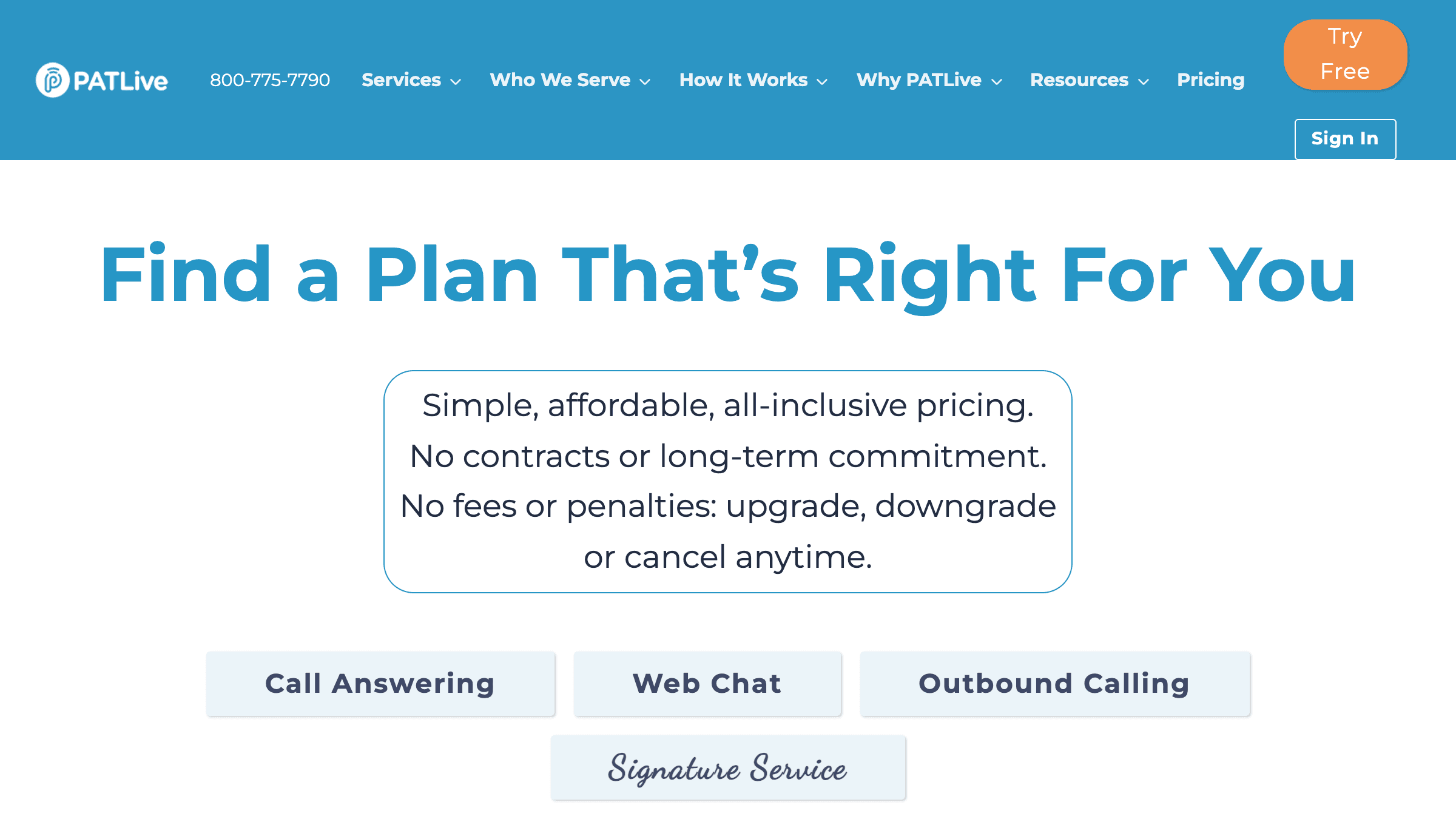
Table of Contents
A dental practice owner called me last November about a 24 hour virtual receptionist. Not because she wanted one. Because she had been quoted $720 a month for one and wanted to know if that was a fair price. Her phone rang 31 times the previous month between 6pm and 8am. Eleven of those callers left nothing. No voicemail, no callback, no trace except a line in her carrier log.
She'd already done the hard part, which is counting. Most owners never count. They feel the gap and guess at it. I've shipped 126 production systems and I can tell you the guess is wrong in both directions about equally often. If you want the short version before you read the rest, book a 15 minute call or run the AI readiness quiz and you'll know inside a day whether round the clock cover is worth buying at your volume.
At a glance
- Human 24 hour cover starts around $250 a month and climbs fast. PATLive Starter is $250 for 75 minutes. Smith.ai Starter is $300 for 30 calls.
- The real unit is $1.95 to $3.33 a minute, or $7 to $11.50 a call, depending on plan and overage.
- A 9 to 5 desk covers 40 of the 168 hours in a week. The other 128 hours, 76.2% of the week, are the thing you are actually buying.
- Staffing that yourself takes 4.2 full time people, which is why almost nobody does it and almost everybody outsources it.
- The AI version runs $0.084 to $0.148 per connected minute once speech, model, voice and telephony are all counted. At 80 after hours calls a month that is roughly $24 to $41 against $636 for the cheapest human plan.
- Skip it entirely if your after hours calls are under about 10 a month, or if nobody can say what should happen to a captured call by 9am.
What a 24 hour virtual receptionist costs in 2026
A 24 hour virtual receptionist costs between $250 and $1,170 a month from the major US providers, and the price is set by talk time rather than by hours of cover. That last part surprises people, and it's the bit that changes the math. Every provider I checked includes nights, weekends and holidays at no extra charge. You aren't paying a night surcharge. You are paying for minutes, and minutes at 2am cost exactly what minutes at 2pm cost.
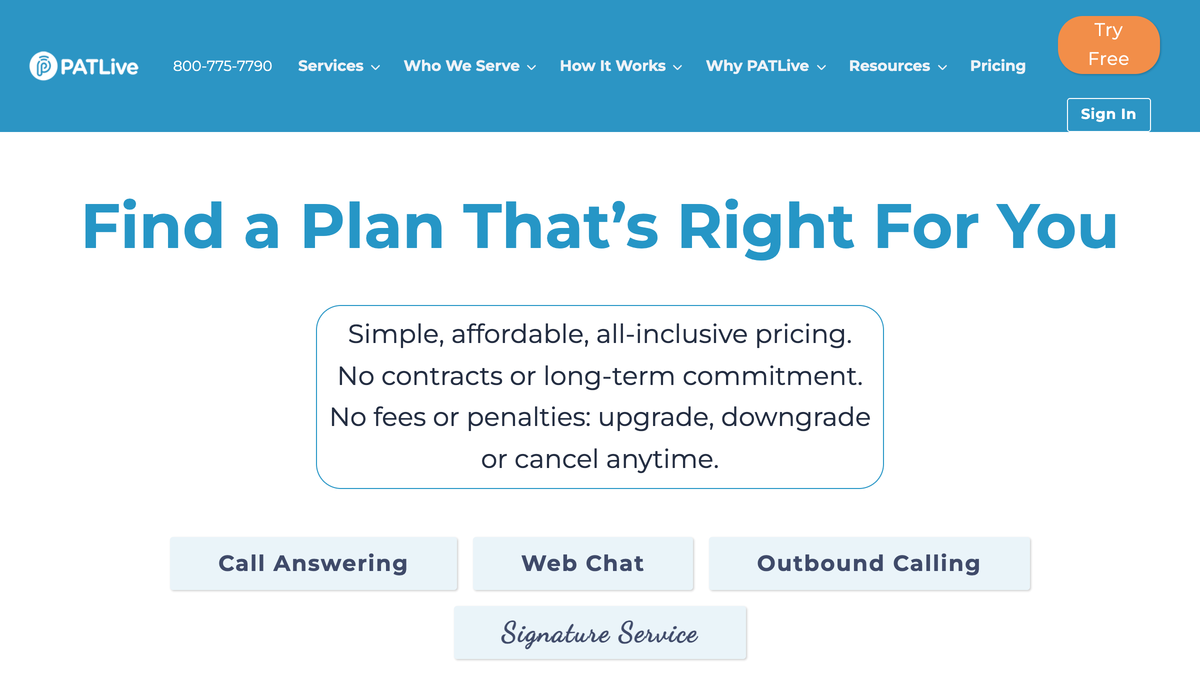
Here is PATLive's published rate card, read on 1 August 2026. The last column is mine, computed by dividing the monthly fee by the included minutes, because that's the number nobody puts on a pricing page.
| Plan | Included minutes | Monthly | Extra minute | Effective per minute |
|---|---|---|---|---|
| Basic (pay as you go) | None | $75/mo | $2.60 | n/a |
| Starter | 75 min | $250/mo | $2.35 | $3.33 |
| Standard | 200 min | $460/mo | $2.20 | $2.30 |
| Premium | 350 min | $720/mo | $2.10 | $2.06 |
| Pro | 600 min | $1,170/mo | $2.00 | $1.95 |
Look at the Starter row. You pay $3.33 for every minute you actually use, which is 45% worse than the Standard plan's $2.30, because you are buying a small bucket at a bad rate. That's the single most common overpay I see. Owners pick the cheapest sticker price, burn through 75 minutes by the 20th, then pay $2.35 a minute for the rest of the month.
Per call pricing is the other model
Smith.ai bills by the call instead of the minute. Its human staffed plans run $300 for 30 calls, $810 for 90 calls, and $2,100 for 300 calls, which works out to $10.00, $9.00 and $7.00 a call. Go over and you pay $11.50, $10.50 or $8.50 per extra call. All of it is live staffed 24/7.
Per call billing is better for you when your after hours calls are short, and worse when they are long. A 90 second "are you open tomorrow" call costs you a full $10 on Smith.ai and about $3.45 on PATLive Standard. A 9 minute intake call costs $10 on Smith.ai and $20.70 on PATLive. Pick the model that matches your actual call shape, not the one with the friendlier landing page. In my experience owners pick on sticker price and regret it by month three.
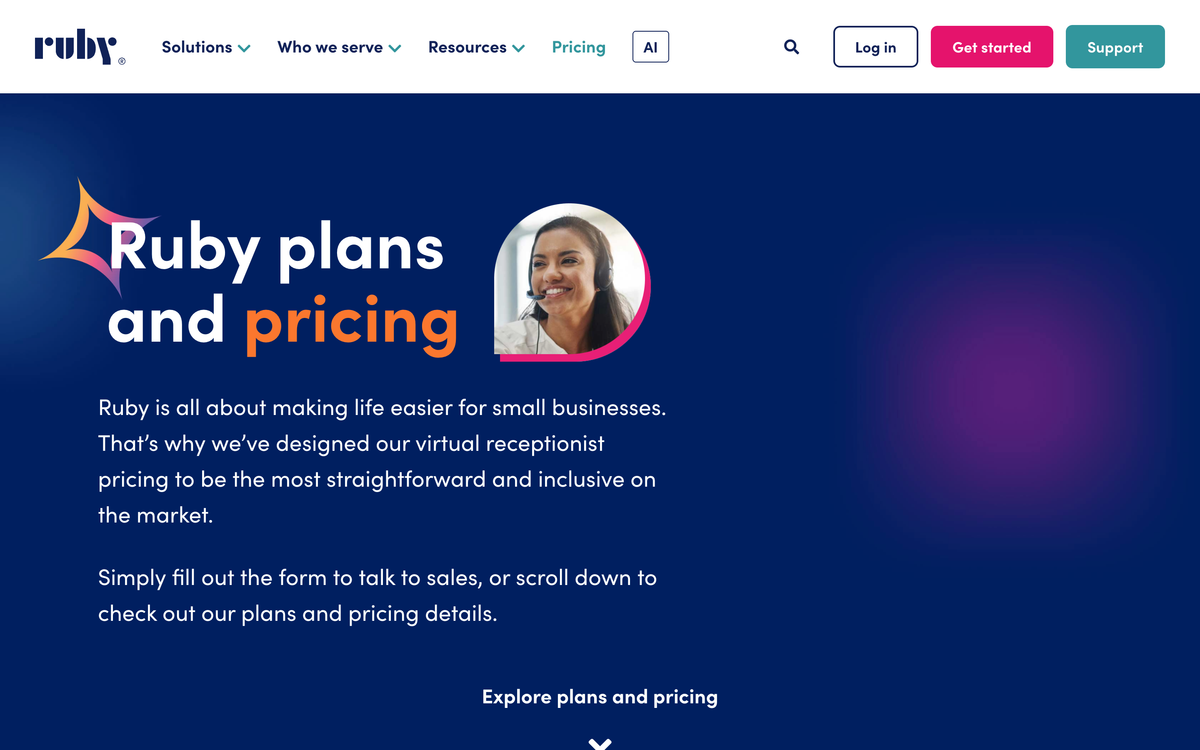
Ruby takes a third position and is worth naming because it states the thing plainly: its plans differ only in receptionist minutes and chats, and 24/7 phone cover including after hours, weekends and holidays is in every tier with no activation, onboarding or setup fee. That's the honest version of the pitch, and it confirms the pattern. Nobody charges extra for night cover. They charge for talk time.
If you want the deeper comparison of what these services do well and badly, I wrote that up separately in AI answering service vs human answering service and in how much a virtual receptionist costs.
The 128 hours nobody is covering
Here is the arithmetic that makes 24 hour cover worth discussing at all. A week has 168 hours. A standard 9 to 5 desk, Monday to Friday, covers 40 of them. That leaves 128 hours uncovered, which is 76.2% of the week.
Three quarters of the week. Your website is up for all 168 hours. Your Google listing is up for all 168. Your competitors' phones are getting answered during some of those 128 hours, because somebody in your category bought cover and you didn't.
Now try to staff it yourself. Covering 168 hours at 40 hours a person means 4.2 full time people before you account for a single sick day, holiday, or lunch break. That isn't a receptionist. It's a small department, and it's the reason this entire market exists. Nobody is choosing between a night receptionist and an outsourced service. They're choosing between an outsourced service and nothing.
"Nothing" is a real option and sometimes the right one. I'll get to when.
What the AI version costs per connected minute
An AI voice agent handling the same calls runs $0.084 to $0.148 per connected minute all in. That range comes from a pricing model I maintain for this site, which stacks every cost layer onto each platform's headline rate using one identical set of assumptions, because platforms are extremely creative about which layers their advertised number covers.
Four layers, and you pay for all of them regardless of who you buy from. They come to about 5 cents a minute between them. The fifth is the orchestration platform's own per minute fee, which roughly doubles that, and it's the layer the headline rate is quoting when it quotes anything at all:
- Speech to text, turning the caller's audio into words. Roughly half a cent a minute at Deepgram or AssemblyAI rates.
- The model, deciding what to say. That's the expensive layer, around 2.5 cents a call minute for a mid tier model.
- Text to speech, producing the voice. About 1 cent a minute at the volume a real conversation uses.
- Telephony, the actual phone call. Twilio inbound local runs under a cent a minute, plus about $1.15 a month for the number.
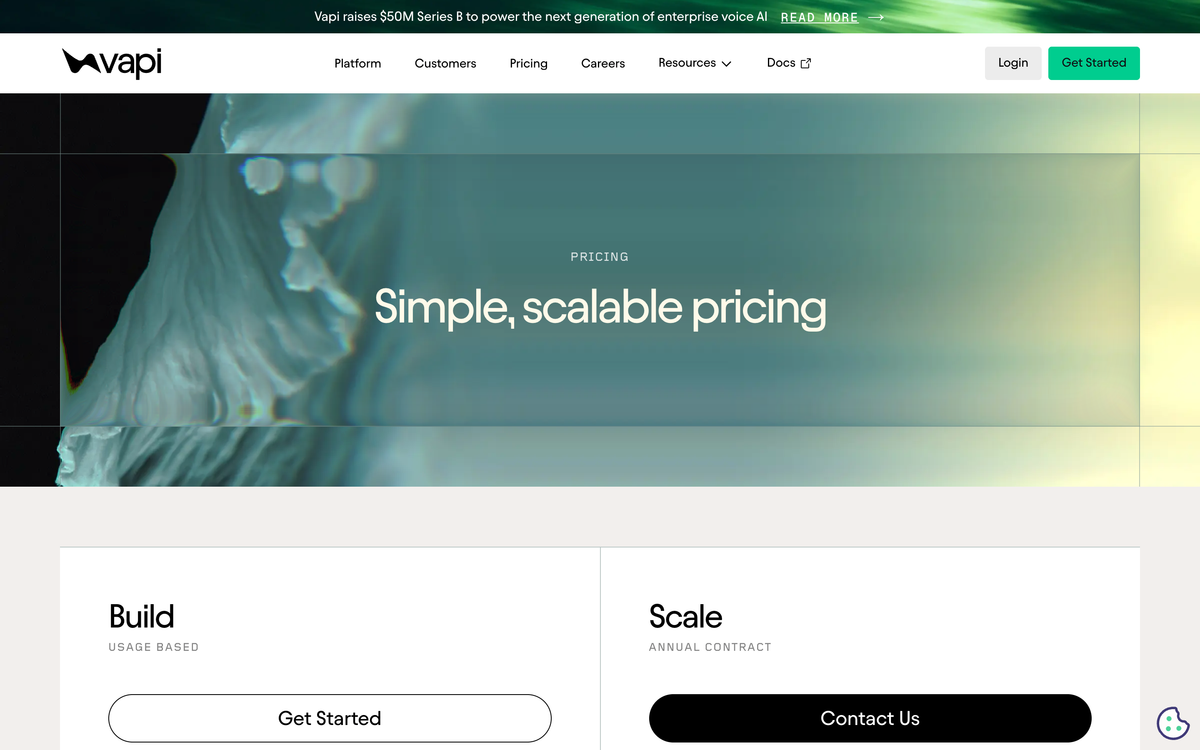
That Vapi line is the whole lesson, and it's why I don't quote from headline rates. A $0.05 headline becomes about $0.10 once you add the layers it excludes. Retell is more honest about the shape by publishing a per call minute rate card for models, which is genuinely useful because it removes the token estimating guesswork that makes most voice AI quotes fiction.
The last layer is the one nobody argues about and everybody forgets to add. Telephony is a rounding error per minute and it still has to be in the quote.
The two costs side by side
Below is the same after hours volume priced both ways. Talk time assumes 3.5 minutes a call, which matches what I see on real inbound after hours traffic. Each human column picks the cheapest plan for that volume including overage, so this is the fairest possible comparison to the human services rather than a rigged one.
| After hours volume | Talk time | PATLive | Smith.ai | AI voice, all in | Cheapest human vs AI |
|---|---|---|---|---|---|
| 20 calls | 70 min | $250 (Starter) | $300 (Starter) | $5.88 to $10 | 24.1x |
| 40 calls | 140 min | $403 (Starter) | $415 (Starter) | $12 to $21 | 19.4x |
| 80 calls | 280 min | $636 (Standard) | $810 (Basic) | $24 to $41 | 15.3x |
| 150 calls | 525 min | $1,088 (Premium) | $1,440 (Basic) | $44 to $78 | 14x |
| 300 calls | 1050 min | $2,070 (Pro) | $2,100 (Pro) | $88 to $155 | 13.3x |
Read that last column carefully, because it is the one people misuse. It says the raw minutes are 13 to 24 times cheaper. It doesn't say your bill drops 13x. Build and maintenance are real, they're the whole cost of the AI route, and I break that down in AI voice agent pricing vs a human receptionist.
The honest framing is this. Human services charge you almost nothing to start and a lot per minute. An AI agent charges you a lot to start and almost nothing per minute. Which one wins depends entirely on your volume and how long you keep it running, and at 20 calls a month the human service usually wins on total cost in year one. I tell clients that regularly and lose the work.
Should you buy 24 hour cover at all?
Answer these five. If you can't answer three of them yes, don't buy anything this quarter.
- Do you know your after hours call count? Not a feeling. A number from your carrier log or call tracking, covering at least one full month.
- Is one captured job worth more than the monthly fee? A dental implant consult, a burst pipe, a criminal matter. If your average job is worth $90, a $460 plan needs five extra jobs a month just to break even.
- Do those calls need answering, or just capturing? Enormous difference in price. Capture and callback is cheap. Real time booking and qualifying isn't.
- Is there someone who acts on the message by 9am? I've watched a business pay $460 a month for perfect message taking that nobody read until Friday.
- Can you write down what should happen on a 2am call? If you can't say it in two sentences, no service can execute it, human or otherwise.
The businesses where this pays are the ones with urgency and high job value. Legal intake, emergency trades, medical and dental, veterinary. If you run one of those, the inbound voice agent is the package that maps to this problem. If you're none of those, the answer's often a good voicemail greeting and a promise you actually keep.
What breaks at 3am, from actual deployments
The pricing conversation is the easy half. Here's what I've watched go wrong on live after hours cover, human and AI alike.
Nobody defined the escalation. My client, a plumbing outfit, had a genuinely good AI agent taking calls all night and a rule that emergencies text the on call tech. The rule worked. The tech had notifications on silent. Six weeks of clean call capture and one very unhappy customer at 4am, and none of it was the agent's fault. That one burned me enough that escalation testing is now step one on every voice build I scope.
The calendar was never the source of truth. Booking into a calendar that staff also edit by hand is where after hours automation goes to die. I've deployed this badly myself and paid for it in apology calls. Double bookings surface at 8:30am and destroy trust in the whole system in a single morning. I wrote about the specific failure modes in what actually breaks when AI writes to your calendar.
Callers were treated as one type. After hours traffic isn't daytime traffic. It skews to urgent, angry, and lost. A script tuned for "thanks for calling, how can I help" reads as insulting to someone whose ceiling is leaking. The tone has to change after 6pm, and almost nobody configures it.
Nobody listened to the recordings. That's the cheapest fix in the whole category. Twenty minutes a week listening to after hours calls will tell you more than any dashboard. The dental practice I opened with found that 6 of her 31 night calls were existing patients asking about billing, which isn't a receptionist problem at all. It's a billing page problem.
How I would set this up
If you have the volume and the answers, the sequence I use is boring on purpose.
Week one, measure. Call tracking on the main number, split by hour. One month minimum. Most owners discover their after hours volume is either half or double what they guessed, and both errors are expensive.
Week two, buy the human service. Yes, really. Start with PATLive or Smith.ai on the smallest plan that fits. It's live in a day, it costs a few hundred dollars, and it generates a month of real transcripts. Those transcripts are the spec for anything you build later. Building an AI agent before you have read 100 real after hours calls is how you build the wrong agent.
Month two, decide. If your volume's under 40 calls a month, stay on the human service and stop reading articles like this one. If you are over that and the calls are repetitive, the economics for a build start to work, and you now have the transcripts to scope it properly.
Month three, build narrow. One call type. Usually new customer intake, because it has the clearest value and the tightest script. Route everything else to the human service or to voicemail. Expand only after the narrow version runs clean for a month.
Every one of the 126 production systems I have shipped that survived contact with reality started narrow. The ones that tried to answer every call on day one all got switched off. I've never seen an exception. If you want help deciding which of those four steps you are actually at, book the 15 minute call or take the readiness quiz first.
Frequently asked questions
How much does a 24 hour virtual receptionist cost per month?
Between $250 and $1,170 a month from the major US providers, depending on talk time. PATLive Starter is $250 for 75 minutes and Pro is $1,170 for 600 minutes. Smith.ai starts at $300 for 30 calls. There is also a $75 pay as you go option from PATLive at $2.60 a minute with no included minutes.
Do virtual receptionists charge extra for nights and weekends?
No. Every major provider I checked in August 2026 includes nights, weekends and holidays in the base plan with no surcharge. PATLive, Smith.ai and Ruby all bill on talk time or call count instead. A minute at 3am costs the same as a minute at 3pm.
Is a 24 hour virtual receptionist worth it for a small business?
It is worth it when one captured job is worth more than the monthly fee and you have a real after hours call count to justify it. Under roughly 10 after hours calls a month the arithmetic rarely works. Above 40, with urgent or high value jobs, it usually does.
Can an AI receptionist handle calls 24/7 instead?
Yes, and the running cost is far lower, at $0.084 to $0.148 per connected minute once speech, model, voice and telephony are counted. The catch is build and maintenance cost, which is the real expense of the AI route. Below about 40 calls a month a human service is usually cheaper in year one.
How many hours a week is a normal business phone unanswered?
128 of 168 hours, or 76.2% of the week, if you run a 9 to 5 Monday to Friday desk. Covering all 168 hours with your own staff needs 4.2 full time people before holidays and sick days, which is why almost every business outsources it.
What is the difference between per minute and per call pricing?
Per minute pricing, like PATLive, favors you when calls are long, because you are not charged a full call fee for a 40 second question. Per call pricing, like Smith.ai, favors you when calls are short. Compare against your own average call length rather than the headline price.
What should a 24 hour service actually do with a night call?
At minimum, capture the caller's name, number, reason and urgency, then deliver it somewhere a human reads before 9am. Booking, qualifying and payment collection cost more and are worth it only when you have someone who acts on them. Undelivered messages are the most common failure I see.
Should I start with a human service or build an AI agent?
Start human. A month on the smallest human plan costs a few hundred dollars and produces the real call transcripts that any AI build should be scoped from. Building before you have read 100 real after hours calls is the most reliable way to build the wrong agent.
A 24 hour virtual receptionist costs $250 to $1,170 a month in the US as of August 2026, priced by talk time rather than hours of cover, with nights and weekends included at no surcharge by every major provider. The effective rate runs $1.95 to $3.33 a minute, or $7.00 to $11.50 a call. A 9 to 5 desk leaves 128 of 168 weekly hours uncovered, 76.2% of the week, and self staffing all 168 hours requires 4.2 full time employees. An AI voice agent handling the same calls costs $0.084 to $0.148 per connected minute once speech to text, model, text to speech and telephony are all included. Sources: PATLive Pricing 2026, Smith.ai Plans and Pricing 2026, Ruby Plans and Pricing 2026, Vapi Pricing 2026, Retell AI Pricing 2026, Twilio Voice Pricing US 2026, Deepgram Pricing 2026, AssemblyAI Pricing 2026. All vendor rates read on 1 August 2026.
The dental practice owner did not buy the $720 plan. She bought the $250 one, ran it for six weeks, read every transcript, and then moved the billing questions to a page on her website that answered them. Her after hours call volume dropped from 31 to 19, and the plan she needed got cheaper. That is the outcome I want for you, and it starts with counting rather than buying.
If you would rather not do that alone, book a 15 minute discovery call and bring your call log. If you are earlier than that, the AI readiness quiz takes about four minutes and will tell you honestly whether this is your bottleneck. And if you want to see what the finished version looks like, the inbound voice agent page has the scope and timeline.
Related Posts
How to Choose a Virtual Receptionist Service: A Small Business Buyer Guide to the Fine Print
Industry GuidesVirtual ReceptionistAnswering Service
Virtual Receptionist Dental Office: The Australian Numbers Nobody Quotes You
Industry GuidesVirtual ReceptionistDental
How Much Does a Virtual Receptionist Cost in 2026? Real Pricing After 40+ Deployments
Industry GuidesVirtual ReceptionistAI Receptionist

Jahanzaib Ahmed
AI Systems Engineer & Founder
AI Systems Engineer with 126 production systems shipped. I run AgenticMode AI (AI agents, RAG systems, voice AI) and ECOM PANDA (ecommerce agency). I build AI that works in the real world for businesses across home services, healthcare, ecommerce, SaaS, and real estate.