Virtual Receptionist for Lawyers: What Your Intake Call Legally Creates
What answering services never tell law firms: your intake script decides whether a call books a matter or creates a conflict. Real published pricing, and the six question gate I run before quoting.

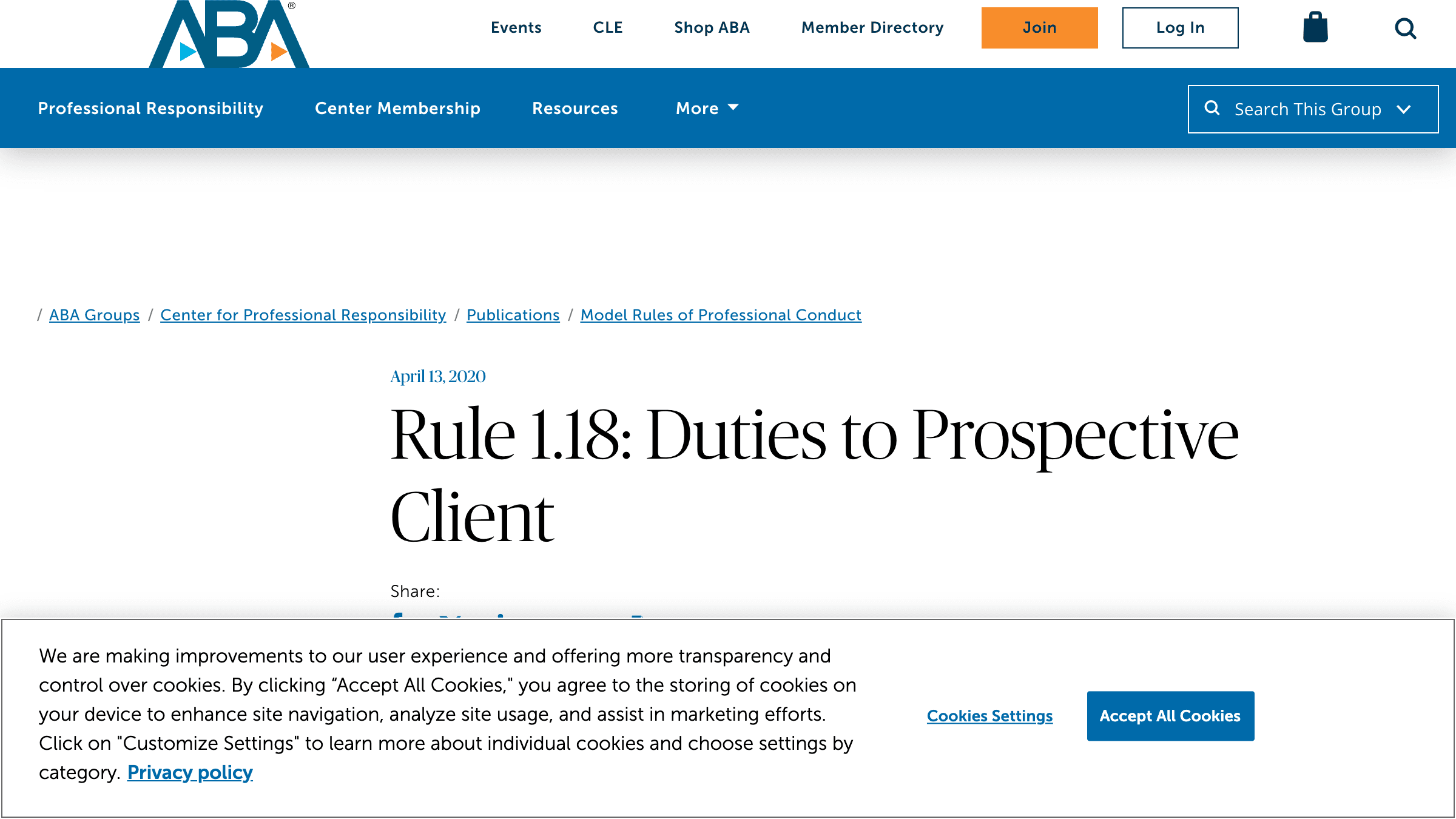
Table of Contents
The first question on your intake script is a professional responsibility decision, and almost nobody treats it that way. Vendors sell you on tone and coverage. They show you a friendly voice answering at 2am. What they don't show you is that the person answering is collecting information from someone who, the moment they start talking about their matter, becomes a prospective client of your firm under the rules you are licensed against.
A virtual receptionist for lawyers is a service that answers your firm's calls, screens and books new matters, and routes urgent callers, either with trained human agents or with an AI voice agent. That part is simple. The part that decides whether it helps you or hurts you is what your script asks in the first ninety seconds. I've built 126 production systems, and roughly 40 of them were voice deployments. The intake script is the single place where I've seen the most avoidable damage done.
This is not a listicle of ten vendors. Those exist and they all rank. This is the thing they leave out: what an answering service legally creates for a law firm, what it actually costs in 2026 with real published numbers, and how to write a script that does not manufacture a conflict.
What a virtual receptionist for lawyers actually does
A virtual receptionist for lawyers answers calls your firm cannot take, captures caller details against a script you define, runs a preliminary conflicts check, books consultations into your calendar, and escalates genuine emergencies to whoever is on call. The good ones integrate with your practice management system so the call lands as a matter record rather than a voicemail nobody plays back.
The demand for this is not speculative. When Clio hired a research firm to call 500 law firms as a secret shopper in 2024, only 40% of firms picked up the phone, and 48% were unreachable by phone entirely even after being given the chance to return a message (Clio Legal Trends Report). Email was worse: 33% responded. Of the calls that did connect, 41% offered any rate information and just 12% could give an estimate of total cost.
So the baseline you are competing against is low. That's the opportunity, and it's why this category sells so easily. But an answering service that picks up fast and asks the wrong questions is not an improvement. It's a faster way to create a problem.
If you want to talk through your own intake flow before you sign anything, book a discovery call. I'd rather you get the script right than get it fast.
The Rule 1.18 problem nobody quotes you
Under ABA Model Rule 1.18, a person who consults your firm about possibly hiring you is a prospective client, and your firm owes them confidentiality even if they never retain you and never pay you a cent. If that person shares information that could be significantly harmful to them in the matter, your firm can be disqualified from representing anyone with adverse interests in the same or a substantially related matter (ABA Model Rule 1.18).
Read that again with your intake script in your hand.
Now read what the vendors advertise. The standard pitch is that agents will document case basics on the first call, gather opposing party names up front, and capture the details so your team gets a clean file. Some of that is exactly right. Opposing party names are what you need to clear conflicts. But "tell me what happened" is a different instruction, and it is the one that generates disqualifying information from a caller you have not screened yet.
The rule gives you a path out, and the path is built around restraint. Rule 1.18(d)(2) preserves the representation where the lawyer who took the information "took reasonable measures to avoid exposure to more disqualifying information than was reasonably necessary" to decide whether to take the matter, then screened that person off the matter and gave the prospective client written notice. Restraint at intake isn't a matter of good manners. It's the element you have to be able to prove.
Here's the pattern I keep seeing. A firm buys an answering service, the vendor supplies a generic intake script written for home services, and it opens with an invitation to describe the problem. For a plumbing company that is the correct script. For a family law practice taking a call from one spouse, where the other spouse may call you next week, it is a liability the vendor does not carry and you do.
The fix isn't complicated, which is what makes it frustrating that so few firms do it. Your first ninety seconds should collect identity and adversity, not narrative: caller name, opposing party name, any other names involved, matter type at the category level, and jurisdiction. Then stop. Book the consultation and let a lawyer take the facts. Anonymized, that's the change I make most often, and in my experience it takes one working session.
What a virtual receptionist for lawyers costs in 2026
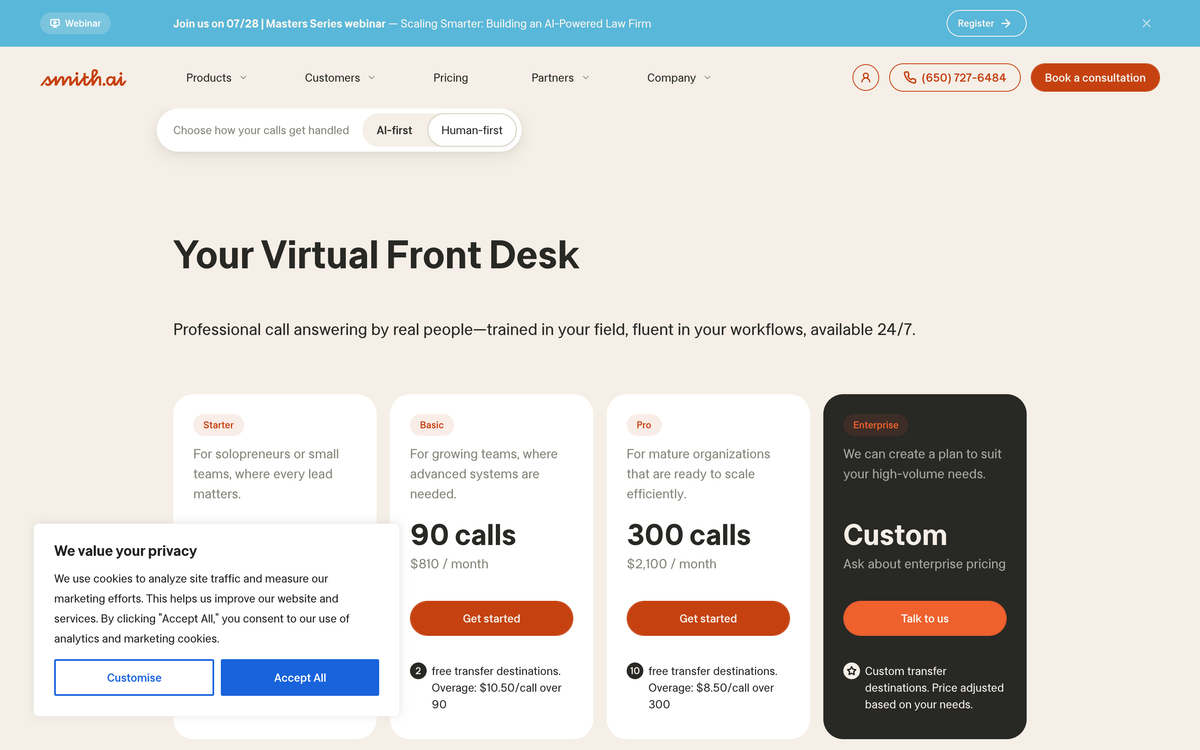
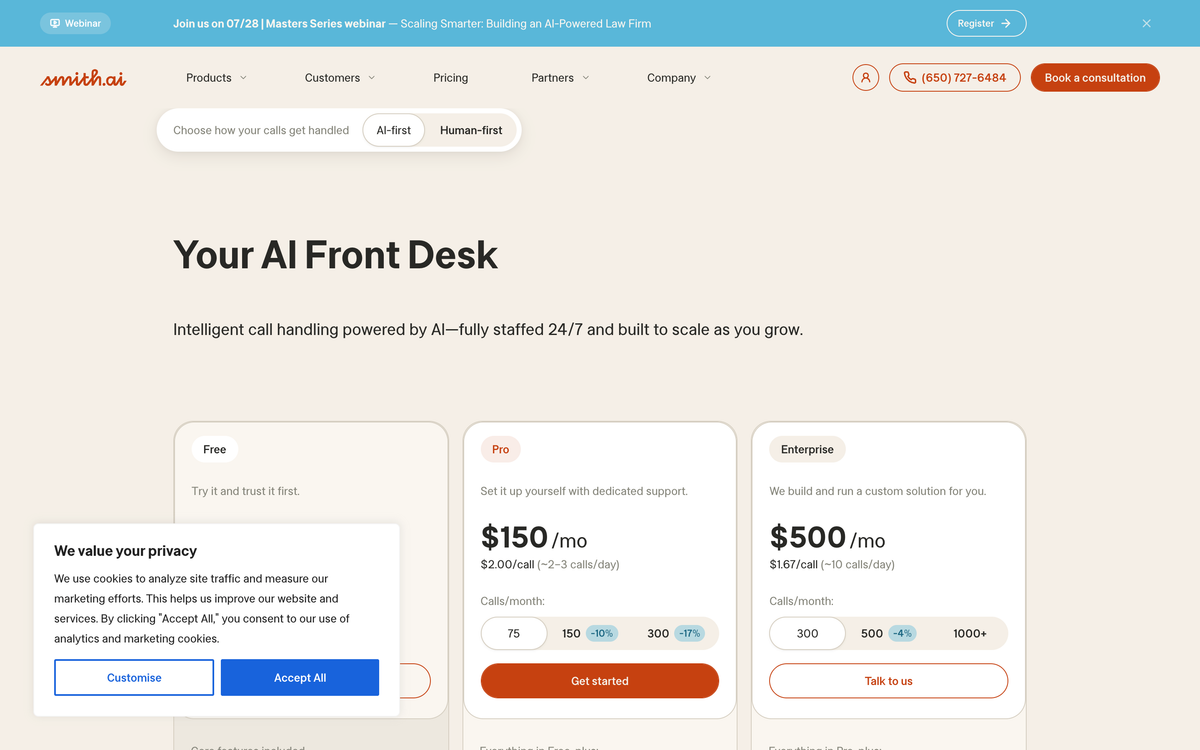
Human answering for law firms runs roughly $300 to $2,100 a month at published rates, and AI answering runs roughly $150 to $500 for the same call volumes. Smith.ai publishes both models openly, which makes it the cleanest public comparison available, so I have used their own numbers rather than a vendor average nobody can check.
On the human plans, 30 calls is $300 a month, 90 calls is $810, and 300 calls is $2,100, with overage at $11.50, $10.50 and $8.50 per call respectively (Smith.ai receptionist pricing). On the AI plans the monthly price is simply the included calls multiplied by the per call rate: 75 calls at $2.00 is $150, and 300 calls at $1.67 is $500 (Smith.ai AI receptionist pricing).
| Call volume | Human answering (Smith.ai human plans) | AI answering (Smith.ai AI plans) | Difference |
|---|---|---|---|
| 30 calls a month | $300 a month $10.00 per call | $150 a month $5.00 per call | 2.0x cheaper $1,800 a year |
| 90 calls a month | $810 a month $9.00 per call | $187.50 a month $2.08 per call | 4.3x cheaper $7,470 a year |
| 300 calls a month | $2,100 a month $7.00 per call | $500 a month $1.67 per call | 4.2x cheaper $19,200 a year |
Two of those AI figures need showing rather than asserting. The cheapest paid AI plan includes 75 calls for $150, so a firm taking 30 calls still pays $150, and the $5.00 is just what that works out to per call actually answered. At 90 calls you pay that same $150 plus 15 extra calls at the published $2.50 overage rate, which is $187.50.
Now the caveats, because a cost table with no caveats is a sales sheet. First, the gap narrows at low volume, where you are mostly paying for availability rather than labor. Second, the per call rates assume the AI actually completes the call. Every transfer to a human, every callback, every detail the caller has to repeat is real cost that does not appear on a pricing page. I have written more about the full cost stack in my AI voice agent pricing breakdown, and about the straight comparison in AI answering service versus human answering service.
The supervision duty is yours, not the vendor's
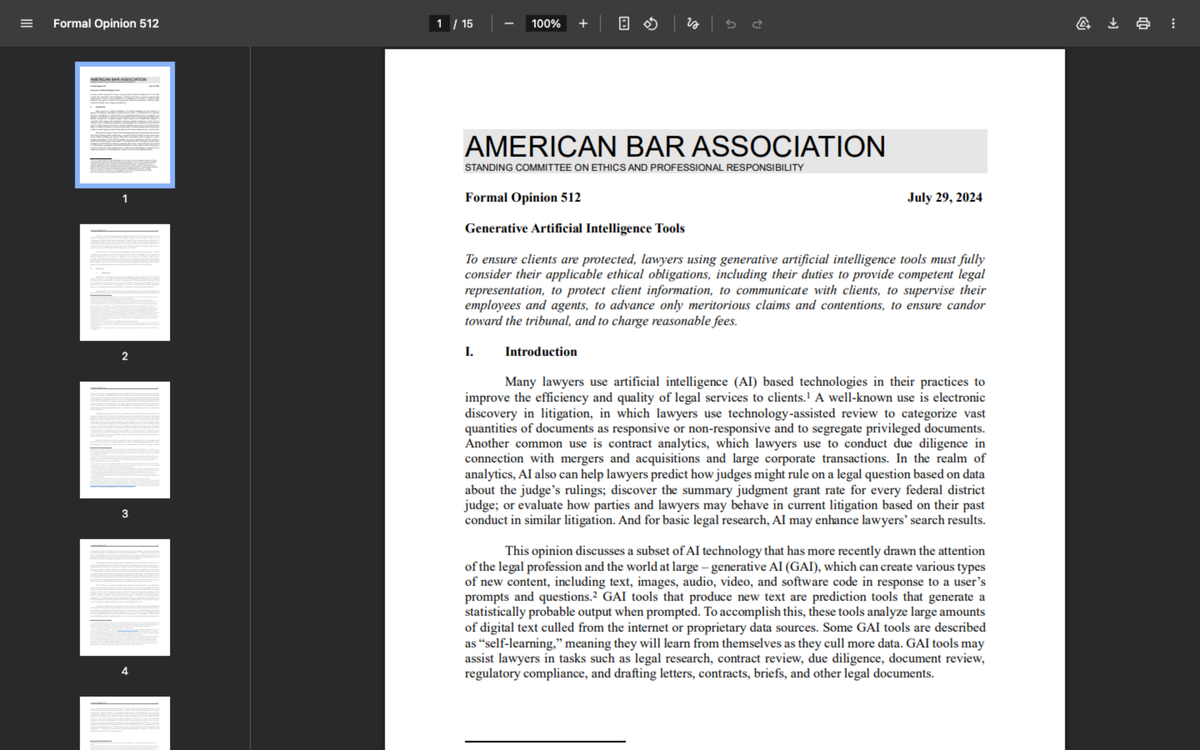
When you hand intake to an outside service, you do not hand over the ethical obligation, and this is the point most firms miss when they compare vendors on price alone. ABA Formal Opinion 512, issued on 29 July 2024, states plainly that lawyers using generative AI tools must fully consider their ethical obligations, including the duty to supervise their employees and agents (ABA Formal Opinion 512).
The opinion builds on Model Rules 1.1 on competence, 1.6 on confidentiality and 5.3 on responsibilities regarding nonlawyer assistance (UNC School of Law). Rule 5.3 is the one that matters here, and it doesn't care whether your nonlawyer assistant is a person in a call center or a voice model on a server. If it acts for your firm, you are responsible for making reasonable efforts to ensure its conduct is compatible with your own obligations.
In practice that means three questions belong in your vendor diligence, and I tell clients not to sign without written answers. Where is call audio stored, for how long, and who can access it. Is any call content used to train a model. Can you get the intake script in writing, change it, and see a log of what the agent actually asked. A vendor who can't answer the third question is selling you a black box that speaks on your behalf.
What California's 2026 guidance signals about agentic AI
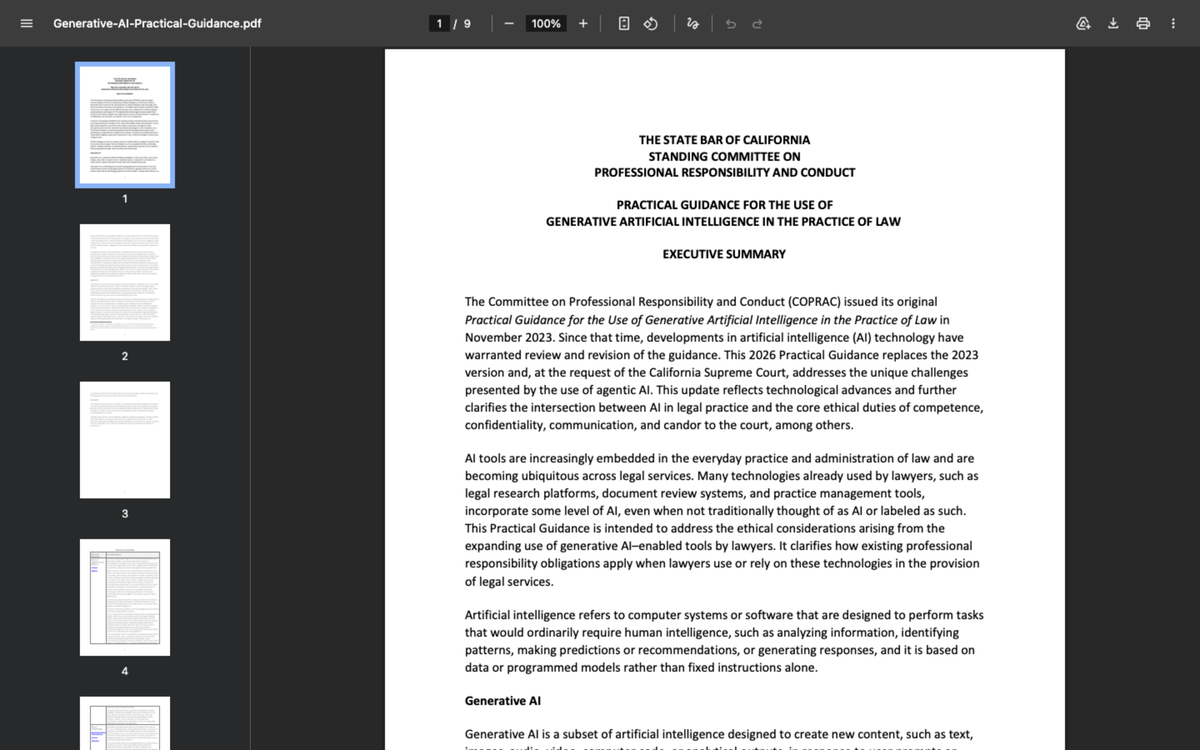
State regulators have moved from general AI guidance to the specific problem of AI that takes actions on its own, and that shift is the clearest signal yet about where this is heading. The State Bar of California's Committee on Professional Responsibility and Conduct issued Practical Guidance for the Use of Generative Artificial Intelligence in the Practice of Law in November 2023, and its 2026 revision replaces that version and, at the request of the California Supreme Court, addresses the challenges presented by the use of agentic AI (State Bar of California).
The guidance does not leave you guessing whether this applies to answering services. Listing what counts as agentic, it gives four examples, and the last one is "autonomously facilitating client intake". A regulator picked intake out of every task in a law firm and named it. It then draws the line: lawyers "must not deploy agentic systems in a manner that allows the system to make substantive legal determinations, communicate legal advice, prepare and file pleadings, or otherwise act in a representative capacity without meaningful lawyer supervision and review".
That distinction is worth holding onto. A voice agent that reads a script and takes a message is a tool. A voice agent that decides which callers to reject, books matters into your calendar, and sends the confirmation is closer to an actor, and regulators are now writing about it in those terms. If you're choosing a vendor this year, the ability to constrain what the agent may decide on its own is going to age better than the ability to make it sound human.
Where AI answering fits for a law firm, and where it does not
AI answering is a good fit when call volume is high, questions are repetitive, and the goal of the call is to qualify and book rather than to advise. It's a poor fit when the caller is likely to be in crisis, when the matter type carries a short deadline, or when the first call is effectively the consultation. Those aren't close calls in either direction.
Where it works well
- High volume practices where most calls are status checks, directions, or scheduling
- Overflow during business hours, so your existing staff stop losing the fifth simultaneous caller
- After hours coverage where the realistic alternative is voicemail, not a person
- Firms that already know their matter types and can define a clean screening rule for each
Where I would not use it
- Criminal defense intake where the caller may be in custody or under time pressure
- Practices where the caller is routinely distressed and a wrong tone costs you the matter
- Any firm without a conflicts database the agent can actually check against
- Matters with imminent statutory deadlines, where a booking two days out is malpractice bait
The pattern that works most often isn't either or. It is AI answering first for identification, conflicts data and booking, with an immediate transfer rule for anything the script flags. That way the cheap path handles the volume and a human handles the judgment. I use the same split for home services voice agents, though the flag conditions are completely different.
How I would set this up for a small firm
Start by writing the screening rule before you look at a single vendor, because the script is the product and everything else is packaging. Most firms do this backwards, pick on price and coverage, then inherit whatever script the vendor uses for its other clients.
- List your matter types and mark each one as bookable, screen out, or transfer immediately. Most firms find three or four types cover 80% of calls.
- Write the ninety second script. Identity, opposing party and other names, matter category, jurisdiction, contact details. No facts of the matter.
- Write the stop rule in plain language. If the caller begins describing the substance, the agent says the lawyer will take those details at the consultation, and moves to booking.
- Connect the conflicts check. Names captured at intake need to reach whoever clears conflicts before the callback, not after it.
- Decide your escalation triggers and test them by calling your own number, at night, as an unhappy person. Most scripts fail this test the first time.
- Log everything and review week one. Read the transcripts. You'll find at least one question you didn't intend to ask.
If you want the same thinking applied to booking specifically, I wrote about what breaks when AI writes to your calendar in virtual receptionist appointment booking. And if you are comparing this against hiring, the numbers are in how much a virtual receptionist costs.
Is a virtual receptionist right for your firm?
Answer these six questions honestly and the decision usually makes itself. This is the same gate I run with firms before quoting anything, and in my experience about a third of the time the answer is that they don't need a vendor at all, they need to fix who answers the phone between 9 and 5.
- Are you losing more than a handful of calls a week, and do you know the number rather than guessing it?
- Can you name the three matter types that make up most of your inbound calls?
- Do you have a conflicts database that someone can check the same day?
- Is your first call usually a screening conversation, or is it usually advice?
- Can you write down what the agent must never ask, in one sentence?
- Will someone at your firm actually read the call transcripts in the first month?
If you answered no to the third or the fifth, fix that before you buy anything. A service that captures names you never check is a cost with no benefit, and a script you cannot constrain is the risk this whole article is about. If you answered yes to most of them, this works, and the AI path is worth pricing seriously.
Not sure where your firm sits? The AI readiness assessment takes a few minutes and tells you which of these gaps to close first. If you would rather just talk it through, book a discovery call and bring your current intake script. You can also see how I structure these builds on the agents page.
Frequently asked questions
What is a virtual receptionist for lawyers?
It is an outside service that answers your law firm's phone, follows an intake script you define, captures caller and opposing party details, books consultations, and escalates urgent calls. It can be staffed by trained human agents, by an AI voice agent, or by a mix of the two with AI answering first and humans taking transfers.
Can a virtual receptionist do a conflicts check?
It can collect the information a conflicts check needs, which is caller name, opposing party name and any other parties involved. It can't clear the conflict itself. Someone at your firm still has to run those names against your database before you call back, and the value of the service collapses if nobody does.
Does using an answering service create a lawyer and client relationship?
Answering the call does not create a representation, but it can create a prospective client under Model Rule 1.18, which carries a confidentiality duty and a disqualification risk if the caller shares information that could be significantly harmful to them. That's why the script should stop at identity and adversity rather than inviting the caller to explain the matter.
How much does a virtual receptionist for lawyers cost?
Published human plans run about $300 a month for 30 calls up to $2,100 for 300 calls, with overage between $8.50 and $11.50 per call. AI plans for the same volumes run about $150 to $500 a month at $1.67 to $2.00 per call. Expect to pay more than the sticker if a meaningful share of calls transfer to a human.
Is AI answering ethical for a law firm?
Nothing in the ABA Model Rules prohibits it, but Formal Opinion 512 makes clear that your duties of competence, confidentiality and supervision of nonlawyer assistance follow the work wherever it goes. The obligation is to supervise the tool and the script, which in practice means knowing what it asks, where recordings live, and whether call content trains a model.
Do I have to tell callers they are speaking to an AI?
Requirements vary by state and are moving quickly, so check your own jurisdiction rather than relying on a vendor's assurance. Beyond any specific rule, disclosure is the safer default. Callers who work out mid conversation that the voice was synthetic tend to distrust the firm, and that'll cost you more than the disclosure ever would.
What should a legal intake script never ask?
It should never invite the caller to narrate the facts of the matter, because that is how a screening call generates disqualifying information before anyone has checked conflicts. Keep the first ninety seconds to names, matter category, jurisdiction and contact details, then book the consultation and let a lawyer take the substance.
Is a virtual receptionist better than hiring someone?
At low call volume a part time person you already employ is usually cheaper and better, because they know your matters. Outside services win on coverage rather than cost: nights, weekends, holidays and simultaneous callers. Compare against the hours you actually need covered, not against a full time salary.
Only 40% of law firms answered the phone and 48% were unreachable by phone in a 500 firm secret shopper study; 33% responded to email. Published US answering prices in 2026 run $300 to $2,100 a month for human plans and about $150 to $500 for AI plans at matched call volumes. ABA Model Rule 1.18 creates confidentiality and disqualification duties toward prospective clients; ABA Formal Opinion 512 (29 July 2024) extends competence, confidentiality and supervision duties to generative AI tools; the State Bar of California's 2026 Practical Guidance addresses agentic AI at the request of the California Supreme Court. Sources: Clio Legal Trends Report, Smith.ai receptionist pricing, Smith.ai AI receptionist pricing, ABA Model Rule 1.18, ABA Formal Opinion 512, State Bar of California Practical Guidance, UNC School of Law.
This article describes professional responsibility rules in general terms and is not legal advice. Model Rules are adopted with variations by each state, so check your own jurisdiction's version and any applicable AI disclosure requirements before you change your intake process.
Related Posts
What Is a Legal Virtual Receptionist? An Honest Guide for Australian Law Firms
Industry GuidesVirtual ReceptionistLegal
Virtual Receptionist for Medical Practice: What Australian Clinics Get Wrong Before They Sign
Industry GuidesVirtual ReceptionistHealthcare
Virtual Receptionist Dental Office: The Australian Numbers Nobody Quotes You
Industry GuidesVirtual ReceptionistDental

Jahanzaib Ahmed
AI Systems Engineer & Founder
AI Systems Engineer with 126 production systems shipped. I run AgenticMode AI (AI agents, RAG systems, voice AI) and ECOM PANDA (ecommerce agency). I build AI that works in the real world for businesses across home services, healthcare, ecommerce, SaaS, and real estate.