Virtual Receptionist Dental Office: The Australian Numbers Nobody Quotes You
A practical guide to phone cover for Australian dental practices, with live salary data, real platform rates in AUD, and the compliance question that catches most buyers.

Table of Contents
A practice manager in Geelong sent me her phone log in March. Four chairs, two dentists, one person on the front desk. She had spent a week searching "virtual receptionist dental office" and getting back nothing but American pricing and vendor blogs. What she actually wanted to know was whether the thing was worth buying, or whether it was the kind of idea that sounds clever in a webinar and falls apart the first time a patient rings about a cracked molar at 7pm.
What struck me was that she had counted. Most owners don't. They feel the gap and guess at it, and after 126 production systems I can tell you the guess is wrong in both directions about equally often. Some practices are bleeding far more than they think. Others are about to spend A$500 a month fixing a problem worth A$80. If you want the short version before the rest of this, book a 15 minute call or run the AI readiness quiz, and you'll know inside a day which one you are.
At a glance
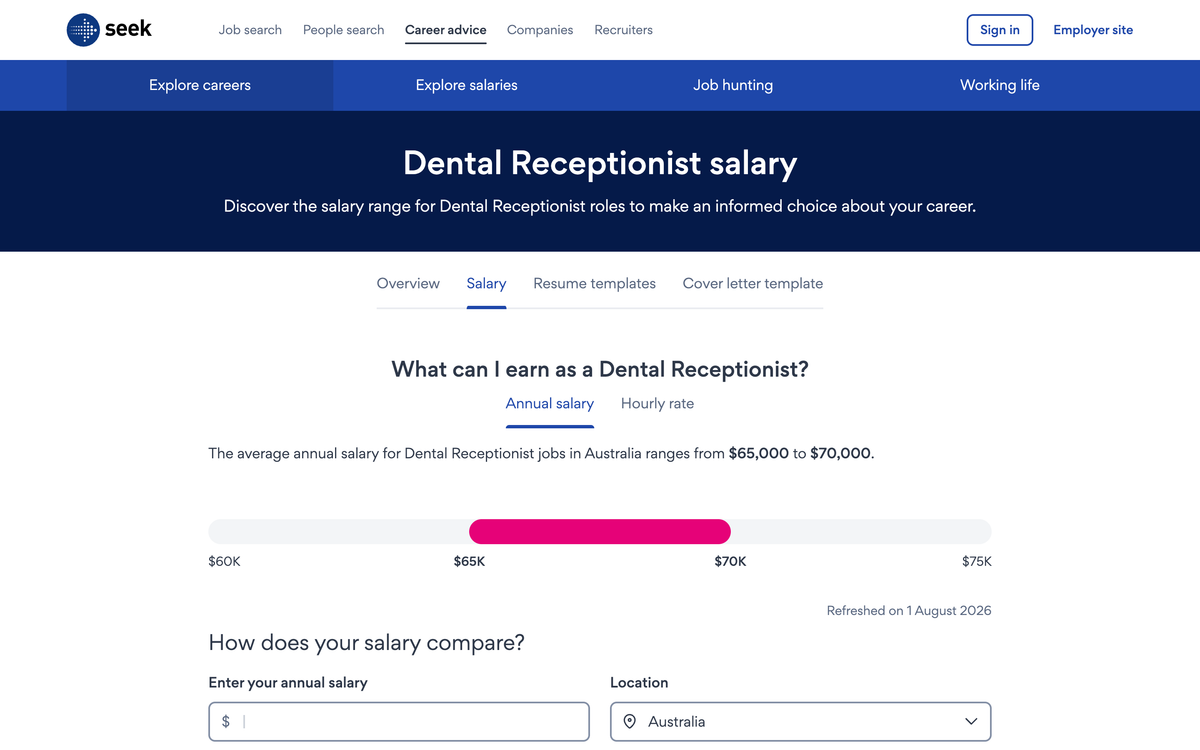
- One full time dental receptionist costs about A$75,600 a year all in. SEEK put the average at A$65,000 to A$70,000 when it refreshed on 1 August 2026, and super adds 12% on top.
- That person covers about 60% of the hours your practice is open. Annual leave, public holidays and sick days take roughly 304 hours out of the year before anyone answers a phone.
- The AI version runs about A$483 a month at 752 calls. That is A$5,799 a year on Vapi rates once speech, model, voice and telephony are counted, or roughly 13 times cheaper than the salary.
- The compliance add on is the trap. Vapi charges US$2,000 a month for HIPAA. That is about A$34,433 a year, it turns a A$5,799 bill into A$40,233, and HIPAA is American law that does nothing for your obligations under the Privacy Act 1988.
- Break even is about 1.7 recovered new patients a month. Below roughly 150 calls a month, or if nobody owns what happens to a captured call by 9am, don't buy it yet.
Virtual receptionist dental office: what it actually does
Strip the marketing away and there are only four jobs worth automating on a dental front desk. Answering the call. Working out who is ringing and why. Booking, moving or cancelling an appointment. Getting an urgent case to a human fast.
Everything else your receptionist does stays with your receptionist. HICAPS claims. Explaining a treatment plan to a nervous patient who has just been quoted A$4,000 for implants. Chasing a health fund. Reading the room when someone walks in crying. I've never built a system that does any of that well, and I wouldn't sell you one that claimed to.
This is the distinction that decides whether the purchase works. You're not replacing a person. You're buying back the phone, which is the part of the role that a human is worst at doing while also standing at a counter processing a payment. That framing matters more than any feature list, and it's the same reasoning I lay out in my guide to when to use AI agents versus plain automation.
The three call types that matter
New patient enquiries are the ones with revenue attached. Existing patient rescheduling is the highest volume and the most mechanical. Clinical urgency is rare, high stakes and the only category where a wrong answer hurts someone. Any system worth buying handles the first two on its own and routes the third to a person within seconds.
What a dental receptionist really costs in Australia
A full time dental receptionist in Australia costs about A$75,600 a year once superannuation is added. The advertised salary sits between A$65,000 and A$70,000, super adds 12% on top, and most single site practices fall under their state payroll tax threshold so that part usually stays at zero.
Start with the number your accountant sees. SEEK's dental receptionist page, refreshed on 1 August 2026, puts the average annual salary between A$65,000 and A$70,000. Take the midpoint at A$67,500. Superannuation is 12% since 1 July 2025 and is not rising again, so that is another A$8,100.
Call it A$75,600. Most single site practices sit under their state payroll tax threshold, so I have left that out rather than inflate the figure.
The coverage gap nobody prices in
Here's where the arithmetic gets uncomfortable. A 38 hour week across 52 weeks is 1,976 hours on paper. Subtract four weeks of annual leave, about ten public holidays and the ten days of personal leave the National Employment Standards entitle them to, and you are left with roughly 1,672 hours of someone actually sitting at the desk.
Now count the hours your phone can ring. Open 8am to 6pm on weekdays and Saturday mornings for most of the year and you are at about 2,792 hours.
One full time receptionist covers 60% of your own opening hours. Not 60% of the week, not 60% of the day. Sixty percent of the hours you have already decided to be open. The other 40% is covered by a dentist stopping mid procedure, a nurse with gloves on, or nobody at all. That's the bit you're really buying. At A$75,600 across 1,672 covered hours you are paying about A$45 for every hour that is genuinely staffed.
That gap is the actual product being sold to you. It's worth reading alongside my breakdown of round the clock cover, which runs the same numbers for businesses that stay open after hours by choice.
How many calls are you actually missing
The best public dataset I have found comes from Peerlogic, which analysed 4,280 calls across 26 practices in February 2026 and found 38% of inbound calls went unanswered, with new patient conversion sitting at 25%. An earlier study on the same page found 68% of new patient calls were answered and only 42% of those answered turned into an appointment, which works out at roughly 71 of every 100 new patient callers never booking.
Two caveats before you take those to the bank. Peerlogic sells software that fixes this problem, so read the numbers with that in mind. And the data is American, from multi location groups whose call patterns look nothing like a two dentist practice in Ballarat. Use them to size the question, not to answer it.
The honest version is the one the Geelong manager did. Pull your carrier log, count the unanswered calls for one month, and count how many of those numbers never rang you again. That is your real figure, and it takes about twenty minutes.
What the AI version costs to run
An AI voice agent handling a four chair practice costs roughly A$483 a month, or A$5,799 a year, at about 750 calls and 2,400 connected minutes. That is the all in run cost with speech, model, voice and telephony counted, and it works out near 13 times cheaper than one full time receptionist.
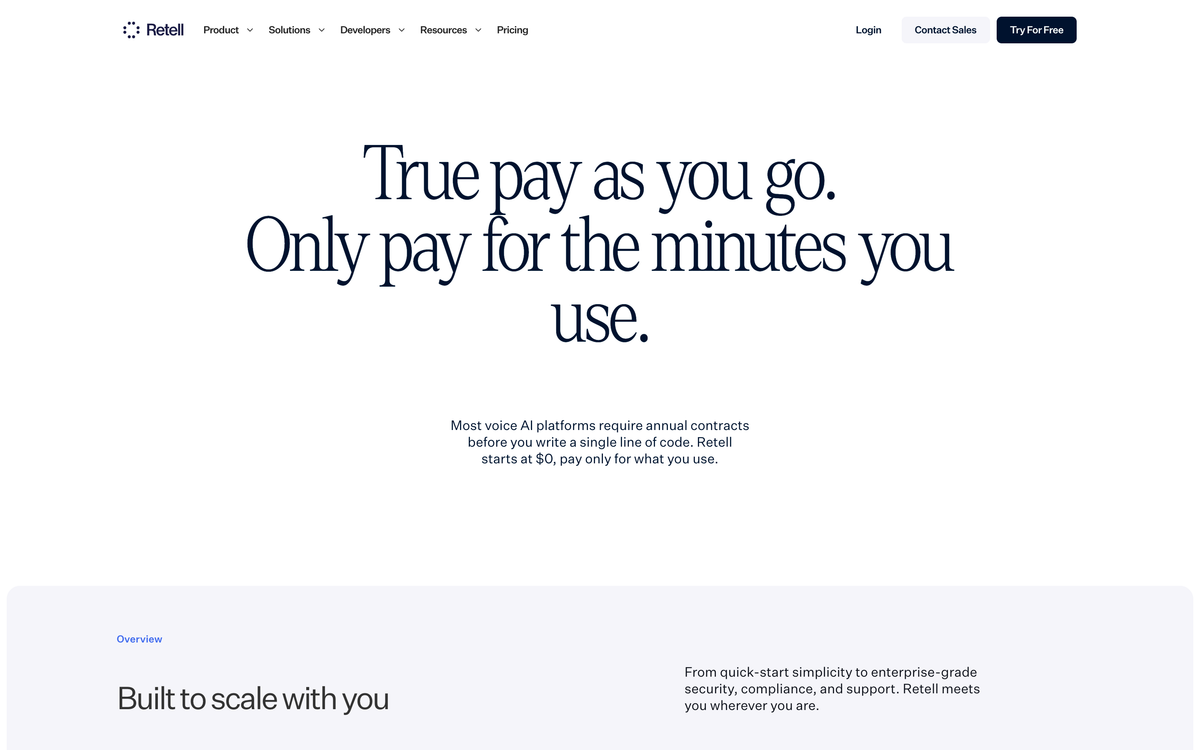
Voice platforms bill in parts, not seats, which is why quoted plan prices tell you almost nothing. On Vapi's published pricing the hosting layer is US$0.05 a minute and every model cost is passed through at cost, or free if you bring your own API keys. Retell takes the same approach and starts at zero.
Take a four chair practice at 30 calls a day across 22 working days, plus the after hours traffic, which lands at about 752 calls a month. Average a dental call at 3.2 minutes and you are buying 2,406 minutes.
| Component | Rate | Monthly at 2,406 min |
|---|---|---|
| Vapi hosting | US$0.05/min | US$120.30 |
| Speech to text | US$0.01/min | US$24.06 |
| Language model | US$0.03/min | US$72.18 |
| Text to speech | US$0.04/min | US$96.24 |
| Telephony | US$0.01/min | US$24.06 |
| Total | US$336.84 |
At 0.697 on the AUD to USD rate on 2 August 2026 that is about A$483 a month, or A$5,799 a year. Against A$75,600 for the salary it is roughly 13 times cheaper, and it covers every hour rather than 60% of them.
One thing Australian buyers keep getting caught by. These platforms bill in US dollars. Your run cost moves with the exchange rate, and a ten cent swing on the Aussie dollar is a real line item over a year. Budget in USD and convert, rather than the other way round. My full voice agent pricing breakdown goes deeper on the per minute maths.
HIPAA is not the Privacy Act, and this is where money disappears
HIPAA compliance does nothing for an Australian dental practice. Your obligations sit under the Privacy Act 1988 and the Australian Privacy Principles, where health information counts as sensitive information. Buying a US compliance tier can add about A$34,433 a year and still leave your actual legal duty unaddressed.
This is the section I wish someone had written before I watched a client nearly sign it.
Vapi sells a HIPAA add on at US$2,000 a month, with Zero Data Retention at another US$1,000. At current rates the HIPAA line alone is about A$2,869 a month, or A$34,433 a year. Add it to the A$5,799 run cost and your A$483 a month becomes A$40,233 a year, near enough to seven times the bill.
And it buys an Australian dental practice essentially nothing. HIPAA is United States health privacy law. Your obligations sit under the Privacy Act 1988 and the Australian Privacy Principles, where health information is classed as sensitive information and attracts extra protection. APP 11 asks you to take reasonable steps to protect it. A US compliance certificate isn't one of those steps.
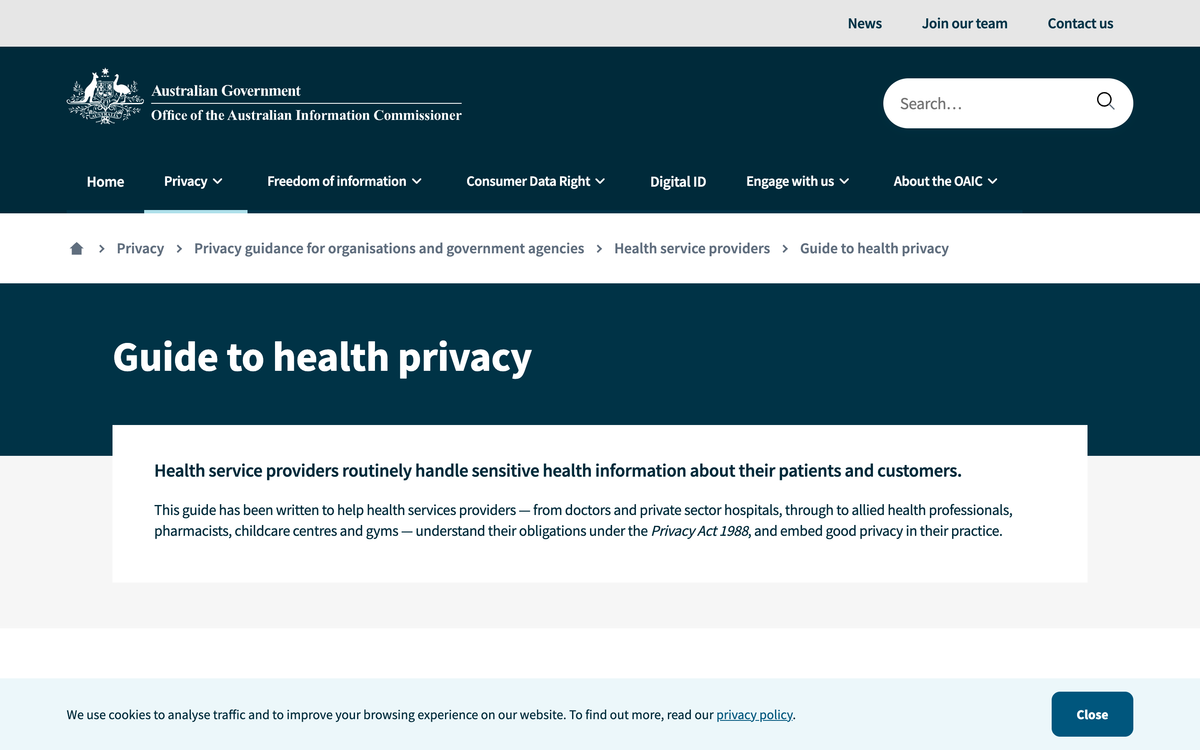
What to ask instead. Where is call audio stored and in which country. How long is it kept, because Vapi's Build tier keeps call history for 14 days by default and that may be shorter than your record keeping obligations. Will the vendor sign an agreement that binds them to the APPs. Who at the vendor can listen to a recording of your patient describing their medical history. The Australian Dental Association's data privacy guidance is a reasonable starting point for what your practice is already meant to be doing.
If a vendor answers those four questions with a HIPAA badge, you're talking to someone who hasn't thought about your jurisdiction.
Integration is where dental gets genuinely hard
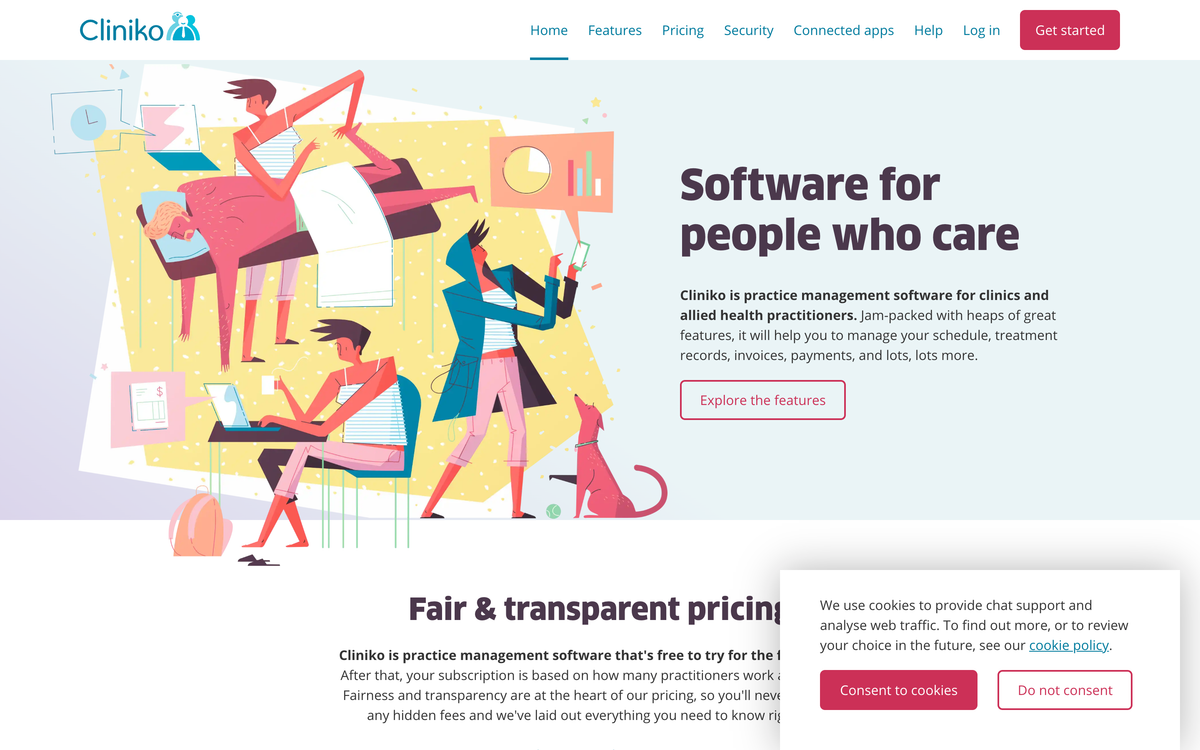
Whether an agent can book directly into your appointment book depends entirely on your practice management software. Cloud native systems like Cliniko expose an API a voice agent can write to. Older on premise installs often don't, so the agent captures the request and a human keys it in next morning.
Answering a call is easy now. Writing to your appointment book without corrupting it is not.
Australian practices run on a mix of Dental4Windows, Praktika, Core Practice and Cliniko, and their integration stories differ enormously. Cloud native systems expose an API you can book against. Older on premise systems often don't, which means your agent is capturing an intent and dropping it in a queue for a human to key in at 8:30 the next morning.
That second pattern isn't a failure. A captured call with a name, a number and a reason is worth vastly more than a voicemail nobody returns, and it takes a fraction of the build time. I've shipped plenty of practices on exactly that and they were happy. Just price it honestly and don't let anyone sell you live booking on a system that can't accept it.
Dental has its own traps too. Appointment lengths vary wildly, a hygiene visit and a root canal are not interchangeable slots, and an agent that books a 20 minute check up into a 90 minute gap has cost you money rather than saved it. I wrote about what breaks when AI writes to your calendar after watching a few of these go wrong.
Is this right for your practice
Six questions. Answer them honestly and the decision usually makes itself.
- Do you take more than 150 calls a month? Below that the run cost is trivial but so is the recovered revenue, and the build effort isn't worth it.
- Have you counted your unanswered calls for one month? If you haven't, do that first. Everything downstream is guesswork without it.
- Does someone own the captured calls by 9am? An agent that fills a queue nobody works is an expensive voicemail.
- Can your practice software accept a booking from an API? If it can't, plan for capture and handover rather than live booking.
- Can your vendor answer the four data questions above? If they lead with HIPAA, keep looking.
- Is your front desk person drowning, or just busy? Drowning is a real signal. Busy is normal and doesn't need A$6,000 a year thrown at it.
On the numbers in this article, a A$483 monthly agent needs to recover about 1.7 new patients a month to pay for itself, assuming an A$280 first visit. If 38% of your calls go unanswered and one in five callers is a new patient, and you assume a deliberately conservative 30% of those never ring back, a practice at 752 calls a month is looking at roughly A$4,805 of recoverable first visit revenue against A$483 of cost. That 30% figure is mine, not a sourced statistic, and it is the number I would argue about first if you want to stress test the case.
If that maths holds at your volume, the inbound voice agent package is where I would start, and the dental specific breakdown covers the build in more detail. If it doesn't, don't buy anything, and tell whoever is quoting you a monthly retainer exactly why not.
Frequently asked questions
What does a virtual receptionist do for a dental office?
It answers inbound calls, identifies the caller and their reason for calling, books or reschedules routine appointments, and escalates clinical urgency to a human. It doesn't handle HICAPS claims, treatment plan conversations, or anything requiring clinical judgement.
How much is a virtual receptionist for a dental practice in Australia?
Human services run from a few hundred dollars a month for basic message taking up to A$2,500 for a fully trained named receptionist. An AI voice agent costs about A$483 a month at 752 calls, based on published Vapi rates converted at 0.697 in August 2026. A full time in house receptionist costs about A$75,600 a year once superannuation is counted.
Is an AI receptionist allowed to handle patient health information in Australia?
Yes, provided you meet your obligations under the Privacy Act 1988 and the Australian Privacy Principles. Health information is sensitive information and attracts additional protection. You need to know where call audio is stored, how long it is kept, and whether the vendor will contractually commit to the APPs. HIPAA compliance is American law and does not satisfy this.
Can it book directly into my practice management software?
It depends on your system. Cloud native platforms like Cliniko generally expose an API that a voice agent can write to. Older on premise systems such as some Dental4Windows installs often don't, in which case the agent captures the booking request and a human enters it. Both patterns work, they just cost different amounts to build.
How does a virtual receptionist handle a dental emergency?
By recognising urgency language early and transferring to a human or an on call number within seconds. This is the one category where you should test the system hard before going live. If a vendor can't demonstrate the escalation path on a live call, that's a reason to walk away.
Will patients know they are talking to AI?
Most will work it out, and in my experience they mind far less than owners expect when the call is short and the outcome is right. What patients object to is a system that loops, mishears a name three times, or refuses to hand over. Disclose it plainly and route to a human quickly and it stops being an issue.
What happens after hours and on weekends?
This is where the return actually comes from. A full time receptionist covers about 60% of a typical practice's opening hours and none of the evenings or Sundays. An agent covers all of them at the same per minute rate, which is why after hours traffic usually justifies the build on its own.
Should a single dentist practice bother?
Usually not yet. Under about 150 calls a month the recovered revenue is small enough that a decent voicemail to SMS setup gets you most of the benefit for a fraction of the effort. Count your missed calls for a month before spending anything.
Australian dental receptionist salaries average A$65,000 to A$70,000 as at 1 August 2026, plus 12% superannuation, giving an all in cost near A$75,600 that covers roughly 60% of a practice's opening hours. An AI voice agent handling 752 calls a month costs about A$483 a month on published platform rates, while a US HIPAA compliance add on would add about A$34,433 a year without addressing Australian Privacy Act obligations. Sources: SEEK Dental Receptionist Salary, August 2026, ATO Super Guarantee, Vapi Pricing 2026, Retell AI Pricing 2026, OAIC Guide to Health Privacy, Peerlogic Missed Dental Calls Analysis, February 2026.
Related Posts
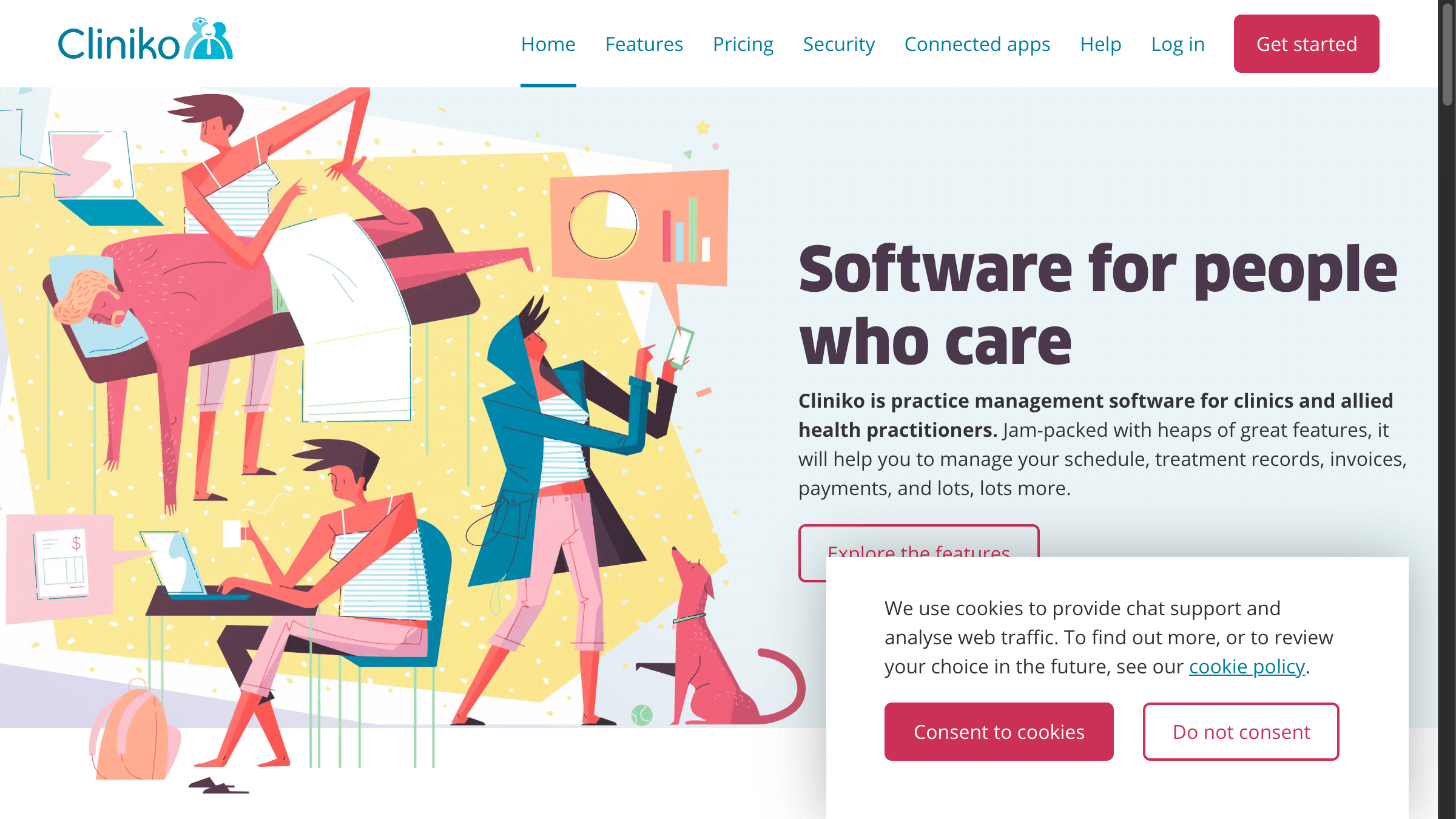
Virtual Receptionist for Medical Practice: What Australian Clinics Get Wrong Before They Sign
Industry GuidesVirtual ReceptionistHealthcare
24 Hour Virtual Receptionist: What Round the Clock Cover Costs, and When It Pays for Itself
Industry GuidesVirtual ReceptionistAI Voice AgentsHow to Choose a Virtual Receptionist Service: A Small Business Buyer Guide to the Fine Print
Industry GuidesVirtual ReceptionistAnswering Service

Jahanzaib Ahmed
AI Systems Engineer & Founder
AI Systems Engineer with 126 production systems shipped. I run AgenticMode AI (AI agents, RAG systems, voice AI) and ECOM PANDA (ecommerce agency). I build AI that works in the real world for businesses across home services, healthcare, ecommerce, SaaS, and real estate.