Virtual Receptionist Adelaide: Real 2026 Pricing, and the AI Version That Costs A$52 a Month
A plain English breakdown of what Adelaide businesses pay for call answering in 2026, with published AUD rates, the ACST timezone trap that quietly breaks bookings, and real numbers from a Prospect plumbing deployment.

Table of Contents
A human answering service in Adelaide runs from modest entry plans up past several hundred dollars a month once you cover real call volume, while an AI receptionist answers every call around the clock for a flat monthly fee with no per call surcharge. The gap between those two models matters more than the headline prices, because the metered plan is cheapest in a quiet month and most expensive in the month you actually needed it.
What should decide it is your call pattern rather than the pricing page: how many calls you take in a week, how complex they get, and whether you need appointments genuinely booked into a calendar rather than messages taken for you to action later. Adelaide trades and professional services tend to see the fastest return, because in both the caller is comparing you against whoever answers next.
A bloke who runs a plumbing business out of Prospect called me in March. He'd been paying an answering service A$740 a month and still lost two hot water jobs in one week, because the receptionist took a message at 6:40pm and nobody read it until the next morning. That's the thing most people miss when they search for a virtual receptionist Adelaide businesses can actually rely on. The problem usually isn't that nobody answers. It's that answering and booking are two different jobs, and most services only do the first one.
I've shipped 126 production systems. About a third of them are voice agents. Here's what the real numbers look like in Adelaide right now, what I charge, and the specific thing that went wrong on my first South Australian deployment.
Virtual receptionist Adelaide pricing, broken down for 2026
A virtual receptionist in Adelaide costs between A$30 and A$1,400 per month in 2026. The spread comes down to one variable: included minutes. Australian providers bill by the minute rather than by the call, so a plan with 100 included minutes covers roughly 30 short calls, and a busy month pushes you into excess rates that cost more than your plan rate does.
Here are the published rates from Alltel, an Australian call centre that lists its numbers publicly:
| Plan | Monthly (AUD) | Included minutes | Effective per minute | Excess rate |
|---|---|---|---|---|
| Receptionist GO | A$30 | 0 (pay as you go) | n/a | A$3.50 |
| Receptionist 100 | A$300 | 100 | A$3.00 | A$3.50 |
| Receptionist 300 | A$900 | 300 | A$3.00 | A$3.50 |
| Receptionist 500 | A$1,400 | 500 | A$2.80 | A$3.50 |
Setup fees start at A$150 and climb if you want custom call flows or scripting, all per Alltel's published 2026 rates. Note what happens at the edges. Go over your allowance and every extra minute costs more than your plan rate, so a busy month is punished twice. And a three minute call about a blocked drain costs you A$9 whether or not it turns into a job.
That's the honest baseline. It's not a rip off.
Real people cost real money, and A$3 a minute for an Australian based operator is fair. But it does mean your phone bill scales with your busiest season, which for Adelaide trades is exactly when cash is tightest.
The Adelaide timezone problem nobody mentions
Adelaide runs on ACST, which sits 30 minutes behind Sydney and Melbourne rather than a full hour. That half hour offset breaks virtual receptionist bookings more often than anything else on this page, because national answering services and scheduling libraries default to AEST. Configured wrong, every booking your receptionist takes lands in your calendar 30 minutes early.
Not one hour. Thirty minutes. That's the whole problem.
Almost every national answering service runs its rosters and its booking software on AEST. Most of the time this is invisible. It stops being invisible the moment a receptionist in a Sydney call centre books your 9:00am job into your calendar and it lands at 8:30am, or when your "after hours" cutoff fires at 5:30pm Adelaide time because someone configured it for eastern states business hours.
I've now seen this break three separate times. Twice with human services, once with my own agent, which I'll get to. If you take one thing from this post, make it this: before you sign anything, ask the provider to confirm in writing that your account is configured for Australia/Adelaide, not Australia/Sydney. Ask them to spell out the timezone string. If the person on the phone doesn't know what you're talking about, that's your answer.
What an AI receptionist costs to run
An AI receptionist costs between US$0.07 and US$0.31 per minute of live conversation, and a sensible setup lands around US$0.11 per minute all in. That total covers four separate line items: the language model, the voice infrastructure, text to speech, and the phone line itself. Platforms market only their orchestration fee, so the advertised number is usually less than half the real one.
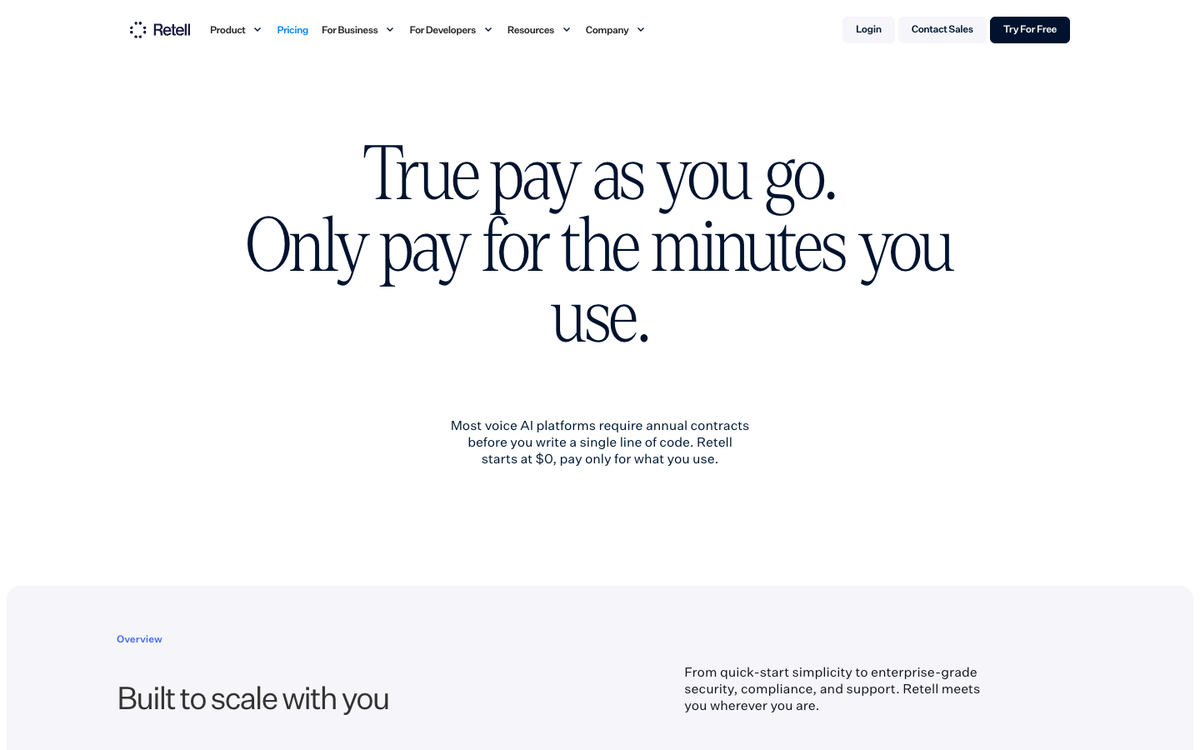
Retell publishes the full stack, which I appreciate. Their worked example breaks down as US$0.04/min for the language model, US$0.055/min for voice infrastructure, and US$0.015/min for text to speech. Total US$0.11.
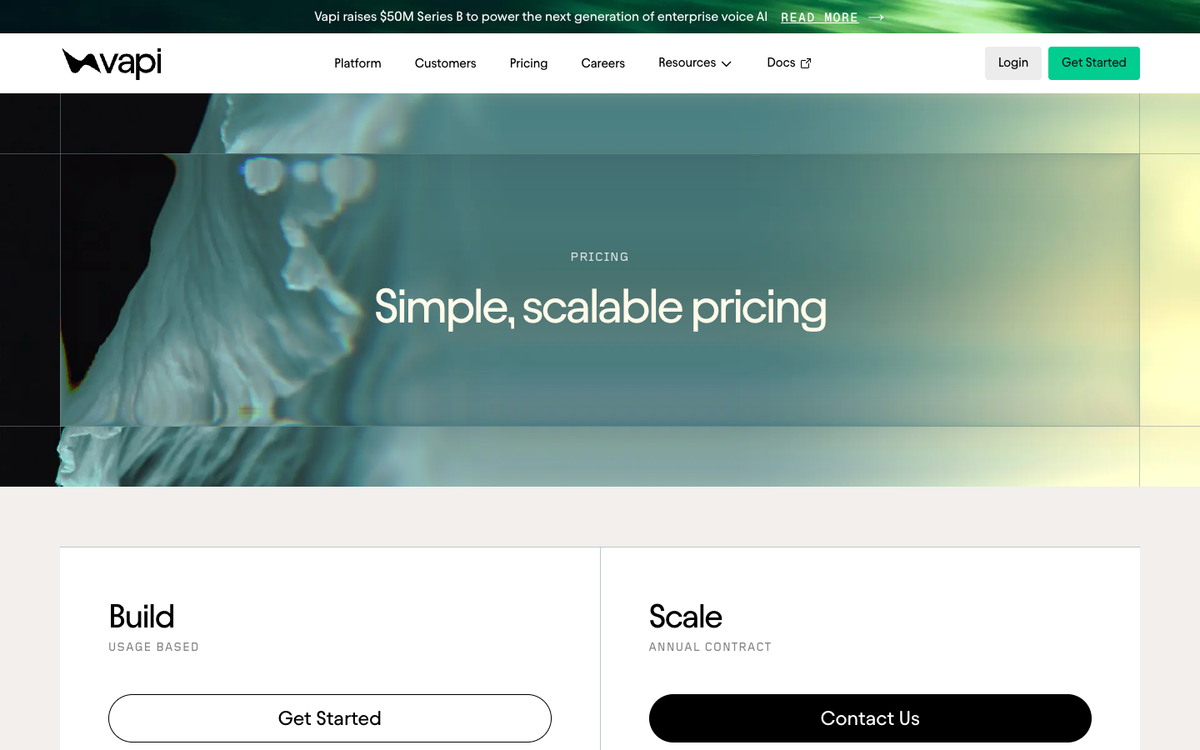
Vapi charges US$0.05/min for hosting and states plainly that this excludes model provider costs. Ten concurrent lines are included and extra lines run US$10 each per month. ElevenLabs sells agent minutes in bundles instead: US$22/month for 275 minutes on Creator, US$99/month for 1,238 minutes on Pro, US$299/month for 3,738 minutes on Scale.
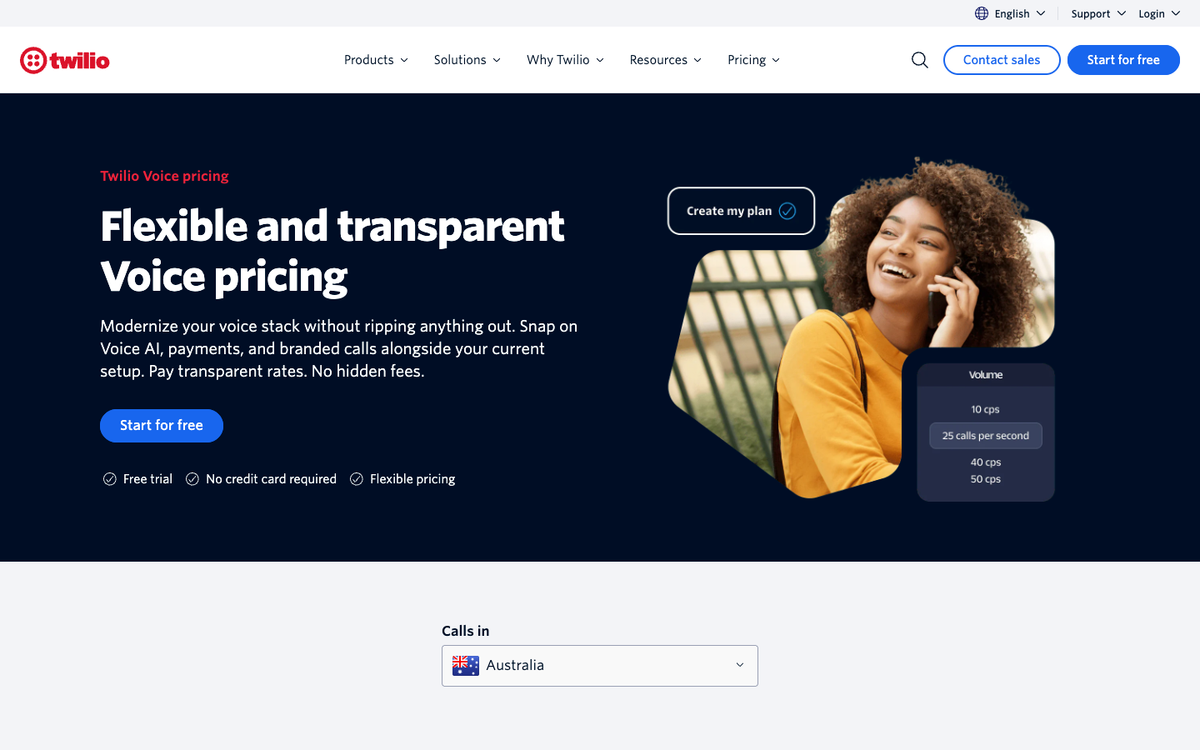
Then there's the phone line. Twilio charges US$0.0100 per minute to receive a local Australian call, US$0.0252 per minute to dial out to a landline, and US$0.0750 per minute to dial an Australian mobile. Small, but it's real and it's the piece people forget.
One catch worth flagging. All three platforms bill in US dollars. At a cross rate of 1.4337 AUD to the USD, worked out from the euro reference rates of 1.6394 AUD and 1.1435 USD (European Central Bank), US$36 becomes about A$52, before your card issuer takes its cut. Budget another 2 or 3 percent for that.
Human versus AI for Adelaide businesses at real call volumes
At 300 minutes a month, a human service costs A$900 and an AI receptionist costs about A$52 to run, a difference of A$848 every month. The running cost gap holds at every volume, but it ignores the build, which is why the payback period below matters more than the monthly saving. AI figures use the US$0.11/min platform cost plus US$0.01/min inbound telephony, converted at 1.4337.
| Monthly minutes | Human service (AUD) | AI receptionist running cost (AUD) | Monthly difference |
|---|---|---|---|
| 100 | A$300 | A$17 | A$283 |
| 300 | A$900 | A$52 | A$848 |
| 500 | A$1,400 | A$86 | A$1,314 |
The running cost gap is enormous and it's also misleading on its own, because the AI column doesn't include the build. A custom AI receptionist that answers, qualifies, books into your calendar and writes the job into your CRM runs A$4,000 to A$12,000 to build properly. That's the spread across the voice builds I've shipped, not a list price. Simple call answering with a message to your phone sits at the bottom of that range. Anything touching ServiceM8, Tradify, Cliniko or a real estate CRM sits at the top.
Human rates come from Alltel's published plans and the AI running cost from Retell's per minute breakdown plus Twilio's Australian inbound rate. Run the payback yourself. A business on the A$900 plan saves A$848 a month, so a A$6,000 build pays for itself in a bit over seven months and everything after that is margin. A business on the A$300 plan saves A$283 a month, so the same build takes 21 months. That second business should probably stay human for now, and I'll tell them so.
What happened when I built this for a Prospect plumbing business
A four van plumbing business in Prospect replaced a A$740 per month answering service with an AI receptionist in April 2026. In its first month the agent answered 341 calls, booked 96 jobs without a human touching the phone, and escalated 19. Running cost is about A$61 a month against a A$5,800 build, so it pays back in roughly eight months.
Back to the bloke from the intro. Four vans, two owners, roughly 380 minutes of inbound calls a month split across quotes, bookings and people ringing to ask if they service Gawler.
We went live on a Tuesday in April. The agent answers, works out whether it's an emergency or a booking, checks van availability, books the slot, and texts the caller a confirmation. Anything it can't handle goes straight to the on call mobile instead of a voicemail box.
First month: 341 calls answered, 96 jobs booked without a human touching the phone, 19 escalated to the mobile. Their old service was costing A$740 a month. The agent costs them about A$61 a month to run, and the build was A$5,800.
Now the part that went wrong. For the first nine days, every booking landed in their calendar 30 minutes early. I'd configured the agent's clock as Australia/Sydney because that's the default I'd used on every previous Australian build, and I genuinely didn't think about it. Two crews turned up early to jobs. One customer in Klemzig wasn't home. The owner rang me about it and he was not thrilled, which is fair enough.
It was a two line fix.
But the lesson stuck: Adelaide is the only mainland capital on a half hour offset, and every default in every scheduling library assumes you're not there. I now run a timezone check as a hard gate before any South Australian deployment goes live. If I were starting that project again, I'd have tested a booking against a real calendar before switching the number across, rather than after.
Should you use an AI receptionist for your Adelaide business?
You should use an AI receptionist if you take more than 150 minutes of calls a month, your calls are mostly repetitive, and you have a calendar or CRM it can write into. You should stay with a human service if a wrong answer creates legal exposure, or if your call volume is too low for the build to pay back. Five questions sort it.
- Do you take more than 150 minutes of calls a month? Below that, the build cost takes too long to pay back. Stay with a human service or a good voicemail to SMS setup.
- Are most of your calls repetitive? Bookings, quotes, opening hours, "do you cover my suburb". If yes, an agent handles them well. If every call is a unique negotiation, it won't.
- Does a wrong answer cost you money or expose you legally? Medical triage, legal advice, insurance claims all need a human in the loop, and I'd say so even though it costs me the sale. There's a reason I write separately about medical virtual receptionist setups.
- Do you have a calendar or CRM the agent can write into? If your bookings live in a paper diary, fix that first. The agent's value is in writing the booking, not just hearing it.
- Can you commit to two weeks of tuning? No agent is right on day one. The ones that work had someone listening to call recordings for a fortnight and fixing what broke.
Three or more yes answers and it's worth a conversation. Fewer than three and I'll tell you to wait. If you'd rather work that out on your own first, the AI readiness quiz takes about four minutes and gives you a straight answer.
What actually breaks, and how long it takes to go live
Three things break in real deployments, every time: speech recognition on South Australian place names, callers who talk over the agent, and the handoff to a human. None of them are exotic. All three show up in the first week, and all three are fixable in under a day if you know to look for them. Going live takes 10 to 15 business days.
Accents and suburb names. Speech recognition mangles South Australian place names. Kaurna derived names cause the most trouble. Willunga, Onkaparinga, Aldinga and Noarlunga all get mangled by default models. On the Prospect build, "Onkaparinga" came back as "on a paringa" often enough that the agent kept asking callers to repeat their suburb. Fix is a custom vocabulary list, which takes about an hour.
Callers who talk over the agent. Older callers in particular start speaking before the greeting finishes. If interruption handling isn't tuned, the agent talks over them and people hang up. This is the single biggest cause of a bad first week.
The handoff. When the agent escalates, does the human get context or just a ringing phone? Get this wrong and your team hates the thing within a week.
Timeline from first call to live number is usually 10 to 15 business days. Roughly: two days scoping your call types, five to seven days building and connecting your calendar and CRM, three days of testing against a parallel number, then the switchover. I keep the old number forwarding for a fortnight so nothing gets lost.
Why so many Adelaide owners are still answering their own phone
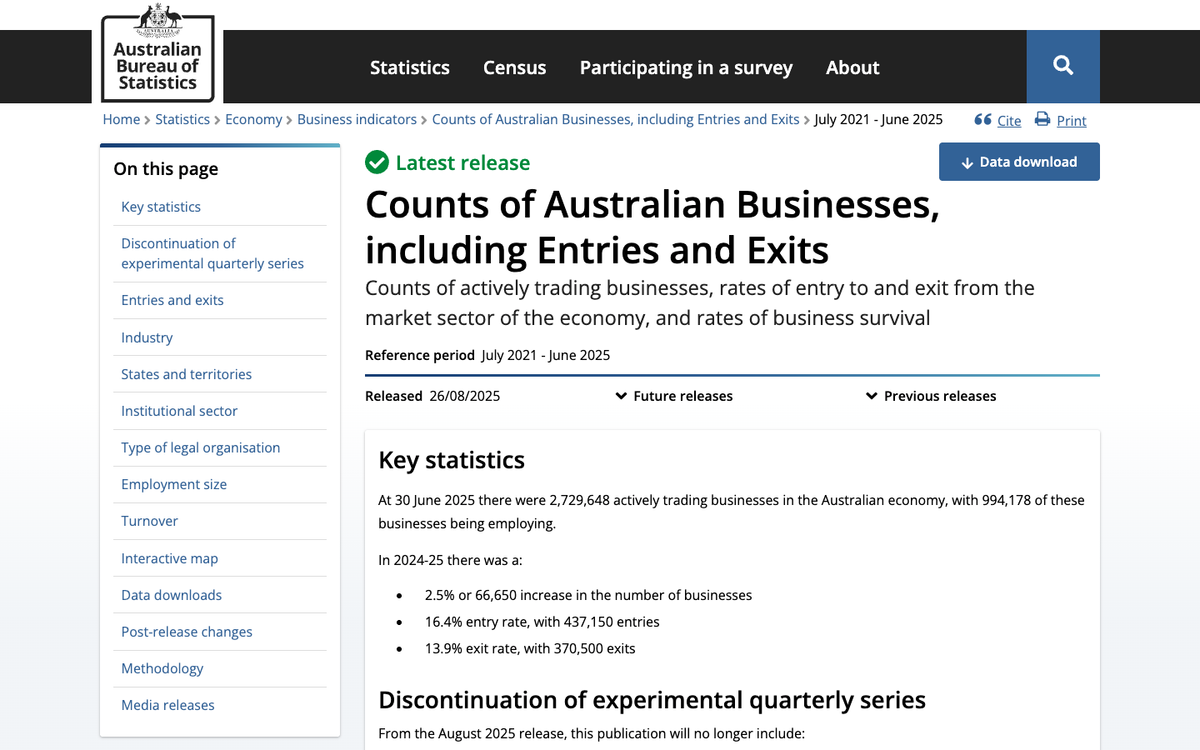
Most Australian businesses have no employees at all, so there is no front desk to answer the phone. The Australian Bureau of Statistics counted 2,729,648 actively trading businesses at 30 June 2025, and fewer than a million of them employ anyone. That single number explains the whole market for call answering in Adelaide.
The precise split, from the same ABS release: 994,178 employing businesses out of 2,729,648. Business numbers grew 2.5 percent that year, or 66,650 net new businesses, against a 13.9 percent exit rate.
So the typical Australian business has no staff. There's no front desk to answer the phone, because there's no desk. That's the actual market for this, and it's why the decision usually isn't "AI or my receptionist". It's "AI or me, on a ladder, missing the call".
Frequently asked questions
How much does a virtual receptionist cost in Adelaide?
Between A$30 and A$1,400 a month for a human service, depending on included minutes. Alltel's published plans run A$300 for 100 minutes, A$900 for 300 minutes and A$1,400 for 500 minutes, with excess minutes at A$3.50 and setup from A$150. An AI receptionist you own costs roughly A$17 to A$86 a month to run at those same volumes, plus a one off build of A$4,000 to A$12,000.
Is an AI receptionist cheaper than a human answering service?
Per minute, yes, by a factor of about 17. A human service charges around A$3.00 a minute. An AI receptionist costs about A$0.17 a minute all in. The catch is the upfront build. Below roughly 150 minutes of calls a month, the human service is the better financial choice.
Will callers know they're talking to AI?
Some will, most won't mention it. I tell every client to have the agent identify itself as a virtual assistant in the greeting. You lose almost nothing and it kills the awkward moment when someone works it out mid call. Callers care far more about getting booked than about who booked them.
What happens if the AI can't answer a question?
It should escalate to a real mobile with context attached, not dump the caller into voicemail. On the Prospect build, 19 of 341 calls escalated in month one. Any agent that can't escalate cleanly isn't finished.
Can an AI receptionist book directly into my calendar?
Yes, and that's the whole point. Anything less is just a fancy answering machine. I've connected agents to Google Calendar, ServiceM8, Tradify and Cliniko. If your bookings live somewhere with an API, it can write to it.
Does it handle Adelaide's half hour timezone properly?
Only if whoever built it set it to Australia/Adelaide explicitly. ACST is 30 minutes behind AEST and most scheduling defaults assume Sydney. I've watched this break bookings on three separate systems. Ask your provider to confirm the timezone string in writing.
How long until it's answering calls?
10 to 15 business days for a custom build that touches your calendar and CRM. Two days scoping, about a week building, three days testing on a parallel number, then switchover with the old number forwarding for a fortnight.
What if it doesn't work for my business?
Then you've spent two weeks and found out, and your old number still forwards. I'd rather tell you upfront that your call mix isn't a fit than build something that annoys your customers. That conversation is free.
Next step
If you're in Adelaide, paying A$500 or more a month for call answering, and still losing jobs after hours, the maths almost certainly works for you. Book a 15 minute call and bring your last phone bill. I'll tell you your break even month before we hang up, and if it doesn't stack up I'll tell you that instead.
Not ready to talk? Take the AI readiness quiz, or read how the same setup performs for home services businesses. You can also compare against what the same service costs in Melbourne and Perth, or read the national Australian cost guide and my breakdown of what virtual receptionists cost generally. The inbound voice agent page covers what I actually build.
Australian human virtual receptionist plans run A$30 to A$1,400/month with excess minutes at A$3.50 and setup from A$150. AI voice platforms charge US$0.05 to US$0.31 per minute, with a typical all in cost of US$0.11. Australian inbound telephony is US$0.0100 per minute. There were 2,729,648 actively trading Australian businesses at 30 June 2025, of which 994,178 employ staff. USD to AUD cross rate was 1.4337, worked out from the ECB euro reference rates.
Sources: Alltel Virtual Receptionist Plans and Pricing 2026, Retell AI Pricing 2026, Vapi Pricing 2026, ElevenLabs Agents Pricing 2026, Twilio Voice Pricing Australia 2026, Australian Bureau of Statistics, Counts of Australian Businesses, reference period July 2021 to June 2025, European Central Bank euro reference rates.
Last updated 20 July 2026 by Jahanzaib Ahmed. I build AI voice and automation systems for Australian small businesses and have shipped 126 production systems. If you want to talk through your own call volume, book a call.
Published
July 20, 2026
Category
Industry Guides
Jahanzaib Ahmed
AI Systems Engineer & Founder
AI Systems Engineer with 126 production systems shipped. I run AgenticMode AI (AI agents, RAG systems, voice AI) and ECOM PANDA (ecommerce agency). I build AI that works in the real world for businesses across home services, healthcare, ecommerce, SaaS, and real estate.
Want this built for your business? See AI Agent Development, or browse the free tools and guides.
Related articles
What Is a Virtual Receptionist? A No-Hype 2026 Guide for US Small Business Owners
A no-hype 2026 guide to virtual receptionists for US small business owners, with real pricing across AI, live human, and hybrid options, plus a real Florida HVAC client deployment that paid for itself in the first 6 hours of every month.
GuideIndustry GuidesVirtual Receptionist
Virtual Receptionist Australia: Real AUD Pricing, Your Options, and the AI Version Most Businesses Haven't Tried
A plain-language guide to virtual receptionist options for Australian small businesses in 2026, with real AUD pricing for OfficeHQ, VirtualHQ, and AI receptionist platforms, plus a decision framework for Sydney, Melbourne, Brisbane, and Perth.
GuideIndustry GuidesVirtual Receptionist
How Much Does a Virtual Receptionist Cost in 2026? Real Pricing After 40+ Deployments
What a virtual receptionist really costs in October 2026: human, AI and hybrid prices from eight vendors by call volume, the hidden fees, and when hiring in house becomes cheaper.
GuideIndustry GuidesVirtual Receptionist