Best AI Chatbot for Customer Service Software 2026: Intercom Fin vs Zendesk AI vs Ada vs Sierra vs Decagon Compared
A direct comparison of Fin, Zendesk AI, Ada, Sierra and Decagon for customer service in 2026: published prices, total cost at 2,000 and 10,000 resolutions a month, and which deploys faster.

Explore with AI
Table of Contents
Pick the AI chatbot that already speaks to the helpdesk you have. Across 126 production deployments I have never once seen switching helpdesks for a better AI agent pay off, and I have twice seen it cost a team a quarter. Industry average resolution rate is 44.8%, as secondary sources quote it from Comm100's gated 2026 benchmark; anything above 70% is genuinely best in class, and any vendor quoting 90% or higher is counting deflections as resolutions, which is a different and much easier thing to do.
Published per resolution pricing runs from about $0.50 on HubSpot's customer agent through $0.99 on Intercom Fin to $2.00 on Zendesk pay as you go (checked October 15, 2026). Ada, Sierra and Decagon do not publish prices at all. Seat based AI add ons are dying because they punish you exactly when the thing starts working. A custom build is not automatically cheaper: it crosses over somewhere above 5,000 resolutions a month, and only if you have the engineering capacity to keep maintaining it afterwards. Gartner expects GenAI cost per resolution to exceed $3 by 2030, more than many offshore human agents cost, so if you can lock in volume discounts now, do.
I have spent the last four years shipping AI to customer service teams. 126 production deployments across SaaS, ecommerce, healthcare, and financial services. So when someone asks me for the best AI chatbot for customer service software in 2026, I do not start with a feature matrix. I start with the question almost nobody asks: who is your existing helpdesk?
That single answer narrows the field from 30 platforms to two or three. Everything else flows from there.
This is a buyer's guide for teams who already know they need an AI agent for support. You have read enough explainers. You want to be told what to pick.
Quick Verdict
- Already on Intercom? Pick Intercom Fin. $0.99 per outcome (Intercom's billing unit, which covers resolutions and completed Procedures), no contract required, deploys in days. Default answer for ~70% of teams.
- Already on Zendesk? Pick Zendesk AI Agents. Native, every plan includes a small allowance of automated resolutions, then $1.50 each on committed plans or $2.00 pay as you go, integrated with your existing macros and triggers.
- Enterprise with a brand-critical voice (>$1B revenue)? Pick Sierra or Decagon. Neither publishes prices and both sell enterprise contracts, but you get a managed service with forward deployed engineers.
- Omnichannel including voice + 50,000+ monthly tickets? Ada is the heavyweight. It does not publish prices, and a real contract does not come in under $100K a year.
- Engineering team and >5,000 tickets/month with predictable intents? Build it on Claude or GPT with RAG. On the assumptions below, an $80K build pays for itself in about 20 months at 5,000 resolutions a month and about 9 months at 10,000, versus Fin at $0.99 per outcome.
- Still unsure? Skip to the five-question decision framework below or book a 30-minute call.
What this best AI chatbot for customer service software comparison covers
I am specifically comparing AI agent platforms purpose-built for customer service. That means tools that ingest your knowledge base, sit on top of your helpdesk, resolve tickets autonomously, and hand off to humans when they cannot.
I am not covering general purpose chatbot builders like Voiceflow or Botpress. Those are construction sets. They can absolutely build a great support agent, but you are doing the integration work yourself. If that is what you want, read my comparison of chatbot builders instead. For flat monthly plans from Tidio, Chatbase, Botpress and Crisp, my AI chatbot pricing breakdown has the current numbers.
If you are weighing Voiceflow against Sierra for customer service automation, it is a build versus buy decision, and as of October 15, 2026 neither publishes business pricing. Voiceflow is a platform for designing, testing and running your own AI agents across chat and voice: you pick the LLM or bring your own, connect your helpdesk and APIs, and own the conversation logic. Voiceflow's pricing page asks businesses to request pricing and offers self serve or fully managed implementation across voice and chat, while agencies get a free trial and usage based billing. Its billing documentation lists Free, Pro, Business and Enterprise plans, each billed as a monthly plan fee plus editor seats and credits for usage such as AI responses and phone calls, but it shows dollar prices only inside the Voiceflow dashboard, so there is no published figure I can quote. That puts Voiceflow between the platforms in this guide and a custom build: less code than building directly on Claude or GPT, more integration work than Fin or Zendesk's native agents, and hands on help only if you buy its fully managed implementation. Sierra sells managed deployments on outcome based contracts, covered below.
The five platforms in this guide are the ones I have either deployed in production or evaluated in formal RFPs in the last twelve months: Intercom Fin, Zendesk AI Agents, Ada, Sierra, and Decagon. I will also cover when a custom build beats all of them.

Intercom Fin: the default for most teams
Pricing: $0.99 per outcome, charged at most once per conversation. Intercom counts an outcome when the customer confirms the issue is resolved, does not ask for more help after Fin responds, or when Fin completes a Procedure, including Procedures that end in a handoff. On a helpdesk other than Intercom there is a minimum of 50 outcomes a month, with no seat or setup fees. Fin's pricing page shows that minimum as $49 a month on some loads and as 50 outcomes at $0.99 (about $49.50) on others. Free 14 day trial. Fin Voice is sold through sales: one version of the page lists $1.99 per voice outcome, another says custom pricing for select customers, so ask for a quote. All checked October 15, 2026. (Source)
Ownership and name, checked October 11, 2026: Intercom now trades as Fin. Salesforce announced on September 10, 2026 that it had completed its acquisition of Fin, formerly Intercom, and says Fin will continue to serve its customers and describes its AI agent as working with the helpdesks and systems companies already use. Intercom's pricing page still labels the plans "Intercom helpdesk" and the agent "Fin AI Agent", so I keep calling the product Intercom Fin in this guide. Both pricing pages still list $0.99 per outcome today. I have no information on what Salesforce plans for pricing after the deal, so ask about renewal terms when you buy.
Resolution rate I see in production: 55 to 65% with stock setup. Up to 75% with curated knowledge sources and Procedures (their guided workflow tool). Intercom claimed 81% in best case scenarios, which I have seen exactly once with a SaaS client whose docs were already structured for an LLM. Its homepage now quotes a 76% average across more than 12,000 businesses (checked October 11, 2026).
What I like: The simplest pricing in the category. You pay only for outcomes. It does not bill if the customer asks for a human or if a Procedure fails, although a Procedure that completes and then hands off does count as an outcome. That alignment is rare.
You can also run Fin on Zendesk, Salesforce Service Cloud, HubSpot or Freshdesk. Intercom sells it separately from its own helpdesk. So you do not need to switch helpdesks to use it, which used to be the deal-breaker.
What hurts: Intercom seats start at $19 per seat per month billed annually on the Essential plan ($29 billed monthly) if you also want the inbox. Advanced is $85 annual and $99 monthly, and Expert is $132 annual and $139 monthly (Intercom pricing, checked October 11, 2026). An earlier version of this guide listed Essential at $29 annual and $39 monthly. Intercom's own pages have shown different seat prices on different checks, so confirm the figure at checkout. The "free trial" is genuinely 14 days, which is not long enough to evaluate against real ticket volume. Plan for a paid pilot. Intercom's 90 day money back offer on Fin lowers the risk of that pilot.
Use Fin if: you are an SMB or mid-market team (5 to 500 agents), you want predictable per-ticket cost, and you do not want to commit to an annual contract.
Skip Fin if: you have 50,000+ tickets/month. At that scale enterprise vendors negotiate volume rates. Decagon does not publish prices, but at the $0.50 per resolution committed quote I have seen, 50,000 resolutions a month would save about $294,000 a year versus Fin.
Zendesk AI Agents: the native answer for Zendesk customers

Pricing: Two layers since May 2026. A seat plan: Support Team at $19 per agent per month, Suite Team at $55 or Suite Professional at $115, all billed yearly, with Suite Enterprise quoted by sales. Then automated resolutions: every plan includes 5 per agent per month (10 on Suite Professional, capped at 10,000 a year), and extra resolutions cost $1.50 each committed or $2.00 pay as you go. Copilot, the assistant for your human agents, is a separate $50 per agent per month on Professional and above, and AI agents do not require it. On accounts using the resolution tiers Zendesk introduced on May 18, 2026, only LLM verified resolutions draw down the allowance; escalations the AI helped with and unverified "contained" conversations do not (resolution tiers). Checked October 11, 2026. (Source)
Resolution rate I see in production: 50 to 60% on standard deployments. The multi step workflow capabilities, formerly the AI Agents Advanced tier and included in every plan since May 2026, can hit 70% but require real implementation work.
What I like: If you already live in Zendesk, this is a one-click install. Your macros, triggers, intent classifications, and SLA rules carry over. Reporting drops into the same Explore dashboards you already use.
It also handles email, web, mobile, WhatsApp, Facebook Messenger, and SMS through Zendesk Sunshine Conversations. Most "omnichannel" claims in this space are marketing. Zendesk's actually works.
What hurts: The pricing math gets ugly fast. A 50 agent team on Suite Team automating 3,000 resolutions per month gets 250 included and pays $1.50 for each of the other 2,750: $4,125 a month in resolutions on top of $2,750 in seats, or $82,500 a year all in at October 2026 list prices. Same volume on Fin ($0.99 × 3,000) is $2,970 a month, or $35,640 a year, and keeping the same Zendesk seats brings that stack to $68,640 a year for email and ticket deployments. Chat is different: Zendesk's pricing page lists third party chatbots on its messaging platform from Suite Professional upward, and at $115 a seat the same Fin stack comes to $104,640 a year. The two vendors also define a billable resolution differently, so check both definitions against your own conversation logs.
Since May 2026, AI agents are included in every Suite and Support plan, so AI no longer requires a Suite plan by itself. Chat still needs a messaging channel, though, and Support Team does not include messaging. So if you are still on legacy Zendesk Support and want a chat agent, switching to Suite first is a separate negotiation.
Use Zendesk AI if: you are already on Zendesk and have under 10,000 monthly tickets where the per-resolution math has not crossed over yet.
Skip Zendesk AI if: you are willing to use Fin on top of Zendesk instead. You will get the same helpdesk, and at list prices the AI spend in the example above comes out 28% lower than Zendesk's committed rate and 46% lower than pay as you go, as long as the seat plan you already pay for supports the channel you deploy on. This is the move I recommend most often.
Deploying Fin versus Zendesk AI agents
Which one is easier to deploy depends on the helpdesk you already run, and both vendors' own setup documentation makes the difference concrete (checked October 10, 2026).
On Zendesk, the native AI agents have fewer moving parts. Since May 2026, Zendesk runs setup as a guided flow inside its AI agents workspace for simpler email and messaging use cases: you pick a brand, that brand's help center connects automatically as the knowledge source, you can add a web crawler for other sites, then you set the name and tone, test, and activate. The prerequisites are an existing messaging channel for chat, at least one knowledge source (an active help center or a web crawler), and admin rights in AI agents. Each AI agent covers one channel type, so email and messaging are two agents (Zendesk setup guide).
Fin on Zendesk adds integration steps. You connect Zendesk to the Fin workspace through OAuth, sync your public Zendesk help center articles (Fin can also take PDFs and text snippets), then choose a deployment (Fin for Zendesk guide). For email and form tickets, you pick a Zendesk agent account for Fin to reply as (Intercom suggests creating a dedicated one) and edit the trigger Fin creates, which decides which tickets Fin receives (tickets setup). For live chat in Zendesk Messaging, Fin needs Zendesk's Sunshine Conversations API, and Intercom's own docs say accounts without a Sunshine licence have to ask Zendesk support for one (messaging setup). Zendesk's pricing page includes third party chatbots on that platform from Suite Professional, with 1,000 monthly active users included and $50 per extra 2,500. That licence step is the one most likely to slow a Fin on Zendesk rollout, and it can change your seat plan.
On Intercom, Fin is native and there is nothing to connect. On Salesforce, HubSpot or Freshdesk, Zendesk's native AI agents are not an option because they come with Zendesk plans; for other helpdesks Zendesk sells its Forethought AI agents through sales instead, while Fin installs self serve. So the short answer: on Zendesk, the native agent is faster to stand up; everywhere else, Fin is. Whether the faster setup is worth the higher per resolution price is the question the cost math above answers.
Ada: omnichannel and voice, but enterprise pricing

Pricing: Not published. Ada's pricing page leads to a demo request, and Ada's own pricing guide argues for billing per conversation, which charges for every conversation the AI handles whatever the outcome, rather than per resolution. The dollar ranges that circulate for Ada online are third party estimates, not Ada's numbers. Checked October 10, 2026. (Source)
Resolution rate Ada claims: Up to 83%. In RFPs I have seen, validated production rates land at 65 to 75% on chat. Voice is lower.
What I like: Ada has the most mature voice product in the dedicated CX category. If you are running a contact center where 40% of contact volume is phone, Ada is one of three vendors who can credibly handle it (the others being Sierra and a Twilio + custom build).
Ada's homepage advertises knowledge in 60 languages and HIPAA, SOC 2, GDPR and AIUC-1 compliance (August 2026 capture of ada.cx).
What hurts: The price point. You will not get a real Ada contract for under $100K/year. The implementation timeline is 8 to 14 weeks for a basic deployment, and changes after launch usually require a Customer Success engagement.
Ada openly prefers a per conversation model, which means you pay for unsuccessful conversations too, not only resolutions. Its argument is that per conversation bills are easier to forecast and do not rise as the agent improves. Read your specific MSA carefully.
Use Ada if: you are a $100M+ revenue company, you need voice + chat + SMS in one platform, and you have a procurement team that can negotiate a reasonable per conversation or per resolution rate.
Skip Ada if: you are under $50M ARR. You will overpay versus Fin or Zendesk by 3 to 5x for capabilities you will not use.
Sierra: the white-glove option for brand-critical CX

Pricing: Not published. Sierra sells outcome based contracts: you pay per agreed outcome, such as a resolved conversation or a saved cancellation, escalations are usually not charged, and simple routing or greeter work can be priced per conversation instead. Rates and year one budgets are set in the sales process, and the per resolution figures quoted for Sierra online come from third party blogs, not Sierra. Checked October 10, 2026. (Source)
Resolution rate I see: 70 to 85% on production deployments I have seen, but with a major caveat. Sierra spends weeks fine-tuning the agent to your brand voice and edge cases. The high resolution rate is not magic; it is paid implementation work.
What I like: Sierra was founded by Bret Taylor (who shared the Salesforce CEO role and now chairs the OpenAI Foundation board) and Clay Bavor (who led Google Labs). The team is the strongest in the category. If your CEO is going to be on stage talking about your AI agent, Sierra is the safest bet.
Their voice product is genuinely good. Latency is low enough that customers do not realize they are talking to an AI for the first 30 seconds.
What hurts: The price. And the speed. A Sierra deployment is 8 to 12 weeks minimum. You are buying an outcome, not a self-serve tool.
Use Sierra if: you are a consumer brand where customer experience is a strategic moat (think: SoFi, ADT, WeightWatchers, all real Sierra customers), and you are willing to commit an enterprise year one budget without a published price to anchor it.
Skip Sierra if: you want to self-serve. Sierra does not really sell that way.
Decagon: enterprise with the most aggressive volume pricing

Pricing: Not published. Decagon quotes either a fixed rate per conversation or a higher rate per resolution with no charge for escalations, and says the vast majority of its customers choose per conversation. On per resolution contracts, I have seen fees quoted as low as $0.50 per resolution on committed plans. The platform fee and total contract ranges that circulate online come from a competitor's blog, not from Decagon. Checked October 10, 2026. (Source)
Resolution rate I see: 75 to 88% on production deployments. Decagon's RAG architecture is the best I have benchmarked in the category for messy, unstructured knowledge bases.
What I like: If your support volume is genuinely large (50,000+ resolutions per month), Decagon is likely to be among the cheapest per ticket costs in this guide. At 100,000 resolutions per month, the $0.50 per resolution quote beats Fin's $0.99 by $49,000 a month.
Decagon also has the strongest analytics layer. You can drill into individual conversation turns and see which knowledge source the agent cited. That matters for compliance.
What hurts: Implementation is enterprise-flavored. 6 to 10 weeks. You will need a project sponsor and an IT champion. Decagon does not really do "drop in and try it."
Use Decagon if: you have 50,000+ monthly tickets, you want enterprise SLAs, and you can sign a 12-month contract.
Skip Decagon if: you are under 5,000 monthly tickets. The volume discounts that make Decagon compelling do not apply at your scale.
Custom build (Claude or GPT + RAG): when to do it yourself
I have built 14 production support agents on direct LLM APIs. Most were Claude Sonnet or Haiku with a vector RAG layer (Pinecone or Postgres pgvector) and a Retool or custom Next.js admin panel.
What it costs to build: $40K to $120K depending on complexity. Three to six month implementation. Plus ongoing engineering of about 25% of build cost annually for maintenance.
What it costs to run: $0.04 to $0.12 per resolution at typical token volumes. So at 5,000 resolutions/month, you are paying $200 to $600/month in API + infrastructure costs.
The break even math against Fin at $0.99 per outcome:
| Monthly resolutions | Fin annual cost | Custom build year 1 | Custom build year 2+ |
|---|---|---|---|
| 1,000 | $11,880 | $80,720 | $20,720 |
| 5,000 | $59,400 | $83,600 | $23,600 |
| 10,000 | $118,800 | $87,200 | $27,200 |
| 50,000 | $594,000 | $116,000 | $56,000 |
The custom build assumes $80K to build, $0.06 per resolution operating cost, and $20K a year of maintenance from year two. On those numbers the build pays for itself in about 20 months at 5,000 resolutions a month and about 9 months at 10,000. Numbers are deliberately conservative. Real deployments often come in higher because integrations are messy.
Build it yourself if: you have engineering capacity, you have >5,000 resolutions per month with predictable patterns, and you genuinely care about owning the agent's behavior. Healthcare, finance, and regulated industries also tend to need this for data residency reasons.
Do not build it yourself if: you do not have a dedicated AI engineer who can maintain it. The first deployment is 60% of the work. The next two years of "the model changed, the LLM provider deprecated an endpoint, our docs got reorganized and now retrieval breaks" is the other 40%.
If you want to see how I scope and execute these custom builds, the agents page walks through the five agents I build, and my AI agent development service covers how I scope a build. Or read my deeper dive on custom versus off the shelf cost economics.
Head-to-head comparison
| Platform | Best for | Per resolution | Real resolution rate |
|---|---|---|---|
| Intercom Fin | SMB and mid market default | $0.99 per outcome | 55 to 75% |
| Zendesk AI | Existing Zendesk users | $1.50 to $2.00 after the included allowance | 50 to 70% |
| Ada | Omnichannel and voice | Not published | 65 to 75% |
| Sierra | Brand critical enterprise CX | Not published | 70 to 85% |
| Decagon | High volume enterprise | Not published (lowest quote I have seen: $0.50) | 75 to 88% |
| Custom build | Owned IP, regulated industries | $0.04 to $0.12 | 60 to 85% (you tune it) |
| Platform | Year one cost, 10 seats | Implementation |
|---|---|---|
| Intercom Fin | $26,040 to $121,080 | Days to weeks |
| Zendesk AI | $41,700 to $185,700 | 2 to 4 weeks |
| Ada | Not published | 8 to 14 weeks |
| Sierra | Not published | 8 to 12 weeks |
| Decagon | Not published | 6 to 10 weeks |
| Custom build | $80K to $120K build, about $25K a year after | 3 to 6 months |
The year one figures for Intercom Fin and Zendesk AI above are computed from the tables below: 10 seats plus AI usage at 2,000 to 10,000 resolutions a month, so they include the seat price. The custom build range is my own estimate of build cost, not a computed figure, and it excludes the engineering time to maintain it.
"Real resolution rate" is what I have actually measured in production, not what vendors claim on their homepages. Vendor claims usually conflate "deflection" (customer left) with "resolution" (problem actually solved). Watch for that distinction in any RFP.
Total cost of ownership at 2,000 and 10,000 resolutions a month
Here is what the vendors with published prices cost at two volumes, using list prices checked October 11, 2026. Assumptions: 10 human agents on the helpdesk, and for vendors that bill per conversation or per session rather than per resolution, a 65% resolution rate, so 2,000 resolutions means 3,077 AI handled conversations and 10,000 means 15,385. None of these vendors bills by website visits, so if you are starting from traffic (say 50,000 visits a month), estimate how many support conversations that produces first, then read the row that matches. I work through that 50,000 visit example below the tables. Ada, Sierra and Decagon are left out because they publish no prices.
| AI agent and billing unit | AI cost per month at 2,000 | AI cost per month at 10,000 |
|---|---|---|
| Intercom Fin, $0.99 per outcome on any helpdesk | $1,980 | $9,900 |
| Zendesk AI agents, $1.50 per resolution committed, 50 included (10 Suite Team agents) | $2,925 | $14,925 |
| Zendesk AI agents, $2.00 per resolution pay as you go, 50 included | $3,900 | $19,900 |
| HubSpot customer agent, 50 credits ($0.50) per resolved conversation, 3,000 credits included on Service Hub Professional | $970 | $4,970 |
| Freshdesk Freddy AI Agent, $49 per 100 sessions | $1,519 | $7,546 |
| Salesforce Agentforce, $2 per conversation | $6,154 | $30,770 |
Seats sit on top of that. Ten seats cost $2,280 a year on Intercom Essential ($19 a seat, billed annually), $6,600 on Zendesk Suite Team, $13,800 on Zendesk Suite Professional, and $2,280 on Freshdesk Growth, all billed annually, plus $12,000 on HubSpot Service Hub Professional at its listed $100 per seat per month. Year one, AI plus seats, comes out like this:
| Stack (10 seats) | Year one at 2,000 a month | Year one at 10,000 a month |
|---|---|---|
| Intercom Essential plus Fin | $26,040 | $121,080 |
| Zendesk Suite Team plus Zendesk AI agents (committed) | $41,700 | $185,700 |
| Zendesk Suite Team plus Fin (tickets and email) | $30,360 | $125,400 |
| Zendesk Suite Professional plus Fin (chat in Zendesk Messaging, user overage not included) | $37,560 | $132,600 |
| HubSpot Service Hub Professional plus customer agent | $23,640 | $71,640 |
| Freshdesk Growth plus Freddy AI Agent | $20,508 | $92,832 |
| Salesforce Agentforce, AI only (Service Cloud licences not included) | $73,848 | $369,240 |
Read the tables with three caveats. First, "resolved" means something different at each vendor: Fin counts a conversation where the customer does not ask for more help, Zendesk's tier model bills only resolutions an LLM verifies, and HubSpot marks a conversation resolved 72 hours after the last visitor reply if no qualifying handoff happened, so the same month of conversations will not produce the same count everywhere. Second, HubSpot's included credits are shared with its other AI features, and Freshdesk positions its Growth plan for email support. Third, Agentforce looks expensive here because it bills $2 per conversation, not per resolution, and its Service Cloud seats are extra. On these list prices the cheapest stacks are HubSpot and Freshdesk, the native options for teams already on those helpdesks, while for Zendesk teams in this 10 seat model, Fin on top of Zendesk beats Zendesk's own AI agents at both volumes. With many more seats and modest volume, as in the 50 agent example above, the Suite Professional requirement for chat can flip that result.
Lowest cost per resolution for a B2B SaaS support team
A B2B SaaS team usually asks the same question a different way: which AI support agent has the lowest cost per resolution, not the lowest monthly bill. Dividing the tables above by resolved conversations answers it on list prices (checked October 11, 2026, same assumptions as before: 65% of AI handled conversations resolve, and the helpdesk has 10 seats).
| AI agent | AI only at 2,000 | AI only at 10,000 | With 10 seats at 10,000 |
|---|---|---|---|
| HubSpot customer agent | $0.48 | $0.50 | $0.60 |
| Freshdesk Freddy AI Agent | $0.76 | $0.75 | $0.77 |
| Intercom Fin | $0.99 | $0.99 | $1.01 |
| Zendesk AI agents, committed | $1.46 | $1.49 | $1.55 |
| Salesforce Agentforce | $3.08 | $3.08 | Not modelled |
Two things decide the ranking. The first is whether the agent runs on the helpdesk you already pay for. HubSpot's customer agent at about $0.50 and Freshdesk's Freddy at about $0.75 are the lowest, but each is native to its own helpdesk, so they only count if you are already on HubSpot or Freshdesk. Among agents that run on any helpdesk, Fin at $0.99 per outcome sits under Zendesk's $1.50 committed rate, and seats add only a couple of cents per resolution at 10,000 a month ($0.99 becomes $1.01 with 10 Intercom Essential seats at $19). Decagon does not publish prices, so the $0.50 per resolution committed quote I have seen is the one figure I can offer that undercuts Fin on a general helpdesk, and I place it at 50,000 resolutions a month or more.
The second is the billing unit. Fin and Zendesk charge per outcome or per verified resolution, so the resolution rate does not change what each resolution costs. Agentforce charges per conversation, so its effective price rises as the agent resolves less: $2 per conversation is $2.50 per resolved conversation at an 80% rate, $3.08 at 65% and $4.00 at 50%. Freddy's $0.49 per session moves the same way, from $0.61 at 80% to $0.98 at 50%. If your tickets include bug reports or account changes that need a person, your real resolution rate will sit below a vendor's average, so ask each vendor what counts as a resolution before you compare any of these numbers.
What 50,000 website visits a month costs
The vendors above price conversations and resolutions, not traffic, so a site with 50,000 visits a month needs one extra step: the share of visits that start a support conversation with the AI agent. That share depends on your product, where the chat widget sits and who your visitors are. I picked 1%, 2% and 4% as round placeholders. They are my assumptions, not a benchmark, so replace them with the figure from your own chat or helpdesk logs. The other assumptions match the tables above: 65% of AI handled conversations resolve and the helpdesk has 10 agents. At 1% that is 500 conversations and 325 resolutions a month, at 2% it is 1,000 and 650, and at 4% it is 2,000 and 1,300. Monthly AI cost at list prices checked October 11, 2026:
| AI agent and billing unit | 1% of visits start a chat | 2% of visits start a chat | 4% of visits start a chat |
|---|---|---|---|
| Intercom Fin, $0.99 per outcome | $322 | $644 | $1,287 |
| Zendesk AI agents, $1.50 committed (10 Suite Team agents) | $413 | $900 | $1,875 |
| HubSpot customer agent, 50 credits per resolution | $133 | $295 | $620 |
| Freshdesk Freddy AI Agent, $49 per 100 sessions | $245 | $490 | $980 |
| Salesforce Agentforce, $2 per conversation | $1,000 | $2,000 | $4,000 |
Fin comes to $322, $644 and $1,287 a month across the three cases, which is $3,861 to $15,444 a year, before the seats you already pay for. Agentforce is the outlier at $1,000 to $4,000 a month because it bills $2 per conversation, not per resolution. At these volumes a custom build does not pay back: at 1,300 resolutions a month Fin costs $15,444 a year, so it would take about 62 months of Fin fees to equal the $80K build assumed earlier, before counting the custom build's own running costs, and that volume is below the 5,000 a month where I start to consider building. For flat monthly plans priced by conversation or credit instead of per resolution, see my AI chatbot pricing breakdown, and to cost the custom route at your own volume, my AI agent cost calculator gives a monthly cost and payback period.
Vendors that publish deflection, cost and ROI numbers
If you want analytics that tie deflection to cost per ticket, check what each vendor actually ships. Intercom's Fin report tracks deflection rate separately from resolution rate (Fin metrics), and its ROI calculator sets employee cost against Fin cost. Zendesk's AI agents dashboard shows total conversations, automated resolutions and escalations (dashboard docs), and its pricing page carries a savings calculator that Zendesk itself labels illustrative. HubSpot reports deflection rate and resolution rate as separate metrics and warns that deflections do not always indicate resolution (HubSpot docs). Decagon markets an analytics suite, but I could not find public documentation of its metric definitions.
As of October 15, 2026, I found no vendor in this guide that publishes ROI benchmarks broken out by industry. What exists is narrower. Salesforce commissioned a Forrester Total Economic Impact study of Agentforce for customer service (November 2025) that reports a 396% ROI for one composite organization built from six customer interviews. Vendors also publish single customer results, such as Ada's homepage claim of a 943% ROI in four months for IPSY (August 2026 capture). Comm100's 2026 benchmark does break chat metrics out across 18 industries from more than 220 million chats, but it measures service performance, not ROI. For construction and home services, the closest published figures are single company results, still without a dollar ROI. Buildertrend, the construction project management software company, built its Bailey support chatbot on Salesforce, and its director of technical program management told a 2026 conference that almost a third of customer issues now resolve without a person and that a typical help journey fell from about 45 minutes to about 20 (Silicon Prairie News, July 22, 2026). Salesforce's Vivint customer story reports a 20% resolution rate with Agentforce at the smart home and security company (checked October 15, 2026). Treat every one of these as vendor marketing, vendor sponsored research or a customer's own account, not an independent benchmark.
The five-question decision framework
Stop reading marketing pages. Answer these five questions in order. Each one cuts the field by half.
1. What helpdesk are you on right now?
- Intercom → Intercom Fin (no debate)
- Zendesk → Zendesk AI Agents OR Fin on Zendesk (Fin is usually cheaper)
- Salesforce Service Cloud → Fin or Salesforce Agentforce, Salesforce's own AI agent platform, at $2 per conversation or on Flex Credits (a different evaluation, not in this guide). Salesforce completed its acquisition of Fin on September 10, 2026, so one vendor now sells both
- HubSpot Service Hub → Fin (HubSpot's native AI is not yet competitive, though its customer agent now has the lowest published price here at 50 credits, about $0.50, per resolved conversation)
- Custom helpdesk or Freshdesk → Ada, Decagon, or build it. Fin also supports Freshdesk now, and Freshdesk's own Freddy AI Agent is $49 per 100 sessions.
2. What is your monthly ticket volume?
- Under 1,000 → Fin or Zendesk AI. Custom builds are not worth it.
- 1,000 to 10,000 → Fin is the default unless you need voice or omnichannel.
- 10,000 to 50,000 → Negotiate volume discounts on Fin or evaluate Decagon.
- 50,000+ → Decagon, Ada, or Sierra depending on brand sensitivity.
3. Do you need voice (phone) automation?
- No → Fin, Zendesk AI, Decagon all fine.
- Yes, on a small scale → Ada or Sierra.
- Yes, at high scale → Sierra, Ada, or a custom Twilio + LLM build.
4. What is your engineering bandwidth for this?
- None → Fin or Zendesk AI. Self-serve products only.
- Part-time engineer → Ada or Decagon. Both have decent docs and APIs.
- Dedicated AI engineer → Custom build becomes viable above 5,000 monthly tickets.
5. Are you in a regulated industry (healthcare, finance, government)?
- No → Any of the five platforms work.
- Yes, but soft compliance → Ada (advertises SOC 2, HIPAA and GDPR). Sierra also good.
- Yes, hard compliance with data residency → Custom build is the safe answer. You control where data lives.
If you answered "Intercom + 1,000-10,000 tickets + no voice + no engineering + not regulated", you are 70% of the market. Pick Fin and move on. Anything more nuanced is where the rest of this guide earns its keep.
Questions to ask vendors about AI agents versus chatbots
A chatbot answers from your content. An AI agent also does things in your systems, such as completing a Procedure or handing a conversation to a person with the context attached. Vendors blur the two, and the quote hides the difference. These are the questions worth putting to every vendor, and the answers decide which row of the tables above applies to you. My AI agent versus chatbot comparison covers the technical difference in more depth, and my AI agent versus live chat comparison covers when a human team should stay in front.
- What counts as a resolution, and who verifies it? Fin counts an outcome when the customer confirms the fix or does not ask for more help. Zendesk's tier model bills only resolutions an LLM verifies. HubSpot marks a conversation resolved 72 hours after the last visitor reply if no qualifying handoff happened. Get the definition written into the contract, then test it against your own conversation logs.
- What do you bill for escalations and failed attempts? Fin charges nothing when the customer asks for a person or Fin cannot answer, although a Procedure that completes and then hands off counts as an outcome. Agentforce bills per conversation. Sierra says escalations are usually not charged. Decagon's per resolution rate carries no charge for escalations, while its per conversation rate bills every conversation.
- What is the monthly minimum, and what does it include? Fin on another helpdesk has a minimum of 50 outcomes a month, shown as $49 or about $49.50 depending on which version of Fin's pricing page loads (checked October 15, 2026). Zendesk includes 5 automated resolutions per agent per month, or 10 on Suite Professional. Freshdesk includes 500 Freddy sessions once per account, then charges $49 per 100.
- Which channels and helpdesk plan does the price cover? Fin in Zendesk Messaging chat needs Zendesk's Sunshine Conversations API, and voice is priced separately: Fin Voice is sold through sales, listed at $1.99 per voice outcome on some versions of Fin's pricing page and as custom pricing on others (checked October 15, 2026).
- What can the agent do beyond answering questions? Fin's Procedures and Zendesk's multi step workflows are the agent side of the product, so ask to see one run against a real ticket type of yours, not a demo knowledge base. That is the difference between an agent and a chatbot.
- Can I see which source the agent cited, and read the full conversation? Decagon's analytics layer shows which knowledge source the agent cited at each turn. You need that to audit wrong answers, and in regulated industries you need it for compliance.
- How do you measure deflection versus resolution, and what is the CSAT on AI resolved tickets? HubSpot's own documentation warns that deflections do not always indicate resolution, and Fin's report tracks the two separately. If the answer takes more than a few seconds, the gap is larger than the vendor wants to admit.
- Who owns the company, and what happens to my price at renewal? Intercom became part of Salesforce through the Fin acquisition completed on September 10, 2026, which is a reminder to ask for price terms in writing for the contract term.
- Can I run a paid pilot on my own tickets, and can I leave with my data? Fin's 14 day trial is not long enough to judge real ticket volume, so plan for a paid pilot (Fin also has a 90 day money back offer), and confirm you can export your knowledge sources and logs.
What most comparisons get wrong
Three things almost every other comparison guide gets wrong. I see these in 80% of the buyer guides I read.
Mistake 1: They quote vendor-claimed resolution rates as if they are real. Ada says up to 83%. Fin says 76% on average. Zendesk says up to 80% and more. Sierra's customer page features an 80% resolution rate. These numbers come from best case deployments or self reported averages, often where the customer's knowledge base was already curated. In actual RFPs across messy real-world data, every platform lands in the 50 to 75% range out of the box. Treat homepage numbers as ceiling, not expected value.
Mistake 2: They ignore implementation cost. A $50K platform fee with $80K of implementation work is a $130K platform. Sierra and Ada both fall into this category. Fin and Zendesk AI are genuinely close to self-serve, which makes their effective cost dramatically lower than a sticker comparison suggests.
Mistake 3: They treat "deflection" and "resolution" as the same thing. Deflection means the customer left. That includes customers who gave up because the bot was useless. Resolution means the customer's actual problem got solved. The gap between the two is usually 15 to 25 percentage points. When a vendor says "90% deflection rate," ask them what their CSAT is. If they cannot tell you within five seconds, the gap is bigger than they want to admit.
A real deployment story
One of my clients runs an ecommerce business doing roughly 8,000 monthly support tickets. They had been on Zendesk for three years and were paying $50/agent/month for the Advanced AI add-on plus an additional $1.50 per automated resolution. Their math was working out to about $11K/month for AI on top of their base Zendesk seats.
We did a paid 30-day pilot with Intercom Fin running on top of Zendesk (you do not need to switch helpdesks). Same knowledge base, same intent classification, same handoff rules to humans.
Results after 30 days:
- Resolution rate: 67% (up from 58% on Zendesk AI)
- Cost per resolution: $0.99 (down from $1.50)
- Total monthly AI spend: $5,300 (down from $11,000)
- CSAT on AI-resolved tickets: 4.3/5 (up from 4.0/5)
The savings paid for the migration in six weeks. They kept Zendesk for the inbox and cancelled the Advanced AI add-on. Total all-in savings: roughly $68,000/year.
This is the "Fin on top of Zendesk" play I recommend more than any other in this guide. It is unintuitive (why would you not use Zendesk's native AI?) but the per-resolution math just works better.
Frequently asked questions
What is the best AI chatbot for customer service software in 2026?
For most teams, the answer is Intercom Fin at $0.99 per outcome. It is the simplest pricing in the market, deploys in days rather than weeks, and works on top of Intercom, Zendesk, Salesforce, HubSpot or Freshdesk. The exception is enterprise teams over 50,000 monthly tickets, where Decagon's volume pricing saves significant money at scale. Decagon does not publish rates; the lowest committed quote I have seen was $0.50 per resolution.
How much does an AI chatbot for customer service cost?
Published prices as of October 15, 2026: HubSpot's customer agent costs 50 credits (about $0.50) per resolved conversation, Intercom Fin $0.99 per outcome, Zendesk $1.50 to $2.00 per automated resolution beyond the plan allowance, Freshdesk's Freddy AI Agent $49 per 100 sessions, and Salesforce Agentforce $2 per conversation. Ada, Sierra and Decagon do not publish prices. Total year one cost depends on volume and seats. On list prices with 10 seats, Intercom Essential plus Fin comes to $26,040 at 2,000 resolutions a month and $121,080 at 10,000, Fin's usage fees alone are $11,880 to $59,400 a year at 1,000 to 5,000 resolutions, and Zendesk Suite Team with Zendesk's own AI agents is $41,700 to $185,700 across 2,000 to 10,000. Enterprise contracts with Ada, Sierra or Decagon are quoted individually. The total cost of ownership tables above work through 2,000 and 10,000 resolutions a month. For a site with 50,000 visits a month, the worked example above puts Fin at $322 to $1,287 a month depending on how many visitors start a chat.
What is a good AI resolution rate for customer service?
The industry average is 44.8%, the figure secondary sources quote from Comm100's gated 2026 benchmark. Anything above 70% is best-in-class. Above 85% is exceptional and usually requires either a curated knowledge base or extensive vendor implementation work. Be skeptical of any vendor claiming 90%+ resolution out of the box; that figure usually conflates deflection with actual problem resolution.
Should I build a custom AI chatbot or buy off-the-shelf?
Build custom only if you have an in-house AI engineer, more than 5,000 monthly tickets, and either regulatory requirements (healthcare, finance) or a strong opinion about owning the agent's behavior. Below 5,000 tickets per month, off-the-shelf platforms like Fin will be cheaper after implementation and maintenance costs.
Does Intercom Fin work with Zendesk?
Yes. Intercom, which now trades as Fin after Salesforce completed its acquisition on September 10, 2026, sells Fin on its own for other helpdesks at $0.99 per outcome, with a minimum of 50 outcomes a month (about $49 to $49.50, depending on which version of the pricing page you see). You can run Fin on top of Zendesk, Salesforce Service Cloud, HubSpot Service Hub or Freshdesk without switching your primary helpdesk. This is the deployment pattern I recommend most often for Zendesk customers because Fin's per outcome price usually beats Zendesk's per resolution math. Check your Zendesk plan first if you want Fin in Zendesk Messaging chat, since that runs on Zendesk's Sunshine Conversations platform.
What is the difference between Sierra and Decagon?
Sierra is a managed service with forward deployed engineers and outcome based contracts, where you pay per agreed outcome. Decagon is more of a platform with aggressive volume pricing and lets you choose per conversation or per resolution billing; it says most customers choose per conversation. Neither publishes prices, so both are quoted individually. Pick Sierra if your brand voice is strategic. Pick Decagon if you have very high ticket volume and want the cheapest per-resolution cost.
Can AI customer service chatbots handle voice calls?
Yes, and the list is longer than this guide first listed. Ada and Sierra have the most established voice products, Cresta and Replicant also have production grade voice, and Decagon now sells Decagon Voice. Intercom added Fin Voice, sold through sales at $1.99 per voice outcome or on custom pricing depending on which pricing page you read (checked October 15, 2026), and Zendesk AI agents can run on voice if you use Zendesk's own voice product (as of October 11, 2026). If voice is important, narrow your shortlist to Ada or Sierra, or budget for a custom Twilio plus LLM build at $80K to $150K.
How long does it take to deploy an AI chatbot for customer service?
Intercom Fin deploys in days to weeks for self-serve setups. Zendesk AI Agents take 2 to 4 weeks for anything beyond the guided self service setup Zendesk introduced in May 2026 for simple email and messaging use cases. Ada, Sierra, and Decagon are 6 to 14 weeks because they include implementation services. Custom builds run 3 to 6 months depending on integration complexity.
If you have decided you need a custom build, here is how I approach it
Most teams reading this guide will pick Fin and move on. That is the right call.
But if your answer to question 5 (regulated industry) was yes, or your answer to question 4 (engineering bandwidth) was "dedicated AI engineer", a custom build on Claude or GPT with RAG is genuinely the better long-term play.
I scope custom support agent builds on the agents page. The relevant one for most teams is the Knowledge Agent, a chatbot grounded in your help docs, support history and internal notes that cites its sources and hands off to a human when it is not confident.
If you want to talk through whether a custom build makes sense for your volume, my contact page has a 30-minute booking link. No sales pitch. I will tell you to buy Fin if Fin is the right answer, which it is for most teams asking.
You can also start with the AI readiness assessment to see whether your knowledge base is in shape for any AI agent (custom or off-the-shelf) before you invest. Most production deployments fail on knowledge quality, not model quality.
Industry average AI chatbot resolution rate of 44.8% as quoted by secondary sources from Comm100's 2026 Live Chat Benchmark Report; the figure sits in the gated report and I could not check it on the public page. Intercom Fin pricing of $0.99 per outcome from Fin pricing, checked October 11, 2026, and Intercom seat prices from Intercom pricing, checked October 11, 2026. Fin's acquisition by Salesforce from Salesforce, September 10, 2026. Zendesk seat and automated resolution pricing from Zendesk pricing, checked October 11, 2026. Ada's pricing model from Ada's pricing guide. Sierra's pricing model from Sierra. Decagon's pricing model from Decagon. Gartner forecast that GenAI cost per resolution will exceed $3 by 2030, above many offshore human agents, from Gartner January 2026.
Last updated
October 14, 2026
Category
Trends & Insights
Jahanzaib Ahmed
AI Systems Engineer & Founder
AI Systems Engineer with 126 production systems shipped. I run AgenticMode AI (AI agents, RAG systems, voice AI) and ECOM PANDA (ecommerce agency). I build AI that works in the real world for businesses across home services, healthcare, ecommerce, SaaS, and real estate.
Want this built for your business? See The AI Audit, or browse the free tools and guides.
Related articles
AI Agent for Customer Service vs Live Chat Software: Which One Actually Resolves Tickets?
A data-backed comparison of AI agents vs live chat software for customer service. Covers costs, use cases, a 6-question decision framework, and a real deployment example.
ComparisonTrends & InsightsAI Agents
AI Voice Agents for Home Services: How HVAC Companies Stop Losing Calls and Revenue
Home service companies miss 30% to 60% of incoming calls, losing $200K+ per year. AI voice agents answer every call 24/7, book appointments, qualify leads, and update your CRM. Here is the ROI math, what to look for, and how to get started.
GuideVoice AIVoice AI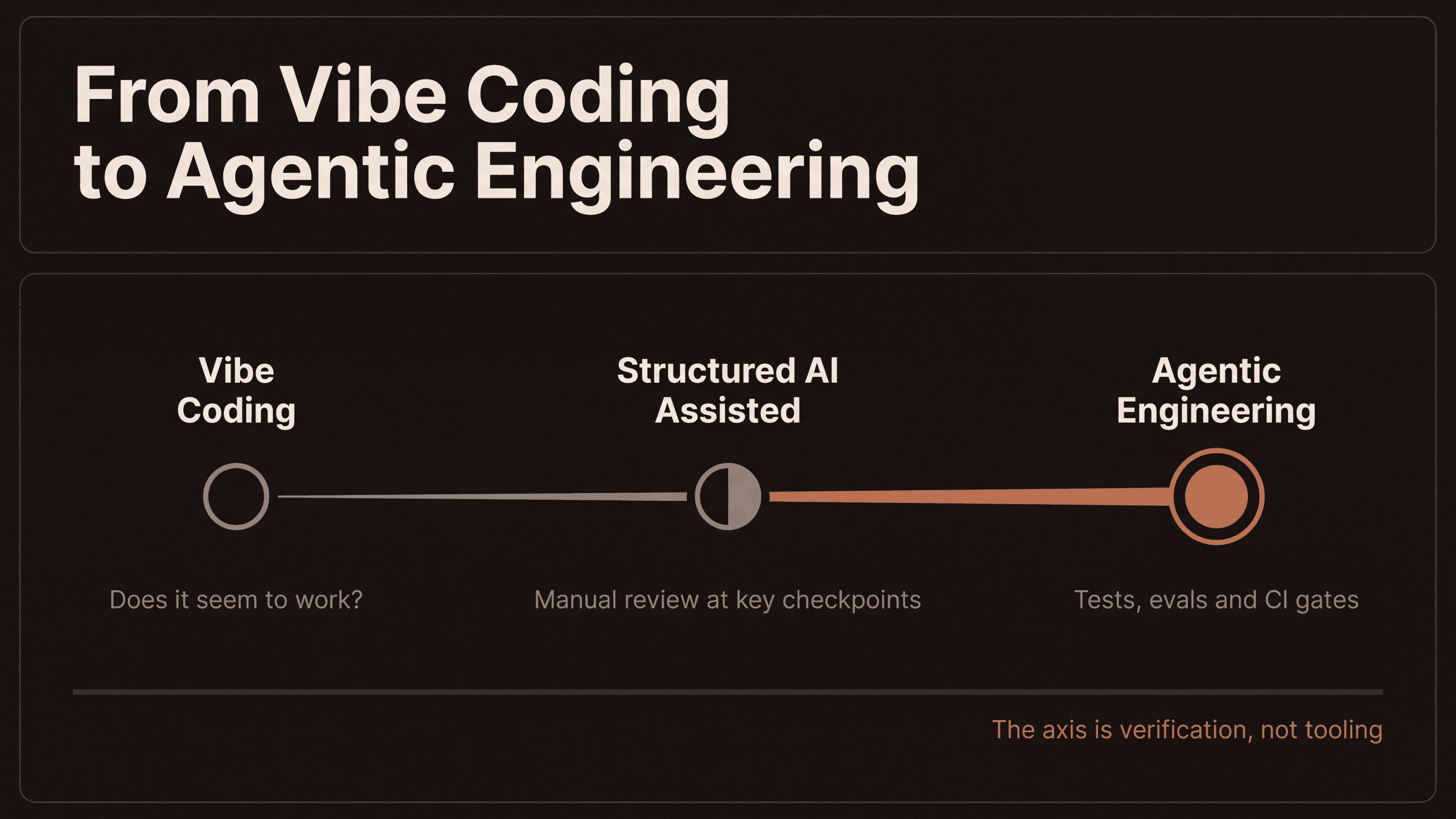
Google's Vibe Coding Whitepaper, Explained in Plain English
Google published 51 pages on how AI is changing the way software gets built. Here is what it actually says, what the jargon means, and the parts worth acting on.
GuideTrends & InsightsVibe Coding